
Prices in AUD. Free Australian delivery for orders over $400. Free international delivery for orders over $800. Read full terms.
Showing all 30 resultsSorted by latest
-
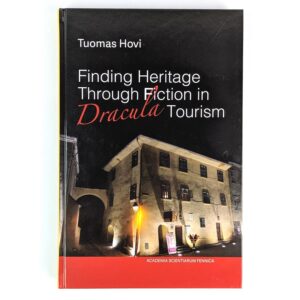
Finding Heritage Through Fiction in Dracula Tourism
AU$65 Read MoreAdd to cartToumas Hovi
Helskinki: Suomalainen Tiedeakatemia, 2016.Heritage and tourism have become inextricably linked. Depending on the view point, the effect of this link can be seen either negative or positive. Does tourism produce inauthentic and falsified tradition, threatening cultural heritage? Or does it, in fact, help to preserve heritage, culture and folklore in a changing and globalizing world? Tuomas Hovi investigates heritage in the context of Dracula tourism in Romania: tourists visiting places connected with either the fictional vampire Dracula or the historical Dracula, Vlad the Impaler, a 15th century Romanian ruler. How is Romanian heritage and culture presented and promoted through a seemingly superficial Dracula tourism based on Western popular fiction in Dracula tourism? Finding Heritage Through Fiction in Dracula Tourism offers new perspectives on the research literate concerning tourism and heritage, and a folkloristic view of tourism research. FF Communications No. 311 published by the Finnish Academy of Science and Letters.
-
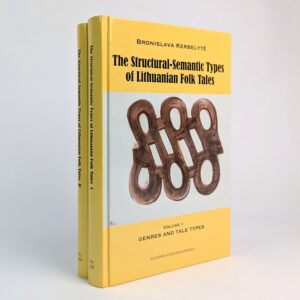
The Structural-Semantic Types of Lithuanian Folk Tales (2 Volumes)
AU$150 Read MoreAdd to cartBronislava Kerbelyte
Helskinki: Suomalainen Tiedeakatemia, 2015.I: Genres and Tale Types. II: The Classification and Index of Elementary Plots and Their Types. The classification system of the types of folk tales published by Antti Aarne in 1910 was a much needed and courageous project. Bronislava Kerbelyte has classified more than 40,000 variants of Lithuanian folk tales according to the international catalogue by Antti Aarne and Stith Thompson (AT). She has concluded that it is necessary to improve the classification system. Kerbelyte has determined elementary plots (EP) as structural elements for narratives and created the structural-semantic method for analysis and description of texts on several levels. The classification of elementary plots and their types contains much information about folk tales and about people. FF Communications No. 308 & 309 published by the Finnish Academy of Science and Letters.
-
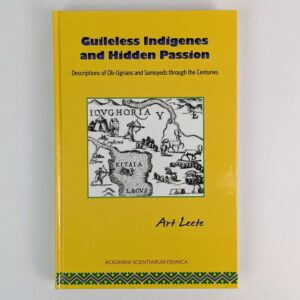
Guileless Indigenes and Hidden Passion: Descriptions of Ob-Ugrians and Smoyeds through the Centuries
AU$80 Read MoreAdd to cartArt Leete
Helskinki: Suomalainen Tiedeakatemia, 2014.This monograph is aimed for discussing the views of the character of the Khanty, Mansi and Nenets by authors of different periods. Changes of general ideas about the inhabitants of the Arctic has had a remarkable, albeit often concealed, role in the development of the research on northern peoples. The author examines the image of northern peoples beginning from ancient Greek and Roman accounts of peoples, medieval sources, modern travel journals and ends up with the analyses of contemporary scholarly writings. The book is an attempt to explore the general background of ideas and the scientific methodology that frames changes in this knowledge about the peoples of the North. The theoretical framework of this monograph is related to the dialogue between modern theories of identity and the historical modes of description. FF Communications No. 306 published by the Finnish Academy of Science and Letters.
-
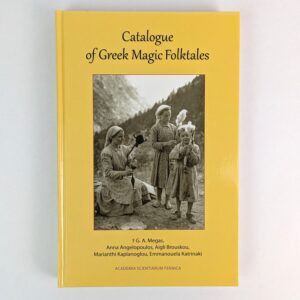
Catalogue of Greek Magic Folktales
AU$80 Read MoreAdd to cartG. A. Megas; Anna Angelopoulos; Aigli Brouskou; Marianthi Kaplanoglou; Emmanouela Katrinaki
Helskinki: Suomalainen Tiedeakatemia, 2012.The collected texts cover a period of more than a century of recordings (from the second half of the nineteenth century up to the mid-1970s) and geographically cover not only the entire Greek territory and Cyprus but also other areas where Greek populations live(d) and Greek cultures thrive(d) (Asia Minor, Pontus, Cappadocia, Southern Italy). Georgios A. Megas drafted the first catalogue, gathering and indexing all published and unpublished Greek folktale versions, so that the number of texts finally exceeded 23 000. A group of specialists continued for nearly 30 years carrying this project, consulting, classifying, and commenting G. Megas’ handwritten card indexes, and finally editing this rich material, scattered in public and private archives. FF Communications No. 303 published by the Finnish Academy of Science and Letters.
-
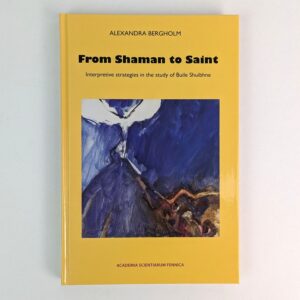
From Shaman to Saint: Interpretive Strategies in the Study of Buile Shuibhne
AU$60 Read MoreAdd to cartAlexandra Bergholm
Helskinki: Suomalainen Tiedeakatemia, 2012.This study charts the ways in which Buile Shuibhne has been interpreted in twentieth-century scholarship, by paying particular attention to the religious allegorical readings of the text. This examination of four prevalent interpretative frameworks ‒ historical, pre-Christian, and anthropological ‒ relates theoretical conceptions of literary theory, comparative religion and historiography to the study of medieval narrative material, by considering the nature of different methodological presuppositions that have guided the scholars’ understanding of the tale’s meaning. The integration of issues relating to text, context, and interpretation raises the issue of communally shared reading strategies in the explication of interpretive variety, thereby highlighting the importance of asking not only what a text means, but also how it means. FF Communications No. 302 published by the Finnish Academy of Science and Letters.
-
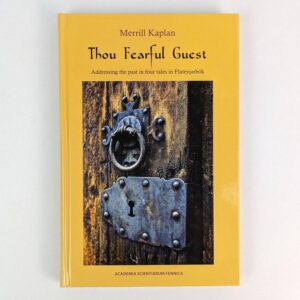
Thou Fearful Guest: Addressing the Past in Four Tales in Flateyjarbok
AU$70 Read MoreAdd to cartMerrill Kaplan
Helskinki: Suomalainen Tiedeakatemia, 2011.A stranger appears at the court of a Norwegian king known best for bringing Christianity to the North. Variations of this scene appear four times in the fourteenth-century manuscript Flateyjarbok. Thou Fearful Guest analyzes how these episodes create meaning by their connections to custom, law, myth, discourses of historical and spiritual truth, typological understandings of time, and the historical context of the manuscript in which they appear. Thou Fearful Guest explores how and to what end medieval Icelanders thought about tales of heathen gods and heroes. FF Communications No. 301 published by the Finnish Academy of Science and Letters.
-
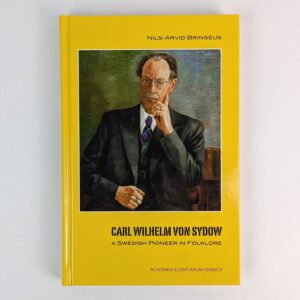
Carl Wilhelm von Sydow: A Swedish Pioneer in Folklore
AU$60 Read MoreAdd to cartNils-Arvid Bringeus
Helskinki: Suomalainen Tiedeakatemia, 2009.Nils-Arvid Bringeus provides a detailed analysis of the founder of folklore research in Sweden, Professor Carl Wilhelm von Sydow (1878-1952). We are introduced to a fascinating personality and able to follow his persevering struggle to gain acceptance for a new academic discipline. Von Sydow took a highly active interest in international cooperation, not least within the field of folktale research. He taught at both Lund and Uppsala universities, establishing a taxonomy within the study of folklore that has been of great importance. FF Communications No. 298 published by the Finnish Academy of Science and Letters.
-
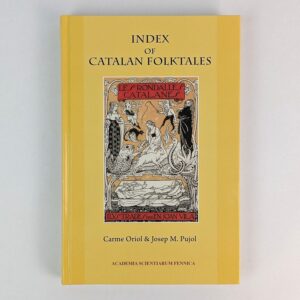
Index of Catalan Folktales
AU$70 Read MoreAdd to cartCarme Oriol; Josep M. Pujol
Helskinki: Suomalainen Tiedeakatemia, 2008.The Catalan language is spoken over a large area divided among four states (Andorra, Spain, France and Italy), with a total population of 13.5 million inhabitants. Catalan culture has a large body of literature as well as a rich and extensive tradition of folklore studies. Catalan folktales were ignored by the Types of the Folktale until the second edition (1961), which included only references to the collection published by Joan Amades (1950). The present Index of Catalan Folktales brings together the work of some seventy collectors working along 150 years and for the first time gives a faithful and complete image of the Catalan contribution to the world´s folklore heritage. FF Communications No. 294 published by the Finnish Academy of Science and Letters.
-
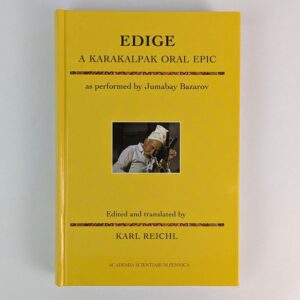
Edige: A Karakalpak Oral Epic as performed by Jumabay Bazarov
AU$80 Read MoreAdd to cartKarl Reichl
Helskinki: Suomalainen Tiedeakatemia, 2007.Edige is one of the most esteemed oral epics of the Karakalpaks, a Turkic-speaking people, who live on the mouth of the Amu Darya and the shores of the Aral Sea. Edige is a historical personage from the time of Timur at the turn of the 14th to the 15th century. The singer, Jumabay Bazarov, was the last Karakalpak singer of heroic epics who stood in an entirely oral tradition. In this edition and translation an attempt has been made to capture as much of his oral performance as possible, including the singer’s dialect features and his musical style. FF Communications No. 289 published by the Finnish Academy of Science and Letters.
-
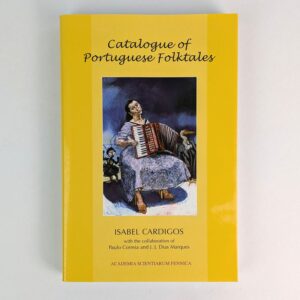
Catalogue of Portuguese Folktales
AU$60 Read MoreAdd to cartIsabel Cardigos; Paul Correia; J. J. Dias Marques
Helskinki: Suomalainen Tiedeakatemia, 2006.In the old Aarne / Thompson, Portugal was virtually non-existent, appearing in the bibliography of just three folktales. In 2003, the author of The Types of International Folktales stretched his hand to the first manuscript of the Catalogue of Portuguese Folktales and included them in 700 types of his own manuscript. The Catalogue of Portuguese Folktales is now the first regional index that takes into account the classifications of the new ‘ATU’. But it displays its difference by electing its own affinities with old ‘AT’ numbers, with regional catalogues, or even by offering new numbers. We can see a new face of the European folktale emerging, with a strong Mediterranean flavour. FF Communications No. 291 published by the Finnish Academy of Science and Letters.
-
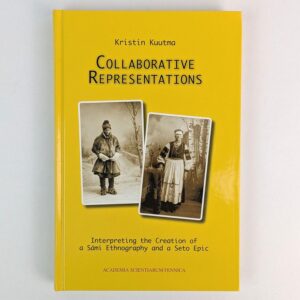
Collaborative Representations: Interpreting the Creation of a Sami Ethnography and a Seto Epic
AU$60 Read MoreAdd to cartKristin Kuutama
Helskinki: Suomalainen Tiedeakatemia, 2006.The focus of this book revolves around two manifestly representative texts from the early twentieth century: Johan Turi’s story of Sami experience Muitalus samiid birra and the Seto epic Peko performed by Anne Vabarna. The current analysis of the complex performative interaction between the culture bearer, his or her repertoire, and the culture researcher benefits from an interdisciplinary anthropological and folkloristic approach, informed by hybridity and the blurring of disciplinary boundaries in historicizing inquiries into cultural documentation and textual practices. FF Communications No. 289 published by the Finnish Academy of Science and Letters.
-
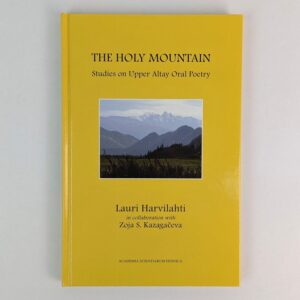
The Holy Mountain: Studies on Upper Altay Oral Poetry
AU$40 Read MoreAdd to cartLauri Harvilahti; Zoja S. Kazagaceva
Helskinki: Suomalainen Tiedeakatemia, 2003.The aim of this study is to achieve a synthesis in forming a new overall view of the stylistic-poetic and structural devices used to produce the archaic mythical and epic cultural tradition of the Upper Altay region. Attention is also being paid to the inherent ethnic nature of the Altaian ethnic groups, to cultural influences and to some extent their present cultural identity. FF Communications No. 282 published by the Finnish Academy of Science and Letters.
-
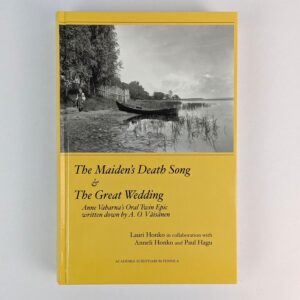
The Maiden’s Death Song & The Great Wedding: Anne Vabarna’s Oral Twin Epic written down by A. O. Vaisanen
AU$80 Read MoreAdd to cartLauri Honko; Anneli Honko; Paul Hagu
Helskinki: Suomalainen Tiedeakatemia, 2003.For centuries, the eastern shores of the Baltic Sea have nourished poetic cultures developing oral epic traditions that mostly survived in lays of a few hundred lines but that eventually gave rise to much longer traditional epics. The Maiden’s Death Song & The Great Wedding is a manifestation of a long epic format rare in Baltic-Finnish folk poetry and of two alternative storylines. It is also a masterpiece that serves as a reminder of the poetry of a gifted minority culture that tends to be forgotten. FF Communications No. 281 published by the Finnish Academy of Science and Letters.
-
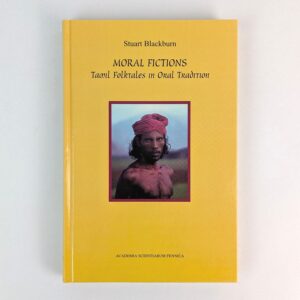
Moral Fictions: Tamil Folktales in Oral Tradition
AU$80 Read MoreAdd to cartStuart Blackburn
Helskinki: Suomalainen Tiedeakatemia, 2001.Is fantasy the defining element in fairy tales? This question is the starting point for Stuart Blackburn’s study of Tamil oral tales. Having collected over 300 tales, 100 of which are translated in this book, he concludes that although fantasy, and humour, are present, at the core of the tales lies a moral vision in which wrongdoing, especially physical cruelty, is punished. Only the second full-length study of Indian tales from oral tradition, this book places the Tamil tradition in an international context, describes the telling sessions and includes tellers’ interpretations of some tales. FF Communications No. 278 published by the Finnish Academy of Science and Letters.
-

The Coon in the Box: A Global Folktale in African-American Tradition
AU$50 Read MoreAdd to cartJohn Minton; David Evans
Helskinki: Suomalainen Tiedeakatemia, 2001.Among the most popular of all African-American folktales is the story folklorists know as The Coon in the Box, itself a derivative of the extremely old and widespread narrative usually identified, after Brothers Grimm, as Doctor Know-All (Doktor Allwissend) (AaTh 1641). Not coincidentally, this item has served as a centerpiece in the debate over the sources of New World black folktales. A detailed analysis of The Coon in the Box, its life history and cultural context thus reveals a great deal not only of the nature of African-American oral narratives in and of themselves, but also of the challenges confronting scholars in investigating the origins, diffusion, and development of these traditions. FF Communications No. 277 published by the Finnish Academy of Science and Letters.
-
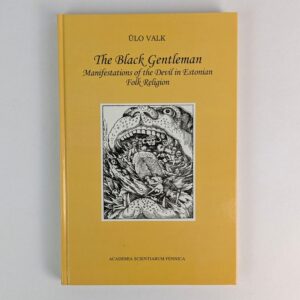
The Black Gentleman: Manifestations of the Devil in Estonian Folk Religion
AU$50 Read MoreAdd to cartUlo Valk
Helskinki: Suomalainen Tiedeakatemia, 2000.This empirical study of the Devil in the collections of the Estonian Folklore Archives, reflecting the world of belief inhabited by the Estonians in the 19th and 20th centuries, is also a book about suspicion and fear in everyday life. It describes how religious folklore has drawn borders between the human and the non-human, how it has modelled the Other, the supernatural and social evil. As a study of folk narrative, and legends in particular, it mainly discusses variation at the level of motif with special reference to the visual guises of the Devil. FF Communications No. 276 published by the Finnish Academy of Science and Letters.
-
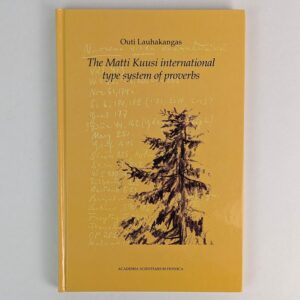
The Matti Kuusi International Type System of Proverbs
AU$40 Read MoreAdd to cartOuti Lauhakangas
Helskinki: Suomalainen Tiedeakatemia, 2000.From 1965 to 1974 Matti Kuusi was editor-in-chief of the famous journal Proverbium and invited proverb scholars to contribute to this forum. During this period he began to keep a card index of literature references to proverb types and made his first experiment in the thematic classification of international proverb materials in the 1970s. This volume is a study of the development of this type system. Outi Lauhakangas attempts to show how her father’s practical dream of a common international reference code came to be realised. The reader will find a list of some 700 global or almost global proverb motifs and can access the database via the website of The Finnish Literature Society. FF Communications No. 275 published by the Finnish Academy of Science and Letters.
-
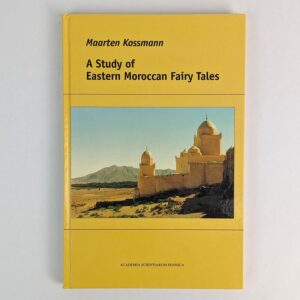
A Study of Eastern Moroccan Fairy Tales
AU$40 Read MoreAdd to cartMaarten Kossmann
Helskinki: Suomalainen Tiedeakatemia, 2000.This book studies the structure and style of orally transmitted fairy tales from Eastern Morocco in Berber and dialectal Arabic. Drawing on materials collected in his own fieldwork and other sources, the author pays special attention to the aesthetics of the fairy tale as understood by Max Lüthi and to the analysis of tale-specific formulae. Two hitherto unpublished Figuig Berber fairy tales are appended, as is a comparison of two versions of an Eastern Riffian story which, though collected independently at an interval of 60 years, show remarkable similarities. FF Communications No. 274 published by the Finnish Academy of Science and Letters.
-
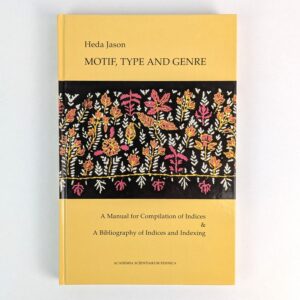
Motif, Type and Genre: A Manual for Compilation of Indices & A Bibliography of Indices and Indexing
AU$60 Read MoreAdd to cartHeda Jason
Helskinki: Suomalainen Tiedeakatemia, 2000.The present manual describes in detail methods and procedures for classifying (indexing/typing) folk literature. It has been prepared by an ethnopoetician at the suggestion of colleagues engaged in philological-historical research and is written on the basis of the author’s experience in both compiling indices for oral folk literature and using indices compiled by others. The Manual describes concepts, methods and working techniques. Three kinds of indices are described: indices for literary motifs, indices for tale types of oral and folk literatures and indices for ethnopoetic genres. FF Communications No. 273 published by the Finnish Academy of Science and Letters.
-
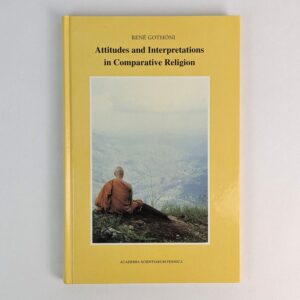
Attitudes and Interpretations in Comparative Religion
AU$50 Read MoreAdd to cartRene Gothoni
Helskinki: Suomalainen Tiedeakatemia, 2000.What is the attitude of the scholar of Comparative Religion to religion and religiosity? What is the specific method in Comparative Religion? Does the study of religions differ from other corresponding disciplines? The present volyme tries to answer these questions on the basis of fieldwork among Sinhalese Buddhist monks in Sri Lanka and Orthodox monks and pilgrims on the Holy Mountain of Athos in Greece. Apart from refining a more perceptive view of religion and religiosity, study elucidates the definition of religion and the principles applied in the comparative study of religions by factual cases from these two cultural fields. FF Communications No. 272 published by the Finnish Academy of Science and Letters.
-
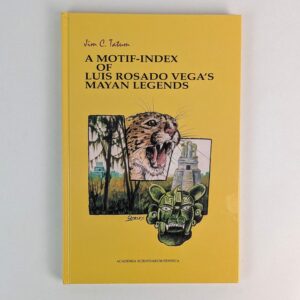
A Motif-Index of Luis Rosado Vega’s Mayan Legends
AU$40 Read MoreAdd to cartJim C. Tatum
Helskinki: Suomalainen Tiedeakatemia, 2000.The Mayan Culture, long recognised as among the most advanced indigenous groups of Latin America, possesses a rich heritage of mythology and traditions still very apparent in the Yacatan Peninsula at the closing of the twentieth century. Although Mayan legends have been studied and published as early as 1844, there exists no extensive motif-index dealing with the topic. This work attempts to help fill that need by indexing the works of Yacatecan writer Luis Rosaldo Vega. FF Communications No. 271 published by the Finnish Academy of Science and Letters.
-
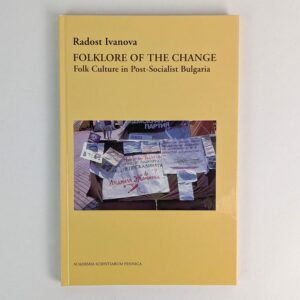
Folklore of the Change: Folk Culture in Post-Socialist Bulgaria
AU$40 Read MoreAdd to cartRadost Ivanova
Helskinki: Suomalainen Tiedeakatemia, 1999.The book analyses the developments taking place in Bulgaria in the years following November 10, 1989. The dynamics of the political and socio-economic changes in that period are comparable only to the most extreme periods of Bulgaria’s history. This study is not a political analysis. It is an attempt to follow the changes in people’s mentality. This book documents the enthusiasm of the negation of a chimera lasting half a century and the euphoria of the search for new roads. The volume consists of eight studies, seven of which deal with the democratic processes and developments in Sofia. FF Communications No. 270 published by the Finnish Academy of Science and Letters.
-
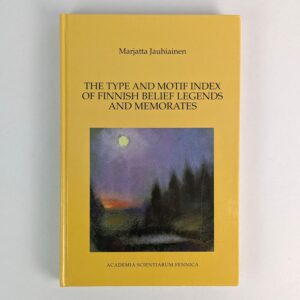
The Type and Motif Index of Finnish Belief Legends and Memorates
AU$65 Read MoreAdd to cartMarjatta Jauhiainen
Helskinki: Suomalainen Tiedeakatemia, 1998.Lauri Simonsuuri’s Typen- und Motivverzeichnis der finnischen mythischen Sagen (FFC 182), published in 1961 and reprinted in 1987, became a classic among the national legend catalogues. Marjatta Jauhiainen’s work not only updates and brings into English the catalogue, it is a thorough revision and enlargement of the classification system itself. In the introduction she surveys the history of collecting and the progress of belief-legend cataloguing on the international scene providing a concordance with Reidar Th. Christiansen’s The Migratory Legends (FFC 175, 1958/1992). A clarification of key terms, a subject directory and a map displaying tradition areas in Finland help the reader to orientate in the exceptionally rich store of belief legends and memorates. FF Communications No. 267 published by the Finnish Academy of Science and Letters.
-
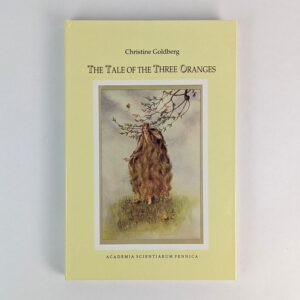
The Tale of the Three Oranges
AU$60 Read MoreAdd to cartChristine Goldberg
Helskinki: Suomalainen Tiedeakatemia, 1997.Folkloristic analysis of The Tale of the Three Oranges, tracing its narrative structure, motifs, and cross-cultural variants. FF Communications No. 263 published by the Finnish Academy of Science and Letters.
-
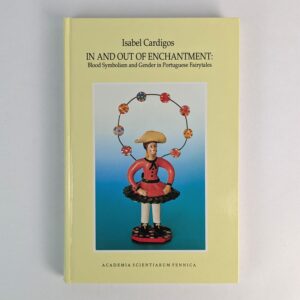
In and Out of Enchantment: Blood Symbolism and Gender in Portuguese Fairytales
AU$60 Read MoreAdd to cartIsabel Cardigos
Helskinki: Suomalainen Tiedeakatemia, 1996.The core of fairytales is the realm of enchantment. This study argues that the bloodshed associated with menstruation, defloration and childbirth–natural episodes in the lifecycle of women–is central to a syntax of enchantment and disenchantment that is common to all fairytales. It is a reflection on the gendered voices that have generated and contributed to the structure and symbolism of fairytales; and it takes shape along with the discussion of Portuguese versions of wide-spread tale types like AT303 (The Two Brothers), AT313 (The Girl as Helper in the Hero’s Flight and AT516 (Faithful John), as well as through an intriguing ecotype of Snake Helper tales (AT533*), ‘The Little Snake’. FF Communications No. 260 published by the Finnish Academy of Science and Letters.
-
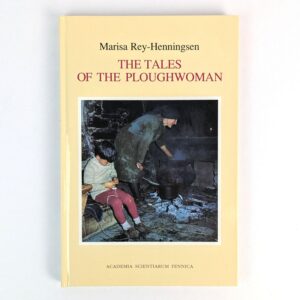
The Tales of the Ploughwoman
AU$40 Read MoreAdd to cartMarisa Rey-Henningsen
Helskinki: Suomalainen Tiedeakatemia, 1996.Appendix to FFC 254. FF Communications No. 259 published by the Finnish Academy of Science and Letters.
-
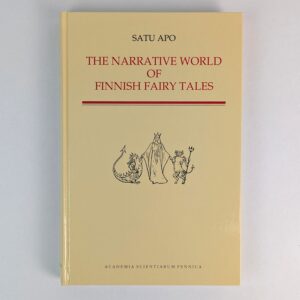
The Narrative World of Finnish Fairy Tales
AU$60 Read MoreAdd to cartSatu Apo
Helskinki: Suomalainen Tiedeakatemia, 1995.Finnish fairy tales represent the northern branch of the Western European fairy-tale tradition. Although Finnish epic folklore and mythology have been objects of great research interest, Finnish fairy tales have been studied surprisingly little. This study answers not only methodological but also the most important empirical questions, such as: what are the themes, plots and characters which have been able to entertain both fairy-tale tellers and their listeners from one generation to the next? How can these contentual elements be understood and interpreted within the framework of traditional Finnish folk culture? /// The methodological issues dealt with here include the question of how to approach traditional folklore material recorded in the 1800s, of which there is an enormous amount but very little accompanying contextual information. In order to analyse the contents of the tales, this study suggests the use of several semantic levels of abstraction as well as the systematic analysis of variation; only then is it feasible to present macrocontextual, interpretive hypotheses in which narrative and cultural structures are examined side by side. FF Communications No. 256 published by the Finnish Academy of Science and Letters.
-
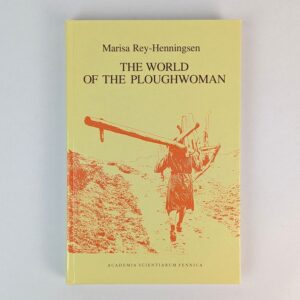
The World of the Ploughwoman: Folklore and Reality in Matriarchal Northwest Spain
AU$60 Read MoreAdd to cartMarisa Rey-Henningsen
Helskinki: Suomalainen Tiedeakatemia, 1993.This study is a contribution to the discussion of folklore as a mirror of society. Spanish Galicia offers a special opportunity for examining wellknown folktales in a different context because of the cultural and economic dominance of women and the matriarchal life style which characterized the region until recently. That matriarchy was deeprooted in Galicia and did not result from male migration in modern times, is demonstrated in the historical chapters of the book, while the anthropological chapters (on family systems, work patterns, matriarchal ideology, sexual behaviour, religion and magic) tend to show that all aspects of Galician culture have been “canonized” in folklore; folklore therefore must have gone through radical changes in order to conform with the local ideology. While the women in Galician folktales almost always appear in active and aggressive hero roles, this has nothing to do with “wishful thinking” or “poetic fiction”, for according to the matriarchal concept it is just the natural order of things. Surely the correlation demonstrated here between the social structure, gender roles, and ideology may also be observed in male-dominated societies, once we learn to disengage from the patriarchal concept of the “natural order of things”. FF Communications No. 254 published by the Finnish Academy of Science and Letters.
-
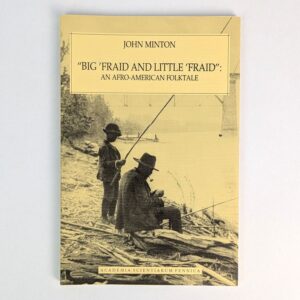
Big ‘Fraid and Little ‘Fraid: An Afro-American Folktale
AU$30 Read MoreAdd to cartJohn Minton
Helskinki: Suomalainen Tiedeakatemia, 1993.Though devoted specifically to the life history of the anecdote folklorists know as Tale Type 1676A/Motif K1682.1, Big ‘Fraid and Little ‘Fraid, this study more generally assesses the manner in which the circuitous epistemology of the tale indices compiled by, or in emulation of, Antti Aarne and Stith Thompson covertly subverted Richard Dorson’s controversial conclusions concerning the origins of Afro-American oral narratives, as well as the arguments of those who have challenged his position. FF Communications No. 253 published by the Finnish Academy of Science and Letters.
-
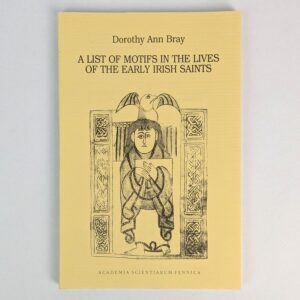
A List of Motifs in the Lives of the Early Irish Saints
AU$30 Read MoreAdd to cartDorothy Ann Bray
Helskinki: Suomalainen Tiedeakatemia, 1992.An identifying, classifying and documenting list of the themes of early medieval Irish saint biographies. FF Communications No. 252 published by the Finnish Academy of Science and Letters.