
Prices in AUD. Shipping worldwide. Flat rate $8 postage per order within Australia. International by weight calculated at checkout. Read full terms.
-
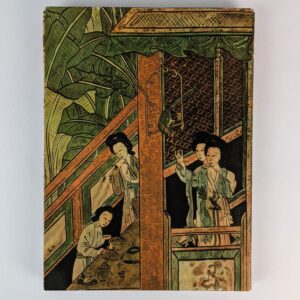
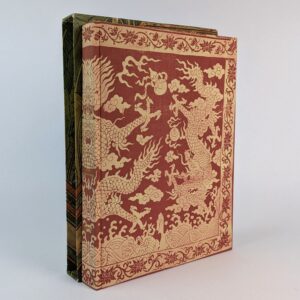
El arte de los antiguos y de los primitivos: Asia anterior – India – Indochina – Tibet – China – Japon – Los tchuktches
AU$150.00 Read MoreAdd to cartW. y B. Forman
Mexico: Editorial Hermes, 1963.The art of the ancients and primitives: Anterior Asia – India – Indochina – Tibet – China – Japan – The Tchutches.
-
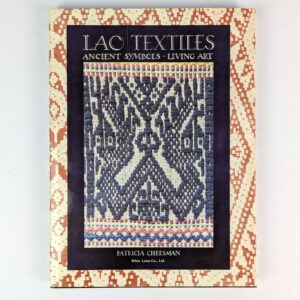
Lao Textiles: Ancient Symbols – Living Art
AU$50.00 Read MoreAdd to cartPatricia Cheesman
Bangkok: White Lotus Co., 1988. -
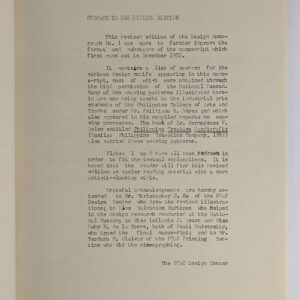
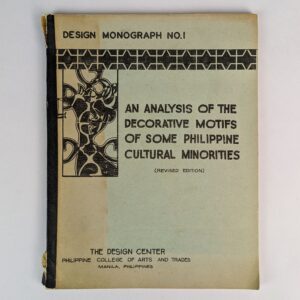
An Analysis of the Decorative Motifs of Some Philippine Cultural Minorities
AU$100.00 Read MoreAdd to cartPhilippine College of Arts and Trades Design Center
Manila: Philippine College of Arts and Trades, 1973. -
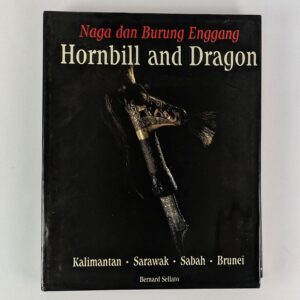
Naga dan Burung Enggang: Hornbill and Dragon: Kalimantan, Sarawak, Sabah, Brunei
AU$150.00 Read MoreAdd to cartBernard Sellato
Jakarta and Kuala Lumpur: Elf Aquitaine Indonesie and Elf Aquitaine Malaysia, 1989. -
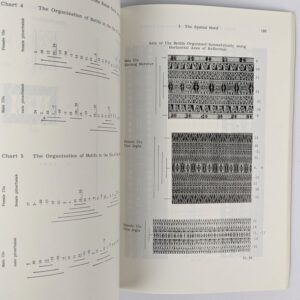
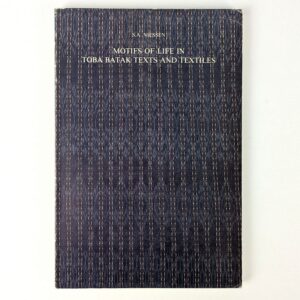
Motifs of Life in Toba Batak Texts and Textiles
AU$60.00 Read MoreAdd to cartS. A. Niessen
Dordrecht: Foris Publications, 1985. -
Oiran
AU$400.00 Read MoreAdd to cartTetsuji Takechi
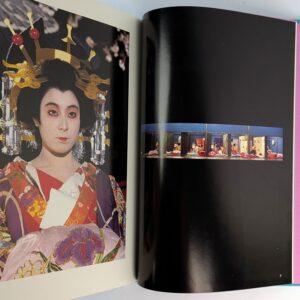
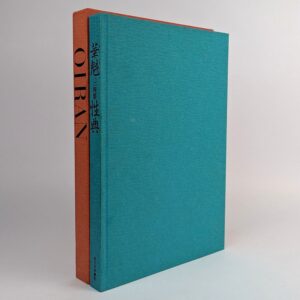
Tokyo: Tokyo Academy of Arts, 1983.First edition photobook issued to accompany Takechi Tetsuji’s controversial late-career film Oiran, “A mixture of romance and sex combined with surrealistic horror elements.” The story is loosely based on the work of Jun’ichiro Tanizaki in which a 19th century Japanese prostitute moves to America and her dead lover manifests as a mole on her leg. Takechi was a prominent critic and kabuki director before moving into directing films in the 1960s. His 1964 feature Hakujitsumu is regarded as the first big budget pink film (Japanese movies with nudity or sexual content), and also the first Japanese production subjected to systematic fogging censorship. The following year, Black Snow (1965), led to his arrest on indecency charges, a landmark case he ultimately won, significantly reshaping Japanese film censorship and opening the way for the flourishing of the pink eiga genre through the late 1960s and 1970s. After a decade-long hiatus from cinema, Takechi returned with a more explicit remake of Hakujitsumu before directing Oiran in 1983. The film again brought him into conflict with the censors whom “edited and fogged in 98 different places, altering the film from a near-hardcore opus to a very soft costume drama.” Takechi promoted the film by proclaiming it featured “the first multicoloured penis in Japanese cinema.” The present photobook, issued uncensored, retains many of the film’s erotic stills and remains an important visual record of Takechi’s work. As usual for the period, explicit male nudity is absent. References: WEISSER: The Sex Films: Japanese Cinema Encyclopedia.
-
Historical and Commercial Atlas of China
AU$150.00 Read MoreAdd to cartAlbert Herrmann
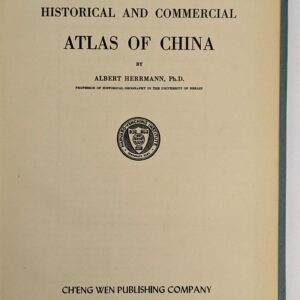
Taipei: Ch’eng Wen Publishing Company, 1970.Harvard-Yenching Institute Monograph Series, Volume I. The second Taiwan printing.
-
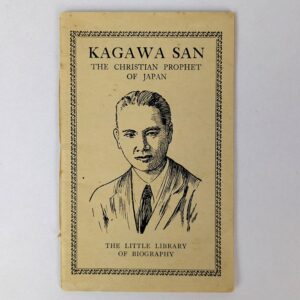
Kagawa San: The Christian Prophet of Japan
AU$200.00 Read MoreAdd to cartMaurice Whitlow
London: The Religious Tract Society, No date.Short biography on the Japanese Evangelical and labour activist, Toyohiko Kagawa (1888-1960). Part of the The Little Library of Biography, c. 1930s.
-
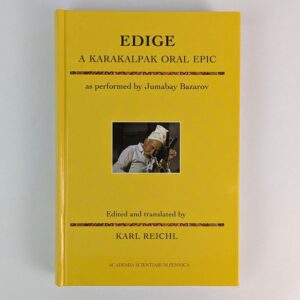
Edige: A Karakalpak Oral Epic as performed by Jumabay Bazarov
AU$80.00 Read MoreAdd to cartKarl Reichl
Helskinki: Suomalainen Tiedeakatemia, 2007.Edige is one of the most esteemed oral epics of the Karakalpaks, a Turkic-speaking people, who live on the mouth of the Amu Darya and the shores of the Aral Sea. Edige is a historical personage from the time of Timur at the turn of the 14th to the 15th century. The singer, Jumabay Bazarov, was the last Karakalpak singer of heroic epics who stood in an entirely oral tradition. In this edition and translation an attempt has been made to capture as much of his oral performance as possible, including the singer’s dialect features and his musical style. FF Communications No. 289 published by the Finnish Academy of Science and Letters.
-
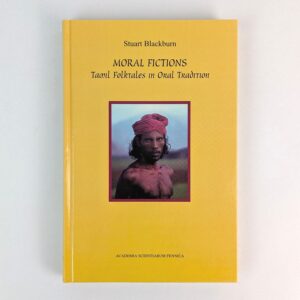
Moral Fictions: Tamil Folktales in Oral Tradition
AU$80.00 Read MoreAdd to cartStuart Blackburn
Helskinki: Suomalainen Tiedeakatemia, 2001.Is fantasy the defining element in fairy tales? This question is the starting point for Stuart Blackburn’s study of Tamil oral tales. Having collected over 300 tales, 100 of which are translated in this book, he concludes that although fantasy, and humour, are present, at the core of the tales lies a moral vision in which wrongdoing, especially physical cruelty, is punished. Only the second full-length study of Indian tales from oral tradition, this book places the Tamil tradition in an international context, describes the telling sessions and includes tellers’ interpretations of some tales. FF Communications No. 278 published by the Finnish Academy of Science and Letters.
-
Types of Indic Oral Tales: India, Pakistan, and Ceylon
AU$30.00 Read MoreAdd to cartStith Thompson; Warren E. Roberts
Helsinki: Suomalainen Tiedeakatemia, 1991.Catalogue and analysis of Indic oral tales from India, Pakistan, and Sri Lanka, organised by tale-type and thematic motifs. FF Communications No. 180 published by the Finnish Academy of Science and Letters.
-
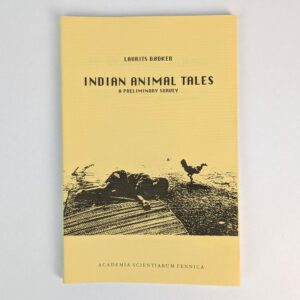
Indian Animal Tales: A Preliminary Survey
AU$30.00 Read MoreAdd to cartLaurits Bodker
Helsinki: Suomalainen Tiedeakatemia, 1991.Survey of Indian animal fables, tracing narrative structures, moral lessons, and cross-cultural folklore parallels. FF Communications No. 170 published by the Finnish Academy of Science and Letters.
-
The Cinderella Cycle in China and Indo-China
AU$30.00 Read MoreAdd to cartNai-Tung Ting
Helsinki: Suomalainen Tiedeakatemia, 1974.Comparative folklore study of Cinderella-type tales across China and Indo-China, highlighting regional variants, motifs, and diffusion of the cycle. FF Communications No. 213 published by the Finnish Academy of Science and Letters.
-
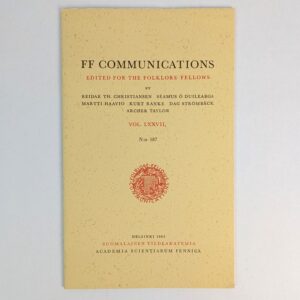
Games of the Tibetans
AU$30.00 Read MoreAdd to cartSiegbert Hummel; Paul G. Brewster
Helsinki: Suomalainen Tiedeakatemia, 1963.Ethnographic survey of traditional Tibetan games, combining cultural anthropology, folklore, and comparative play studies. FF Communications No. 187 published by the Finnish Academy of Science and Letters.
-
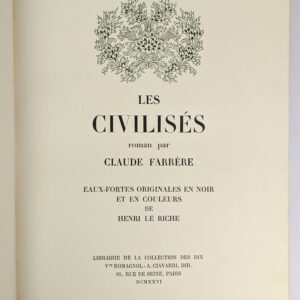
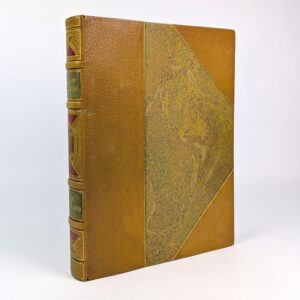
Les Civilises
AU$800.00 Read MoreAdd to cartClaude Farrere; Henri Le Riche
Paris: Librairie de la Collection des Dix, 1926.French colonizers indulge in fornication, opium, and general debauchery in late 19th century Saigon (then French Cochincina, modern day Ho Chi Minh City, Vietnam). One of 200 numbered copies of Arches vellum (of a total edition of 300), bound with the original wrappers.
-
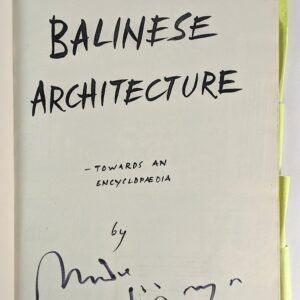
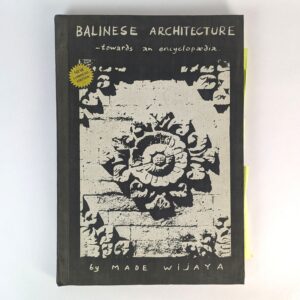
Balinese Architecture: Towards an Encyclopaedia
AU$500.00 Read MoreAdd to cartMade Wijaya
[Sanur]: Fotokopi, 1988.This book grew out of a report by students of the University of Sydney during a holiday design programme in Bali to which Wijaya was the tutor. “Most of the photographers were taken over the six months April – October, 1984. The selection is comprehensive in that it covers the full spectrum of Balinese Architecture — mountain to coastal, north to south, palatial to makeshift..” (from preface) Made Wijaya (born in Sydney as Michael White, 1953-2016) was a landscape architect who left Sydney for Bali as a break from architectural studies at University of Sydney and stayed, immersing himself in the Balinese culture, consorting with royalty, and in 1975 was renamed Made Wijaya by a priest in a Hindu temple ceremony. The New Compiled Edition, combining volumes 1 and 2. Photocopied pages (as issued) with 14 original colour photographs pasted in (copies are known to have differing numbers of added photographs). One of 50 numbered and signed copies, this copy further inscribed by Wijaya to the title page, and with numerous manuscript corrections as well as additional information tabs further describing many of the illustrations.
-
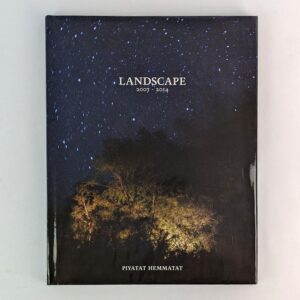
Landscape, 2007 – 2014
AU$40.00 Read MoreAdd to cartPiyatat Hemmatat
[Chicago]: Serindia Contemporary, 2015.“LANDSCAPE 2007-2014 by Piyatat Hemmatat is a limited edition (of 500) artist’s book of his Landscape series in which for the last seven years he explored ‘his alternate reality’, the landscape. His exploration of nature has informed many of his published projects and has enabled him to get back in touch with his instincts and derive creative strength from them. LANDSCAPE is a collection of his most illuminating encounters that translated into a stunning selection of thirty landscape photographs in this beautifully-produced artist’s edition volume.” (publisher’s blurb)
-
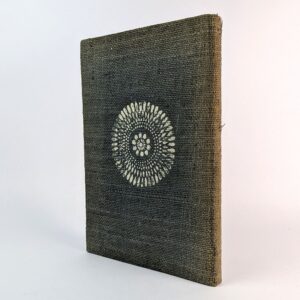
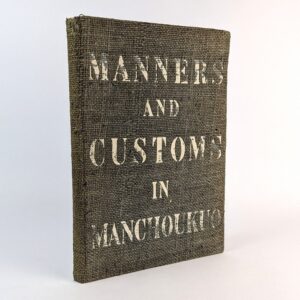
Manners and Customs in Manchoukuo
AU$1,000.00 Read MoreAdd to cartMasatoshi Kobayashi; Noboru Hidaka
Manchoukuo: The Manchuria Daily News, 1942.A detailed and thoroughly illustrated guide in English to life and culture in Manchuria. Published at the height of WWII, depicting a completely normal world inside the Japanese puppet state with chapters on races and tribes, costumes, residential houses, food and drink, salutation and etiquette, tastes and pastimes, annual festivals, religions, symbols of religious faith, and happy and unhappy affairs.
-
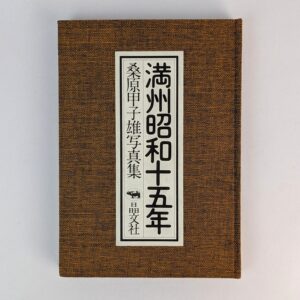
![[Manshu Showa Jugonen: Kuwabara Kineo shashin shu]](https://www.thebookmerchantjenkins.com/wp-content/uploads/0035651-300x300.jpg)
[Manshu Showa Jugonen: Kuwabara Kineo shashin shu]
AU$200.00 Read MoreAdd to cartKineo Kuwabara
Tokyo: Shobunsha, 1974.Photobook by Japanese photographer Kineo Kuwabara (1913-2007) documenting his trip to Manchuria in 1940.
-
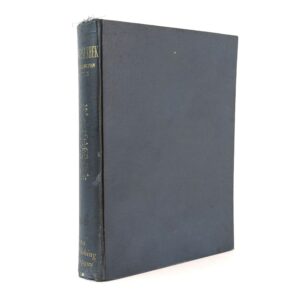
Chiang Kai-shek
AU$800.00 Read MoreAdd to cartHollington K. Tong
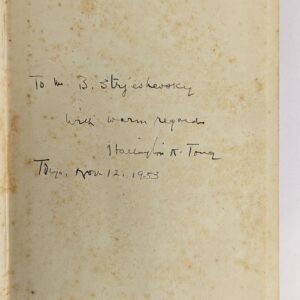
Taipei: China Publishing Company, 1953.The revised edition of Tong’s biography of the Chinese leader. Tong was a journalist and diplomat, serving as the Ambassador of the Republic of China to Japan when this edition was published later as the Ambassador to the United States. This revised edition, published 16 years after the first edition, condenses the story of Chiang Kai-shek’s life pre-1936, which was covered at length in the two volume first edition, and focuses on the epic years which followed, 1937-1953. This copy inscribed by Tong in Tokyo, 1953, to the polyglot Boris Strjeshevsky, an officer in the Imperial Russian Army that fled to China where he learned English and Chinese and taught Russian to the Chinese, before moving to Japan in 1939 where he learned Japanese and taught languages, before finally moving to Queensland, Australia, where he taught Russian at the University of Queensland.