
Prices in AUD. Shipping worldwide. Flat rate $8 postage per order within Australia. International by weight calculated at checkout. Read full terms.
-
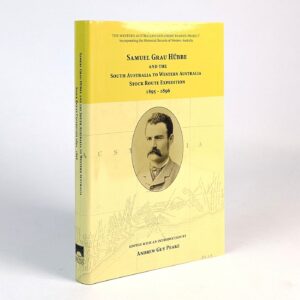
Samuel Grau Hubbe and the South Australia to Western Australia Stock Route Expedition, 1895 – 1896
AU$110.00 Read MoreAdd to cartSamuel Grau Hubbe
Perth: Hesperian Press, 2018.The Western Australian Explorers’ Diaries Project, Incorporating the Historical Records of Western Australia. “Contains the official and private journals of Hubbe and John Mahar. Biographical notes on the men of the expedition.” (publisher’s blurb) Edited and with an introduction by Andrew Guy Peake.
-
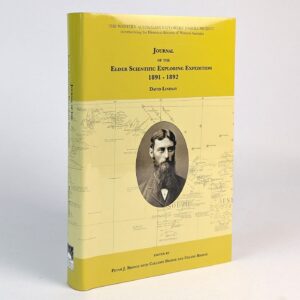
Journal of the Elder Scientific Exploring Expedition, 1891 – 1892
AU$120.00 Read MoreAdd to cartDavid Lindsay
Perth: Hesperian Press, 2018.The Western Australian Explorers’ Diaries Project, Incorporating the Historical Records of Western Australia. “With appendices on the plants by Alex George and animals by Ian Abbott, reported by the expedition. Also the full Anthropology report by Richard Helms which has not been available for over a century, which contains 6 colour plates and many b&w photos. Biographies of all the men.” (publisher’s blurb) Edited by Peter J. Bridge, Calliope Bridge, and Celene Bridge.
-
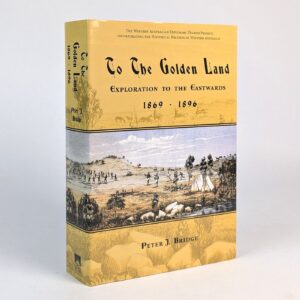
To the Golden Land: Exploration to the Eastwards, 1869 – 1896
AU$160.00 Read MoreAdd to cartPeter J. Bridge
Perth: Hesperian Press, 2018.The Western Australian Explorers’ Diaries Project, Incorporating the Historical Records of Western Australia. “An important contribution to the history of WA covering all that periods 65 expeditions, including many that were previously unknown. Includes for the first time all the colour plates of Forrest in the 1870s. More than 150 illustrations and maps.” (publisher’s blurb)
-
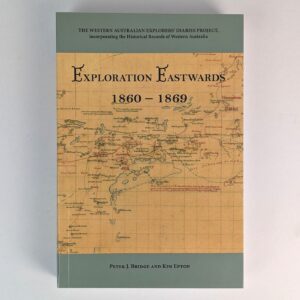
Exploration Eastwards, 1860 – 1869
AU$110.00 Read MoreAdd to cartPeter J. Bridge; Kim Epton
Perth: Hesperian Press, 2018.The Western Australian Explorers’ Diaries Project, Incorporating the Historical Records of Western Australia. “Contains some 30 expeditions including Lefroy and CC Hunt with appendices on the plants by Alex George and animals by Ian Abbott. Biographical notes on all known expedition members. Resolves the problems of the ‘convicts gold’ and Hunt’s unknown convict helpers.” (publisher’s blurb)
-
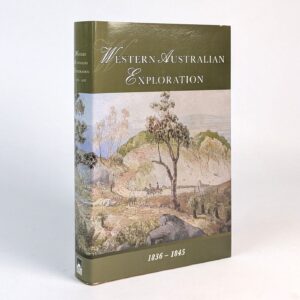
Western Australian Exploration, 1836-1845
AU$110.00 Read MoreAdd to cartMarion Hercock; Sheryl Milentis; Phil Bianchi
Perth: Hesperian Press, 2011.The Western Australian Explorers’ Diaries Project, incorporating the Historical Records of Western Australia: The Letters, Reports & Journals of Exploration and Discovery in Australia. “During the years 1836-1845, the settlements of Albany, Perth, Fremantle and York expanded as immigrants arrived in search of new pastures and other resources. The search for resources, the development of roads between remote settlements, and scientific enquiry provided the impetus for further exploration and discovery in Western Australia in that period. One hundred reports of expeditions of exploration in colonial Western Australia have been annotated, summarised and indexed in Western Australian Exploration 1936-1845. The reports are complemented by expert analyses of native plant species, native animal species and the relations between Aboriginal people and the explorers. This volume in the Western Australian Exploration Diaries series is the companion to Western Australian Exploration Volume 1 1826-1835 and Evidences of an Inland Sea.” (from jacket)
-
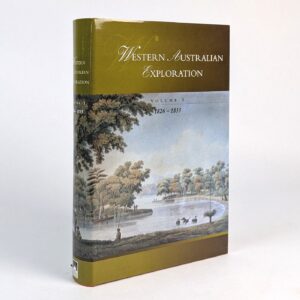
Western Australian Exploration Volume One, December 1826 – December 1835
AU$110.00 Read MoreAdd to cartJoanne Shoobert
Perth: Hesperian Press, 2005.The Western Australian Explorers’ Diaries Project, incorporating the Historical Records of Western Australia: The Letters, Reports & Journals of Exploration and Discovery in Australia. “Western Australian Exploration Volume One, 1826-1835 is the annotated record of all the known extant documents of Western Australian land exploration for the period. This seminal collection of 130 items, many of which have never before been publicly accessible, is a unique view of Western Australia as it was found by the explorers. It is a fundamental source of importance to all Australians who have an interest in our origins.” (from jacket)
-
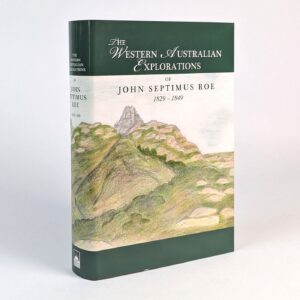
The Western Australian Explorations of John Septimus Roe, 1829-1849
AU$120.00 Read MoreAdd to cartMarion Hercock
Perth: Hesperian Press, 2014.The Western Australian Explorers’ Diaries Project, incorporating the Historical Records of Western Australia. “The landscapes and waters, the aboriginal people and their place names, as well as the plants and animals of south-western Australia, were all noted by John Septimus Roe. Naval officer, hydrogrpaher, explorer, founding Surveyor General, settler and father, Roe helped make Western Australia what it is today, while leaving a record of what it was at first contact by European settlers. Roe’s expedition reports, field notes and maps have been annotated, summaries and indexed in The Western Australian Explorations of John Septimus Rose 1829-1849. The reports are complemented by expert analyses of native plant species, native animal species, and navigation and surveying. This volume in the Western Australian Exploration series is a companion to Western Australian Exploration Volume 1 1826-1835 and Western Australian Exploration 1836-1845.” (from jacket)
-
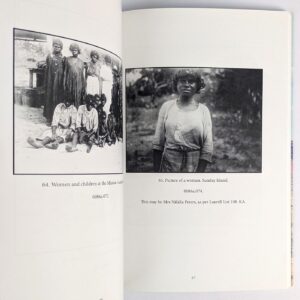
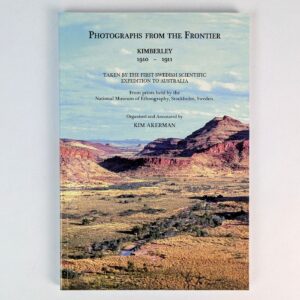
Photographs from the Frontier: Kimberley, 1910-1911
AU$60.00 Read MoreAdd to cartKim Akerman
Perth: Hesperian Press, 2017.Taken by the first Swedish scientific expedition to Australia from prints held by the National Museum of Ethnography, Stockholm, Sweden. Organised and arranged by Kim Akerman.
-
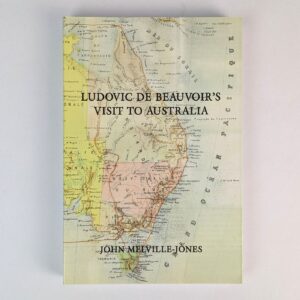
Ludovic de Beauvoir’s Visit to Australia
AU$60.00 Read MoreAdd to cartJohn Melville-Jones
Perth: Hesperian Press, 2017.“This publication presents a revised English translation of the first volume (Australie) of an account of a voyage around the world undertaken in 1866 by two young French aristocrats. In Australia they visited Melbourne, Ballarat and Bendigo, and outside Melbourne experienced the life of a squatter at that time. They also visited Hobart, Sydney, Newcastle and Brisbane before sailing north towards South East Asia. The separate chapters are preceded by a general introduction written by Marie Ramsland (University of Newcastle), and by introductions to the separate chapters written by the editor, and by Nicola Cousen (Federation University), Steve Mullins (Central Queensland University), Stefan Petrow (University of Tasmania, and John and Marie Ramsland (University of Newcastle). The text and the introductions provide a vivid picture of the eastern states of Australia as they were in 1866, seen through the eyes of a young French aristocrat.” (publisher’s blurb)
-
Northmost Australia (3 Volumes)
AU$220.00 Read MoreAdd to cartR. Logan Jack
Perth: Hesperian Press, 1998.Three centuries of exploration, discovery, and adventure in and around the Cape York Peninsula, Queensland, by Robert Logan Jack, Queensland Government Geologist. Facsimile Edition with maps in pocket in a third volume.
-
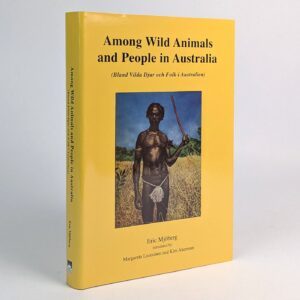
Among Wild Animals and People in Australia
AU$120.00 Read MoreAdd to cartEric Mjoberg
Perth: Hesperian Press, 2012.Originally published in Swedish in 1915 as ‘Bland vilda djur och folk i Australien’. Here translated into English for the first time by Margareta Luotsinen and Kim Akerman. “From October 1910 to August 1911 biologist Erik Mjoberg and his seven man Swedish team travelled by bullock wagon through the West Kimberley collecting invertebrates, birds, mammals, and ethnographic research material. Their ten month journey took them from Derby, along the Fitzroy River upstream to Mount Anderson Station. Some members then went on to Noonkanbah, the St George Ranges and Fitzroy Crossing, while others went south to Mowla Bluff. After the return to Derby two members went to Sunday Island and then followed the stock route across the Leopold Ranges to Mount Barnett. Extensive collections were also made around Derby and Meda Station. Finally the expedition re-convened in Broome where side trips included a coastal trip by pearling lugger collecting marine specimens and another trip to Beagle Bay, collecting birds. Eric Mjöbergs idiosyncratic text remained in the Swedish language until this long-awaited English translation. Now, for the first time, this unique perspective on biota and people is brought to a new generation of readers with an interest in Kimberley history and geography.” (publisher’s blurb)
-
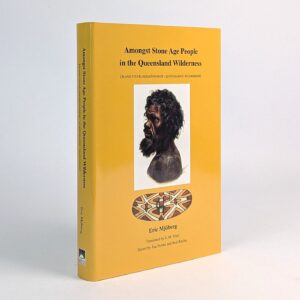
Amongst Stone Age People in the Queensland Wilderness
AU$135.00 Read MoreAdd to cartEric Mjoberg
Perth: Hesperian Press, 2015.Published in Swedish in 1918 as ‘Bland Stenaldersmanniskor i Queensland’s Vildmarker’, and now available for the first time in English translated by S. M. Fryer and edited by Asa Ferrier and Rod Ritche. A magnificent book on Eric Mjoberg’s North Queensland anthropological and natural history collecting expedition. 31 plates. 226 captioned figures and 2 maps, showing rarely seen photographs of North Queensland Aboriginals, ethnographic items, tropical rainforests and their endemic animals.
-
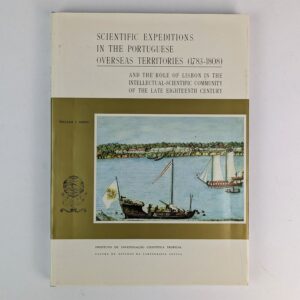
Scientific Expeditions in the Portuguese Overseas Territories (1783-1808)
AU$150.00 Read MoreAdd to cartWilliam Joel Simon
Lisboa: Instituto de Investigacao Cientifica Tropical, 1983.and the Role of Lisbon in the Intellectual-Scientific Community of the late Eighteenth Century.
-
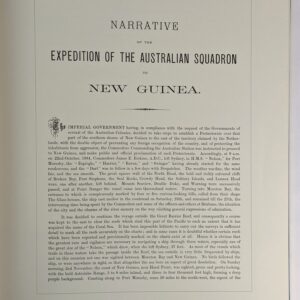
Narrative of the Expedition of the Australian Squadron in New Guinea
AU$200.00 Read MoreAdd to cartJames E. Erskine; Augustine Dyer
Bathurst: Robert Brown & Associates, 1984.One of 1,000 numbered copies, with the laid in slip signed by the printer. This copy with the original South Pacific Brewery shipping carton.
-
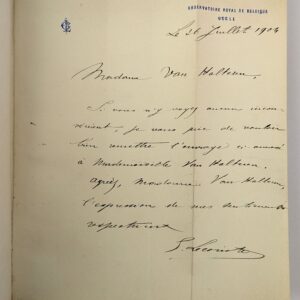
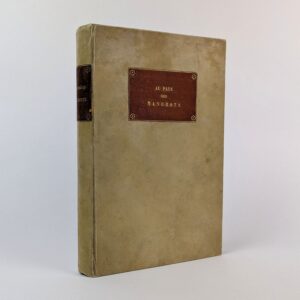
Expedition Antarctique Belge. Au Pays des Manchots: Recit du Voyage de la Belgica
AU$1,800.00 Read MoreAdd to cartGeorges Lecointe
Bruxelles: Societe Belge de Libraire, 1904.Account of the captain of the RV Belgica, the second in command of the first Belgian Antarctic Expedition of 1897-1899. Considered the first expedition of the Heroic Age of Antarctic Exploration, it was the first expedition to spend the entire winter in the region. Trapped in the ice for a year, they were ill prepared, the polar night driving a number of the crew mad and with scurvy setting in they were forced to subsist on penguin (largely considered inedible). Despite the challenges much scientific data was gathered including around 700 rock samples, for the first time meteorological observations were recorded for a full Antarctic year, and 188 new animal species were discovered. This superlative copy bound in full vellum with leather labels and decorative endpapers, and with a bound in manuscript letter dated 26 July 1904 from Lecointe to Madame Van Halteren requesting her to give the book to her daughter, Miss Van Halteren, signed by Lecointe, also with his monogram stamp and the stamp of the Royal Observatory of Belgium.
-
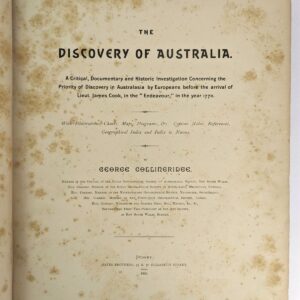
The Discovery of Australia
AU$200.00 Read MoreAdd to cartGeorge Collingridge
Sydney: Hayes Brothers, 1895.A Critical, Documentary and Historic Investigation Concerning the Priority of Discover in Australasia by Europeans before the arrival of Lieut. James Cook, in the “Endeavour,” in the year 1770. With illustrations, charts, maps diagrams, &c. copious notes, references, geographical index and index to names. FERGUSON 8465.
-
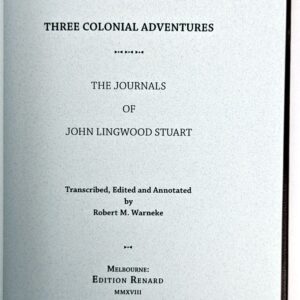
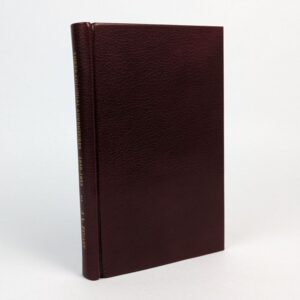
Three Colonial Adventures
AU$285.00 Read MoreAdd to cartJohn Lingwood Stuart
Melbourne: Edition Renard, 2018.One of the Deluxe Edition of 70 numbered copies in full leather (from a total edition of 215). John Lingwood Stuart’s three manuscript journals, here collected under the title THREE COLONIAL ADVENTURES, have never before been published. Written in 1849, 1851, and 1852-53 they provide a fascinating insight into the migration of a young man from England to Adelaide in South Australia and his subsequent adventures in his new land. His first journal comprises an interesting shipboard diary of his voyage to Australia on board the Minerva. Whilst not a particularly remarkable voyage in itself, his journal captures beautifully the experience of a migrant in the mid-nineteenth century, conveying with gentle humour just what it was like to be a passenger in those times, the routine, the duties, the boredom, the occasional excitement, the wildlife observed, the sickness and (fortunately few) deaths, and of course, the weather. His second journal is much more unusual and historically important. In 1851 Stuart signed on to a sealing expedition in South Australian and Kangaroo Island waters on the cutter Jane and Emma and he gives a detailed daily account of the progress of the voyage, the places visited, seals killed, skins and oil obtained, other wildlife observed, and encounters with sailors, settlers, and Aborigines. Following his return to Adelaide, in 1852 Stuart embarked on another expedition, this time overland by bullock dray to the diggings at the Bendigo goldfields. Again, historically important, and one of the few detailed journals of the time, Stuart recounts his adventures following the Murray and Loddon Rivers including comments on the squatters and Aboriginal people encountered along the way, the difficulties of travelling with bullocks and much else. Arriving at Bendigo he and his companions spent a few days investigating various gullies before commencing digging in Geelong Gully where almost immediately they found gold. All three journals have dated daily entries and have been meticulously transcribed, but the wealth of interesting information has been hugely supplemented by the detailed and informative footnotes and the account of Stuart’s life (he subsequently became a mining engineer) by Robert M. Warneke. In addition Robert has provided maps of the two Australian journeys, carefully reconciling the places mentioned by Stuart to the geography; a detailed analysis of the seal catch and notes to the wildlife encountered in all three journeys; and an extensive bibliography of the references used. A detailed description of the original journals is provided by Julien Renard. An entirely new and original work, never before published, elegantly typeset with sparing and judicious use of colour to enhance the text and capture the flavour of the manuscript originals, and the volumes have been finely hand bound by Peter Lewis.
-
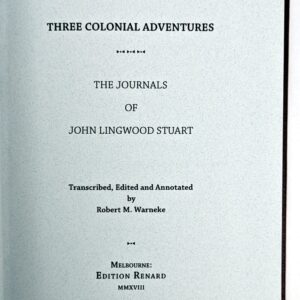
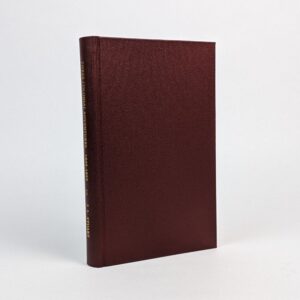
Three Colonial Adventures
AU$175.00 Read MoreAdd to cartJohn Lingwood Stuart
Melbourne: Edition Renard, 2018.One of the Standard Edition of 100 numbered copies (from a total edition of 215). John Lingwood Stuart’s three manuscript journals, here collected under the title THREE COLONIAL ADVENTURES, have never before been published. Written in 1849, 1851, and 1852-53 they provide a fascinating insight into the migration of a young man from England to Adelaide in South Australia and his subsequent adventures in his new land. His first journal comprises an interesting shipboard diary of his voyage to Australia on board the Minerva. Whilst not a particularly remarkable voyage in itself, his journal captures beautifully the experience of a migrant in the mid-nineteenth century, conveying with gentle humour just what it was like to be a passenger in those times, the routine, the duties, the boredom, the occasional excitement, the wildlife observed, the sickness and (fortunately few) deaths, and of course, the weather. His second journal is much more unusual and historically important. In 1851 Stuart signed on to a sealing expedition in South Australian and Kangaroo Island waters on the cutter Jane and Emma and he gives a detailed daily account of the progress of the voyage, the places visited, seals killed, skins and oil obtained, other wildlife observed, and encounters with sailors, settlers, and Aborigines. Following his return to Adelaide, in 1852 Stuart embarked on another expedition, this time overland by bullock dray to the diggings at the Bendigo goldfields. Again, historically important, and one of the few detailed journals of the time, Stuart recounts his adventures following the Murray and Loddon Rivers including comments on the squatters and Aboriginal people encountered along the way, the difficulties of travelling with bullocks and much else. Arriving at Bendigo he and his companions spent a few days investigating various gullies before commencing digging in Geelong Gully where almost immediately they found gold. All three journals have dated daily entries and have been meticulously transcribed, but the wealth of interesting information has been hugely supplemented by the detailed and informative footnotes and the account of Stuart’s life (he subsequently became a mining engineer) by Robert M. Warneke. In addition Robert has provided maps of the two Australian journeys, carefully reconciling the places mentioned by Stuart to the geography; a detailed analysis of the seal catch and notes to the wildlife encountered in all three journeys; and an extensive bibliography of the references used. A detailed description of the original journals is provided by Julien Renard. An entirely new and original work, never before published, elegantly typeset with sparing and judicious use of colour to enhance the text and capture the flavour of the manuscript originals, and the volumes have been finely hand bound by Peter Lewis.
-
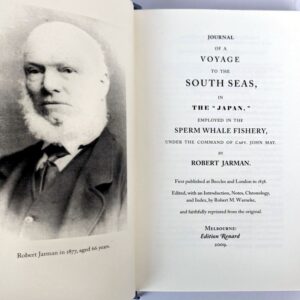
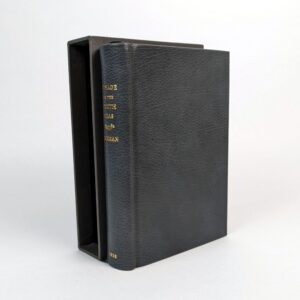
Journal of a Voyage to the South Seas, in the Japan,
AU$625.00 Read MoreAdd to cartRobert Jarman
Melbourne: Edition Renard, 2009.employed in the Sperm Whale Fishery, under the Command of Capt. John May. First published at Beccles and London in 1838. Edited, with an Introduction, Notes, Chronology, and Index, by Robert M. Warneke, and faithfully reprinted from the original. Special limited edition of 30 numbered copies within the overall limitation of 200 copies for sale. A new edition of the very rare account first published in two issues in 1838 and until now never reprinted – see FORBES 1104, also BAGNALL 2685 and FERGUSON 2526 (and 2526a). Robert Jarman, the son of a printer at Beccles, joined the crew as a young man of twenty years on a whaling voyage to the South Seas in 1831. During the next three to four years young Robert’s forecastle jottings were transformed into a lively and well-crafted tale. The primary theme is the hard, unrelenting search for whales, reflected in Jarman’s methodical recording of encounters with other whalers and elaborated with graphic descriptions of the excitements and dangers of whaling with the inevitable accidents, injuries, and tragic deaths. After cruising the Japan Sea, the ship reached the Hawaiian Islands at the end of October 1832 and anchored at Honolulu. “The author noted 18 whalers in port. He describes the harbor and the method by which ships were towed in, and the Honolulu Fort, and the town and its native people” (Forbes). He tells also of surviving gales and near disaster when the Japan was dismasted in a hurricane, which forced the stricken ship to Sydney for extensive repairs. Jarman gives an interesting account of Sydney, with perceptive comments on convicts and their management and the Aboriginals and their customs including the use of the boomerang. Subsequently the ship cruised around Rotuma, the Fiji Islands and New Zealand before returning to England. Along the way Jarman gives accounts of visits to bays and islands to trade for fresh provisions, and of longer stays at various ports for wood, water and to benefit the crew. A welcome respite from the rigors and grinding repetition of shipboard life, Jarman was obviously captivated by those of the natives who were friendly, and he perceptively and sympathetically described their modes of life, customs, and the effects of European intercourse and colonization. The scope and appeal of this book is enhanced by some lengthy passages on natural history, including observations on the social behaviour of sperm whales and encounters with sharks, other fish and birds. Because of several chance but pertinent events he was able to include commentaries on several dramatic episodes of Pacific maritime history, such as the Bligh mutiny and its aftermath, and recent massacres of ships crews by islanders — a constant fear for lightly-armed visiting whalers.
-
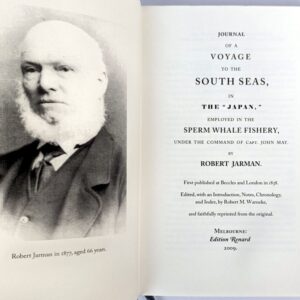
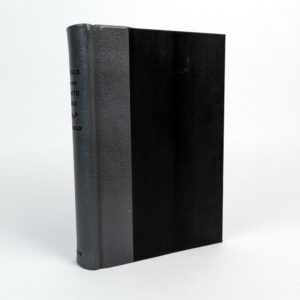
Journal of a Voyage to the South Seas, in the Japan,
AU$275.00 Read MoreAdd to cartRobert Jarman
Melbourne: Edition Renard, 2009.employed in the Sperm Whale Fishery, under the Command of Capt. John May. First published at Beccles and London in 1838. Edited, with an Introduction, Notes, Chronology, and Index, by Robert M. Warneke, and faithfully reprinted from the original. Deluxe limited edition of 70 numbered copies within the overall limitation of 200 copies for sale. A new edition of the very rare account first published in two issues in 1838 and until now never reprinted – see FORBES 1104, also BAGNALL 2685 and FERGUSON 2526 (and 2526a). Robert Jarman, the son of a printer at Beccles, joined the crew as a young man of twenty years on a whaling voyage to the South Seas in 1831. During the next three to four years young Robert’s forecastle jottings were transformed into a lively and well-crafted tale. The primary theme is the hard, unrelenting search for whales, reflected in Jarman’s methodical recording of encounters with other whalers and elaborated with graphic descriptions of the excitements and dangers of whaling with the inevitable accidents, injuries, and tragic deaths. After cruising the Japan Sea, the ship reached the Hawaiian Islands at the end of October 1832 and anchored at Honolulu. “The author noted 18 whalers in port. He describes the harbor and the method by which ships were towed in, and the Honolulu Fort, and the town and its native people” (Forbes). He tells also of surviving gales and near disaster when the Japan was dismasted in a hurricane, which forced the stricken ship to Sydney for extensive repairs. Jarman gives an interesting account of Sydney, with perceptive comments on convicts and their management and the Aboriginals and their customs including the use of the boomerang. Subsequently the ship cruised around Rotuma, the Fiji Islands and New Zealand before returning to England. Along the way Jarman gives accounts of visits to bays and islands to trade for fresh provisions, and of longer stays at various ports for wood, water and to benefit the crew. A welcome respite from the rigors and grinding repetition of shipboard life, Jarman was obviously captivated by those of the natives who were friendly, and he perceptively and sympathetically described their modes of life, customs, and the effects of European intercourse and colonization. The scope and appeal of this book is enhanced by some lengthy passages on natural history, including observations on the social behaviour of sperm whales and encounters with sharks, other fish and birds. Because of several chance but pertinent events he was able to include commentaries on several dramatic episodes of Pacific maritime history, such as the Bligh mutiny and its aftermath, and recent massacres of ships crews by islanders — a constant fear for lightly-armed visiting whalers.