
Prices in AUD. Free Australian delivery for orders over $400. Free international delivery for orders over $800. Read full terms.
Showing all 23 resultsSorted by latest
-
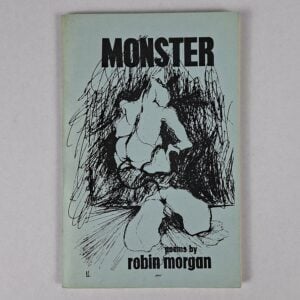
Monster
AU$150 Read MoreAdd to cartRobin Morgan
Melbourne: Melbourne Radical Feminists, No date.American radical feminist Robin Morgan’s first book of poems, originally published by Random House in 1972. The title poem, ‘Monster’, quickly became one of the best-known poems of the women’s liberation movement, with the collection selling thirty thousand copies in its first six months. Its most controversial poem, ‘Arraignment’, accused Ted Hughes of complicity in Sylvia Plath’s death through his infidelity and alleged violence. Although Morgan revised the poem before publication, Hughes threatened legal action. Without informing Morgan, Random House agreed to withdraw the book from Commonwealth markets in return for Hughes dropping the matter. Feminist presses across the Commonwealth responded with unauthorised ‘pirate’ editions, most produced with Morgan’s blessing. The first appeared in Canada and followed shortly after by editions in Australia and New Zealand. Each varied in content: some carried graphics by women artists, others photographs of Plath, others, as here, both versions of ‘Arraignment’. This Australian edition includes illustrations and a bibliographical preface by Melbourne Radical Feminists.
-
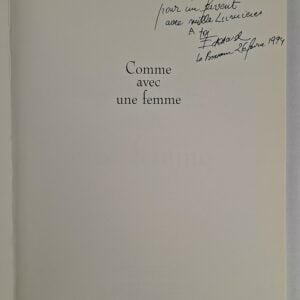
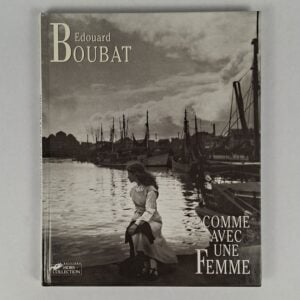
Comme avec une Femme
AU$300 Read MoreAdd to cartEdouard Boubat
Paris: Hors Collection, 1994.71 photogravures by the French photographer of women and their lives. An association copy, inscribed to Boubat’s longtime friend and colleague Peter Turnley.
-
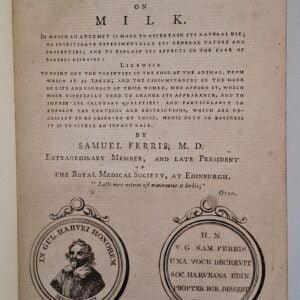

A Dissertation on Milk
AU$1,000 Read MoreAdd to cartSamuel Ferris
London: John Abraham, [1785].In which an attempt is made to ascertain its natural use; to investigate experimentally its general nature and properties; and to explain its effects in the cure of various diseases: Likewise to point out the varieties in the food of the animal, from which it is taken; and the circumstances in the mode of life and conduct of those women, who afford it, which more especially tend to change its appearance, and to impair its salutary qualities: and particularly to enforce the cautions and restrictions, which are necessary to be observed by those, whose duty or business it is to suckle an infant race. One of the more substantial English-language eighteenth-century monographs devoted wholly to milk, combining experimental chemistry with medical, moral, and social thought on infant feeding, motherhood, female bodies, and the transmission of health and character. Ferris undertakes comparative chemical experiments on six milks (ass, human, mare, cow, goat, and ewe) and uses the results to advance a sustained argument for maternal breastfeeding against both wet-nursing and the nursery customs of the day. He maintains that a mother’s own milk is the best possible nutriment and casts a woman’s refusal to nurse her child as ‘one of the worst species of inhumanity’. He approvingly cites the late Dr William Hunter (1718-1783), who believed cancers of the breast occurred disproportionately among women who declined to breastfeed, and condemns the common practice of withholding the breast during the first days after birth. Where maternal nursing proves impossible, Ferris subjects the wet nurse to detailed scrutiny. Her diet, habits, mode of life, and even emotional state are made objects of prescription, the infant being thought to absorb the consequences of her conduct through her milk. The nursing body is thus framed throughout as an object of medical and social management, ordered in the interests of the ‘infant race’. Presentation copy, inscribed by Ferris to The Revd. Mr Tonyn, likely the Revd Charles William Tonyn (1732-1805), Rector of Radnage, Buckinghamshire, a parish situated near Great Missenden, where Ferris settled in 1785.
-
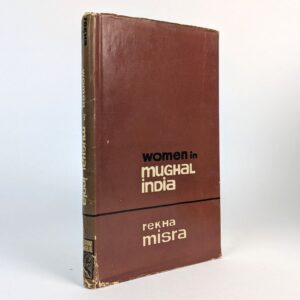
Women in Mughal India (1526-1748 A.D.)
AU$150 Read MoreAdd to cartRekha Misra
Delhi: Munshiram Manoharlal, 1967.Scholarly historical study of the role and status of women in the Mughal Empire, based on the author’s doctoral thesis at the University of Allahabad. This copy from the collection of the controversial Tattersalls heir, Prof. V.J.A. Flynn.
-
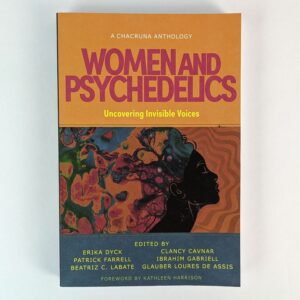
Women and Psychedelics: Uncovering Invisible Voices
AU$40 Read MoreAdd to cartErika Dyck; Clancy Cavnar; Patrick Farrell; Ibrahim Gabriell; Beatriz C. Labate; Glauber Loures de Assis
Santa Fe and London: Synergetic Press, 2024.“This collection of short essays examines the place of women in the history of psychedelics. While some of the subjects are pioneers in their own right, the authors in this collection go beyond merely adding women to the past in psychedelic history, exploring some of the significant ways that women have contributed to psychedelic knowledge. Blending historical and anthropological approaches with a series of captivating interviews, this collection taps into women’s networks around the world throughout the 20th century. It reveals some of the sophisticated and creative ways women have influenced our understanding of psychedelics and how they will continue to protect these stories as we face our psychedelic future. Our collection intentionally moves beyond an American set of stories, teasing out networks in Latin America. This collection brings together authors from the Chacruna Institute and Chacruna Latinamerica to engage readers in conversations that move across time and place throughout the Americas. It is the first of its kind to balance non-English contributions through translation of stories exploring different cultural contexts outside the United States, where women have contributed to this enduring history.” (publisher’s blurb)
-
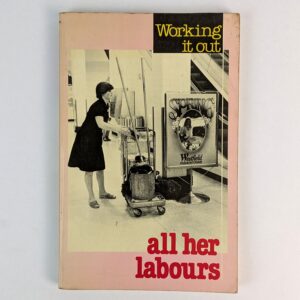
All Her Labours: One, Working it Out
AU$40 Read MoreAdd to cartWomen And Labour Publications Collective
Sydney: Hale & Iremonger, 1984.Feminist perspectives on women’s paid and unpaid work in Australia.
-
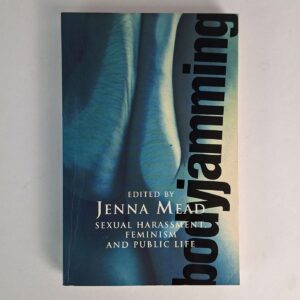
Bodyjamming
AU$50 Read MoreAdd to cartJenna Mead
Sydney: Vintage, 1997.Sexual harassment, feminism, and public life. Contributions by Alice Blake, Rosi Braidotti, Kaz Cooke, Ann Curthoys, Mark Davis, Judy Horacek, Foong Ling Kong, Amanda Lohrey, Jenna Mead, Jenny Morgan, Meaghan Morris, Elspeth Probyn, Matthew Ricketson, Natasha Stott Despoja, and XX (Ormond College Complainant). Edited by Jenna Mead.
-
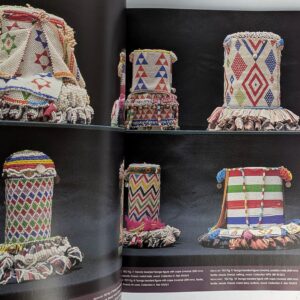
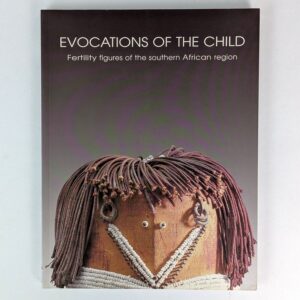
Evocations of the Child: Fertility Figures of the Southern African Region
AU$40 Read MoreAdd to cartElizabeth Dell
Cape Town: Human & Rousseau, 1998. -
The Mutual Help Group: A Therapeutic Program for Women Who Have Been Abused
AU$40 Read MoreAdd to cartMargaret Condonis; Karen Paroissien; Barbara Aldrich
Sydney: Redfern Legal Centre Publishing, 1990. -
In and Out of Enchantment: Blood Symbolism and Gender in Portuguese Fairytales
AU$60 Read MoreAdd to cartIsabel Cardigos
Helskinki: Suomalainen Tiedeakatemia, 1996.The core of fairytales is the realm of enchantment. This study argues that the bloodshed associated with menstruation, defloration and childbirth–natural episodes in the lifecycle of women–is central to a syntax of enchantment and disenchantment that is common to all fairytales. It is a reflection on the gendered voices that have generated and contributed to the structure and symbolism of fairytales; and it takes shape along with the discussion of Portuguese versions of wide-spread tale types like AT303 (The Two Brothers), AT313 (The Girl as Helper in the Hero’s Flight and AT516 (Faithful John), as well as through an intriguing ecotype of Snake Helper tales (AT533*), ‘The Little Snake’. FF Communications No. 260 published by the Finnish Academy of Science and Letters.
-
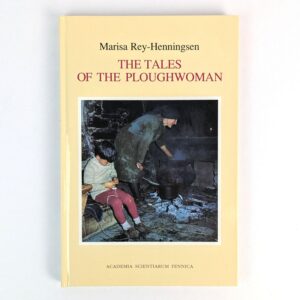
The Tales of the Ploughwoman
AU$40 Read MoreAdd to cartMarisa Rey-Henningsen
Helskinki: Suomalainen Tiedeakatemia, 1996.Appendix to FFC 254. FF Communications No. 259 published by the Finnish Academy of Science and Letters.
-
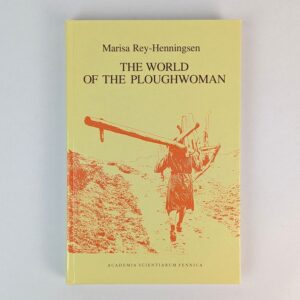
The World of the Ploughwoman: Folklore and Reality in Matriarchal Northwest Spain
AU$60 Read MoreAdd to cartMarisa Rey-Henningsen
Helskinki: Suomalainen Tiedeakatemia, 1993.This study is a contribution to the discussion of folklore as a mirror of society. Spanish Galicia offers a special opportunity for examining wellknown folktales in a different context because of the cultural and economic dominance of women and the matriarchal life style which characterized the region until recently. That matriarchy was deeprooted in Galicia and did not result from male migration in modern times, is demonstrated in the historical chapters of the book, while the anthropological chapters (on family systems, work patterns, matriarchal ideology, sexual behaviour, religion and magic) tend to show that all aspects of Galician culture have been “canonized” in folklore; folklore therefore must have gone through radical changes in order to conform with the local ideology. While the women in Galician folktales almost always appear in active and aggressive hero roles, this has nothing to do with “wishful thinking” or “poetic fiction”, for according to the matriarchal concept it is just the natural order of things. Surely the correlation demonstrated here between the social structure, gender roles, and ideology may also be observed in male-dominated societies, once we learn to disengage from the patriarchal concept of the “natural order of things”. FF Communications No. 254 published by the Finnish Academy of Science and Letters.
-
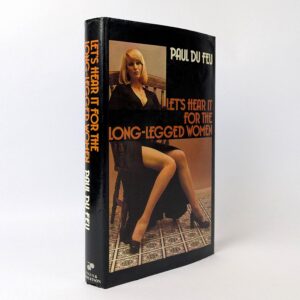
Let’s Hear It for the Long-Legged Women
AU$150 Read MoreAdd to cartPaul du Feu
Sydney: Angus & Robertson, 1974.Erotic memoir by the husband of feminist writer Germaine Greer. He later married poet Maya Angelou.
-
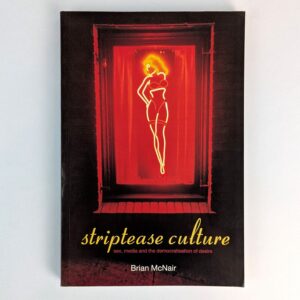
Striptease Culture: Sex, Media and the Democratisation of Desire
AU$30 Read MoreAdd to cartBrian McNair
London and New York: Routledge, 2002. -
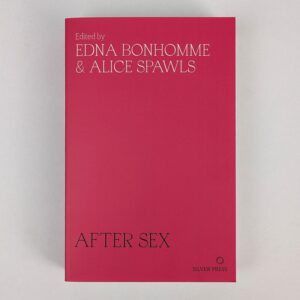
After Sex
AU$35 Read MoreAdd to cartEdna Bonhomme; Alice Spawls
London: Silver Press, 2023.“The last decade has seen a rise in activism and arguments over women’s reproductive freedom reminiscent of the 1960s and 1970s. This title provides personal and political perspectives from the mid-twentieth century to the present day, setting feminist classics alongside contemporary accounts and highlighting the experiences of women of colour and working-class women. Contributors include Nell Dunn, Anne Enright, bell hooks, Ursula K. Le Guin, Audre Lorde and Sally Rooney. These essays, short stories and poems trace past understandings of reproductive freedom and consider what it might look like in future, making urgent connections between womens equality and access to contraception, healthcare and childcare. The writers pay special attention to people — both fictional and real — who have sought control over their sexual lives, and the joy, comedy, difficulties and disappointments that entails. But above all, After Sex testifies to the power of great writing to show us why that freedom is worth pursuing — without shame and without apology.” (publisher’s blurb)
-
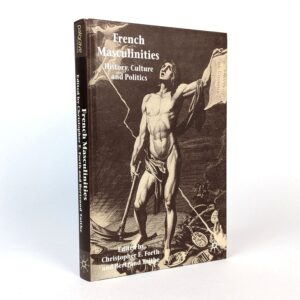
French Masculinities: History, Culture and Politics
AU$100 Read MoreAdd to cartChristopher E. Forth; Bertrand Taithe
Basingstoke and New York: Palgrave Macmillan, 2007.This copy inscribed by Christopher Forth
-
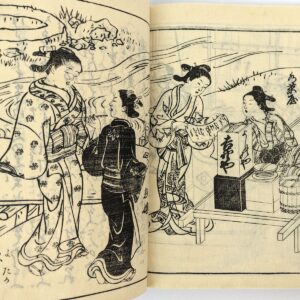
![Hyakunin Joro Shinasadame [One Hundred Women Classified According to Their Rank]](https://www.thebookmerchantjenkins.com/wp-content/uploads/0033662-300x300.jpg)
Hyakunin Joro Shinasadame [One Hundred Women Classified According to Their Rank]
AU$600 Read MoreAdd to cartNishikawa Sukenobu
Kyoto: Unsodo, No date.One of the masterpieces of Ukiyoe art. Depicts women from various social classes of the Edo period, from court and samurai ladies to geisha and sex workers, and the many town and country women in between. Originally published in 2 volumes in 1723 and here reprinted together in 1 volume circa late 19th/early 20th century.
-
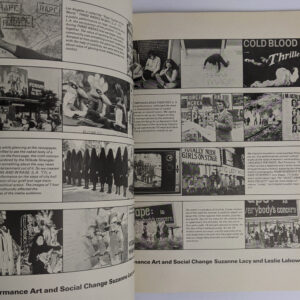
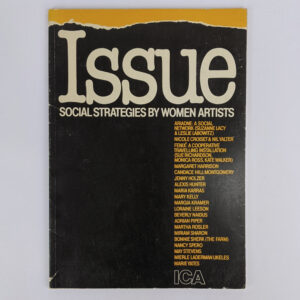
Issue: Social Strategies by Women Artists
AU$400 Read MoreAdd to cartLucy R. Lippard
London: Institute of Contemporary Arts, 1980.Catalogue for an influential feminist art exhibition, including the works of Jenny Holzer, Suzanne Lacy, Leslie Labowitz, Nicole Croiset, Nil Yalter, Sue Richardson, Monica Ross, Kate Walker, Margaret Harrison, Candace Hill-Montgomery, Alexis Hunter, Maria Karras, Mary Kelly, Margia Kramer, Loraine Leeson, Beverly Naidus, Adrian Piper, Martha Rosler, Miriam Sharon, Bonnie Sherk (the Farm), Nancy Spero, May Stevens, Mierle Laderman Ukeles, and Marie Yates.
-

Gender and Power in the Japanese Visual Field
AU$80 Read MoreAdd to cartJoshua S. Mostow; Norman Bryson: Maribeth Graybill
Honolulu: University of Hawai’i Press, 2003. -
Midwives, Society and Childbirth: Debates and Controversies in the Modern Period
AU$30 Read MoreAdd to cartHilary Marland; Anne Marie Rafferty
London: Routledge, 1997. -
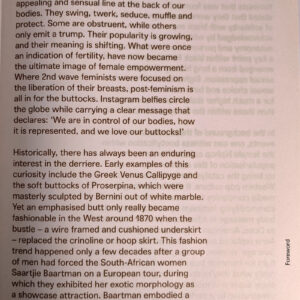

Post-Butt: The Power of the Image
AU$35 Read MoreAdd to cartMelani De Luca
: Onomatopee, 2019.“Post-Butt analyses the virality of images in our mediated society. It is a case study around the image of female butts, bootys, and behinds, and their influence in media, society and art. The butt is the protagonist of mass-mediated culture, it is the democratic sex organ par excellence. The phenomenon of bootyfication exists in many contexts, as varied as the exploitation of the body in colonialism to 90s hiphop culture. Post-Butt goes through different periods in time and place, to analyse the political meaning of the usage of the image of the female buttocks. It discusses the role of the booty in varied cultural expressions such as film, Internet art, music videos, dance and plastic surgery; and aims to reflect on how our society is conditioned by viral images that do not only exist in the digital context, but have deep consequences on our physical world as well.” (publisher’s blurb)
-
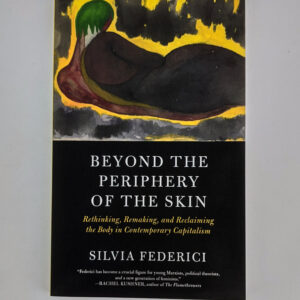
Beyond The Periphery of the Skin: Rethinking, Remaking, and Reclaiming the Body in Contemporary Capitalism
AU$30 Read MoreAdd to cartSilvia Federici
Oakland: PM Press, 2020.“More than ever, the ‘body’ is today at the centre of radical and institutional politics. Feminist, antiracist, trans and ecological movements all look at the body as a ground of confrontation with the state and a vehicle for transformative social practices. Concurrently, the body has become a signifier for the reproduction crisis the neoliberal turn in capitalist development has generated and for the international surge in institutional repression and public violence. Here, lifelong activist and bestselling author Silvia Federici examines these complex processes, placing them in the context of the history of the capitalist transformation of the body into a work-machine. In this process she confronts some of the most important questions for radical political projects. What does ‘the body’ mean, today, as a category of social/political action? What are the processes, institutional or anti-systemic, by which it is constituted? How do we dismantle the tools by which our bodies have been “enclosed” and collectively reclaim our capacity to govern them?” (publisher’s blurb)
-
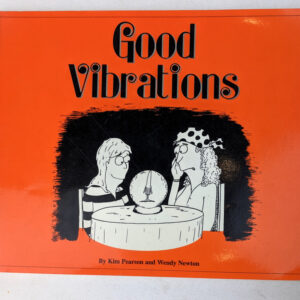
Good Vibrations
AU$50 Read MoreAdd to cartKim Pearson; Wendy Newton
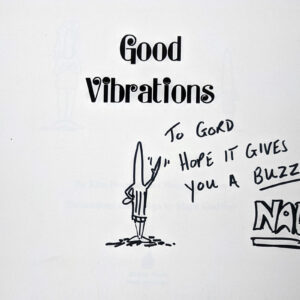
Canberra: Black Pear Productions, 1997.Comical feminist theory cartoons using the vibrator as trope. This copy inscribed with an original drawing.