
Prices in AUD. Free Australian delivery for orders over $400. Free international delivery for orders over $800. Read full terms.
Showing 21–40 of 97 resultsSorted by latest
-
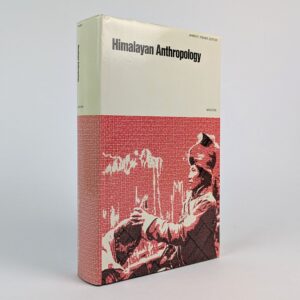
Himalayan Anthropology
AU$100 Read MoreAdd to cartJames F. Fisher
The Hague: Mouton Publishers, 1978. -
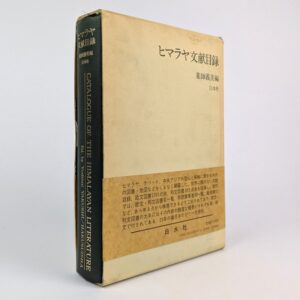
Catalogue of the Himalayan Literature
AU$300 Read MoreAdd to cartYoshi Yakushi
Tokyo: Hakusuisha Publishign Co., 1984.The standard bibliography for works on the Himalayas.
-
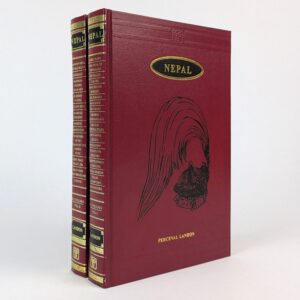
Nepal (2 Volumes)
AU$50 Read MoreAdd to cartPerceval Landon
New Delhi: Asian Educational Services, 1993. -
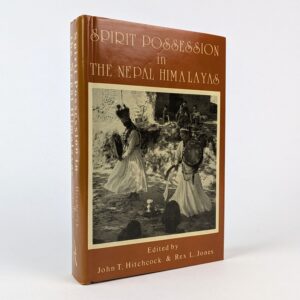
Spirit Possession in the Nepal Himalayas
AU$60 Read MoreAdd to cartJohn T. Hitchcock; Rex L. Jones
Warminster: Aris & Phillips, 1976. -
![[Bhutan and Tibet]: An Account of an Embassy to the Court of the Teshoo Lama in Tibet](https://www.thebookmerchantjenkins.com/wp-content/uploads/0036601-300x300.jpg)
[Bhutan and Tibet]: An Account of an Embassy to the Court of the Teshoo Lama in Tibet
AU$100 Read MoreAdd to cartSamuel Turner
New Delhi: Manjusri Publishing House, 1971.Containing a Narrative of a Journey through Bootan, and part of Tibet by Captain Samuel Turner. Cover title: Bhutan and Tibet. The first facsimile edition after the 1800 London Edition, one of the 900 standard copies from a total edition of 1,000 numbered copies. Bibliotheca Himalayica. Series I, Volume 4.
-
La Prima Missione Cattolica Nel Tibet
AU$80 Read MoreAdd to cartGiuseppe M. Toscano
Parma: Istituto Missioni Estere, 1951.The First Catholic Mission in Tibet.
-
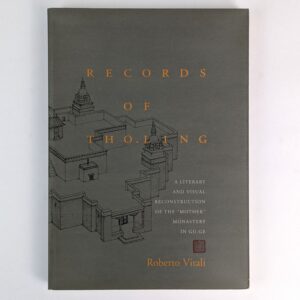
Records of Tho.ling: A Literary and Visual Reconstruction of the Mother Monastery in Gu.ge
AU$150 Read MoreAdd to cartRoberto Vitali
Dharamsala: High Asia, 1999. -
Tibetan Pilgrimage
AU$120 Read MoreAdd to cartRobert B. Ekvall; James F. Downs
Tokyo: Institute for the Study of Language and Cultures of Asia & Africa, 1987.With an appreciation by James F. Downs and Shigeru Iijima.
-
The Yar-Lun Dynasty
AU$120 Read MoreAdd to cartErik Haarh
Kobenhavn: G. E. C. Gad’s Forlag, 1969.A study with particular regard to the contribution by myths and legends to the history of Ancient Tibet and the origin and nature of its kings.
-
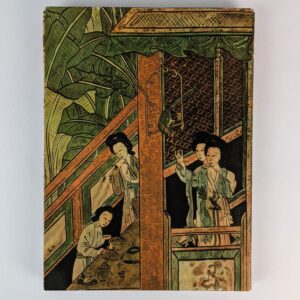
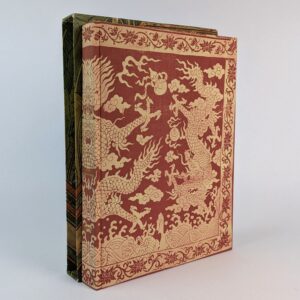
El arte de los antiguos y de los primitivos: Asia anterior – India – Indochina – Tibet – China – Japon – Los tchuktches
AU$150 Read MoreAdd to cartW. y B. Forman
Mexico: Editorial Hermes, 1963.The art of the ancients and primitives: Anterior Asia – India – Indochina – Tibet – China – Japan – The Tchutches.
-
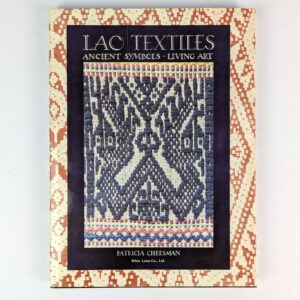
Lao Textiles: Ancient Symbols – Living Art
AU$50 Read MoreAdd to cartPatricia Cheesman
Bangkok: White Lotus Co., 1988. -
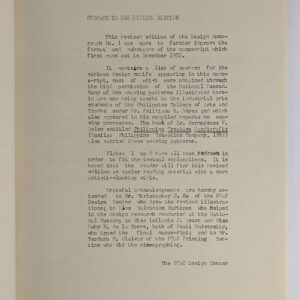
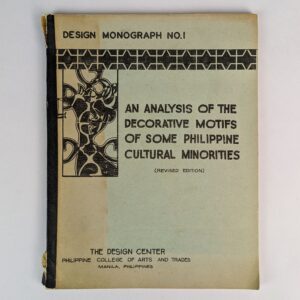
An Analysis of the Decorative Motifs of Some Philippine Cultural Minorities
AU$100 Read MoreAdd to cartPhilippine College of Arts and Trades Design Center
Manila: Philippine College of Arts and Trades, 1973. -
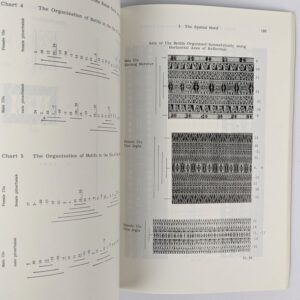
Motifs of Life in Toba Batak Texts and Textiles
AU$60 Read MoreAdd to cartS. A. Niessen
Dordrecht: Foris Publications, 1985. -
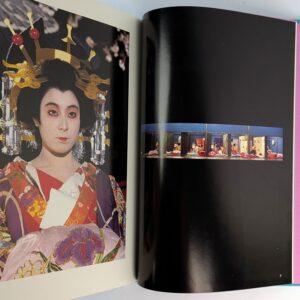
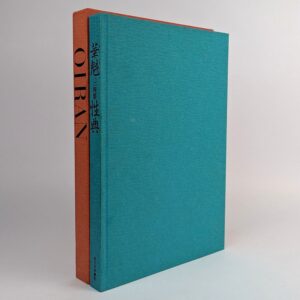
Oiran
AU$400 Read MoreAdd to cartTetsuji Takechi
Tokyo: Tokyo Academy of Arts, 1983.First edition photobook issued to accompany Takechi Tetsuji’s controversial late-career film Oiran, “A mixture of romance and sex combined with surrealistic horror elements.” The story is loosely based on the work of Jun’ichiro Tanizaki in which a 19th century Japanese prostitute moves to America and her dead lover manifests as a mole on her leg. Takechi was a prominent critic and kabuki director before moving into directing films in the 1960s. His 1964 feature Hakujitsumu is regarded as the first big budget pink film (Japanese movies with nudity or sexual content), and also the first Japanese production subjected to systematic fogging censorship. The following year, Black Snow (1965), led to his arrest on indecency charges, a landmark case he ultimately won, significantly reshaping Japanese film censorship and opening the way for the flourishing of the pink eiga genre through the late 1960s and 1970s. After a decade-long hiatus from cinema, Takechi returned with a more explicit remake of Hakujitsumu before directing Oiran in 1983. The film again brought him into conflict with the censors whom “edited and fogged in 98 different places, altering the film from a near-hardcore opus to a very soft costume drama.” Takechi promoted the film by proclaiming it featured “the first multicoloured penis in Japanese cinema.” The present photobook, issued uncensored, retains many of the film’s erotic stills and remains an important visual record of Takechi’s work. As usual for the period, explicit male nudity is absent. References: WEISSER: The Sex Films: Japanese Cinema Encyclopedia.
-
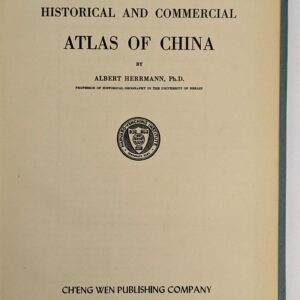
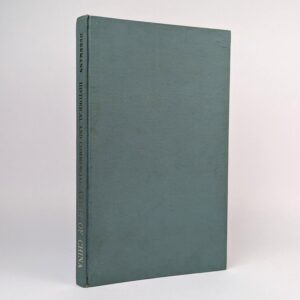
Historical and Commercial Atlas of China
AU$150 Read MoreAdd to cartAlbert Herrmann
Taipei: Ch’eng Wen Publishing Company, 1970.Harvard-Yenching Institute Monograph Series, Volume I. The second Taiwan printing.
-
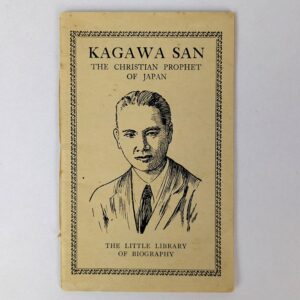
Kagawa San: The Christian Prophet of Japan
AU$200 Read MoreAdd to cartMaurice Whitlow
London: The Religious Tract Society, No date.Short biography on the Japanese Evangelical and labour activist, Toyohiko Kagawa (1888-1960). Part of the The Little Library of Biography, c. 1930s.
-
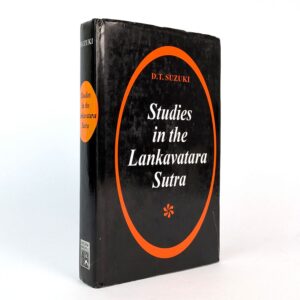
Studies in the Lankavatara Sutra
AU$30 Read MoreAdd to cartD. T. Suzuki
New Delhi: Munshiram Manoharlal Publishers, 2007.One of the most important texts of Mahayana Buddhism, in which almost all its principal tenets are presented, including the teaching of Zen.
-
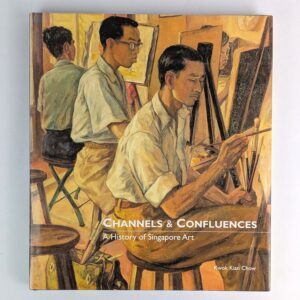
Channels & Confluences: A History of Singapore Art
AU$100 Read MoreAdd to cartKwok Kian Chow
Singapore: Singapore Art Museum, 1996. -

Edige: A Karakalpak Oral Epic as performed by Jumabay Bazarov
AU$80 Read MoreAdd to cartKarl Reichl
Helskinki: Suomalainen Tiedeakatemia, 2007.Edige is one of the most esteemed oral epics of the Karakalpaks, a Turkic-speaking people, who live on the mouth of the Amu Darya and the shores of the Aral Sea. Edige is a historical personage from the time of Timur at the turn of the 14th to the 15th century. The singer, Jumabay Bazarov, was the last Karakalpak singer of heroic epics who stood in an entirely oral tradition. In this edition and translation an attempt has been made to capture as much of his oral performance as possible, including the singer’s dialect features and his musical style. FF Communications No. 289 published by the Finnish Academy of Science and Letters.
-
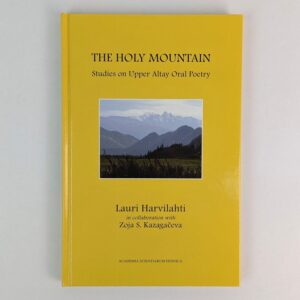
The Holy Mountain: Studies on Upper Altay Oral Poetry
AU$40 Read MoreAdd to cartLauri Harvilahti; Zoja S. Kazagaceva
Helskinki: Suomalainen Tiedeakatemia, 2003.The aim of this study is to achieve a synthesis in forming a new overall view of the stylistic-poetic and structural devices used to produce the archaic mythical and epic cultural tradition of the Upper Altay region. Attention is also being paid to the inherent ethnic nature of the Altaian ethnic groups, to cultural influences and to some extent their present cultural identity. FF Communications No. 282 published by the Finnish Academy of Science and Letters.