
Prices in AUD. Free Australian delivery for orders over $400. Free international delivery for orders over $800. Read full terms.
Showing all 8 resultsSorted by latest
-
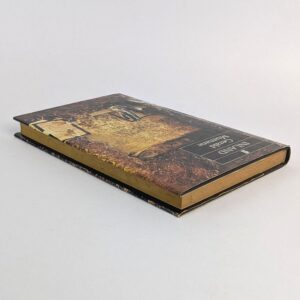
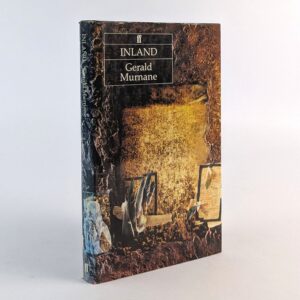
Inland
AU$200 Read MoreAdd to cartGerald Murnane
London: Faber and Faber, 1988. -

Biker, Drifter
AU$50 Read MoreAdd to cartStella Chance
New York: Star Distributors, 1988.Biker themed gay pulp, with cover illustration by Craig Esposito. Young Stallions YS-125. One of the many gay erotic pulp novels produced in the mid to late 20th century. These short sexually explicit stories, many of which were formulaic and published in easily recognisable series with graphically illustrated covers and titillating titles each targeting a specific sexual niche, demonstrate the breadth of sexual fantasy, occupation, desire, and deviance of the emerging homosexual culture.
-
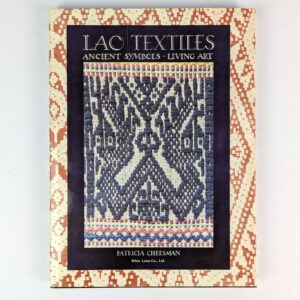
Lao Textiles: Ancient Symbols – Living Art
AU$50 Read MoreAdd to cartPatricia Cheesman
Bangkok: White Lotus Co., 1988. -
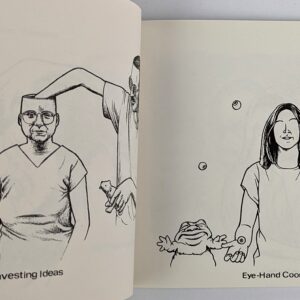
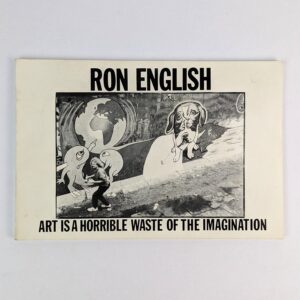
Art is a Horrible Waste of the Imagination
AU$300 Read MoreAdd to cartRon English
New York: English & Eichman, 1988.First published book by the American contemporary artist Ron English (1959-), being a collection of line drawings. The cover photograph by Charles D. Herold shows English painting a street mural. Introduction by Mark Kostabi. Only 1 copy recorded in OCLC, at New York University.
-
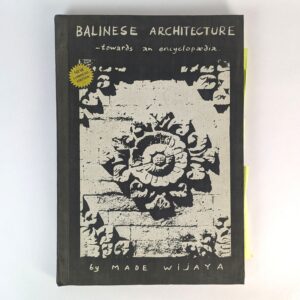
Balinese Architecture: Towards an Encyclopaedia
AU$500 Read MoreAdd to cartMade Wijaya
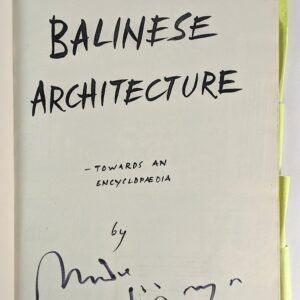
[Sanur]: Fotokopi, 1988.This book grew out of a report by students of the University of Sydney during a holiday design programme in Bali to which Wijaya was the tutor. “Most of the photographers were taken over the six months April – October, 1984. The selection is comprehensive in that it covers the full spectrum of Balinese Architecture — mountain to coastal, north to south, palatial to makeshift..” (from preface) Made Wijaya (born in Sydney as Michael White, 1953-2016) was a landscape architect who left Sydney for Bali as a break from architectural studies at University of Sydney and stayed, immersing himself in the Balinese culture, consorting with royalty, and in 1975 was renamed Made Wijaya by a priest in a Hindu temple ceremony. The New Compiled Edition, combining volumes 1 and 2. Photocopied pages (as issued) with 14 original colour photographs pasted in (copies are known to have differing numbers of added photographs). One of 50 numbered and signed copies, this copy further inscribed by Wijaya to the title page, and with numerous manuscript corrections as well as additional information tabs further describing many of the illustrations.
-
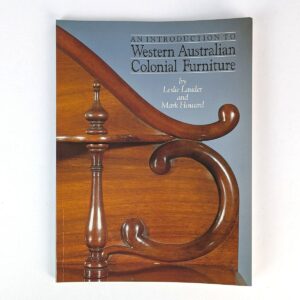
An Introduction to Western Australian Colonial Furniture
AU$65 Read MoreAdd to cartLeslie Lauder; Mark Howard
East Fremantle: Lauder & Howard, 1988.Numbered edition of 2,500 copies, of which this copy is numbered and signed by both authors.
-
School Photography
AU$40 Read MoreAdd to cartJohn Dunn
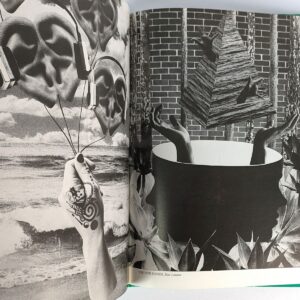
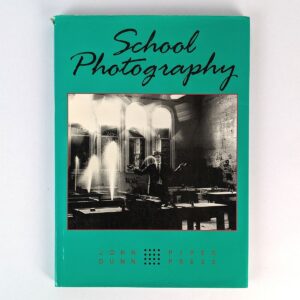
Sydney: Piper Press, 1988.1980s Australian secondary school text on photography with a foreword by Max Dupain and 190 photographs by Australian secondary students.
-
Ankoku Buto: The Premodern and Postmodern Influence on the Dance of Utter Darkness
AU$25 Read MoreAdd to cartSusan Blakeley Klein
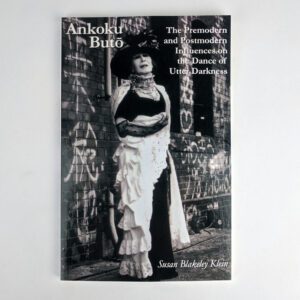
Ithaca: East Asia Program, Cornell University, 1988.“A brief introduction to the history, philosophy, and techniques of the Japanese avant-garde dance movement, Ankoku Buto. Evoking images of grotesque beauty, revelling in the seamy underside of human behavior, Buto dance groups such as Sankai Juku and Dai Rakuda-kan have performed to wide critical and popular acclaim, making Buto one of the most influential new forces in the dance world today. The monograph traces the development of Buto from its birth in the bleak post-war landscape of 1950s Japan, and then addresses the question of Buto as a post-modern phenomenon, before going on to examine the influence of traditional Japanese performance on Buto techniques. The last chapter analyzes a specific dance (Niwa – The Garden) by Muteki-sha, to show how these techniques are used concretely. Includes translations of four essays on Buto by contemporary Japanese dance critics.” (publisher’s blurb)