
Prices in AUD. Free Australian delivery for orders over $400. Free international delivery for orders over $800. Read full terms.
Showing 1–100 of 119 resultsSorted by latest
-
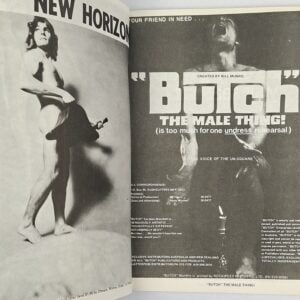
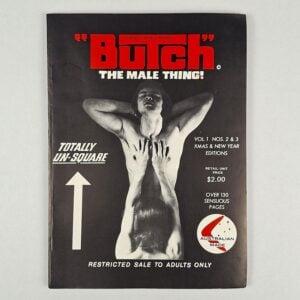
Butch: The Male Thing! Vol. 1, Nos. 2 & 3
AU$400 Read MoreAdd to cartBill Munro
Sydney: Butch Enterprises, [1972].The second (of only two published) of one of Australia’s first gay porn magazines. It has been well documented that Munro’s publishing ventures were more for his own joy of sex than any great publishing profit aspirations, nonetheless, this final double-issue presents as a fine example of 1970s Australian erotica with its mix of male homoeroticism, cartoons, advertisements, and articles, as well as venue, book, and film reviews. Uncommon in the medium, Munro published his name prominently on the front cover, and the interior contains portraits of himself and staff, at a time when homosexuality was still criminalised throughout Australia. He later said he wanted Butch to have a “strong come out attitude [and show] that somebody wasn’t afraid to come out of the closet” (Munro: Let It All Hang Out, 2008). After Butch, Munro published a shortlived tabloid in 1973 titled Little Butch, before selling up to heterosexual smut publisher of Ribald, Bill Horne, who continued the publication as Gay. Printed by Sydney printers Rotaspeed Press, known for printing numerous Australian erotica works by Howard Products, Potz Press, and Lay Press, as well as student newspapers such as University of Queensland Union’s Semper Floreat.
-
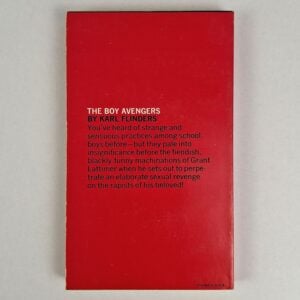
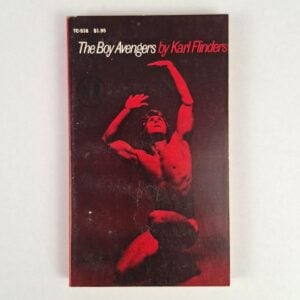
The Boy Avengers
AU$200 Read MoreAdd to cartKarl Flinders
New York: The Traveller’s Companion, 1971.Gay pulp TC-516. One of the many gay erotic pulp novels produced in the mid to late 20th century. These short sexually explicit stories, many of which were formulaic and published in easily recognisable series with graphically illustrated covers and titillating titles each targeting a specific sexual niche, demonstrate the breadth of sexual fantasy, occupation, desire, and deviance of the emerging homosexual culture.
-
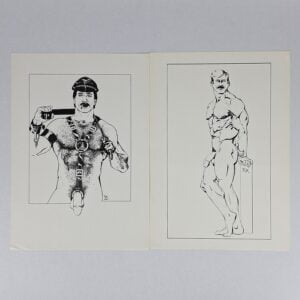
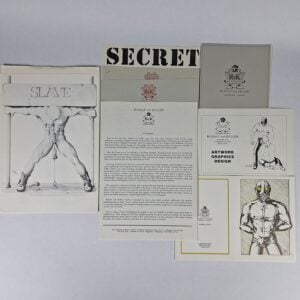
Archive of Homoerotic Prints with Catalogue and TLS
AU$2,000 Read MoreAdd to cartRudolf von Keller
London: Rudolf von Keller, 1993.Archive of late 1980s / early 1990s homoerotic prints by Rudolf von Keller, sent to Jurgen Boedt, editor of the Belgian fetish magazine Secret, in the original postmarked envelope from London to Brussels. One of the two signed typed letters lists the contents of the packet as sent: the artist’s biography, advertising card, catalogue and price list, 8 sets of A4 posters (some in series of 3, others of 4), and 4 greeting cards. Of these, one three-poster series and one greeting card are absent from the surviving archive, while a second packet of A3 posters, also described in the letter, is no longer present. The artwork features hardcore homoerotic themes centred on leather, BDSM, and sadomasochism. Von Keller’s biographical note describes him as born in the late 1940s and educated in Germany, England and the Netherlands, before studying fine art at a college in the English Midlands. After working as a freelance designer while travelling Europe, he returned to the family jewellery business, but continued to produce fetish and BDSM drawings, watercolours, and paintings for a private circle. A series of exhibitions brought this work to a wider audience, leading to print reproduction and, in late 1990, his first ‘Artwork’ catalogue (included here), offering posters, cards, and limited edition prints. The operation was based in London, with a small studio later opened in Amsterdam for developing new work; the note describes him dividing his time between the two cities and a family home in the Rhineland.
-
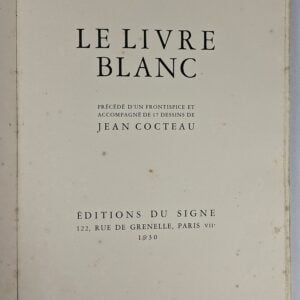
Le Livre Blanc
AU$2,500 Read MoreAdd to cartJean Cocteau
Paris: Editions du Signe, 1930.One of the foundational texts of modern gay literature. The text was first published anonymously in 1928, without illustration, in an edition of just thirty-one copies. This 1930 edition, the first illustrated and first commercially distributed edition, added eighteen drawings by Cocteau, hand-coloured by M. B. Armington, together with a facsimile of an autograph note in which Cocteau alludes to, without explicitly acknowledging, authorship. Edition limited to 450 copies. This copy on Arches paper, lacking the justification leaf.
-
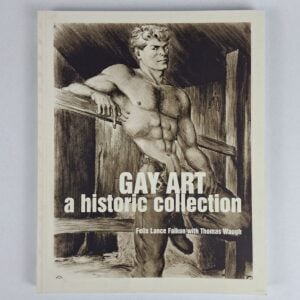
Gay Art: A Historic Collection
AU$150 Read MoreAdd to cartFelix Lance Falkon; Thomas Waugh
Vancouver: Arsenal Pulp Press, 2006.New edition of one of the first anthologies of gay art, A Historic Collection of Gay Art (Greenleaf Editions, 1972). Includes Tom of Finland, Graewolf, Blade, Harry Bush, and many others. Prefaces by Don Gilmore (1972) and Felix Lance Falkon (2006); Forewords by G. G. Stoctay (1972) and Earl Kemp (2006); and Introductions by Felix Lance Falkon (1972) and Thomas Waugh (2006). Published “in the hopes that their personal lives will become more sexually enlightened, enriched and educated, A historic collection of gay art is dedicated to those adults who desire sexually explicit material for their private use in the privacy of their own homes” (from the first edition preface)
-
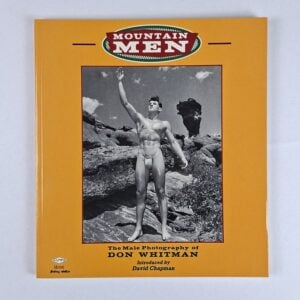
Mountain Men: The Male Photography of Don Whitman
AU$100 Read MoreAdd to cartDon Whitman
London: Editions Aubrey Walter, 1991.The physique photography of Don Whitman’s Western Photography Guild, operating out of Denver Colorado, capturing the perfectly sculpted men of the American West in the Rocky Mountains.
-
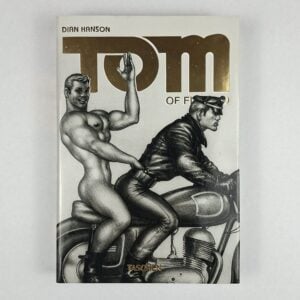
Tom of Finland Volume II: Bikers
AU$100 Read MoreAdd to cartDian Hanson; Tom of Finland
Koln: Taschen, 2012.Collected volume of ToFs Bikers with the reversible panic dust jacket for safe reading on the train.
-
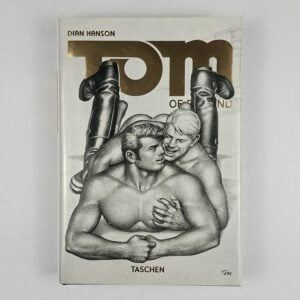
Tom of Finland The Comics Volume I
AU$100 Read MoreAdd to cartDian Hanson; Tom of Finland
Koln: Taschen, 2011.Collected volume of ToFs comic illustration with the reversible panic dust jacket for safe reading on the train.
-
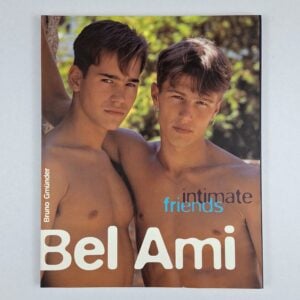
Bel Ami: Intimate Friends
AU$100 Read MoreAdd to cartGeorge Duroy
Berlin: Bruno Gmunder, 1996.BelAmi is a gay pornographic film studio founded in 1993 by the Slovak filmmaker George Duroy, whose pseudonym was taken from the protagonist of Guy de Maupassant’s novel Bel-Ami. Established in the years following the collapse of the Eastern Bloc, the studio became closely associated with performers from Central and Eastern Europe, particularly the Czech Republic, Slovakia, and Hungary, presenting an idealised image of youthful masculine beauty and helping to define the archetype of the Euro-twink in contemporary gay erotica. BelAmi distinguished itself through a polished and often narrative-driven style of filmmaking. Rather than relying solely on a succession of scenes, many productions incorporated simple storylines, characterisation, and location shooting in rural, coastal, and historic European settings, lending the films a degree of atmosphere unusual within the genre at the time. The same aesthetic informed the studio’s extensive publishing programme, including calendars and photobooks produced with Bruno Gmunder Verlag. These publications, combining portraiture, travel imagery, and erotic photography, are striking examples of late twentieth- and early twenty-first-century gay visual culture.
-
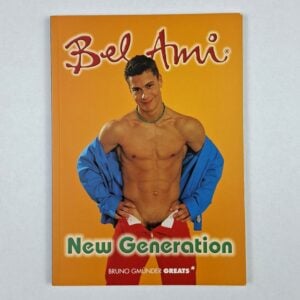
Bel Ami: New Generation
AU$100 Read MoreAdd to cartGeorge Duroy
Berlin: Bruno Gmunder, 2008.BelAmi is a gay pornographic film studio founded in 1993 by the Slovak filmmaker George Duroy, whose pseudonym was taken from the protagonist of Guy de Maupassant’s novel Bel-Ami. Established in the years following the collapse of the Eastern Bloc, the studio became closely associated with performers from Central and Eastern Europe, particularly the Czech Republic, Slovakia, and Hungary, presenting an idealised image of youthful masculine beauty and helping to define the archetype of the Euro-twink in contemporary gay erotica. BelAmi distinguished itself through a polished and often narrative-driven style of filmmaking. Rather than relying solely on a succession of scenes, many productions incorporated simple storylines, characterisation, and location shooting in rural, coastal, and historic European settings, lending the films a degree of atmosphere unusual within the genre at the time. The same aesthetic informed the studio’s extensive publishing programme, including calendars and photobooks produced with Bruno Gmunder Verlag. These publications, combining portraiture, travel imagery, and erotic photography, are striking examples of late twentieth- and early twenty-first-century gay visual culture.
-
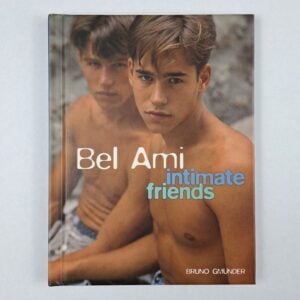
Bel Ami: Intimate Friends
AU$100 Read MoreAdd to cartGeorge Duroy
Berlin: Bruno Gmunder, 2001.BelAmi is a gay pornographic film studio founded in 1993 by the Slovak filmmaker George Duroy, whose pseudonym was taken from the protagonist of Guy de Maupassant’s novel Bel-Ami. Established in the years following the collapse of the Eastern Bloc, the studio became closely associated with performers from Central and Eastern Europe, particularly the Czech Republic, Slovakia, and Hungary, presenting an idealised image of youthful masculine beauty and helping to define the archetype of the Euro-twink in contemporary gay erotica. BelAmi distinguished itself through a polished and often narrative-driven style of filmmaking. Rather than relying solely on a succession of scenes, many productions incorporated simple storylines, characterisation, and location shooting in rural, coastal, and historic European settings, lending the films a degree of atmosphere unusual within the genre at the time. The same aesthetic informed the studio’s extensive publishing programme, including calendars and photobooks produced with Bruno Gmunder Verlag. These publications, combining portraiture, travel imagery, and erotic photography, are striking examples of late twentieth- and early twenty-first-century gay visual culture.
-
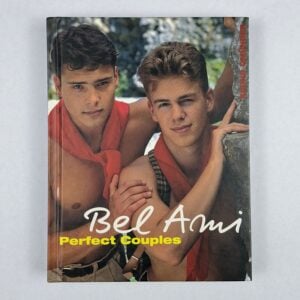
Bel Ami: Perfect Couples
AU$100 Read MoreAdd to cartBel Ami
Berlin: Bruno Gmunder, 1999.BelAmi is a gay pornographic film studio founded in 1993 by the Slovak filmmaker George Duroy, whose pseudonym was taken from the protagonist of Guy de Maupassant’s novel Bel-Ami. Established in the years following the collapse of the Eastern Bloc, the studio became closely associated with performers from Central and Eastern Europe, particularly the Czech Republic, Slovakia, and Hungary, presenting an idealised image of youthful masculine beauty and helping to define the archetype of the Euro-twink in contemporary gay erotica. BelAmi distinguished itself through a polished and often narrative-driven style of filmmaking. Rather than relying solely on a succession of scenes, many productions incorporated simple storylines, characterisation, and location shooting in rural, coastal, and historic European settings, lending the films a degree of atmosphere unusual within the genre at the time. The same aesthetic informed the studio’s extensive publishing programme, including calendars and photobooks produced with Bruno Gmunder Verlag. These publications, combining portraiture, travel imagery, and erotic photography, are striking examples of late twentieth- and early twenty-first-century gay visual culture.
-
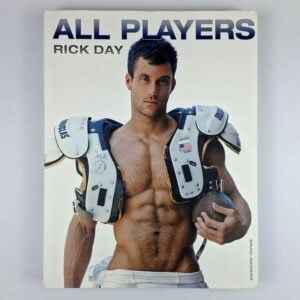
All Players
AU$600 Read MoreAdd to cartRick Day
Berlin: Bruno Gmunder, 2012.Large-format photobook of male nudes. The third and concluding volume in Day’s Players series, focussed on the athletic male physique in sporting kit, partial undress, and full nudity, combining selected images from the two earlier volumes with new material.
-

BelAmi: Oversized
AU$500 Read MoreAdd to cartStephan Niederwieser
Berlin: Bruno Gmunder, 2011.BelAmi is a gay pornographic film studio founded in 1993 by the Slovak filmmaker George Duroy, whose pseudonym was taken from the protagonist of Guy de Maupassant’s novel Bel-Ami. Established in the years following the collapse of the Eastern Bloc, the studio became closely associated with performers from Central and Eastern Europe, particularly the Czech Republic, Slovakia, and Hungary, presenting an idealised image of youthful masculine beauty and helping to define the archetype of the Euro-twink in contemporary gay erotica. BelAmi distinguished itself through a polished and often narrative-driven style of filmmaking. Rather than relying solely on a succession of scenes, many productions incorporated simple storylines, characterisation, and location shooting in rural, coastal, and historic European settings, lending the films a degree of atmosphere unusual within the genre at the time. The same aesthetic informed the studio’s extensive publishing programme, including calendars and photobooks produced with Bruno Gmunder Verlag. These publications, combining portraiture, travel imagery, and erotic photography, are striking examples of late twentieth- and early twenty-first-century gay visual culture.
-
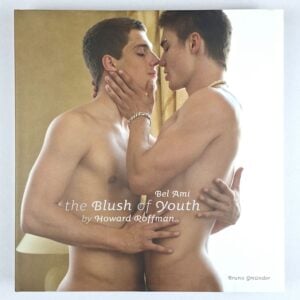
Bel Ami: The Blush of Youth
AU$800 Read MoreAdd to cartHoward Roffman
Berlin: Bruno Gmunder, 2010.BelAmi is a gay pornographic film studio founded in 1993 by the Slovak filmmaker George Duroy, whose pseudonym was taken from the protagonist of Guy de Maupassant’s novel Bel-Ami. Established in the years following the collapse of the Eastern Bloc, the studio became closely associated with performers from Central and Eastern Europe, particularly the Czech Republic, Slovakia, and Hungary, presenting an idealised image of youthful masculine beauty and helping to define the archetype of the Euro-twink in contemporary gay erotica. BelAmi distinguished itself through a polished and often narrative-driven style of filmmaking. Rather than relying solely on a succession of scenes, many productions incorporated simple storylines, characterisation, and location shooting in rural, coastal, and historic European settings, lending the films a degree of atmosphere unusual within the genre at the time. The same aesthetic informed the studio’s extensive publishing programme, including calendars and photobooks produced with Bruno Gmunder Verlag. These publications, combining portraiture, travel imagery, and erotic photography, are striking examples of late twentieth- and early twenty-first-century gay visual culture.
-
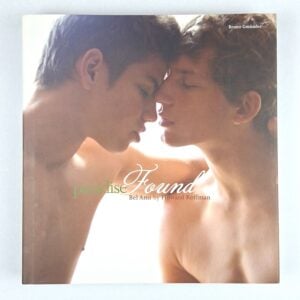
Paradise Found
AU$400 Read MoreAdd to cartHoward Roffman
Berlin: Bruno Gmunder, 2011.BelAmi is a gay pornographic film studio founded in 1993 by the Slovak filmmaker George Duroy, whose pseudonym was taken from the protagonist of Guy de Maupassant’s novel Bel-Ami. Established in the years following the collapse of the Eastern Bloc, the studio became closely associated with performers from Central and Eastern Europe, particularly the Czech Republic, Slovakia, and Hungary, presenting an idealised image of youthful masculine beauty and helping to define the archetype of the Euro-twink in contemporary gay erotica. BelAmi distinguished itself through a polished and often narrative-driven style of filmmaking. Rather than relying solely on a succession of scenes, many productions incorporated simple storylines, characterisation, and location shooting in rural, coastal, and historic European settings, lending the films a degree of atmosphere unusual within the genre at the time. The same aesthetic informed the studio’s extensive publishing programme, including calendars and photobooks produced with Bruno Gmunder Verlag. These publications, combining portraiture, travel imagery, and erotic photography, are striking examples of late twentieth- and early twenty-first-century gay visual culture.
-
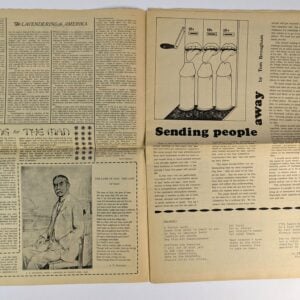
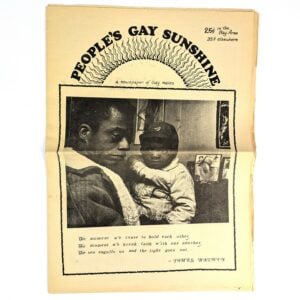
People’s Gay Sunshine: A Newspaper of Gay Males
AU$50 Read MoreAdd to cartPeople’s Gay Sunshine
Berkeley: People’s Gay Sunshine, No date.One-shot California gay newspaper. Cover story on James Baldwin and featuring Allen Ginsberg, Edward Carpenter, an open letter to Tennessee Williams, and more.
-
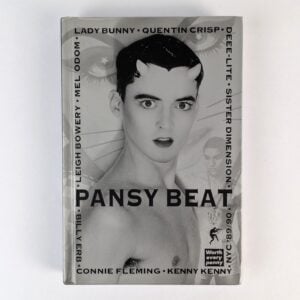
Pansy Beat
AU$200 Read MoreAdd to cartMichael Economy
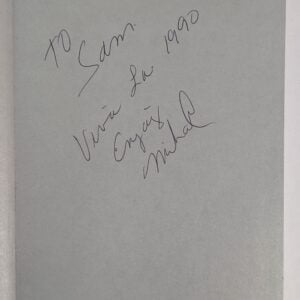
[New York]: KrimsKrams Island, 2017.“Pansy Beat was a short-lived fanzine published by Michael Economy in New York from 1989 to 1990, totalling five quarterly issues. Each issue’s 50-some black-and-white pages documented the exuberant downtown gay and drag club scene of that era and included one free condom. The zine offered a glimpse into an exhilarating alternative universe during the darkest years of the AIDS crisis. Interviews profiled downtown personalities on the verge of global stardom, many still working to this day. Artists such as Lady Bunny, Billy Erb, Connie Fleming, Kenny Kenny, Lady Miss Kier and Larry Tee first shared their memorable selves in print on the pages of Pansy Beat. The zine also featured interviews with Edwige Belmore, Leigh Bowery and Quentin Crisp. This book celebrates Pansy Beat’s brief but influential life, including a reprinting of all five issues in their original format, previously unseen photographs by staff photographer Michael Fazakerley, new full-color artwork by some of the original contributors, plus new essays and interviews.” (publisher’s blurb) This copy inscribed by Michael.
-
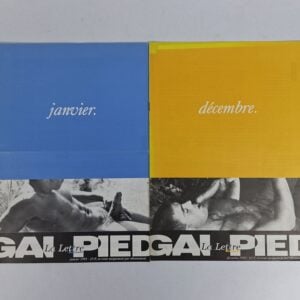
Gai Pied: La Lettre Mensuelle
AU$1,000 Read MoreAdd to cartChristophe Dernoncourt; Pascal Le Coq; Didier Lestrade; Patrick Bossatti
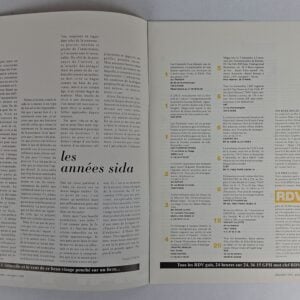
Paris: Editions du Triangle Rose, 1992-1994.Taking over from one of France’s most important gay magazines of the 20th century, Gai Pied hebdo, La lettre served as a gay personals subscription-only newsletter running for 21 numbers between December 1992 and October 1994. A near complete run, lacking numbers 16 and 21.
-
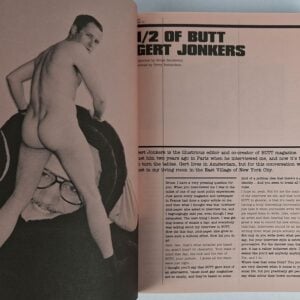
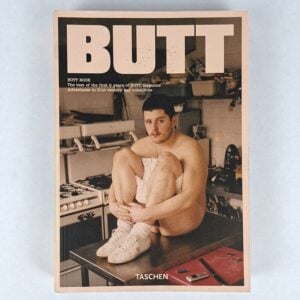
Butt Book: The Best of the First 5 Years of Butt Magazine
AU$150 Read MoreAdd to cartJop van Bennekom; Gert Jonkers
Koln: Taschen, 2006.Reproduction of many of the features from the early issues of the 21st century gay subculture zine.
-
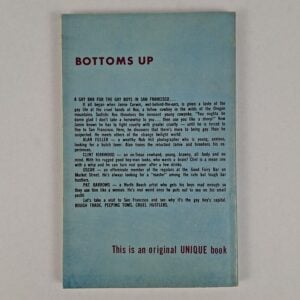
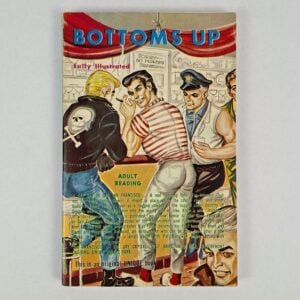
Bottoms Up
AU$400 Read MoreAdd to cartNed Winslow
: Unique Books, 1966.A gay bar in gay San Francisco. Cover illustration by Gene Bilbrew and 6 interior black and white illustrations by various artists. One of the many gay erotic pulp novels produced in the mid to late 20th century. These short sexually explicit stories, many of which were formulaic and published in easily recognisable series with graphically illustrated covers and titillating titles each targeting a specific sexual niche, demonstrate the breadth of sexual fantasy, occupation, desire, and deviance of the emerging homosexual culture.
-
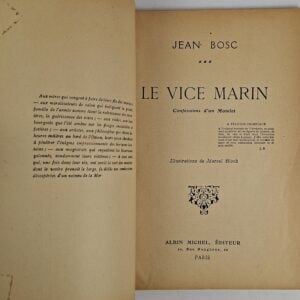
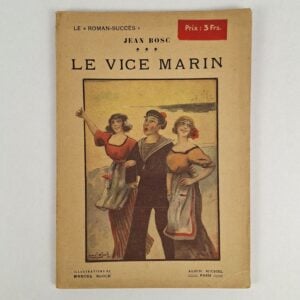
Le Vice Marin: Confessions d’un Matelot
AU$1,500 Read MoreAdd to cartJean Bosc
Paris: Albin Michel, No date.A French maritime novel centred on homosexual desire aboard ship, and a notable document in the literary history of same-sex desire. The first part of the story explicitly confronts the “marine vice” of pederasty. The book attracted controversy, prompting later issues to appear under the more discreet title ‘Les Isoles, moeurs maritimes’. In a preface to the retitled edition, dated 15 March 1905, Bosc complained that Le Vice Marin had “frightened the bourgeoisie” and that newspaper editors refused even to advertise it, forcing his publisher to disguise a commercially successful book beneath a less provocative title. The episode provides a revealing glimpse of the constraints surrounding the public discussion of homosexuality in Belle Epoque France. The novel prefigures later maritime treatments of adolescent sexuality, including the controversy surrounding James Hanley’s Boy (1931). Its place in the period’s homosexual self-understanding is seen in Georges Portal’s 1936 Un Protestant, whose narrator discovers the book in a shop window and recognises in it a reflection of his own experience. After numerous printings of the first edition by Pierre Douville, this second edition issued in Albin Michel’s Le Roman-Succes series (c. 1920s/1930s) and illustrated throughout by Marcel Bloch. The restoration of the original title suggests a markedly different publishing climate from that which had prompted its disguise a generation earlier.
-
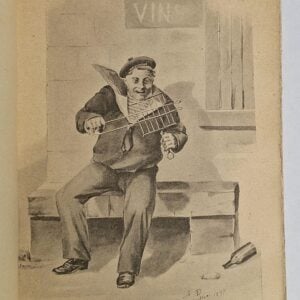
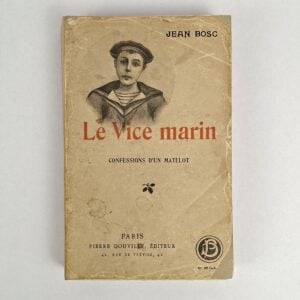
Le Vice Marin: Confessions d’un Matelot
AU$1,500 Read MoreAdd to cartJean Bosc
Paris: Pierre Douville, [1905].A French maritime novel centred on homosexual desire aboard ship, and a notable document in the literary history of same-sex desire. The first part of the story explicitly confronts the “marine vice” of pederasty. The book attracted controversy, prompting later issues to appear under the more discreet title ‘Les Isoles: Moeurs Maritimes’. In a preface to the retitled edition, dated 15 March 1905, Bosc complained that Le Vice Marin had “frightened the bourgeoisie” and that newspaper editors refused even to advertise it, forcing his publisher to disguise a commercially successful book beneath a less provocative title. The episode provides a revealing glimpse of the constraints surrounding the public discussion of homosexuality in Belle Epoque France. The novel prefigures later maritime treatments of adolescent sexuality, including the controversy surrounding James Hanley’s Boy (1931). Its place in the period’s homosexual self-understanding is seen in Georges Portal’s 1936 Un Protestant, whose narrator discovers the book in a shop window and recognises in it a reflection of his own experience. With two illustrations.
-
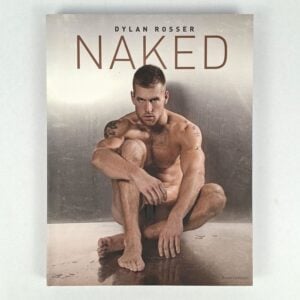
Naked
AU$400 Read MoreAdd to cartDylan Rosser
Berlin: Bruno Gmunder, 2011.Male nude photography. Rosser’s final book of new studio nudes before relocating to Ibiza and turning to outdoor shoots.
-
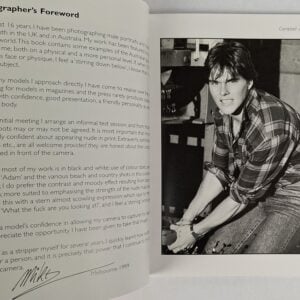
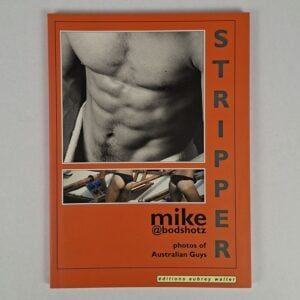
Stripper: Photos of Australian Guys
AU$100 Read MoreAdd to cartMike@Bodshotz
London: Editions Aubrey Walter, 1999.“Working as a stripper myself for several years, I quickly learnt how nudity can empower a person, and it is precisely that power that I continue to try and capture with my camera.” (artist’s statement)
-
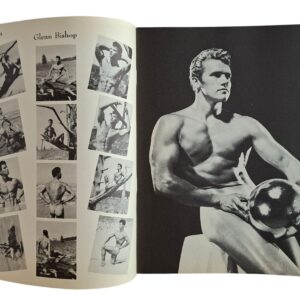
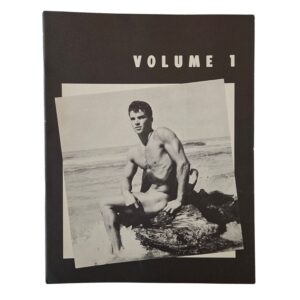
Volume 1
AU$250 Read MoreAdd to cart[Bob Delmonteque]
[Los Angeles]: [Bob Delmonteque], [1957].Bob Delmonteque (1921-2011), a Detroit-born bodybuilder first gained fame as a physique model for Douglas of Detroit in the late 1940s before establishing his own Los Angeles based photography and mail-order business. This volume reproduces 25 original catalogue sheets at an enlarged scale, supplemented by a series of full-page plates, Models include Glenn Bishop, Richard Alan, and Norman Tousley, though Delmonteque himself appears frequently, both as photographer and subject.
-
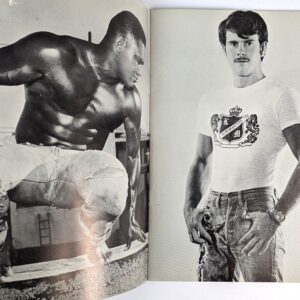
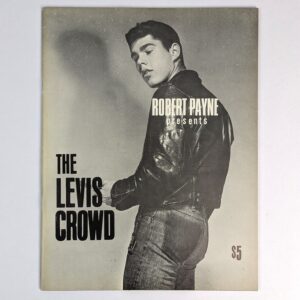
Robert Payne Presents The Levis Crowd
AU$400 Read MoreAdd to cart[John Embry]
: N.p., No date.A selection from the gay physique photographic archive of Bob Mizer’s Athletic Model Guild (AMG), compiled by Drummer magazine co-founder John Embry under his Robert Payne pseudonym in the years leading up the magazine’s beginnings. The publication brings together masculine imagery of the American outdoorsman in Levi’s, with a centre spread featuring prominent American porn actor and director Fred Halsted.
-
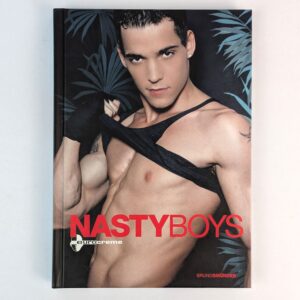
Nastyboys
AU$60 Read MoreAdd to cartEurocreme
Berlin: Bruno Gmunder, 2009.First photobook of the European gay pornographic studio with a twink focus, Eurocreme.
-
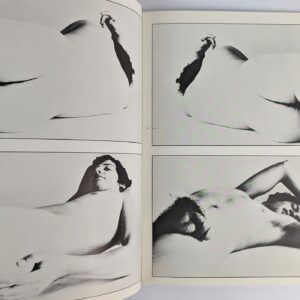
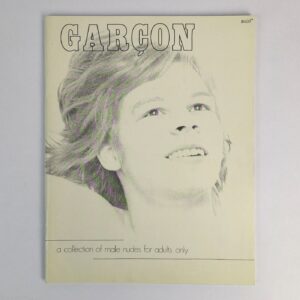
Garcon: A Collection of Male Nudes for Adults Only
AU$200 Read MoreAdd to cartGreg Fenton; Peter Wright
Sydney: Christopher Wilde Productions, No date.Rare Australian gay erotica. A collection of male nudes: photographs by Greg Fenton, drawings by Peter Wright. Publisher’s catalogue request form laid in.
-
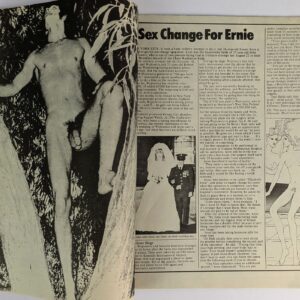
![Male Maze [No. 1] & 2](https://www.thebookmerchantjenkins.com/wp-content/uploads/0036969-300x300.jpg)
Male Maze [No. 1] & 2
AU$500 Read MoreAdd to cartMankind Publications
Sydney: Mankind Publications, No date.2 issues of short running Australian homoerotic tabloid Male Maze, a spin-off of the slightly glossier Mankind. Features W. H. Auden’s poem, A Day for a Lay, Gay News From Afar, articles: Smile! You’re Growing Older, The First Closet Queen, Sex Change, and Three Way Heaven, alongside numerous male nudes, and mail order advertisements for books, photographs, and gay gear from Mankind.
-
![Bizarre Productions Catalog Supplement Number 25-A [Bizarre Productions Catalog of Hollywood Models & Feature Films by Pat Rocco]](https://www.thebookmerchantjenkins.com/wp-content/uploads/0036967-300x300.jpg)
Bizarre Productions Catalog Supplement Number 25-A [Bizarre Productions Catalog of Hollywood Models & Feature Films by Pat Rocco]
AU$100 Read MoreAdd to cartPat Rocco
Hollywood: Bizarre Productions, 1969.8 page supplement with the original order form and Bizarre Productions addressed envelope laid in.
-
Peter Berlin: Icon, Artist, Photosexual
AU$900 Read MoreAdd to cartPeter Berlin
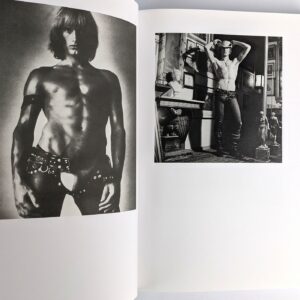
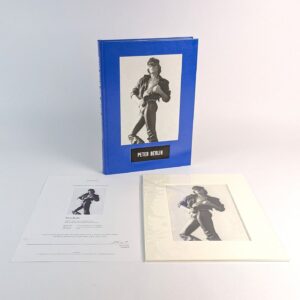
[Bologna]: Damiani, 2019.One of 50 copies of the deluxe edition with a signed and numbered silver gelatin photograph by Berlin housed in the publisher’s original mailing carton. “Featuring the work of Berlin along with images by Tom of Finland, Robert Mapplethorpe, and Andy Warhol, Peter Berlin: Icon pays tribute to the man who in the early to mid-1970s revolutionized the landscape of gay male eroticism and became an international sensation. His self-portrait photography graced the covers of gay magazines, and defined a look that re-imagined a new masculinity among gay men and an emerging gay male culture. Peter Berlin was a self-created. Tailoring his own clothes to accentuate an already naturally defined physique, every part of his anatomy became showcased. Cruising was his career, and with a background in photography, Peter embarked on recording thousands of self-portraits. The book is edited by Michael Bullock is a writer and publisher of BUTT, Pin-Up, Fantastic Man, Gentlewoman, and Apartamento magazines.” (publisher’s blurb)
-
Gayface
AU$100 Read MoreAdd to cartAsh Kolodner
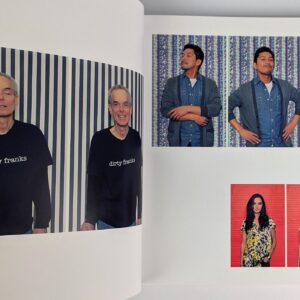
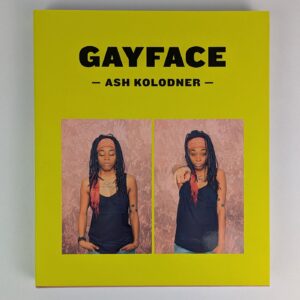
Seattle: Lucia Marquand, 2023.“From 2011 to 2015, Ashley Kolodner travelled across the United States photographing hundreds of LGBTQIA+ individuals of all ages. She made two consecutive portraits of each of her subjects, photographing them twice during the same sitting: once with eyes closed and then with eyes open. Through more than 180 colour portraits, along with subject interviews, this title reflects the beauty, intimacy and sometimes the pain of a community kept in the shadows for decades. Includes contributing texts by filmmaker Kimberly Peirce and Tony award-winning producer Jordan Roth. These diptychs symbolise the vulnerability many have felt at the outset of discovering their personal identities, and then the realisation and self-actualisation manifest in the intimate and profound process of coming out. Ultimately these pictures and this handsome volume represent a revelatory statement on the profound humanity we all s hare.” (publisher’s blurb)
-
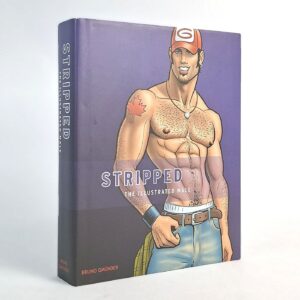
Stripped: The Illustrated Male
AU$150 Read MoreAdd to cartClaus Kiessling; Joris Buiks
Berlin: Bruno Gmunder, 2006.Anthology of contemporary homoerotic art.
-
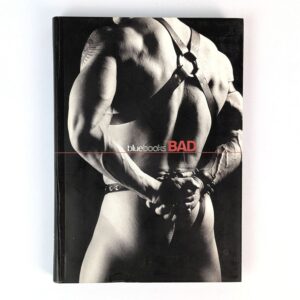
Bad
AU$80 Read MoreAdd to cartBen Robertson
Sydney: Blue Books / Studio Magazines, 2004.A special issue of Blue focussing on leather and SM. (not only) Blue was a glossy coffee table art magazine produced between 1995 and 2007 by Studio Magazines in Sydney, who also published the successful photography magazine, Black+White. “Blue’s agenda is to showcase artists whose work is an authentic representation of gay relationships, gay lifestyles and gay issues” (Blue’s editorial statement) and it did so in a large format filled with nude and semi nude art photography. The premiere issue featured William Yang, Tom Bianchi, Pierre et Gilles, Edmund White, Fiona McGregor, and Ian Roberts, and over its 12 year history featured work from top photographers and features on artists and celebrities including Robert Mapplethorpe, Leigh Bowery, Boy George, Erwin Olaf, k.d. lang, Bruce of LA, Dennis Rodman, Elton John, John Waters, Karl Lagerfield, Jeffrey Smart, Yukio Mishima, Paul Cadmas, William S. Burroughs, George Platt Lynes, Gilbert and George, Rupert Everett, Uma Thurman, Wilhelm von Gloeden and countless others.
-
Lads
AU$50 Read MoreAdd to cartBen Robertson
Sydney: Blue Books, 2004. -
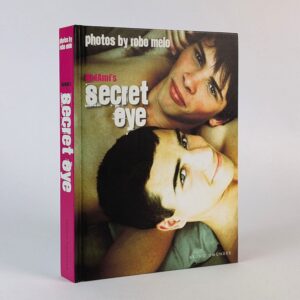
BelAmi’s Secret Eye
AU$150 Read MoreAdd to cartRobo Melo
Berlin: Bruno Gmunder, 2013.BelAmi is a gay pornographic film studio founded in 1993 by the Slovak filmmaker George Duroy, whose pseudonym was taken from the protagonist of Guy de Maupassant’s novel Bel-Ami. Established in the years following the collapse of the Eastern Bloc, the studio became closely associated with performers from Central and Eastern Europe, particularly the Czech Republic, Slovakia, and Hungary, presenting an idealised image of youthful masculine beauty and helping to define the archetype of the Euro-twink in contemporary gay erotica. BelAmi distinguished itself through a polished and often narrative-driven style of filmmaking. Rather than relying solely on a succession of scenes, many productions incorporated simple storylines, characterisation, and location shooting in rural, coastal, and historic European settings, lending the films a degree of atmosphere unusual within the genre at the time. The same aesthetic informed the studio’s extensive publishing programme, including calendars and photobooks produced with Bruno Gmunder Verlag. These publications, combining portraiture, travel imagery, and erotic photography, are striking examples of late twentieth- and early twenty-first-century gay visual culture.
-
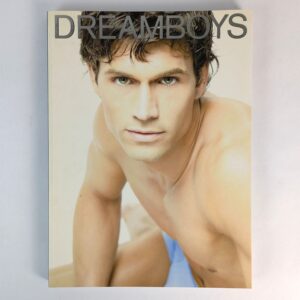
Dreamboys 4: A Special Issue of Blue
AU$100 Read MoreAdd to cartMarcello Grand
Sydney: Studio Magazines, 2003.The fourth instalment of the Blue magazine special issues focusing on masculine beauty through the lenses of 50 photographers who are interpreting the theme of athletic prowess and bodily strength. (not only) Blue was a glossy coffee table art magazine produced between 1995 and 2007 by Studio Magazines in Sydney, who also published the successful photography magazine, Black+White. “Blue’s agenda is to showcase artists whose work is an authentic representation of gay relationships, gay lifestyles and gay issues” (Blue’s editorial statement) and it did so in a large format filled with nude and semi nude art photography. The premiere issue featured William Yang, Tom Bianchi, Pierre et Gilles, Edmund White, Fiona McGregor, and Ian Roberts, and over its 12 year history featured work from top photographers and features on artists and celebrities including Robert Mapplethorpe, Leigh Bowery, Boy George, Erwin Olaf, k.d. lang, Bruce of LA, Dennis Rodman, Elton John, John Waters, Karl Lagerfield, Jeffrey Smart, Yukio Mishima, Paul Cadmas, William S. Burroughs, George Platt Lynes, Gilbert and George, Rupert Everett, Uma Thurman, Wilhelm von Gloeden and countless others.
-
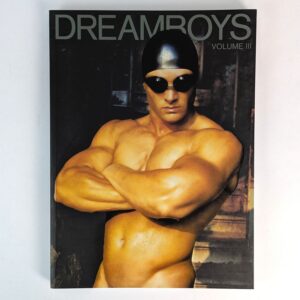
Dreamboys Volume III: A Special Issue of Blue
AU$100 Read MoreAdd to cartMarcello Grand
Sydney: Studio Magazines, [2002].The third instalment of the Blue magazine special issues focusing on masculine beauty through the lenses of 46 photographers who are interpreting the theme of athletic prowess and bodily strength. (not only) Blue was a glossy coffee table art magazine produced between 1995 and 2007 by Studio Magazines in Sydney, who also published the successful photography magazine, Black+White. “Blue’s agenda is to showcase artists whose work is an authentic representation of gay relationships, gay lifestyles and gay issues” (Blue’s editorial statement) and it did so in a large format filled with nude and semi nude art photography. The premiere issue featured William Yang, Tom Bianchi, Pierre et Gilles, Edmund White, Fiona McGregor, and Ian Roberts, and over its 12 year history featured work from top photographers and features on artists and celebrities including Robert Mapplethorpe, Leigh Bowery, Boy George, Erwin Olaf, k.d. lang, Bruce of LA, Dennis Rodman, Elton John, John Waters, Karl Lagerfield, Jeffrey Smart, Yukio Mishima, Paul Cadmas, William S. Burroughs, George Platt Lynes, Gilbert and George, Rupert Everett, Uma Thurman, Wilhelm von Gloeden and countless others.
-
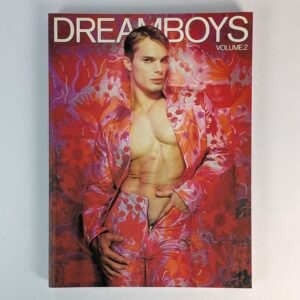
Dreamboys Volume 2: A Special Issue of Blue
AU$100 Read MoreAdd to cartMarcello Grand
Sydney: Studio Magazines, [2001].The second instalment of the Blue magazine special issues focusing on masculine beauty through the lenses of 66 photographers who are interpreting the theme of athletic prowess and bodily strength. (not only) Blue was a glossy coffee table art magazine produced between 1995 and 2007 by Studio Magazines in Sydney, who also published the successful photography magazine, Black+White. “Blue’s agenda is to showcase artists whose work is an authentic representation of gay relationships, gay lifestyles and gay issues” (Blue’s editorial statement) and it did so in a large format filled with nude and semi nude art photography. The premiere issue featured William Yang, Tom Bianchi, Pierre et Gilles, Edmund White, Fiona McGregor, and Ian Roberts, and over its 12 year history featured work from top photographers and features on artists and celebrities including Robert Mapplethorpe, Leigh Bowery, Boy George, Erwin Olaf, k.d. lang, Bruce of LA, Dennis Rodman, Elton John, John Waters, Karl Lagerfield, Jeffrey Smart, Yukio Mishima, Paul Cadmas, William S. Burroughs, George Platt Lynes, Gilbert and George, Rupert Everett, Uma Thurman, Wilhelm von Gloeden and countless others.
-
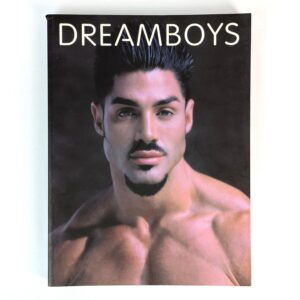
Dreamboys: A Special Issue of Blue
AU$60 Read MoreAdd to cartMarcello Grand
Sydney: Studio Magazines, 2000.The first instalment of the Blue magazine special issues focusing on masculine beauty through the lenses of photographers who are interpreting the theme of athletic prowess and bodily strength. (not only) Blue was a glossy coffee table art magazine produced between 1995 and 2007 by Studio Magazines in Sydney, who also published the successful photography magazine, Black+White. “Blue’s agenda is to showcase artists whose work is an authentic representation of gay relationships, gay lifestyles and gay issues” (Blue’s editorial statement) and it did so in a large format filled with nude and semi nude art photography. The premiere issue featured William Yang, Tom Bianchi, Pierre et Gilles, Edmund White, Fiona McGregor, and Ian Roberts, and over its 12 year history featured work from top photographers and features on artists and celebrities including Robert Mapplethorpe, Leigh Bowery, Boy George, Erwin Olaf, k.d. lang, Bruce of LA, Dennis Rodman, Elton John, John Waters, Karl Lagerfield, Jeffrey Smart, Yukio Mishima, Paul Cadmas, William S. Burroughs, George Platt Lynes, Gilbert and George, Rupert Everett, Uma Thurman, Wilhelm von Gloeden and countless others.
-
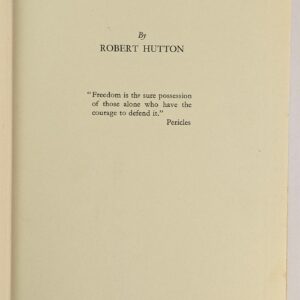
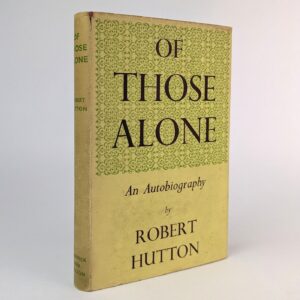
Of Those Alone
AU$1,000 Read MoreAdd to cartRobert Hutton
London: Sidgwick and Jackson, 1958.The pseudonymous autobiography of Horace Charles Forbes Cheston, published under the name Robert Hutton shortly after the release of the Wolfenden Report. Written at a time when homosexuality was still criminalised and taboo, Of Those Alone offers an unusually candid account of Cheston’s sexual and emotional life. Moving between Paris, California, New York, and the South of France before returning to England, he recounts his affairs, his ill-fated marriage to an American woman, and his descent into alcoholism, concluding with redemption through Alcoholics Anonymous, an organisation he later helped to establish in Britain. One of the earliest openly homosexual autobiographies of the postwar period, it precedes the more widely known works of the 1960s gay liberation era and is quite likely the first memoir of a gay alcoholic writer.
-

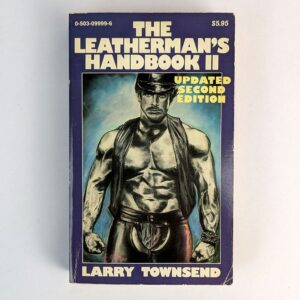
The Leatherman’s Handbook II: Updated Second Edition
AU$200 Read MoreAdd to cartLarry Townsend
New York: Carlyle Communications, 1989.A completely new sequel to the definitive exploration of the gay S&M leather scene.
-

Whose Homosexuality? Which Authority? Homosexual Practice, Marriage Ordination and the Church
AU$50 Read MoreAdd to cartBrian Edgar; Gordon Preece
Adelaide: ATF Press, 2006.Interface: A Forum for Theology in the World Vol. 9 Nos 1 & 2. A special double issue of this Australian theology journal focusing on homosexuality with contributions by Bryden Black, David Clarke, Denise Cooper-Clarke, Graham Cole, Keith Dyer, Brian Edgar, Debra Hirsch, Muriel Porter, Gordon Preece, Peter Sherlock, and Mark Thiessen Nation.
-
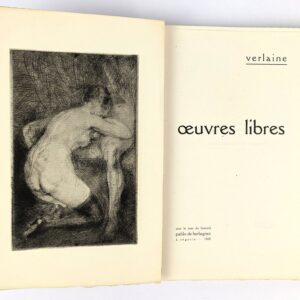
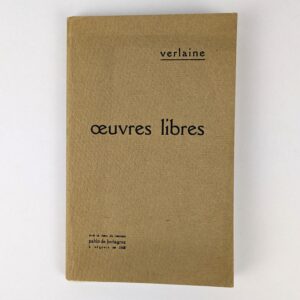
Oeuvres Libres
AU$650 Read MoreAdd to cartPaul Verlaine
Segovie: Pablo de Herlagnez, 1868 [c. 1930].Clandestine 20th century anthology of Verlaine’s Amies, Femmes, Hombres (except the last 4 quatrains of Balanide I), and Sonnet du trou du cul [Sonnet to an Asshole] by Verlaine and Arthur Rimbaud. With erotic chapter initials and accompanied by 6 erotic etchings by an anonymous artist. Edition of 400 copies, though often found without the suite of plates, here the plates are on thick Holland laid paper and not vellum as described in PIA 1440, DUTEL 2092.
-
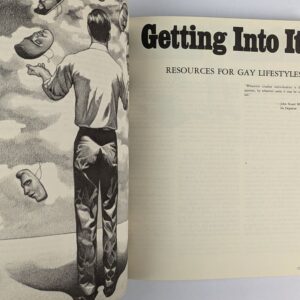
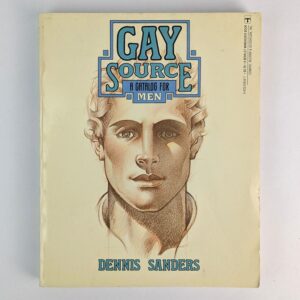
Gay Source: A Catalog for Men
AU$300 Read MoreAdd to cartDennis Sanders
New York: Coward, McCann & Geohegan, 1977.The Whole Earth Catalog of gay America; from help lines to holiday destinations. Compiled, written, and edited by Dennis Sanders with the assistance of Michael Emory. Illustrations by George Stavrinos. Feature articles by Felicine Picano, Ian Young, and many others.
-
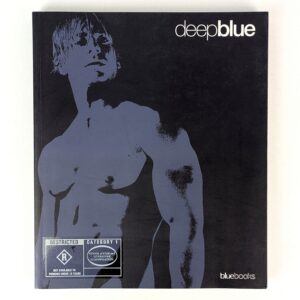
Deep Blue
AU$200 Read MoreAdd to cartBrad Johnston
Sydney: Studio Magazines, 2004.A special issue of Not Only Blue celebrating masculine sexuality featuring photography too explicit for the magazine. (not only) Blue was a glossy coffee table art magazine produced between 1995 and 2007 by Studio Magazines in Sydney, who also published the successful photography magazine, Black+White. “Blue’s agenda is to showcase artists whose work is an authentic representation of gay relationships, gay lifestyles and gay issues” (Blue’s editorial statement) and it did so in a large format filled with nude and semi nude art photography. The premiere issue featured William Yang, Tom Bianchi, Pierre et Gilles, Edmund White, Fiona McGregor, and Ian Roberts, and over its 12 year history featured work from top photographers and features on artists and celebrities including Robert Mapplethorpe, Leigh Bowery, Boy George, Erwin Olaf, k.d. lang, Bruce of LA, Dennis Rodman, Elton John, John Waters, Karl Lagerfield, Jeffrey Smart, Yukio Mishima, Paul Cadmas, William S. Burroughs, George Platt Lynes, Gilbert and George, Rupert Everett, Uma Thurman, Wilhelm von Gloeden and countless others.
-
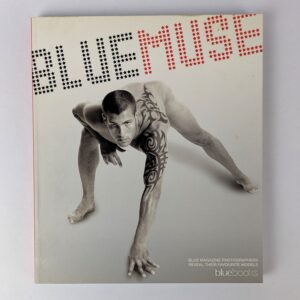
Blue Muse: Blue Magazine Photographers Reveal Their Favourite Models
AU$100 Read MoreAdd to cartMarcello Grand
Sydney: Studio Magazines, 2006.(not only) Blue was a glossy coffee table art magazine produced between 1995 and 2007 by Studio Magazines in Sydney, who also published the successful photography magazine, Black+White. “Blue’s agenda is to showcase artists whose work is an authentic representation of gay relationships, gay lifestyles and gay issues” (Blue’s editorial statement) and it did so in a large format filled with nude and semi nude art photography. The premiere issue featured William Yang, Tom Bianchi, Pierre et Gilles, Edmund White, Fiona McGregor, and Ian Roberts, and over its 12 year history featured work from top photographers and features on artists and celebrities including Robert Mapplethorpe, Leigh Bowery, Boy George, Erwin Olaf, k.d. lang, Bruce of LA, Dennis Rodman, Elton John, John Waters, Karl Lagerfield, Jeffrey Smart, Yukio Mishima, Paul Cadmas, William S. Burroughs, George Platt Lynes, Gilbert and George, Rupert Everett, Uma Thurman, Wilhelm von Gloeden and countless others. This special issue features short descriptions of some of Blue photographers favourite models, of course accompanied by numerous images.
-
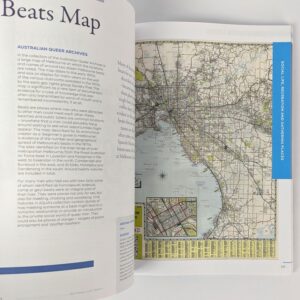
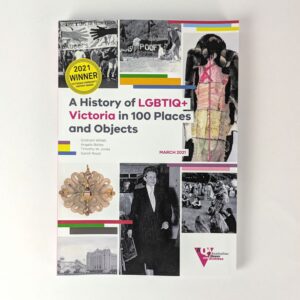
A History of LGBTIQ+ Victoria in 100 Places and Objects
AU$50 Read MoreAdd to cartGraham Willett; Angela Bailey; Timothy W. Jones; Sarah Rood
Melbourne: Australian Queer Archives and Heritage Victoria, 2021.“A History of LGBTIQ+ Victoria in 100 Places and Objects was commissioned by Heritage Victoria to highlight the rich, diverse and unique history of queer communities in Victoria and to demonstrate how these communities are reflected in the places, objects and landscapes that surround us. Lesbian, gay, bisexual, transgender, intersex, queer, asexual, sistergirl and brotherboy (LGBTIQ+) people are, and always have been, an integral part of Victorian social, political and cultural life. However, the experiences and voices of queer communities have not commonly been included in the historical record and, consequently, queer heritage has remained largely invisible. This report identifies 100 places, objects and collections that have specific and unique meaning to Victorias contemporary queer communities. Identifying and exploring the meaning of these places, objects and collections to members of the LGBTIQ+ communities who have suggested them adds depth and richness to Victorias history and heritage. It also makes visible the stories and experiences of communities that have, until recently, been ignored and at times actively persecuted.” (publisher’s blurb)
-

Queer Writing: Homoeroticism in Jean Genet’s Fiction
AU$50 Read MoreAdd to cartElizabeth Stephens
Basingstoke and New York: Palgrave Macmillan, 2009. -
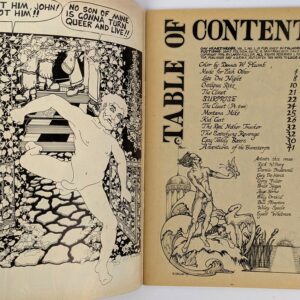
Gay Heart Throbs (3 Issues, Complete)
AU$300 Read MoreAdd to cartLarry Fuller; Mike Kuchar
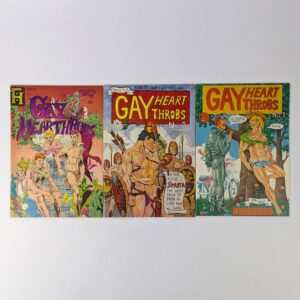
San Francisco: Fulhorne Productions, Larry Fuller Presents, and Inkwell, Inc., 1976-1981.A complete run of the intermittent and short-lived underground gay erotic comix anthology, the three issues published in 1976, 1979, and 1981. The title is thought to be a reference to the romance comic Heart Throbs. The stories are campy and pornographic. Featuring the work of Larry Fuller, Ray Horne, Mike Kuchar, and many others.
-
(not only) Blue (Complete Set, 67 Volumes)
AU$3,000 Read MoreAdd to cartMarcello Grand
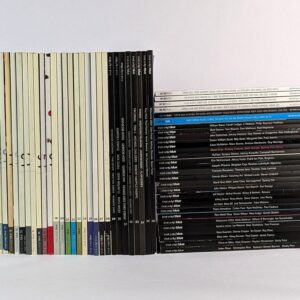
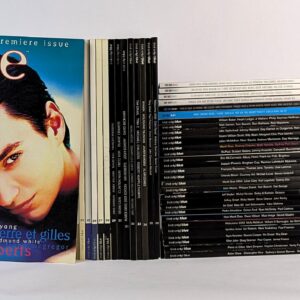
Sydney: Studio Magazines, 1995-2007.A complete set of Australian gay men’s magazine, (not only) Blue, from issue 00 to 66 (67 total). Blue was a glossy coffee table art magazine produced between 1995 and 2007 by Studio Magazines in Sydney, publishers of the successful photography magazine, Black+White. “Blue’s agenda is to showcase artists whose work is an authentic representation of gay relationships, gay lifestyles and gay issues” (Blue’s editorial statement) and it did so in a large format filled with nude and semi nude art photography. The premiere issue featured William Yang, Tom Bianchi, Pierre et Gilles, Edmund White, Fiona McGregor, and Ian Roberts, and over its 12 year history featured work from top photographers and features on artists and celebrities including Robert Mapplethorpe, Leigh Bowery, Boy George, Erwin Olaf, k.d. lang, Bruce of LA, Dennis Rodman, Elton John, John Waters, Karl Lagerfield, Jeffrey Smart, Yukio Mishima, Paul Cadmas, William S. Burroughs, George Platt Lynes, Gilbert and George, Rupert Everett, Uma Thurman, Wilhelm von Gloeden, and countless others.
-
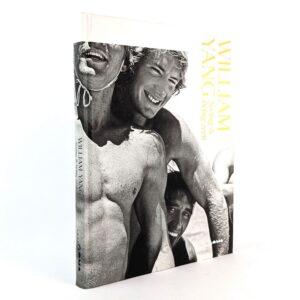
Seeing & Being Seen
AU$600 Read MoreAdd to cartWilliam Yang
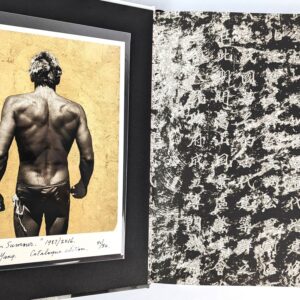
Brisbane: Queensland Art Gallery / Gallery of Modern Art, 2021.The deluxe edition, limited to only 50 copies signed by the artist with a limited edition archival inkjet print Golden Summer 1987 / 2016 by William Yang, printed on Hahnemuhle Smooth Cotton Rag paper. The print is signed, titled, dated and editioned by the artist in ink, and mounted inside the upper board in a mylar sleeve housing. “William Yang: Seeing and Being Seen explores photographer and performer William Yang’s five decades of prolific art practice. This is the first major survey exhibition and publication on the artist by a state gallery. Featuring reproductions of over 200 photographs, it traces Yang’s career from his heady early days as a social photographer in the 1970s documenting Sydney’s queer scene through to some of his well-known series addressing family ties, sexual and cultural identity, and the Australian landscape. Developed in collaboration with the artist, the publication also examines the artist’s deep connections to Queensland, including his mid-career explorations of growing up in the far north of the state.” (publisher’s blurb)
-

The Archaeology of Eros
AU$40 Read MoreAdd to cartJorge Socarras; Mel Odom
San Francisco: Dark Entries Editions, 2023.“Homoerotic poetry and art appear throughout the worlds civilizations for millennia. The Archaeology of Eros, the first collection of poems from cult music figure Jorge Socarras, taps into that continuum through the collaboration of acclaimed artist Mel Odom. Socarras’ intimate love poems and Odom’s evocative drawings are beautifully juxtaposed in this elegantly designed book. Straddling the sensual and the archetypal, the contemporary and the classical, poetry and art join forces in exploring the mystery and wonder of Eros, affirming that same-sex desire has lived before even as it flourishes now. Born to Cuban parents in New York City, Jorge Socarras (born 1952) is known for his 1970s collaboration with pioneering synthesizer musician Patrick Cowley as the duo Catholic, as singer-frontman of the 1980s avant-rock group Indoor Life and as half of the ongoing musical duo Fanatico X. He was also cofounder of the Silence=Death Collective, the AIDS activist group that in 1987 created the eponymous poster design and slogan. The award-winning art of Mel Odom (born 1950) has graced numerous book covers and magazines since the 1970s, has been the subject of two books, and has been exhibited in galleries and art institutions, including in collaboration with gay literary icon Edmund White.” (publisher’s blurb)
-
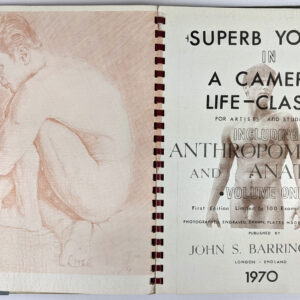
Superb Youth in a Camera Life-Class, For Artists and Students including Anthropometry and Anatomy (2 Volumes)
AU$2,500 Read MoreAdd to cartJohn S. Barrington
London: John S. Barrington, 1970.John S. Barrington (1920-1991) was a prolific 20th century British physique photographer. Receiving a formal art training in Paris, he was also a visual artist and sculptor, and earlier in his career worked in theatre design. Barrington began picking up and photographing men at the pool, eventually going on to establish one of the most prolific physique studios of the 20th century, during which time he probably published and distributed more full male nudes than any of his contemporaries up until the changing censorship laws in the latter part of the century. Superb Youth in a Camera Life-Class is one of his scarcest works, unrecorded in public collections, and with a stated limited edition of 100 copies (though this could be Barrington’s marketing at work). It combines his photography and visual art with detailed instruction in the art of the measurements and proportions of the male body, and features numerous photographs and drawings of many of his favourite models, who were also his lovers or unrequited lusts. A prospectus at the end of volume two alludes to a third and fourth volume to be published and available only to subscribers of the first two volumes, though no record can be found of them ever having been published.
-
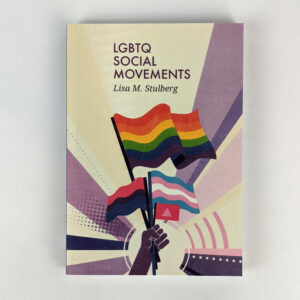
LGBTQ Social Movements
AU$35 Read MoreAdd to cartLisa M. Stulberg
Cambridge: Polity, 2018.“In recent years, there has been substantial progress on lesbian, gay, bisexual, transgender, and queer (LGBTQ) civil rights in the United States. We are now, though, in a time of incredible political uncertainty for queer people. LGBTQ Social Movements provides an accessible introduction to mainstream LGBTQ movements in the US, illustrating the many forms that LGBTQ activism has taken since the mid-twentieth century. Covering a range of topics, including the Stonewall uprising and gay liberation, AIDS politics, queer activism, marriage equality fights, youth action, and bisexual and transgender justice, Lisa M. Stulberg explores how marginalized people and communities have used a wide range of political and cultural tools to demand and create change. The five key themes that guide the book are assimilationism and liberationism as complex strategies for equality, the limits and possibilities of legal change, the role of art and popular culture in social change, the interconnectedness of social movements, and the role of privilege in movement organizing. This book is an important tool for understanding current LGBTQ politics and will be essential reading for students and scholars of sexuality, LGBTQ studies, and social movements, as well as anyone new to thinking about these issues. (publisher’s blurb)
-
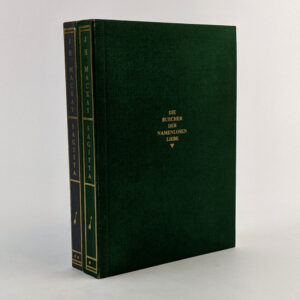
Die Buecher Der Namenlosen Liebe (2 Volumes)
AU$100 Read MoreAdd to cartJohn Henry Mackay [Sagitta]
Berlin: Verlag Rosa Winkel, 1979.The Books of Nameless Love. Seven volumes were originally published between 1906-1926 under the pseudonym Sagitta. Writer, anarchist, and advocate Mackay traces early developments of the homosexual emancipation movement in Germany.
-
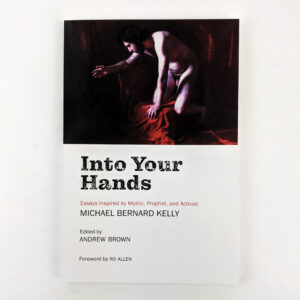
Into Your Hands: Essays Inspired by Mystic, Prophet, and Activist Michael Bernard Kelly
AU$30 Read MoreAdd to cartAndrew Brown
Melbourne: Clouds of Magellan Press, 2022.Academic and personal tributes to the life and work of leading Australian gay activist and religious commentator Michael Bernard Kelly.
-

Queering Psychedelics: From Oppression to Liberation in Psychedelic Medicine
AU$35 Read MoreAdd to cartAlex Belser; Clancy Cavnar; Beatriz C. Labate
Santa Fe & London: Synergetic Press, 2022.“As psychedelic-assisted therapy gains traction in popular culture and through policy reforms, Queering Psychedelics: From Oppression to Liberation in Psychedelic Medicine aims to foster accessibility and diversity in psychedelic science, practice, and discourse… Queering Psychedelics integrates indigenous outlooks on psychedelics, gender roles, and identity while aligning them with those of other marginalized groups: women, people of color, the disabled, the impoverished. This book interrogates the continuing radical potential of queer psychedelia in today’s era of assimilation, paving the way for an inclusive and intersectional world.” (publisher’s blurb)
-
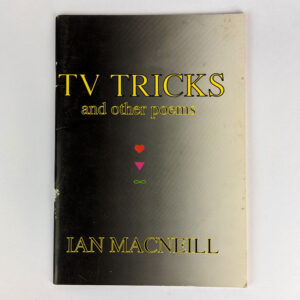
TV Tricks and other poems
AU$40 Read MoreAdd to cartIan MacNeill
Sydney: BlackWattle Press, 1989. -
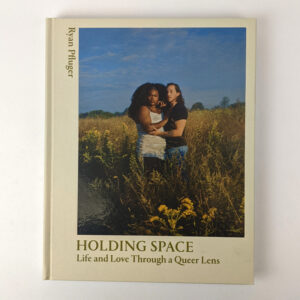
Holding Space: Life and Love Through a Queer Lens
AU$60 Read MoreAdd to cartRyan Pfluger
New York: Princeton Architectural Press, 2022.“Throughout 2020 and 2021, artist, advocate and photographer Ryan Pfluger set out to capture intimate images of queer, interracial couples, along with personal insight into their relationships in todays world. Featured together for the first time in this book, this unique collection of modern love in its many forms across the spectrum of race, sexuality, and gender identity and gives space to these couples to share short, revealing stories about their relationships. The photos in this collection, and the people in them, can be startling in their openness, playful in their poses, and tender to their core. Pfluger has captured the magic, honesty, and beauty of love in todays queer culture.” (publisher’s blurb)
-
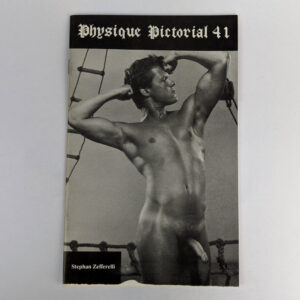
Physique Pictorial Volume 41, September 1990
AU$30 Read MoreAdd to cartBob Mizer
Los Angeles: Athletic Model Guild, 1990.The only 1990s issue, and the final issue in the original series of the most popular of beefcake magazines, Physique Pictorial, produced by Bob Mizer’s AMG (a relaunch of the series published from 2017 by the Bob Mizer Foundation). Early issues feature scantily clad athletic men in fitness poses together with homoerotic artwork by Tom of Finland, Harry Bush, George Quaintance, and others. If you can stayed focused the text provides insight into gay culture and rights at the time, as well as details on the models and artwork. Into the late 1960s and 1970s as the laws around censorship change, the beefcake physique magazine became more naked and blatantly homoerotic.
-
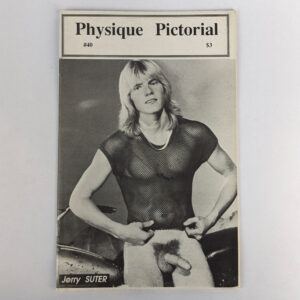
Physique Pictorial Volume 40, June 1987
AU$30 Read MoreAdd to cartBob Mizer
Los Angeles: Athletic Model Guild, 1987.Single 1980s, and the penultimate issue in the original series of the most popular of beefcake magazines, Physique Pictorial, produced by Bob Mizer’s AMG (a relaunch of the series published from 2017 by the Bob Mizer Foundation). Early issues feature scantily clad athletic men in fitness poses together with homoerotic artwork by Tom of Finland, Harry Bush, George Quaintance, and others. If you can stayed focused the text provides insight into gay culture and rights at the time, as well as details on the models and artwork. Into the late 1960s and 1970s as the laws around censorship change, the beefcake physique magazine became more naked and blatantly homoerotic.
-
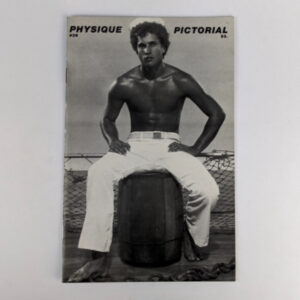
Physique Pictorial Volume 39, January 1986
AU$30 Read MoreAdd to cartBob Mizer
Los Angeles: Athletic Model Guild, 1986.Single 1980s issue of the most popular of beefcake magazines, Physique Pictorial, produced by Bob Mizer’s AMG. Early issues feature scantily clad athletic men in fitness poses together with homoerotic artwork by Tom of Finland, Harry Bush, George Quaintance, and others. If you can stayed focused the text provides insight into gay culture and rights at the time, as well as details on the models and artwork. Into the late 1960s and 1970s as the laws around censorship change, the beefcake physique magazine became more naked and blatantly homoerotic.
-
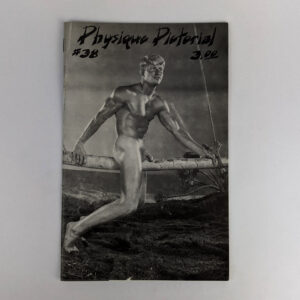
Physique Pictorial Volume 38, November 1984
AU$30 Read MoreAdd to cartBob Mizer
Los Angeles: Athletic Model Guild, 1984.Single 1980s issue of the most popular of beefcake magazines, Physique Pictorial, produced by Bob Mizer’s AMG. Early issues feature scantily clad athletic men in fitness poses together with homoerotic artwork by Tom of Finland, Harry Bush, George Quaintance, and others. If you can stayed focused the text provides insight into gay culture and rights at the time, as well as details on the models and artwork. Into the late 1960s and 1970s as the laws around censorship change, the beefcake physique magazine became more naked and blatantly homoerotic.
-
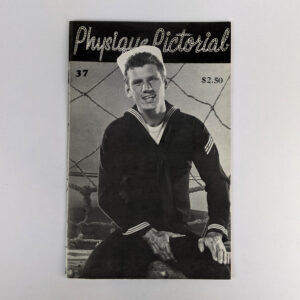
Physique Pictorial Volume 37, November 1982
AU$30 Read MoreAdd to cartBob Mizer
Los Angeles: Athletic Model Guild, 1982.Single 1980s issue of the most popular of beefcake magazines, Physique Pictorial, produced by Bob Mizer’s AMG. Early issues feature scantily clad athletic men in fitness poses together with homoerotic artwork by Tom of Finland, Harry Bush, George Quaintance, and others. If you can stayed focused the text provides insight into gay culture and rights at the time, as well as details on the models and artwork. Into the late 1960s and 1970s as the laws around censorship change, the beefcake physique magazine became more naked and blatantly homoerotic.
-
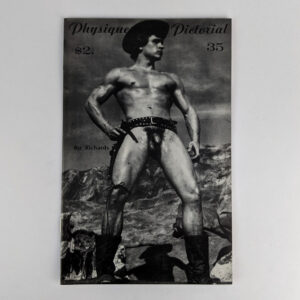
Physique Pictorial Volume 35, August 1981
AU$40 Read MoreAdd to cartBob Mizer
Los Angeles: Athletic Model Guild, 1981.Single 1980s issue of the most popular of beefcake magazines, Physique Pictorial, produced by Bob Mizer’s AMG. Early issues feature scantily clad athletic men in fitness poses together with homoerotic artwork by Tom of Finland, Harry Bush, George Quaintance, and others. If you can stayed focused the text provides insight into gay culture and rights at the time, as well as details on the models and artwork. Into the late 1960s and 1970s as the laws around censorship change, the beefcake physique magazine became more naked and blatantly homoerotic.
-
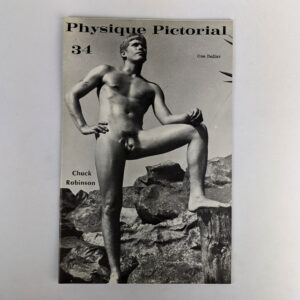
Physique Pictorial Volume 34, October 1980
AU$30 Read MoreAdd to cartBob Mizer
Los Angeles: Athletic Model Guild, 1980.Single 1980s issue of the most popular of beefcake magazines, Physique Pictorial, produced by Bob Mizer’s AMG. Early issues feature scantily clad athletic men in fitness poses together with homoerotic artwork by Tom of Finland, Harry Bush, George Quaintance, and others. If you can stayed focused the text provides insight into gay culture and rights at the time, as well as details on the models and artwork. Into the late 1960s and 1970s as the laws around censorship change, the beefcake physique magazine became more naked and blatantly homoerotic.
-
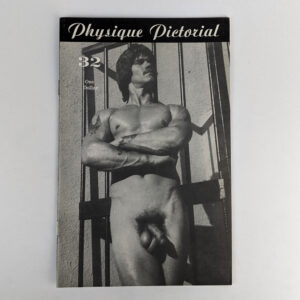
Physique Pictorial Volume 32, May 1979
AU$40 Read MoreAdd to cartBob Mizer
Los Angeles: Athletic Model Guild, 1979.Single 1970s issue of the most popular of beefcake magazines, Physique Pictorial, produced by Bob Mizer’s AMG. Early issues feature scantily clad athletic men in fitness poses together with homoerotic artwork by Tom of Finland, Harry Bush, George Quaintance, and others. If you can stayed focused the text provides insight into gay culture and rights at the time, as well as details on the models and artwork. Into the late 1960s and 1970s as the laws around censorship change, the beefcake physique magazine became more naked and blatantly homoerotic.
-
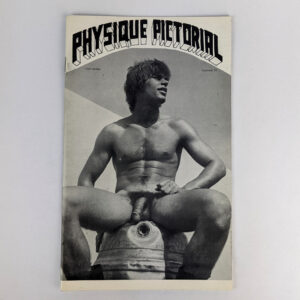
Physique Pictorial Volume 31, August 1978
AU$30 Read MoreAdd to cartBob Mizer
Los Angeles: Athletic Model Guild, 1978.Single 1970s issue of the most popular of beefcake magazines, Physique Pictorial, produced by Bob Mizer’s AMG. Early issues feature scantily clad athletic men in fitness poses together with homoerotic artwork by Tom of Finland, Harry Bush, George Quaintance, and others. If you can stayed focused the text provides insight into gay culture and rights at the time, as well as details on the models and artwork. Into the late 1960s and 1970s as the laws around censorship change, the beefcake physique magazine became more naked and blatantly homoerotic.
-
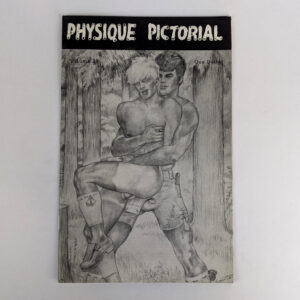
Physique Pictorial Volume 29, March 1977
AU$30 Read MoreAdd to cartBob Mizer
Los Angeles: Athletic Model Guild, 1977.Single 1970s issue of the most popular of beefcake magazines, Physique Pictorial, produced by Bob Mizer’s AMG. Early issues feature scantily clad athletic men in fitness poses together with homoerotic artwork by Tom of Finland, Harry Bush, George Quaintance, and others. If you can stayed focused the text provides insight into gay culture and rights at the time, as well as details on the models and artwork. Into the late 1960s and 1970s as the laws around censorship change, the beefcake physique magazine became more naked and blatantly homoerotic.
-
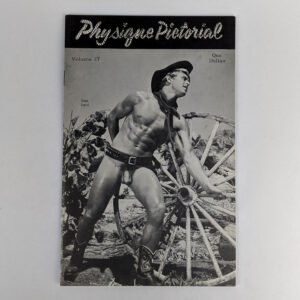
Physique Pictorial Volume 27, July 1975
AU$30 Read MoreAdd to cartBob Mizer
Los Angeles: Athletic Model Guild, 1975.Single 1970s issue of the most popular of beefcake magazines, Physique Pictorial, produced by Bob Mizer’s AMG. Early issues feature scantily clad athletic men in fitness poses together with homoerotic artwork by Tom of Finland, Harry Bush, George Quaintance, and others. If you can stayed focused the text provides insight into gay culture and rights at the time, as well as details on the models and artwork. Into the late 1960s and 1970s as the laws around censorship change, the beefcake physique magazine became more naked and blatantly homoerotic.
-
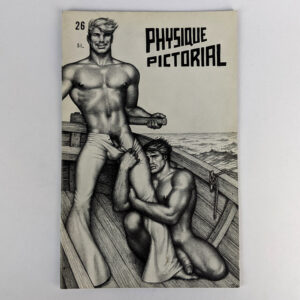
Physique Pictorial Volume 26, December 1974
AU$50 Read MoreAdd to cartBob Mizer
Los Angeles: Athletic Model Guild, 1974.Single 1970s issue of the most popular of beefcake magazines, Physique Pictorial, produced by Bob Mizer’s AMG. Early issues feature scantily clad athletic men in fitness poses together with homoerotic artwork by Tom of Finland, Harry Bush, George Quaintance, and others. If you can stayed focused the text provides insight into gay culture and rights at the time, as well as details on the models and artwork. Into the late 1960s and 1970s as the laws around censorship change, the beefcake physique magazine became more naked and blatantly homoerotic.
-
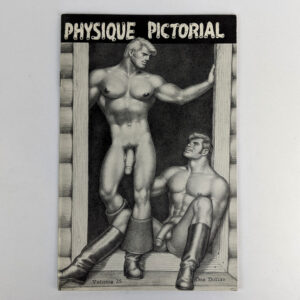
Physique Pictorial Volume 25, May 1974
AU$50 Read MoreAdd to cartBob Mizer
Los Angeles: Athletic Model Guild, 1974.Single 1970s issue of the most popular of beefcake magazines, Physique Pictorial, produced by Bob Mizer’s AMG. Early issues feature scantily clad athletic men in fitness poses together with homoerotic artwork by Tom of Finland, Harry Bush, George Quaintance, and others. If you can stayed focused the text provides insight into gay culture and rights at the time, as well as details on the models and artwork. Into the late 1960s and 1970s as the laws around censorship change, the beefcake physique magazine became more naked and blatantly homoerotic.
-
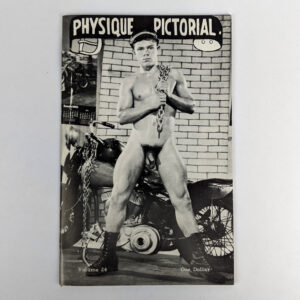
Physique Pictorial Volume 24, January 1974
AU$30 Read MoreAdd to cartBob Mizer
Los Angeles: Athletic Model Guild, 1974.Single 1970s issue of the most popular of beefcake magazines, Physique Pictorial, produced by Bob Mizer’s AMG. Early issues feature scantily clad athletic men in fitness poses together with homoerotic artwork by Tom of Finland, Harry Bush, George Quaintance, and others. If you can stayed focused the text provides insight into gay culture and rights at the time, as well as details on the models and artwork. Into the late 1960s and 1970s as the laws around censorship change, the beefcake physique magazine became more naked and blatantly homoerotic.
-
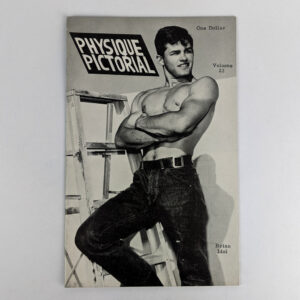
Physique Pictorial Volume 22, April 1973
AU$40 Read MoreAdd to cartBob Mizer
Los Angeles: Athletic Model Guild, 1973.Single 1970s issue of the most popular of beefcake magazines, Physique Pictorial, produced by Bob Mizer’s AMG. Early issues feature scantily clad athletic men in fitness poses together with homoerotic artwork by Tom of Finland, Harry Bush, George Quaintance, and others. If you can stayed focused the text provides insight into gay culture and rights at the time, as well as details on the models and artwork. Into the late 1960s and 1970s as the laws around censorship change, the beefcake physique magazine became more naked and blatantly homoerotic.
-
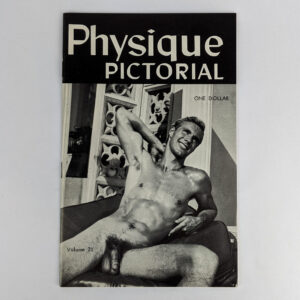
Physique Pictorial Volume 21, July 1972
AU$40 Read MoreAdd to cartBob Mizer
Los Angeles: Athletic Model Guild, 1972.Single 1970s issue of the most popular of beefcake magazines, Physique Pictorial, produced by Bob Mizer’s AMG. Early issues feature scantily clad athletic men in fitness poses together with homoerotic artwork by Tom of Finland, Harry Bush, George Quaintance, and others. If you can stayed focused the text provides insight into gay culture and rights at the time, as well as details on the models and artwork. Into the late 1960s and 1970s as the laws around censorship change, the beefcake physique magazine became more naked and blatantly homoerotic.
-
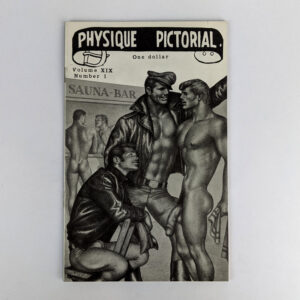
Physique Pictorial Volume 19 Number 1, June 1971
AU$40 Read MoreAdd to cartBob Mizer
Los Angeles: Athletic Model Guild, 1971.Single 1970s issue of the most popular of beefcake magazines, Physique Pictorial, produced by Bob Mizer’s AMG. Early issues feature scantily clad athletic men in fitness poses together with homoerotic artwork by Tom of Finland, Harry Bush, George Quaintance, and others. If you can stayed focused the text provides insight into gay culture and rights at the time, as well as details on the models and artwork. Into the late 1960s and 1970s as the laws around censorship change, the beefcake physique magazine became more naked and blatantly homoerotic.
-
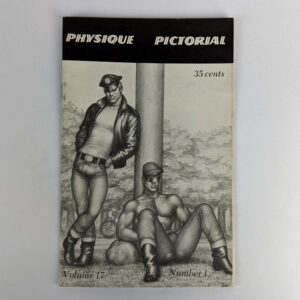
Physique Pictorial Volume 17 Number 1, July 1968
AU$50 Read MoreAdd to cartBob Mizer
Los Angeles: Athletic Model Guild, 1968.Single 1960s issue of the most popular of beefcake magazines, Physique Pictorial, produced by Bob Mizer’s AMG. Early issues feature scantily clad athletic men in fitness poses together with homoerotic artwork by Tom of Finland, Harry Bush, George Quaintance, and others. If you can stayed focused the text provides insight into gay culture and rights at the time, as well as details on the models and artwork. Into the late 1960s and 1970s as the laws around censorship change, the beefcake physique magazine became more naked and blatantly homoerotic.
-
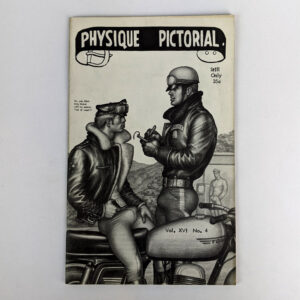
Physique Pictorial Volume 16 Number 4, February 1968
AU$50 Read MoreAdd to cartBob Mizer
Los Angeles: Athletic Model Guild, 1968.Single 1960s issue of the most popular of beefcake magazines, Physique Pictorial, produced by Bob Mizer’s AMG. Early issues feature scantily clad athletic men in fitness poses together with homoerotic artwork by Tom of Finland, Harry Bush, George Quaintance, and others. If you can stayed focused the text provides insight into gay culture and rights at the time, as well as details on the models and artwork. Into the late 1960s and 1970s as the laws around censorship change, the beefcake physique magazine became more naked and blatantly homoerotic.
-
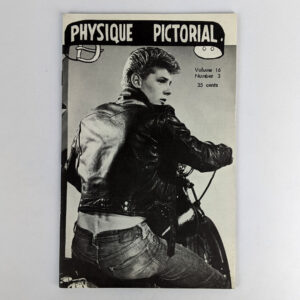
Physique Pictorial Volume 16 Number 3, September 1967
AU$50 Read MoreAdd to cartBob Mizer
Los Angeles: Athletic Model Guild, 1967.Single 1960s issue of the most popular of beefcake magazines, Physique Pictorial, produced by Bob Mizer’s AMG. Early issues feature scantily clad athletic men in fitness poses together with homoerotic artwork by Tom of Finland, Harry Bush, George Quaintance, and others. If you can stayed focused the text provides insight into gay culture and rights at the time, as well as details on the models and artwork. Into the late 1960s and 1970s as the laws around censorship change, the beefcake physique magazine became more naked and blatantly homoerotic.
-
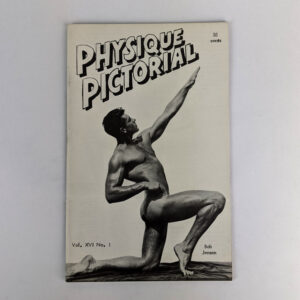
Physique Pictorial Volume 16 Number 1, December 1966
AU$40 Read MoreAdd to cartBob Mizer
Los Angeles: Athletic Model Guild, 1966.Single 1960s issue of the most popular of beefcake magazines, Physique Pictorial, produced by Bob Mizer’s AMG. Early issues feature scantily clad athletic men in fitness poses together with homoerotic artwork by Tom of Finland, Harry Bush, George Quaintance, and others. If you can stayed focused the text provides insight into gay culture and rights at the time, as well as details on the models and artwork. Into the late 1960s and 1970s as the laws around censorship change, the beefcake physique magazine became more naked and blatantly homoerotic.
-
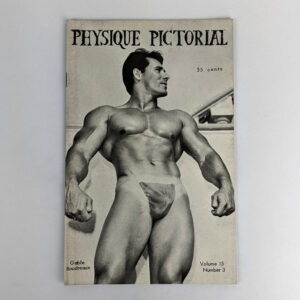
Physique Pictorial Volume 15 Number 4, September 1966
AU$40 Read MoreAdd to cartBob Mizer
Los Angeles: Athletic Model Guild, 1966.Single 1960s issue of the most popular of beefcake magazines, Physique Pictorial, produced by Bob Mizer’s AMG. Early issues feature scantily clad athletic men in fitness poses together with homoerotic artwork by Tom of Finland, Harry Bush, George Quaintance, and others. If you can stayed focused the text provides insight into gay culture and rights at the time, as well as details on the models and artwork. Into the late 1960s and 1970s as the laws around censorship change, the beefcake physique magazine became more naked and blatantly homoerotic. Vol. 15 No. 4 incorrectly printed as Number 3 on the cover, but with correct numbering on interior.
-
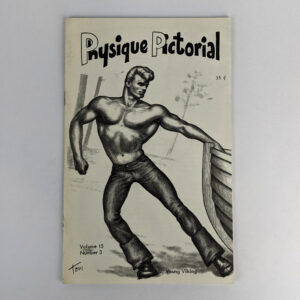
Physique Pictorial Volume 15 Number 3, June 1966
AU$40 Read MoreAdd to cartBob Mizer
Los Angeles: Athletic Model Guild, 1966.Single 1960s issue of the most popular of beefcake magazines, Physique Pictorial, produced by Bob Mizer’s AMG. Early issues feature scantily clad athletic men in fitness poses together with homoerotic artwork by Tom of Finland, Harry Bush, George Quaintance, and others. If you can stayed focused the text provides insight into gay culture and rights at the time, as well as details on the models and artwork. Into the late 1960s and 1970s as the laws around censorship change, the beefcake physique magazine became more naked and blatantly homoerotic.
-
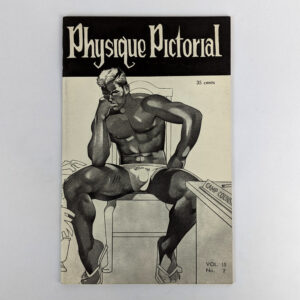
Physique Pictorial Volume 15 Number 2, January 1966
AU$40 Read MoreAdd to cartBob Mizer
Los Angeles: Athletic Model Guild, 1966.Single 1960s issue of the most popular of beefcake magazines, Physique Pictorial, produced by Bob Mizer’s AMG. Early issues feature scantily clad athletic men in fitness poses together with homoerotic artwork by Tom of Finland, Harry Bush, George Quaintance, and others. If you can stayed focused the text provides insight into gay culture and rights at the time, as well as details on the models and artwork. Into the late 1960s and 1970s as the laws around censorship change, the beefcake physique magazine became more naked and blatantly homoerotic.
-
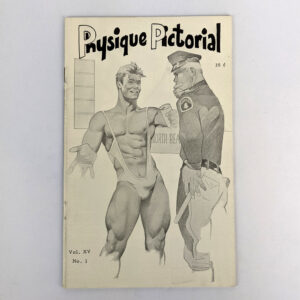
Physique Pictorial Volume 15 Number 1, October 1965
AU$40 Read MoreAdd to cartBob Mizer
Los Angeles: Athletic Model Guild, 1965.Single 1960s issue of the most popular of beefcake magazines, Physique Pictorial, produced by Bob Mizer’s AMG. Early issues feature scantily clad athletic men in fitness poses together with homoerotic artwork by Tom of Finland, Harry Bush, George Quaintance, and others. If you can stayed focused the text provides insight into gay culture and rights at the time, as well as details on the models and artwork. Into the late 1960s and 1970s as the laws around censorship change, the beefcake physique magazine became more naked and blatantly homoerotic.
-
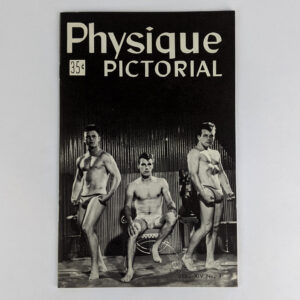
Physique Pictorial Volume 14 Number 4, June 1965
AU$40 Read MoreAdd to cartBob Mizer
Los Angeles: Athletic Model Guild, 1965.Single 1960s issue of the most popular of beefcake magazines, Physique Pictorial, produced by Bob Mizer’s AMG. Early issues feature scantily clad athletic men in fitness poses together with homoerotic artwork by Tom of Finland, Harry Bush, George Quaintance, and others. If you can stayed focused the text provides insight into gay culture and rights at the time, as well as details on the models and artwork. Into the late 1960s and 1970s as the laws around censorship change, the beefcake physique magazine became more naked and blatantly homoerotic.
-
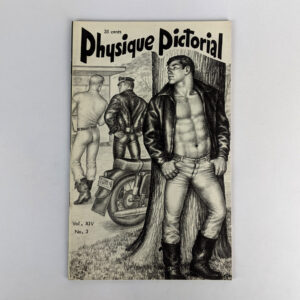
Physique Pictorial Volume 14 Number 3, February 1965
AU$40 Read MoreAdd to cartBob Mizer
Los Angeles: Athletic Model Guild, 1965.Single 1960s issue of the most popular of beefcake magazines, Physique Pictorial, produced by Bob Mizer’s AMG. Early issues feature scantily clad athletic men in fitness poses together with homoerotic artwork by Tom of Finland, Harry Bush, George Quaintance, and others. If you can stayed focused the text provides insight into gay culture and rights at the time, as well as details on the models and artwork. Into the late 1960s and 1970s as the laws around censorship change, the beefcake physique magazine became more naked and blatantly homoerotic.
-
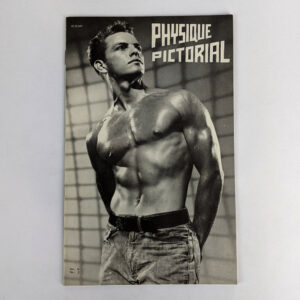
Physique Pictorial Volume 14 Number 2, October 1964
AU$40 Read MoreAdd to cartBob Mizer
Los Angeles: Athletic Model Guild, 1964.Single 1960s issue of the most popular of beefcake magazines, Physique Pictorial, produced by Bob Mizer’s AMG. Early issues feature scantily clad athletic men in fitness poses together with homoerotic artwork by Tom of Finland, Harry Bush, George Quaintance, and others. If you can stayed focused the text provides insight into gay culture and rights at the time, as well as details on the models and artwork. Into the late 1960s and 1970s as the laws around censorship change, the beefcake physique magazine became more naked and blatantly homoerotic.
-
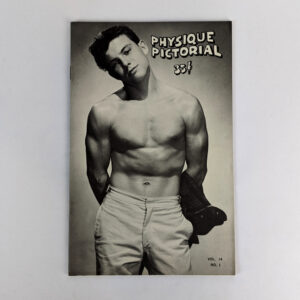
Physique Pictorial Volume 14 Number 1, July 1964
AU$50 Read MoreAdd to cartBob Mizer
Los Angeles: Athletic Model Guild, 1964.Single 1960s issue of the most popular of beefcake magazines, Physique Pictorial, produced by Bob Mizer’s AMG. Early issues feature scantily clad athletic men in fitness poses together with homoerotic artwork by Tom of Finland, Harry Bush, George Quaintance, and others. If you can stayed focused the text provides insight into gay culture and rights at the time, as well as details on the models and artwork. Into the late 1960s and 1970s as the laws around censorship change, the beefcake physique magazine became more naked and blatantly homoerotic.
-
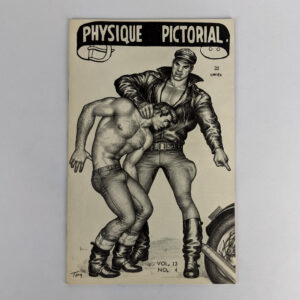
Physique Pictorial Volume 13 Number 4, May 1964
AU$50 Read MoreAdd to cartBob Mizer
Los Angeles: Athletic Model Guild, 1964.Single 1960s issue of the most popular of beefcake magazines, Physique Pictorial, produced by Bob Mizer’s AMG. Early issues feature scantily clad athletic men in fitness poses together with homoerotic artwork by Tom of Finland, Harry Bush, George Quaintance, and others. If you can stayed focused the text provides insight into gay culture and rights at the time, as well as details on the models and artwork. Into the late 1960s and 1970s as the laws around censorship change, the beefcake physique magazine became more naked and blatantly homoerotic.
-
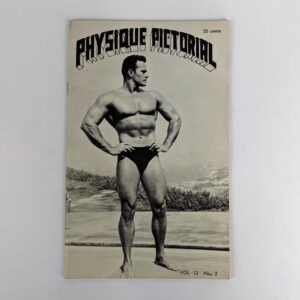
Physique Pictorial Volume 13 Number 3, February 1964
AU$40 Read MoreAdd to cartBob Mizer
Los Angeles: Athletic Model Guild, 1964.Single 1960s issue of the most popular of beefcake magazines, Physique Pictorial, produced by Bob Mizer’s AMG. Early issues feature scantily clad athletic men in fitness poses together with homoerotic artwork by Tom of Finland, Harry Bush, George Quaintance, and others. If you can stayed focused the text provides insight into gay culture and rights at the time, as well as details on the models and artwork. Into the late 1960s and 1970s as the laws around censorship change, the beefcake physique magazine became more naked and blatantly homoerotic. Volume 13 Number 3 states published Feb ’63 but is Feb ’64.
-
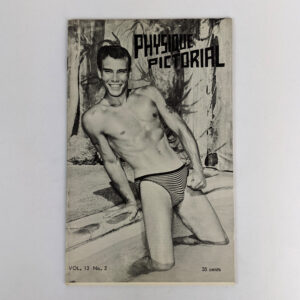
Physique Pictorial Volume 13 Number 2, October 1963
AU$40 Read MoreAdd to cartBob Mizer
Los Angeles: Athletic Model Guild, 1963.Single 1960s issue of the most popular of beefcake magazines, Physique Pictorial, produced by Bob Mizer’s AMG. Early issues feature scantily clad athletic men in fitness poses together with homoerotic artwork by Tom of Finland, Harry Bush, George Quaintance, and others. If you can stayed focused the text provides insight into gay culture and rights at the time, as well as details on the models and artwork. Into the late 1960s and 1970s as the laws around censorship change, the beefcake physique magazine became more naked and blatantly homoerotic.
-
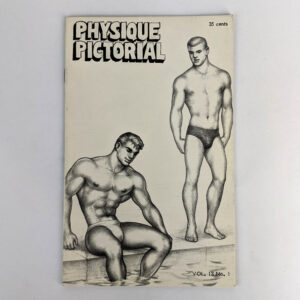
Physique Pictorial Volume 13 Number 1, August 1963
AU$40 Read MoreAdd to cartBob Mizer
Los Angeles: Athletic Model Guild, 1963.Single 1960s issue of the most popular of beefcake magazines, Physique Pictorial, produced by Bob Mizer’s AMG. Early issues feature scantily clad athletic men in fitness poses together with homoerotic artwork by Tom of Finland, Harry Bush, George Quaintance, and others. If you can stayed focused the text provides insight into gay culture and rights at the time, as well as details on the models and artwork. Into the late 1960s and 1970s as the laws around censorship change, the beefcake physique magazine became more naked and blatantly homoerotic.
-
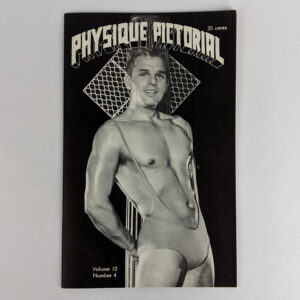
Physique Pictorial Volume 12 Number 4, May 1963
AU$40 Read MoreAdd to cartBob Mizer
Los Angeles: Athletic Model Guild, 1963.Single 1960s issue of the most popular of beefcake magazines, Physique Pictorial, produced by Bob Mizer’s AMG. Early issues feature scantily clad athletic men in fitness poses together with homoerotic artwork by Tom of Finland, Harry Bush, George Quaintance, and others. If you can stayed focused the text provides insight into gay culture and rights at the time, as well as details on the models and artwork. Into the late 1960s and 1970s as the laws around censorship change, the beefcake physique magazine became more naked and blatantly homoerotic.
-
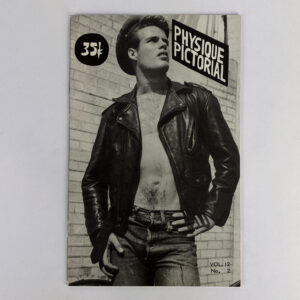
Physique Pictorial Volume 12 Number 2, November 1962
AU$50 Read MoreAdd to cartBob Mizer
Los Angeles: Athletic Model Guild, 1962.Single 1960s issue of the most popular of beefcake magazines, Physique Pictorial, produced by Bob Mizer’s AMG. Early issues feature scantily clad athletic men in fitness poses together with homoerotic artwork by Tom of Finland, Harry Bush, George Quaintance, and others. If you can stayed focused the text provides insight into gay culture and rights at the time, as well as details on the models and artwork. Into the late 1960s and 1970s as the laws around censorship change, the beefcake physique magazine became more naked and blatantly homoerotic.
-
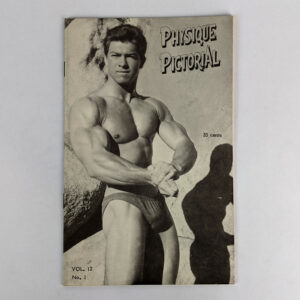
Physique Pictorial Volume 12 Number 1, July 1962
AU$40 Read MoreAdd to cartBob Mizer
Los Angeles: Athletic Model Guild, 1962.Single 1960s issue of the most popular of beefcake magazines, Physique Pictorial, produced by Bob Mizer’s AMG. Early issues feature scantily clad athletic men in fitness poses together with homoerotic artwork by Tom of Finland, Harry Bush, George Quaintance, and others. If you can stayed focused the text provides insight into gay culture and rights at the time, as well as details on the models and artwork. Into the late 1960s and 1970s as the laws around censorship change, the beefcake physique magazine became more naked and blatantly homoerotic.
-
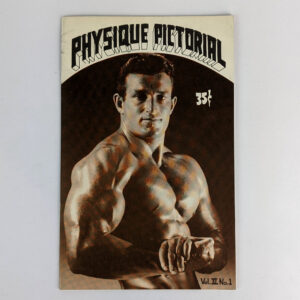
Physique Pictorial Volume 11 Number 1, August 1961
AU$50 Read MoreAdd to cartBob Mizer
Los Angeles: Athletic Model Guild, 1961.Single 1960s issue of the most popular of beefcake magazines, Physique Pictorial, produced by Bob Mizer’s AMG. Early issues feature scantily clad athletic men in fitness poses together with homoerotic artwork by Tom of Finland, Harry Bush, George Quaintance, and others. If you can stayed focused the text provides insight into gay culture and rights at the time, as well as details on the models and artwork. Into the late 1960s and 1970s as the laws around censorship change, the beefcake physique magazine became more naked and blatantly homoerotic.
-
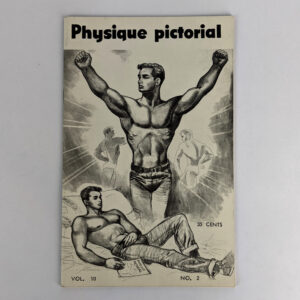
Physique Pictorial Volume 10 Number 2, August 1960
AU$50 Read MoreAdd to cartBob Mizer
Los Angeles: Athletic Model Guild, 1960.Single 1960s issue of the most popular of beefcake magazines, Physique Pictorial, produced by Bob Mizer’s AMG. Early issues feature scantily clad athletic men in fitness poses together with homoerotic artwork by Tom of Finland, Harry Bush, George Quaintance, and others. If you can stayed focused the text provides insight into gay culture and rights at the time, as well as details on the models and artwork. Into the late 1960s and 1970s as the laws around censorship change, the beefcake physique magazine became more naked and blatantly homoerotic.
-
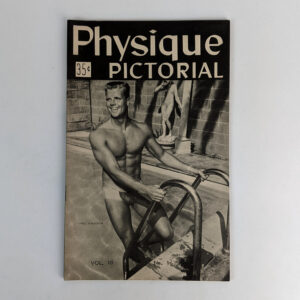
Physique Pictorial Volume 10 Number 1, June 1960
AU$50 Read MoreAdd to cartBob Mizer
Los Angeles: Athletic Model Guild, 1960.Single 1960s issue of the most popular of beefcake magazines, Physique Pictorial, produced by Bob Mizer’s AMG. Early issues feature scantily clad athletic men in fitness poses together with homoerotic artwork by Tom of Finland, Harry Bush, George Quaintance, and others. If you can stayed focused the text provides insight into gay culture and rights at the time, as well as details on the models and artwork. Into the late 1960s and 1970s as the laws around censorship change, the beefcake physique magazine became more naked and blatantly homoerotic.