
Prices in AUD. Free Australian delivery for orders over $400. Free international delivery for orders over $800. Read full terms.
Showing 1–100 of 201 resultsSorted by latest
-
Gay Fiction (26)
-
Gay Studies (119)
-
Gender Diversity (25)
-
in Australia (8)
-
Lesbian Fiction (25)
-
Lesbian Studies (13)
-
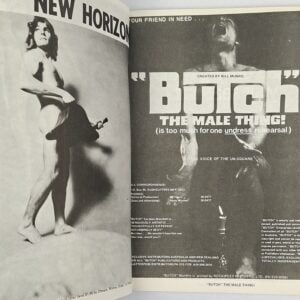

Butch: The Male Thing! Vol. 1, Nos. 2 & 3
AU$400 Read MoreAdd to cartBill Munro
Sydney: Butch Enterprises, [1972].The second (of only two published) of one of Australia’s first gay porn magazines. It has been well documented that Munro’s publishing ventures were more for his own joy of sex than any great publishing profit aspirations, nonetheless, this final double-issue presents as a fine example of 1970s Australian erotica with its mix of male homoeroticism, cartoons, advertisements, and articles, as well as venue, book, and film reviews. Uncommon in the medium, Munro published his name prominently on the front cover, and the interior contains portraits of himself and staff, at a time when homosexuality was still criminalised throughout Australia. He later said he wanted Butch to have a “strong come out attitude [and show] that somebody wasn’t afraid to come out of the closet” (Munro: Let It All Hang Out, 2008). After Butch, Munro published a shortlived tabloid in 1973 titled Little Butch, before selling up to heterosexual smut publisher of Ribald, Bill Horne, who continued the publication as Gay. Printed by Sydney printers Rotaspeed Press, known for printing numerous Australian erotica works by Howard Products, Potz Press, and Lay Press, as well as student newspapers such as University of Queensland Union’s Semper Floreat.
-

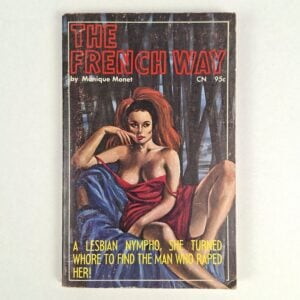
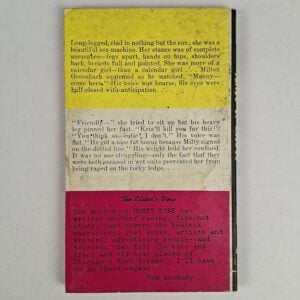
The French Way
AU$150 Read MoreAdd to cartMonique Monet
North Hollywood: All Star Books, 1965.Lesbian pulp AS 54. “A lesbian nympho, she turned whore to find the man who raped her!” One of the many lesbian pulp novels produced in the mid to late 20th century. Often formulaic and issued in easily recognisable series with suggestive covers and titillating titles, the genre was written largely by male authors under female pseudonyms for a male readership, though a smaller number of authors, some of them lesbian or bisexual women writing under similar pseudonyms, brought more narrative sincerity and psychological depth to the same commercial format. The genre as a whole ranges from outright formulaic titillation to more literary treatments of lesbian relationships within the constraints of the paperback original.
-
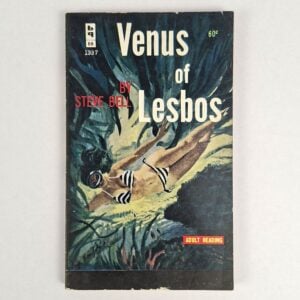
Venus of Lesbos
AU$100 Read MoreAdd to cartSteve Bell
[London]: Gadoline, 1975.Bedside Books BB1337, the English edition of the Newstand Library pulp. Cover illustration by Robert Bonfils. One of the many lesbian pulp novels produced in the mid to late 20th century. Often formulaic and issued in easily recognisable series with suggestive covers and titillating titles, the genre was written largely by male authors under female pseudonyms for a male readership, though a smaller number of authors, some of them lesbian or bisexual women writing under similar pseudonyms, brought more narrative sincerity and psychological depth to the same commercial format. The genre as a whole ranges from outright formulaic titillation to more literary treatments of lesbian relationships within the constraints of the paperback original.
-


The Boy Avengers
AU$200 Read MoreAdd to cartKarl Flinders
New York: The Traveller’s Companion, 1971.Gay pulp TC-516. One of the many gay erotic pulp novels produced in the mid to late 20th century. These short sexually explicit stories, many of which were formulaic and published in easily recognisable series with graphically illustrated covers and titillating titles each targeting a specific sexual niche, demonstrate the breadth of sexual fantasy, occupation, desire, and deviance of the emerging homosexual culture.
-
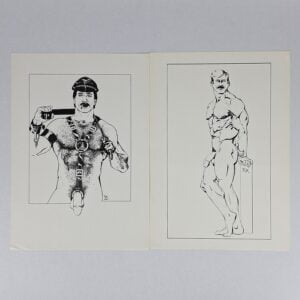

Archive of Homoerotic Prints with Catalogue and TLS
AU$2,000 Read MoreAdd to cartRudolf von Keller
London: Rudolf von Keller, 1993.Archive of late 1980s / early 1990s homoerotic prints by Rudolf von Keller, sent to Jurgen Boedt, editor of the Belgian fetish magazine Secret, in the original postmarked envelope from London to Brussels. One of the two signed typed letters lists the contents of the packet as sent: the artist’s biography, advertising card, catalogue and price list, 8 sets of A4 posters (some in series of 3, others of 4), and 4 greeting cards. Of these, one three-poster series and one greeting card are absent from the surviving archive, while a second packet of A3 posters, also described in the letter, is no longer present. The artwork features hardcore homoerotic themes centred on leather, BDSM, and sadomasochism. Von Keller’s biographical note describes him as born in the late 1940s and educated in Germany, England and the Netherlands, before studying fine art at a college in the English Midlands. After working as a freelance designer while travelling Europe, he returned to the family jewellery business, but continued to produce fetish and BDSM drawings, watercolours, and paintings for a private circle. A series of exhibitions brought this work to a wider audience, leading to print reproduction and, in late 1990, his first ‘Artwork’ catalogue (included here), offering posters, cards, and limited edition prints. The operation was based in London, with a small studio later opened in Amsterdam for developing new work; the note describes him dividing his time between the two cities and a family home in the Rhineland.
-

Le Livre Blanc
AU$2,500 Read MoreAdd to cartJean Cocteau
Paris: Editions du Signe, 1930.One of the foundational texts of modern gay literature. The text was first published anonymously in 1928, without illustration, in an edition of just thirty-one copies. This 1930 edition, the first illustrated and first commercially distributed edition, added eighteen drawings by Cocteau, hand-coloured by M. B. Armington, together with a facsimile of an autograph note in which Cocteau alludes to, without explicitly acknowledging, authorship. Edition limited to 450 copies. This copy on Arches paper, lacking the justification leaf.
-
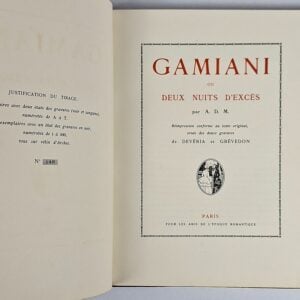
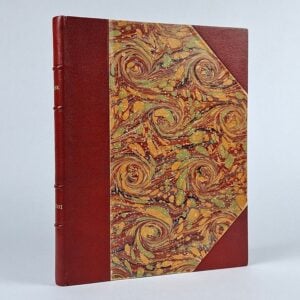
Gamiani ou Deux Nuits d’Exces
AU$1,500 Read MoreAdd to cartA. D. M. [Alfred de Musset]
Paris: Pour les Amis de l’Epoque Romantique [Maurice Duflou], [1924].The first serious reprint of Gamiani, with the text revised against the original edition, and the preface, by Louis Perceau, for the first time attempting a bibliography of the much reprinted work. One of 300 numbered copies (from a total edition of 320). The 12 heliogravures after the lithographs of the 1833 Brussels edition, and the title page of that edition reproduced in facsimile. This copy with the plates expertly hand-coloured. PERCEAU 16-36, PIA 529, DUTEL 1635.
-
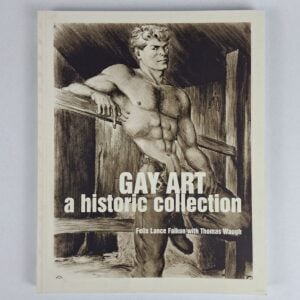
Gay Art: A Historic Collection
AU$150 Read MoreAdd to cartFelix Lance Falkon; Thomas Waugh
Vancouver: Arsenal Pulp Press, 2006.New edition of one of the first anthologies of gay art, A Historic Collection of Gay Art (Greenleaf Editions, 1972). Includes Tom of Finland, Graewolf, Blade, Harry Bush, and many others. Prefaces by Don Gilmore (1972) and Felix Lance Falkon (2006); Forewords by G. G. Stoctay (1972) and Earl Kemp (2006); and Introductions by Felix Lance Falkon (1972) and Thomas Waugh (2006). Published “in the hopes that their personal lives will become more sexually enlightened, enriched and educated, A historic collection of gay art is dedicated to those adults who desire sexually explicit material for their private use in the privacy of their own homes” (from the first edition preface)
-
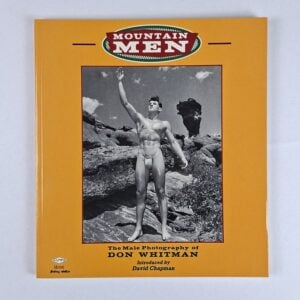
Mountain Men: The Male Photography of Don Whitman
AU$100 Read MoreAdd to cartDon Whitman
London: Editions Aubrey Walter, 1991.The physique photography of Don Whitman’s Western Photography Guild, operating out of Denver Colorado, capturing the perfectly sculpted men of the American West in the Rocky Mountains.
-
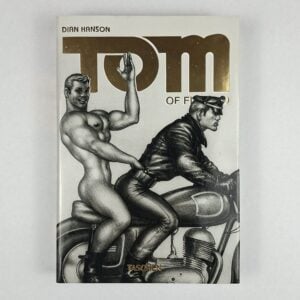
Tom of Finland Volume II: Bikers
AU$100 Read MoreAdd to cartDian Hanson; Tom of Finland
Koln: Taschen, 2012.Collected volume of ToFs Bikers with the reversible panic dust jacket for safe reading on the train.
-
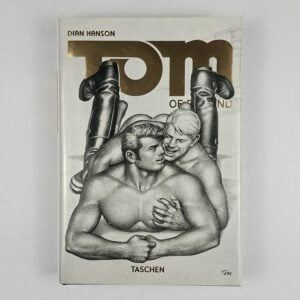
Tom of Finland The Comics Volume I
AU$100 Read MoreAdd to cartDian Hanson; Tom of Finland
Koln: Taschen, 2011.Collected volume of ToFs comic illustration with the reversible panic dust jacket for safe reading on the train.
-
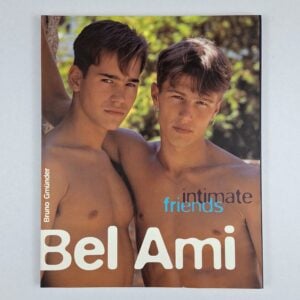
Bel Ami: Intimate Friends
AU$100 Read MoreAdd to cartGeorge Duroy
Berlin: Bruno Gmunder, 1996.BelAmi is a gay pornographic film studio founded in 1993 by the Slovak filmmaker George Duroy, whose pseudonym was taken from the protagonist of Guy de Maupassant’s novel Bel-Ami. Established in the years following the collapse of the Eastern Bloc, the studio became closely associated with performers from Central and Eastern Europe, particularly the Czech Republic, Slovakia, and Hungary, presenting an idealised image of youthful masculine beauty and helping to define the archetype of the Euro-twink in contemporary gay erotica. BelAmi distinguished itself through a polished and often narrative-driven style of filmmaking. Rather than relying solely on a succession of scenes, many productions incorporated simple storylines, characterisation, and location shooting in rural, coastal, and historic European settings, lending the films a degree of atmosphere unusual within the genre at the time. The same aesthetic informed the studio’s extensive publishing programme, including calendars and photobooks produced with Bruno Gmunder Verlag. These publications, combining portraiture, travel imagery, and erotic photography, are striking examples of late twentieth- and early twenty-first-century gay visual culture.
-
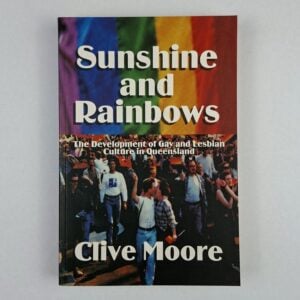
Sunshine and Rainbows: The Development of Gay and Lesbian Culture in Queensland
Read MoreClive Moore
Brisbane: University of Queensland Press, 2001.“a history of the development of homosexuality as an Australian subculture. Proceeding chronologically from the 1820s through to the vibrant alternative culture that exists in 2000, Sunshine and Rainbows argues that the manner in which gay and lesbian identity has been constructed in Queensland is typical of Australia generally. Beginning with isolated acts suppressed by criminal law and medical opnion, a homosexual identity developed, which by the mid-nineteenth century was based on male appropriation of public space. A clandestine social subculture was in place during the first half of the twentieth century. Despite continued religious, social, legal and medical repression, it became an obvious part of Australian sexuality, expressed through Beats and early gathering places such as coffee shops, hotels and theatres. Well developed in urban areas by the 1930s and 1940s, the subculture strengthened in the 1970s and 1980s, when clubs, gay commercial venues and political organisations emerged. The fight for gay law reform, recognition of the rights of same-sex partners, and of individuals affected by HIV/AIDS continues today. Sunshine and Rainbows discusses the different roles of gay men and lesbians in the subculture, arguing that by the end of the twentieth century a transition had occurred to a full-development alternative culture.” (from rear cover)
-

Bel Ami: New Generation
AU$100 Read MoreAdd to cartGeorge Duroy
Berlin: Bruno Gmunder, 2008.BelAmi is a gay pornographic film studio founded in 1993 by the Slovak filmmaker George Duroy, whose pseudonym was taken from the protagonist of Guy de Maupassant’s novel Bel-Ami. Established in the years following the collapse of the Eastern Bloc, the studio became closely associated with performers from Central and Eastern Europe, particularly the Czech Republic, Slovakia, and Hungary, presenting an idealised image of youthful masculine beauty and helping to define the archetype of the Euro-twink in contemporary gay erotica. BelAmi distinguished itself through a polished and often narrative-driven style of filmmaking. Rather than relying solely on a succession of scenes, many productions incorporated simple storylines, characterisation, and location shooting in rural, coastal, and historic European settings, lending the films a degree of atmosphere unusual within the genre at the time. The same aesthetic informed the studio’s extensive publishing programme, including calendars and photobooks produced with Bruno Gmunder Verlag. These publications, combining portraiture, travel imagery, and erotic photography, are striking examples of late twentieth- and early twenty-first-century gay visual culture.
-
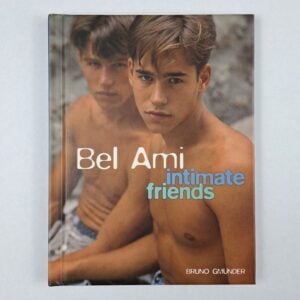
Bel Ami: Intimate Friends
AU$100 Read MoreAdd to cartGeorge Duroy
Berlin: Bruno Gmunder, 2001.BelAmi is a gay pornographic film studio founded in 1993 by the Slovak filmmaker George Duroy, whose pseudonym was taken from the protagonist of Guy de Maupassant’s novel Bel-Ami. Established in the years following the collapse of the Eastern Bloc, the studio became closely associated with performers from Central and Eastern Europe, particularly the Czech Republic, Slovakia, and Hungary, presenting an idealised image of youthful masculine beauty and helping to define the archetype of the Euro-twink in contemporary gay erotica. BelAmi distinguished itself through a polished and often narrative-driven style of filmmaking. Rather than relying solely on a succession of scenes, many productions incorporated simple storylines, characterisation, and location shooting in rural, coastal, and historic European settings, lending the films a degree of atmosphere unusual within the genre at the time. The same aesthetic informed the studio’s extensive publishing programme, including calendars and photobooks produced with Bruno Gmunder Verlag. These publications, combining portraiture, travel imagery, and erotic photography, are striking examples of late twentieth- and early twenty-first-century gay visual culture.
-
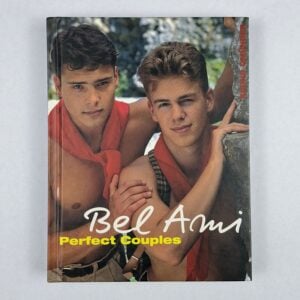
Bel Ami: Perfect Couples
AU$100 Read MoreAdd to cartBel Ami
Berlin: Bruno Gmunder, 1999.BelAmi is a gay pornographic film studio founded in 1993 by the Slovak filmmaker George Duroy, whose pseudonym was taken from the protagonist of Guy de Maupassant’s novel Bel-Ami. Established in the years following the collapse of the Eastern Bloc, the studio became closely associated with performers from Central and Eastern Europe, particularly the Czech Republic, Slovakia, and Hungary, presenting an idealised image of youthful masculine beauty and helping to define the archetype of the Euro-twink in contemporary gay erotica. BelAmi distinguished itself through a polished and often narrative-driven style of filmmaking. Rather than relying solely on a succession of scenes, many productions incorporated simple storylines, characterisation, and location shooting in rural, coastal, and historic European settings, lending the films a degree of atmosphere unusual within the genre at the time. The same aesthetic informed the studio’s extensive publishing programme, including calendars and photobooks produced with Bruno Gmunder Verlag. These publications, combining portraiture, travel imagery, and erotic photography, are striking examples of late twentieth- and early twenty-first-century gay visual culture.
-

All Players
AU$600 Read MoreAdd to cartRick Day
Berlin: Bruno Gmunder, 2012.Large-format photobook of male nudes. The third and concluding volume in Day’s Players series, focussed on the athletic male physique in sporting kit, partial undress, and full nudity, combining selected images from the two earlier volumes with new material.
-

BelAmi: Oversized
AU$500 Read MoreAdd to cartStephan Niederwieser
Berlin: Bruno Gmunder, 2011.BelAmi is a gay pornographic film studio founded in 1993 by the Slovak filmmaker George Duroy, whose pseudonym was taken from the protagonist of Guy de Maupassant’s novel Bel-Ami. Established in the years following the collapse of the Eastern Bloc, the studio became closely associated with performers from Central and Eastern Europe, particularly the Czech Republic, Slovakia, and Hungary, presenting an idealised image of youthful masculine beauty and helping to define the archetype of the Euro-twink in contemporary gay erotica. BelAmi distinguished itself through a polished and often narrative-driven style of filmmaking. Rather than relying solely on a succession of scenes, many productions incorporated simple storylines, characterisation, and location shooting in rural, coastal, and historic European settings, lending the films a degree of atmosphere unusual within the genre at the time. The same aesthetic informed the studio’s extensive publishing programme, including calendars and photobooks produced with Bruno Gmunder Verlag. These publications, combining portraiture, travel imagery, and erotic photography, are striking examples of late twentieth- and early twenty-first-century gay visual culture.
-
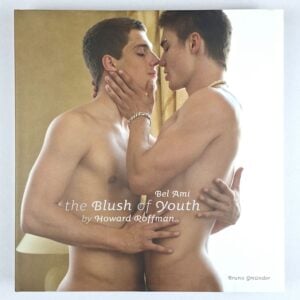
Bel Ami: The Blush of Youth
AU$800 Read MoreAdd to cartHoward Roffman
Berlin: Bruno Gmunder, 2010.BelAmi is a gay pornographic film studio founded in 1993 by the Slovak filmmaker George Duroy, whose pseudonym was taken from the protagonist of Guy de Maupassant’s novel Bel-Ami. Established in the years following the collapse of the Eastern Bloc, the studio became closely associated with performers from Central and Eastern Europe, particularly the Czech Republic, Slovakia, and Hungary, presenting an idealised image of youthful masculine beauty and helping to define the archetype of the Euro-twink in contemporary gay erotica. BelAmi distinguished itself through a polished and often narrative-driven style of filmmaking. Rather than relying solely on a succession of scenes, many productions incorporated simple storylines, characterisation, and location shooting in rural, coastal, and historic European settings, lending the films a degree of atmosphere unusual within the genre at the time. The same aesthetic informed the studio’s extensive publishing programme, including calendars and photobooks produced with Bruno Gmunder Verlag. These publications, combining portraiture, travel imagery, and erotic photography, are striking examples of late twentieth- and early twenty-first-century gay visual culture.
-

Paradise Found
AU$400 Read MoreAdd to cartHoward Roffman
Berlin: Bruno Gmunder, 2011.BelAmi is a gay pornographic film studio founded in 1993 by the Slovak filmmaker George Duroy, whose pseudonym was taken from the protagonist of Guy de Maupassant’s novel Bel-Ami. Established in the years following the collapse of the Eastern Bloc, the studio became closely associated with performers from Central and Eastern Europe, particularly the Czech Republic, Slovakia, and Hungary, presenting an idealised image of youthful masculine beauty and helping to define the archetype of the Euro-twink in contemporary gay erotica. BelAmi distinguished itself through a polished and often narrative-driven style of filmmaking. Rather than relying solely on a succession of scenes, many productions incorporated simple storylines, characterisation, and location shooting in rural, coastal, and historic European settings, lending the films a degree of atmosphere unusual within the genre at the time. The same aesthetic informed the studio’s extensive publishing programme, including calendars and photobooks produced with Bruno Gmunder Verlag. These publications, combining portraiture, travel imagery, and erotic photography, are striking examples of late twentieth- and early twenty-first-century gay visual culture.
-
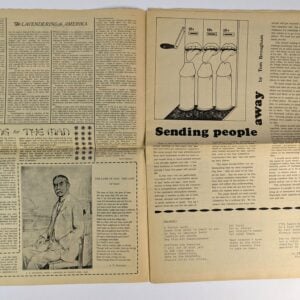
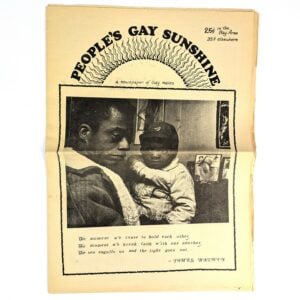
People’s Gay Sunshine: A Newspaper of Gay Males
AU$50 Read MoreAdd to cartPeople’s Gay Sunshine
Berkeley: People’s Gay Sunshine, No date.One-shot California gay newspaper. Cover story on James Baldwin and featuring Allen Ginsberg, Edward Carpenter, an open letter to Tennessee Williams, and more.
-

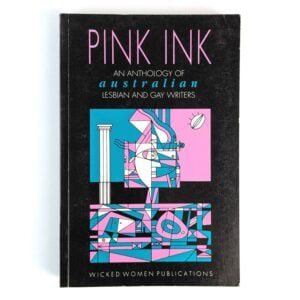
Pink Ink: An Anthology of Australian Lesbian and Gay Writers
AU$50 Read MoreAdd to cartKerry Bashford; Mikey Halliday; Chris Jones; Peter Kerans; Leonie Knight; Jan Moulstone; Wendy Moulstone
Sydney: Wicked Women Publications, 1991.Featuring Xalid Abd-ul-Wahid, Graeme Aitken, Mazz Appleton, Kerry Bashford, Catherine Bateson, Javant Biarujia, Ian C. Birks, Margaret Bradstock, Buffy Bright, Di Brown, Pamela Brown, Fiesta Carrera, Cicada, Rebecca Cox, S. Daalmeyer, Steven Dawson, Campsion Decent, Linda Dement, Gary Dunne, Kathleen Mary Fallon, Mikol Furneaux, Denis Gallagher, Carolyn Gerrish, Mikey Halliday, Susan Hampton, Jen Harrison, Tim Herbert, Lyn Hughes, Giles Hugo, Michael Hurley, Chris Jones, Karl Karlsen, Peter Kerans, Kerry Leves, Ian MacNeill, Frances Marjorie, Manfred Jurgensen, Cynthia Maxwell-Smith, Don Maynard, Dorothy Moore, Jan Moulstone, Wendy Moulstone, Rosslyn Prosser, Dorothy Porter, Gina Schien, Kurt Josef Schranzer, Robert Tompsett, Marky Try, Paul Van Reyk, Natalie Varnish, Louise Wakeling, Linda Weste, and Adrian Weston.
-


Pansy Beat
AU$200 Read MoreAdd to cartMichael Economy
[New York]: KrimsKrams Island, 2017.“Pansy Beat was a short-lived fanzine published by Michael Economy in New York from 1989 to 1990, totalling five quarterly issues. Each issue’s 50-some black-and-white pages documented the exuberant downtown gay and drag club scene of that era and included one free condom. The zine offered a glimpse into an exhilarating alternative universe during the darkest years of the AIDS crisis. Interviews profiled downtown personalities on the verge of global stardom, many still working to this day. Artists such as Lady Bunny, Billy Erb, Connie Fleming, Kenny Kenny, Lady Miss Kier and Larry Tee first shared their memorable selves in print on the pages of Pansy Beat. The zine also featured interviews with Edwige Belmore, Leigh Bowery and Quentin Crisp. This book celebrates Pansy Beat’s brief but influential life, including a reprinting of all five issues in their original format, previously unseen photographs by staff photographer Michael Fazakerley, new full-color artwork by some of the original contributors, plus new essays and interviews.” (publisher’s blurb) This copy inscribed by Michael.
-

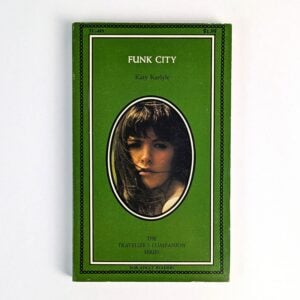
Funk City
AU$150 Read MoreAdd to cartKaty Karlyle
New York: The Olympia Press, 1970.The Traveller’s Companion TC-489. A young artists moves to New York to paint, but also discovers the joys of the flesh, both men and women.
-

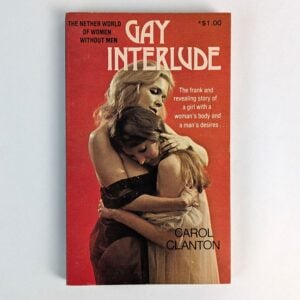
Gay Interlude
AU$100 Read MoreAdd to cartCarol Clanton
Sydney: Scripts, 1973.“The nether world of women without men.” Australian reissue of the 1961 Midwood release. One of the many lesbian pulp novels produced in the mid to late 20th century. Often formulaic and issued in easily recognisable series with suggestive covers and titillating titles, the genre was written largely by male authors under female pseudonyms for a male readership, though a smaller number of authors, some of them lesbian or bisexual women writing under similar pseudonyms, brought more narrative sincerity and psychological depth to the same commercial format. The genre as a whole ranges from outright formulaic titillation to more literary treatments of lesbian relationships within the constraints of the paperback original.
-
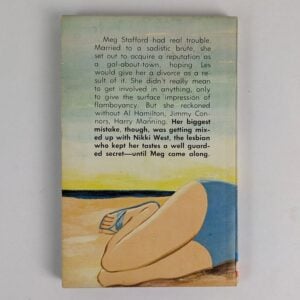
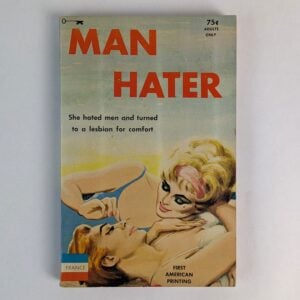
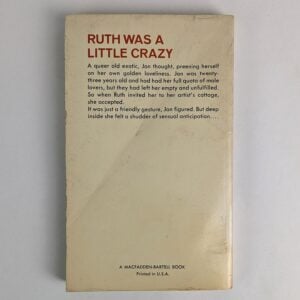
Man Hater
AU$50 Read MoreAdd to cartR. C. Gold
Hollywood: International Publications Inc., 1963.“She hated men and turned to a lesbian for comfort.” France’ Book 1067. One of the many lesbian pulp novels produced in the mid to late 20th century. Often formulaic and issued in easily recognisable series with suggestive covers and titillating titles, the genre was written largely by male authors under female pseudonyms for a male readership, though a smaller number of authors, some of them lesbian or bisexual women writing under similar pseudonyms, brought more narrative sincerity and psychological depth to the same commercial format. The genre as a whole ranges from outright formulaic titillation to more literary treatments of lesbian relationships within the constraints of the paperback original.
-
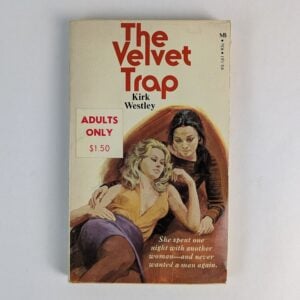
The Velvet Trap
AU$50 Read MoreAdd to cartKirk Westley [Manning Lee Stokes]
New York: Macfadden-Bartell, 1971.“She spent one night with another woman–and never wanted a man again.” Cover illustration by Daryl Greene. One of the many lesbian pulp novels produced in the mid to late 20th century. Often formulaic and issued in easily recognisable series with suggestive covers and titillating titles, the genre was written largely by male authors under female pseudonyms for a male readership, though a smaller number of authors, some of them lesbian or bisexual women writing under similar pseudonyms, brought more narrative sincerity and psychological depth to the same commercial format. The genre as a whole ranges from outright formulaic titillation to more literary treatments of lesbian relationships within the constraints of the paperback original.
-
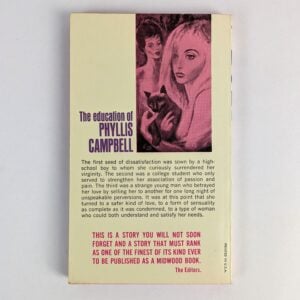
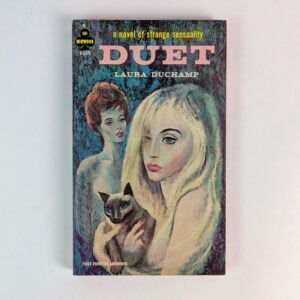
Duet
AU$150 Read MoreAdd to cartLaura Duchamp [Sally M. Singer]
New York: Tower Publications, 1964.Original Midwood paperback. “Laura Duchamp” is attributed to Sally M. Singer, who published over 100 pulp novels under the names March Hastings and Laura Duchamp. This tale centred on a woman dissatisfied with men turning to a woman for true sensuality. Cover illustration by Irv Docktor. One of the many lesbian pulp novels produced in the mid to late 20th century. Often formulaic and issued in easily recognisable series with suggestive covers and titillating titles, the genre was written largely by male authors under female pseudonyms for a male readership, though a smaller number of authors, some of them lesbian or bisexual women writing under similar pseudonyms, brought more narrative sincerity and psychological depth to the same commercial format. The genre as a whole ranges from outright formulaic titillation to more literary treatments of lesbian relationships within the constraints of the paperback original.
-
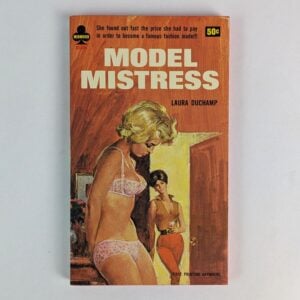
Model Mistress
AU$150 Read MoreAdd to cartLaura Duchamp [Sally M. Singer]
New York: Tower Publications, 1965.Original Midwood paperback. “Laura Duchamp” is attributed to Sally M. Singer, who published over 100 pulp novels under the names March Hastings and Laura Duchamp. This tale centred on a model that will pay any price for success. One of the many lesbian pulp novels produced in the mid to late 20th century. Often formulaic and issued in easily recognisable series with suggestive covers and titillating titles, the genre was written largely by male authors under female pseudonyms for a male readership, though a smaller number of authors, some of them lesbian or bisexual women writing under similar pseudonyms, brought more narrative sincerity and psychological depth to the same commercial format. The genre as a whole ranges from outright formulaic titillation to more literary treatments of lesbian relationships within the constraints of the paperback original.
-
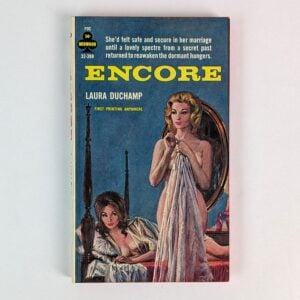
Encore
AU$150 Read MoreAdd to cartLaura Duchamp [Sally M. Singer]
New York: Tower Publications, 1964.Original Midwood paperback. “Laura Duchamp” is attributed to Sally M. Singer, who published over 100 pulp novels under the names March Hastings and Laura Duchamp. This tale centred on a young wife drawn away from her marriage by a female lover. One of the many lesbian pulp novels produced in the mid to late 20th century. Often formulaic and issued in easily recognisable series with suggestive covers and titillating titles, the genre was written largely by male authors under female pseudonyms for a male readership, though a smaller number of authors, some of them lesbian or bisexual women writing under similar pseudonyms, brought more narrative sincerity and psychological depth to the same commercial format. The genre as a whole ranges from outright formulaic titillation to more literary treatments of lesbian relationships within the constraints of the paperback original.
-
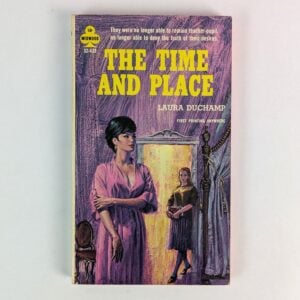
The Time and Place
AU$150 Read MoreAdd to cartLaura Duchamp [Sally M. Singer]
New York: Tower Publications, 1965.Original Midwood paperback. “Laura Duchamp” is attributed to Sally M. Singer, who published over 100 pulp novels under the names March Hastings and Laura Duchamp. A novel of lesbian pulp fiction set in a Parisian finishing school. One of the many lesbian pulps produced in the mid to late 20th century. Often formulaic and issued in easily recognisable series with suggestive covers and titillating titles, the genre was written largely by male authors under female pseudonyms for a male readership, though a smaller number of authors, some of them lesbian or bisexual women writing under similar pseudonyms, brought more narrative sincerity and psychological depth to the same commercial format. The genre as a whole ranges from outright formulaic titillation to more literary treatments of lesbian relationships within the constraints of the paperback original.
-
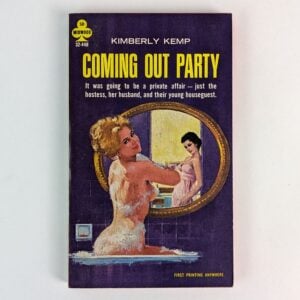
Coming Out Party
AU$150 Read MoreAdd to cartKimberley Kemp [Gilbert Fox]
New York: Tower Publications, 1965.Original Midwood paperback. “Kimberley Kemp” is attributed to Gilbert Fox, who used the name (along with Dallas Mayo) for his lesbian pulp fiction at Midwood, reserving Paul V. Russo for his heterosexual novels for the same house. This tale centred on a young houseguest drawn into an intimate arrangement with her hosts. One of the many lesbian pulp novels produced in the mid to late 20th century. Often formulaic and issued in easily recognisable series with suggestive covers and titillating titles, the genre was written largely by male authors under female pseudonyms for a male readership, though a smaller number of authors, some of them lesbian or bisexual women writing under similar pseudonyms, brought more narrative sincerity and psychological depth to the same commercial format. The genre as a whole ranges from outright formulaic titillation to more literary treatments of lesbian relationships within the constraints of the paperback original.
-
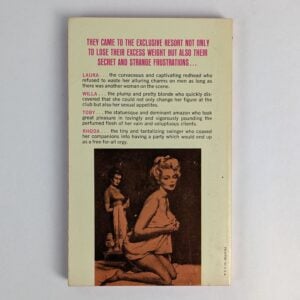
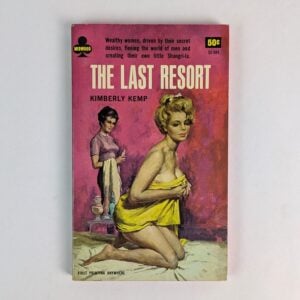
The Last Resort
AU$150 Read MoreAdd to cartKimberley Kemp [Gilbert Fox]
New York: Tower Publications, 1966.Original Midwood paperback. “Kimberley Kemp” is attributed to Gilbert Fox, who used the name (along with Dallas Mayo) for his lesbian pulp fiction at Midwood, reserving Paul V. Russo for his heterosexual novels for the same house. This tale set at a weight-loss resort, where the female guests find one another as well as the diet. Cover illustration by Victor Olson. Midwood later reissued the work under the alternate title Secret Cravings. One of the many lesbian pulp novels produced in the mid to late 20th century. Often formulaic and issued in easily recognisable series with suggestive covers and titillating titles, the genre was written largely by male authors under female pseudonyms for a male readership, though a smaller number of authors, some of them lesbian or bisexual women writing under similar pseudonyms, brought more narrative sincerity and psychological depth to the same commercial format. The genre as a whole ranges from outright formulaic titillation to more literary treatments of lesbian relationships within the constraints of the paperback original.
-
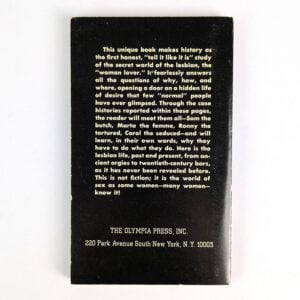

Women in Love with Women
AU$100 Read MoreAdd to cartKarena Wilton
New York: The Olympia Press, 1971.The usual references to Kinsey, Caprio, PhDs, and The Second Sex dispersed with depictions of lingering touches, moans, and much more. OPS-39.
-

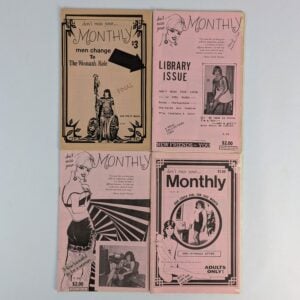
Don’t Miss Your… Monthly (4 Issues: 34, 35, 36, 38)
AU$600 Read MoreAdd to cartEve Brown Fashions
New York: Eve Browne Fashions, 1973.4 issues of New York crossdressing newsletter Don’t Miss Your Monthly published by Eve Brown Fashions, New York. Each issue contains personals, reader photos, and lots of ads for trans and fetish goods and services. Issue 35 is a special Library Issue with a 14 page booklist.
-

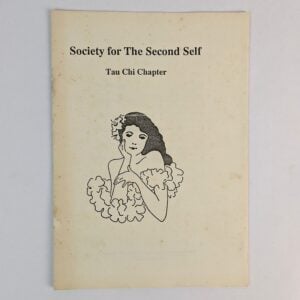
Society for The Second Self: Tau Chi Chapter
AU$150 Read MoreAdd to cartJane Ellen Anderson; Jackie Thorne; Carol Lynn Stuettgen
Richmond, Texas: Tau Chi Chapter, Society for the Second Self, 1988.An introductory pamphlet on crossdressing published by the Houston area chapter of Tri-Ess, an international support organization for crossdressers and spouses, partners, and families.
-
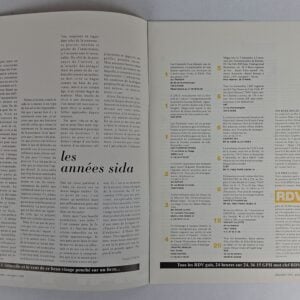
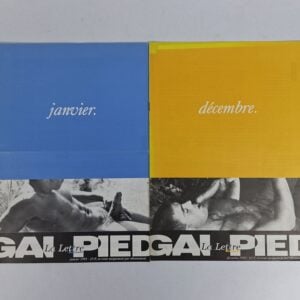
Gai Pied: La Lettre Mensuelle
AU$1,000 Read MoreAdd to cartChristophe Dernoncourt; Pascal Le Coq; Didier Lestrade; Patrick Bossatti
Paris: Editions du Triangle Rose, 1992-1994.Taking over from one of France’s most important gay magazines of the 20th century, Gai Pied hebdo, La lettre served as a gay personals subscription-only newsletter running for 21 numbers between December 1992 and October 1994. A near complete run, lacking numbers 16 and 21.
-
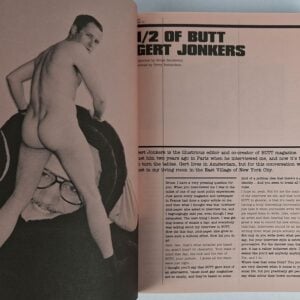
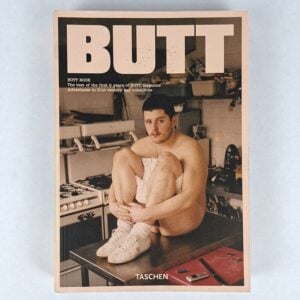
Butt Book: The Best of the First 5 Years of Butt Magazine
AU$150 Read MoreAdd to cartJop van Bennekom; Gert Jonkers
Koln: Taschen, 2006.Reproduction of many of the features from the early issues of the 21st century gay subculture zine.
-
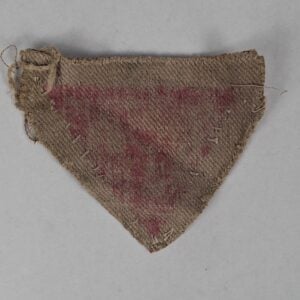
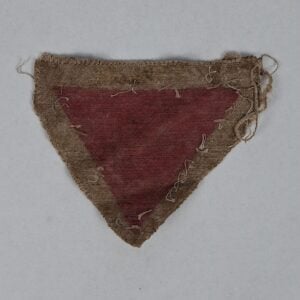
Pink Triangle Concentration Camp Prisoner-Identification Badge
AU$2,500 Read MoreAdd to cartGermany: , c. 1937-1945.
Beginning in 1937 the SS marked concentration camp prisoners with colour-coded inverted cloth triangles sewn to the uniform, denoting the official grounds for imprisonment. The pink triangle marked prisoners categorised by the SS as homosexual. Prisoners so marked were, by multiple survivor and historical accounts, subject to particularly severe treatment within the camp hierarchy. The symbol was reclaimed from the 1970s onward as a symbol of gay liberation and pride. Surviving examples of the badge are held in institutional collections including the United States Holocaust Memorial Museum and the Arolsen Archives; comparatively few are thought to survive outside institutional hands. This example has been stored for a number of decades in the warehouse of London Judaica dealer Jonathan Fishburn (Fishburn Books), and was acquired at Firsts London 2026.
-

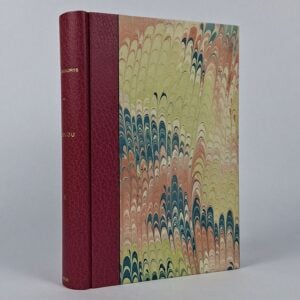
Joujou ou Les Libertinages du Travesti
AU$600 Read MoreAdd to cartLiane Delorys
Paris: Aux Galants Passe-Temps [Jean Fort], 1936.Crossdressing curiosa: a collection of transvestite-themed erotic tales from Jean Fort’s Aux Galants Passe-Temps, illustrated with sixteen heliogravures by Cheri Herouard under his erotica pseudonym Herric, the same artist behind the fetish and spanking imagery he published pseudonymously in La Vie Parisienne. The standard edition was printed in 2,050 numbered copies on Hollande; this copy is a small group printed specially for Jean Fort’s own use on Lafuma.
-
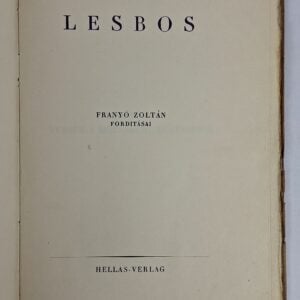
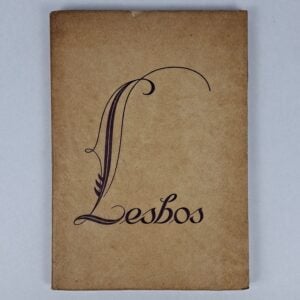
Lesbos
AU$300 Read MoreAdd to cartFranyo Zoltan
[Vienna]: Hellas-Verlag, 1922.Anthology of lesbian erotic poems translated into Hungarian by Franyo Zoltan. Includes works by Sappho, Baudelaire, Verlaine, Werfel, and an excerpt from Diderot’s La Religieuse. Illustrated with 3 plates reproduced from other sources, one by Rudolf Keller. One of 325 numbered copies.
-


Death of a Transvestite
AU$150 Read MoreAdd to cartEd Wood, Jr.
[San Francisco]: Angora Press, No date.The sequel to Edward D. Wood, Jr.’s most widely reprinted novel, Killer in Drag. Glen Marker, the contract killer who worked in drag as Glenda Satin, is now on death row; he agrees to set down the full account of his life on condition that he be allowed to die in drag. Much of the story is delivered through police reports and similar documents. First published in 1967, this is the circa 1990 Angora Press edition.
-
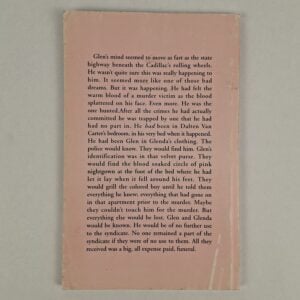
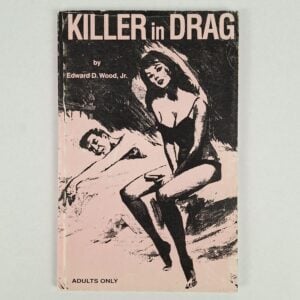
Killer in Drag
AU$150 Read MoreAdd to cartEdward D. Wood, Jr.
[San Francisco]: Angora Press, No date.Early edition of one of prolific filmmaker and pulp novelist Ed Wood, Jr.’s most widely reprinted novels. More crime fiction than outright erotica, it follows Glen Marker, a New York contract killer who works in drag as his alter ego Glenda Satin. The protagonist can be read as a continuation of the figure from Wood’s 1953 directorial debut, ‘Glen or Glenda?’. First published in 1963 as Black Lace Drag and retitled Killer in Drag from 1965; this is the circa 1990 Angora Press edition.
-
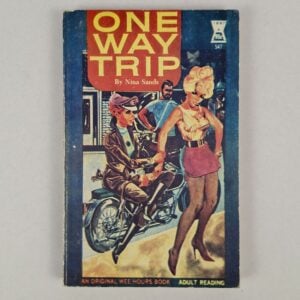
One Way Trip
AU$50 Read MoreAdd to cartNina Sands
Buffalo: Wee Hours Books Inc., 1967.Lesbian biker pulp fiction. Wee Hours 547. Cover art by Bill Alexander. Unrecorded in OCLC.
-
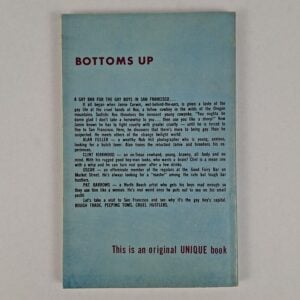
Bottoms Up
AU$400 Read MoreAdd to cartNed Winslow
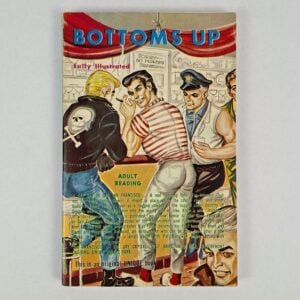
: Unique Books, 1966.A gay bar in gay San Francisco. Cover illustration by Gene Bilbrew and 6 interior black and white illustrations by various artists. One of the many gay erotic pulp novels produced in the mid to late 20th century. These short sexually explicit stories, many of which were formulaic and published in easily recognisable series with graphically illustrated covers and titillating titles each targeting a specific sexual niche, demonstrate the breadth of sexual fantasy, occupation, desire, and deviance of the emerging homosexual culture.
-
Le Vice Marin: Confessions d’un Matelot
AU$1,500 Read MoreAdd to cartJean Bosc
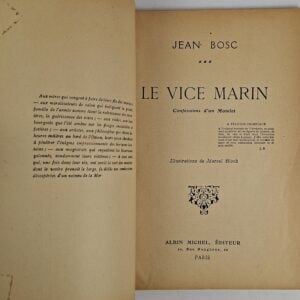
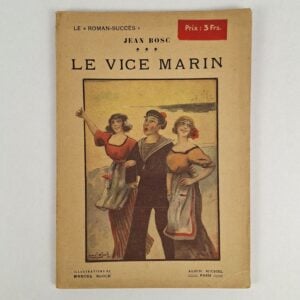
Paris: Albin Michel, No date.A French maritime novel centred on homosexual desire aboard ship, and a notable document in the literary history of same-sex desire. The first part of the story explicitly confronts the “marine vice” of pederasty. The book attracted controversy, prompting later issues to appear under the more discreet title ‘Les Isoles, moeurs maritimes’. In a preface to the retitled edition, dated 15 March 1905, Bosc complained that Le Vice Marin had “frightened the bourgeoisie” and that newspaper editors refused even to advertise it, forcing his publisher to disguise a commercially successful book beneath a less provocative title. The episode provides a revealing glimpse of the constraints surrounding the public discussion of homosexuality in Belle Epoque France. The novel prefigures later maritime treatments of adolescent sexuality, including the controversy surrounding James Hanley’s Boy (1931). Its place in the period’s homosexual self-understanding is seen in Georges Portal’s 1936 Un Protestant, whose narrator discovers the book in a shop window and recognises in it a reflection of his own experience. After numerous printings of the first edition by Pierre Douville, this second edition issued in Albin Michel’s Le Roman-Succes series (c. 1920s/1930s) and illustrated throughout by Marcel Bloch. The restoration of the original title suggests a markedly different publishing climate from that which had prompted its disguise a generation earlier.
-
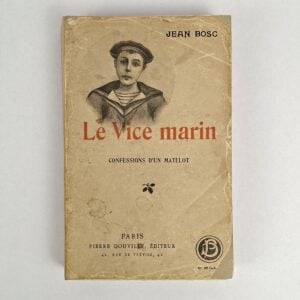
Le Vice Marin: Confessions d’un Matelot
AU$1,500 Read MoreAdd to cartJean Bosc
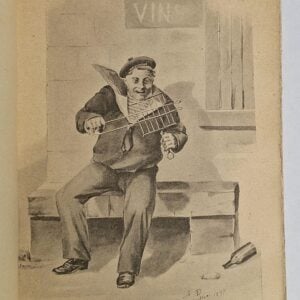
Paris: Pierre Douville, [1905].A French maritime novel centred on homosexual desire aboard ship, and a notable document in the literary history of same-sex desire. The first part of the story explicitly confronts the “marine vice” of pederasty. The book attracted controversy, prompting later issues to appear under the more discreet title ‘Les Isoles: Moeurs Maritimes’. In a preface to the retitled edition, dated 15 March 1905, Bosc complained that Le Vice Marin had “frightened the bourgeoisie” and that newspaper editors refused even to advertise it, forcing his publisher to disguise a commercially successful book beneath a less provocative title. The episode provides a revealing glimpse of the constraints surrounding the public discussion of homosexuality in Belle Epoque France. The novel prefigures later maritime treatments of adolescent sexuality, including the controversy surrounding James Hanley’s Boy (1931). Its place in the period’s homosexual self-understanding is seen in Georges Portal’s 1936 Un Protestant, whose narrator discovers the book in a shop window and recognises in it a reflection of his own experience. With two illustrations.
-
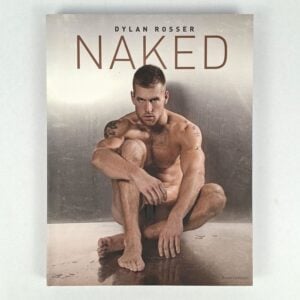
Naked
AU$400 Read MoreAdd to cartDylan Rosser
Berlin: Bruno Gmunder, 2011.Male nude photography. Rosser’s final book of new studio nudes before relocating to Ibiza and turning to outdoor shoots.
-
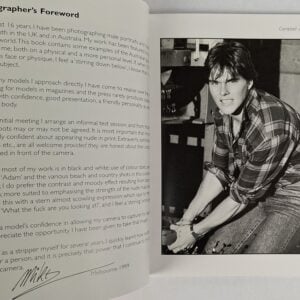
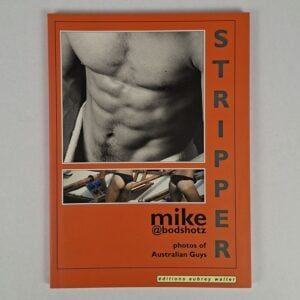
Stripper: Photos of Australian Guys
AU$100 Read MoreAdd to cartMike@Bodshotz
London: Editions Aubrey Walter, 1999.“Working as a stripper myself for several years, I quickly learnt how nudity can empower a person, and it is precisely that power that I continue to try and capture with my camera.” (artist’s statement)
-
Volume 1
AU$250 Read MoreAdd to cart[Bob Delmonteque]
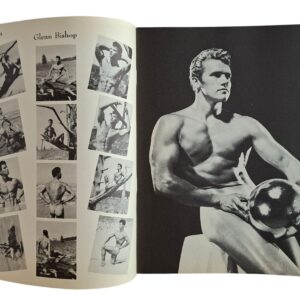
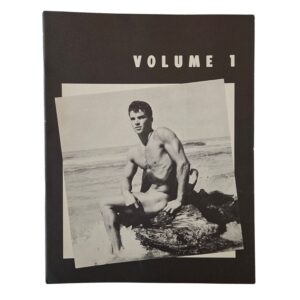
[Los Angeles]: [Bob Delmonteque], [1957].Bob Delmonteque (1921-2011), a Detroit-born bodybuilder first gained fame as a physique model for Douglas of Detroit in the late 1940s before establishing his own Los Angeles based photography and mail-order business. This volume reproduces 25 original catalogue sheets at an enlarged scale, supplemented by a series of full-page plates, Models include Glenn Bishop, Richard Alan, and Norman Tousley, though Delmonteque himself appears frequently, both as photographer and subject.
-
The Gay Haunt
AU$200 Read MoreAdd to cartVictor Jay
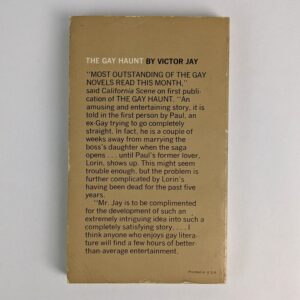
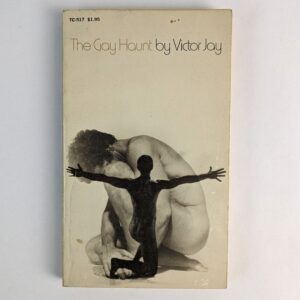
New York: The Other Traveller, 1972.Gay pulp fiction by Victor J. Banis under his Victor Jay pseudonym, one of several he employed for his prolific output of gay paperback fiction in the 1960s and 70s. Banis was a pioneering figure in gay genre fiction, among the first American writers to place openly gay protagonists at the centre of mass-market paperbacks, not as villains, victims, or cautionary figures, but as sympathetic leads in adventure, mystery, and comedy. This copy signed by Banis to the title page.
-

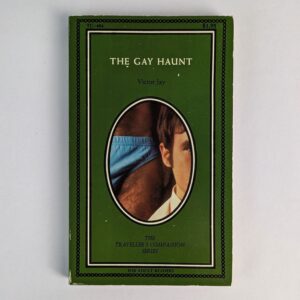
The Gay Haunt
AU$400 Read MoreAdd to cartVictor Jay
New York: The Olympia Press, 1970.Gay pulp fiction by Victor J. Banis under his Victor Jay pseudonym, one of several he employed for his prolific output of gay paperback fiction in the 1960s and 70s. Banis was a pioneering figure in gay genre fiction, among the first American writers to place openly gay protagonists at the centre of mass-market paperbacks, not as villains, victims, or cautionary figures, but as sympathetic leads in adventure, mystery, and comedy. Part of Maurice Girodias’ The Olympia Press Traveller’s Companion Series, TC-484. “Can a handsome young gay stud go straight and marry the boss’s daughter? Sure, if the amorous ghost of his late boyfriend doesn’t materialize naked in his car, at his parties, and in his bed.” This copy signed by Banis to the title page.
-
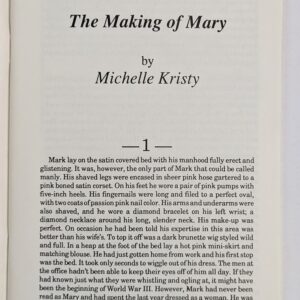
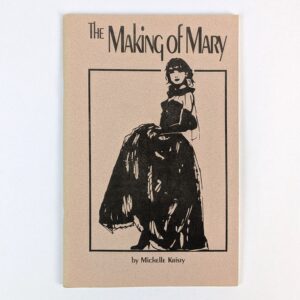
The Making of Mary
AU$100 Read MoreAdd to cartMichelle Kristy
King of Prussia: Creative Design Services, 1991.“Follow the transformation of Mark to Mary…” An erotic transitional story with illustrations by the author. Unrecorded in OCLC.
-
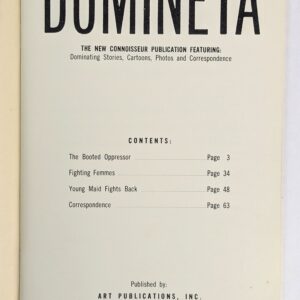
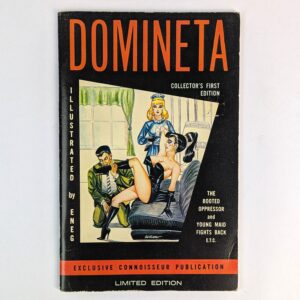
Domineta
AU$400 Read MoreAdd to cartGene Bilbrew; A. De Granamour; Ralph Gayl; Gene Paul
New York: Art Publications, 1965.3 femdom short stories with illustrations by Gene Bilbrew, noted African American fetish artist of the 1950s and 60s, under his Eneg moniker. Billed as a new Connoisseur publication (whether it was produced by Leonard Burtman, or riding off the back of the collapse of Selbee, is unknown) and as a Collector’s First Edition, together with a call for correspondence to be sent in from readers, however no further issues appear to have been produced. The first author, A. DeGranamour, whose contribution occupies more than half the volume, went on to pen numerous works of erotica published in the late 1960s and early 1970s.
-
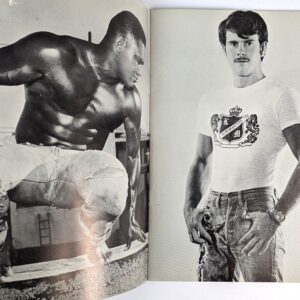
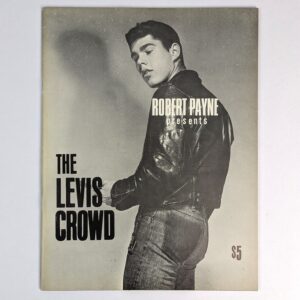
Robert Payne Presents The Levis Crowd
AU$400 Read MoreAdd to cart[John Embry]
: N.p., No date.A selection from the gay physique photographic archive of Bob Mizer’s Athletic Model Guild (AMG), compiled by Drummer magazine co-founder John Embry under his Robert Payne pseudonym in the years leading up the magazine’s beginnings. The publication brings together masculine imagery of the American outdoorsman in Levi’s, with a centre spread featuring prominent American porn actor and director Fred Halsted.
-

Love, Politics and Rescue In Lesbian Relationships
AU$60 Read MoreAdd to cartDiana Rabenold
Santa Cruz: HerBooks, 1987.HerBooks Lesbian-Feminist Essay Series, No. 2. Tools for lesbians to identify and resolve relationship problems.
-

Interstate Studs
AU$50 Read MoreAdd to cartRoy Calhoun
Santee: Surey Books, 1976.His 69 gay pulp. HIS69562. One of the many gay erotic pulp novels produced in the mid to late 20th century. These short sexually explicit stories, many of which were formulaic and published in easily recognisable series with graphically illustrated covers and titillating titles each targeting a specific sexual niche, demonstrate the breadth of sexual fantasy, occupation, desire, and deviance of the emerging homosexual culture.
-
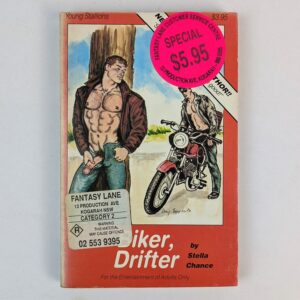
Biker, Drifter
AU$50 Read MoreAdd to cartStella Chance
New York: Star Distributors, 1988.Biker themed gay pulp, with cover illustration by Craig Esposito. Young Stallions YS-125. One of the many gay erotic pulp novels produced in the mid to late 20th century. These short sexually explicit stories, many of which were formulaic and published in easily recognisable series with graphically illustrated covers and titillating titles each targeting a specific sexual niche, demonstrate the breadth of sexual fantasy, occupation, desire, and deviance of the emerging homosexual culture.
-

Dark Brotherhood
AU$120 Read MoreAdd to cartJonathon D’Etange
Santee: Blueboy Library, 1977.Occult themed gay pulp. Blueboy Library 80032. One of the many gay erotic pulp novels produced in the mid to late 20th century. These short sexually explicit stories, many of which were formulaic and published in easily recognisable series with graphically illustrated covers and titillating titles each targeting a specific sexual niche, demonstrate the breadth of sexual fantasy, occupation, desire, and deviance of the emerging homosexual culture.
-
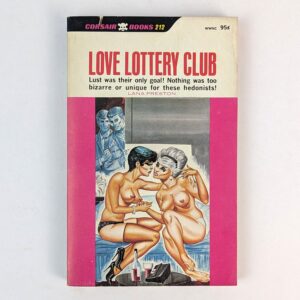
Love Lottery Club
AU$100 Read MoreAdd to cartLana Preston
Cleveland: Corsair Publications, 1968.Sex club erotic pulp. Corsair Books 212. Cover illustration by Gene Bilbrew AKA Eneg.
-
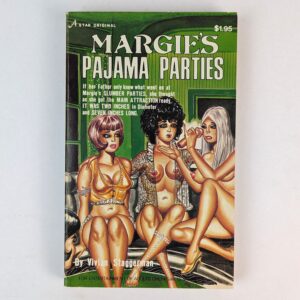
Margie’s Pajama Parties
AU$150 Read MoreAdd to cartVivian Staggerman
New York: Star Distributors, 1972.Lesbian pulp. A Star Original Euro Classic EC-1148. Cover illustration by Gene Bilbrew AKA Eneg.
-
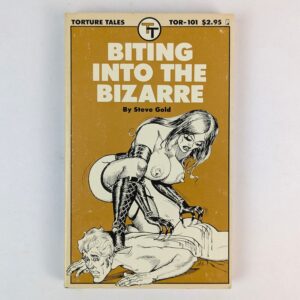
Biting Into the Bizarre
AU$250 Read MoreAdd to cartSteve Gold
South Laguna: Publisher’s Consultants, 1979.Sexological pulp on the erotics of teeth and biting. Torture Tales TOR-101. Cover illustration by Bill Ward.
-
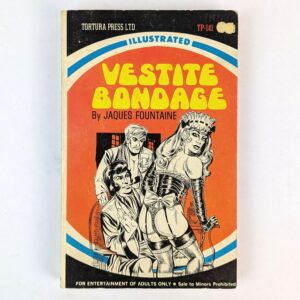
Vestite Bondage
AU$200 Read MoreAdd to cartJaques Fountaine
Buffalo: Tortura Press, 1972.Trans femdom BDSM pulp. TP-141. Cover illustration and 10 full page black and with illustrations in the text by Gene Bilbrew AKA Eneg.
-

Nastyboys
AU$60 Read MoreAdd to cartEurocreme
Berlin: Bruno Gmunder, 2009.First photobook of the European gay pornographic studio with a twink focus, Eurocreme.
-
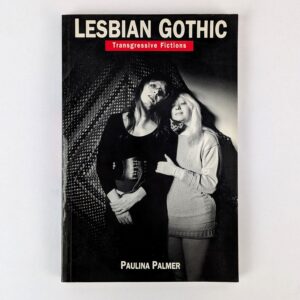
Lesbian Gothic: Transgressive Fictions
AU$50 Read MoreAdd to cartPaulina Palmer
London: Cassell, 1999.Traces the growth of lesbian Gothic fiction since the advent of the Women’s Movement and Gay Liberation in the 1970s.
-
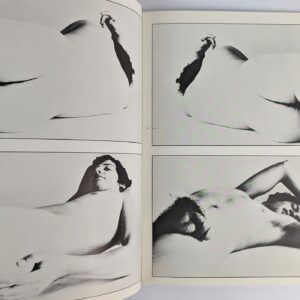
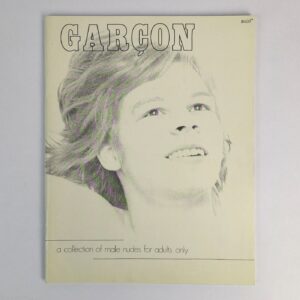
Garcon: A Collection of Male Nudes for Adults Only
AU$200 Read MoreAdd to cartGreg Fenton; Peter Wright
Sydney: Christopher Wilde Productions, No date.Rare Australian gay erotica. A collection of male nudes: photographs by Greg Fenton, drawings by Peter Wright. Publisher’s catalogue request form laid in.
-
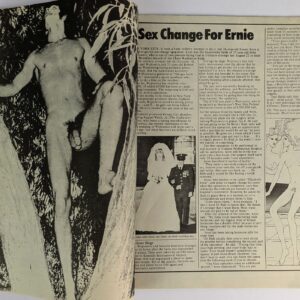
![Male Maze [No. 1] & 2](https://www.thebookmerchantjenkins.com/wp-content/uploads/0036969-300x300.jpg)
Male Maze [No. 1] & 2
AU$500 Read MoreAdd to cartMankind Publications
Sydney: Mankind Publications, No date.2 issues of short running Australian homoerotic tabloid Male Maze, a spin-off of the slightly glossier Mankind. Features W. H. Auden’s poem, A Day for a Lay, Gay News From Afar, articles: Smile! You’re Growing Older, The First Closet Queen, Sex Change, and Three Way Heaven, alongside numerous male nudes, and mail order advertisements for books, photographs, and gay gear from Mankind.
-
![Bizarre Productions Catalog Supplement Number 25-A [Bizarre Productions Catalog of Hollywood Models & Feature Films by Pat Rocco]](https://www.thebookmerchantjenkins.com/wp-content/uploads/0036967-300x300.jpg)
Bizarre Productions Catalog Supplement Number 25-A [Bizarre Productions Catalog of Hollywood Models & Feature Films by Pat Rocco]
AU$100 Read MoreAdd to cartPat Rocco
Hollywood: Bizarre Productions, 1969.8 page supplement with the original order form and Bizarre Productions addressed envelope laid in.
-
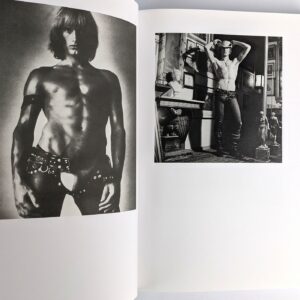
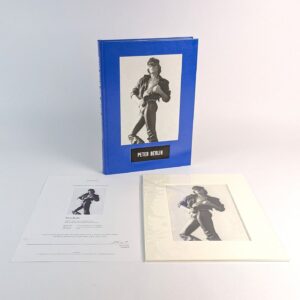
Peter Berlin: Icon, Artist, Photosexual
AU$900 Read MoreAdd to cartPeter Berlin
[Bologna]: Damiani, 2019.One of 50 copies of the deluxe edition with a signed and numbered silver gelatin photograph by Berlin housed in the publisher’s original mailing carton. “Featuring the work of Berlin along with images by Tom of Finland, Robert Mapplethorpe, and Andy Warhol, Peter Berlin: Icon pays tribute to the man who in the early to mid-1970s revolutionized the landscape of gay male eroticism and became an international sensation. His self-portrait photography graced the covers of gay magazines, and defined a look that re-imagined a new masculinity among gay men and an emerging gay male culture. Peter Berlin was a self-created. Tailoring his own clothes to accentuate an already naturally defined physique, every part of his anatomy became showcased. Cruising was his career, and with a background in photography, Peter embarked on recording thousands of self-portraits. The book is edited by Michael Bullock is a writer and publisher of BUTT, Pin-Up, Fantastic Man, Gentlewoman, and Apartamento magazines.” (publisher’s blurb)
-
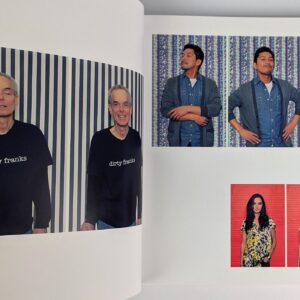

Gayface
AU$100 Read MoreAdd to cartAsh Kolodner
Seattle: Lucia Marquand, 2023.“From 2011 to 2015, Ashley Kolodner travelled across the United States photographing hundreds of LGBTQIA+ individuals of all ages. She made two consecutive portraits of each of her subjects, photographing them twice during the same sitting: once with eyes closed and then with eyes open. Through more than 180 colour portraits, along with subject interviews, this title reflects the beauty, intimacy and sometimes the pain of a community kept in the shadows for decades. Includes contributing texts by filmmaker Kimberly Peirce and Tony award-winning producer Jordan Roth. These diptychs symbolise the vulnerability many have felt at the outset of discovering their personal identities, and then the realisation and self-actualisation manifest in the intimate and profound process of coming out. Ultimately these pictures and this handsome volume represent a revelatory statement on the profound humanity we all s hare.” (publisher’s blurb)
-
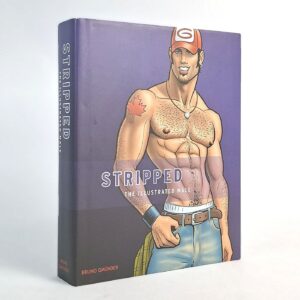
Stripped: The Illustrated Male
AU$150 Read MoreAdd to cartClaus Kiessling; Joris Buiks
Berlin: Bruno Gmunder, 2006.Anthology of contemporary homoerotic art.
-
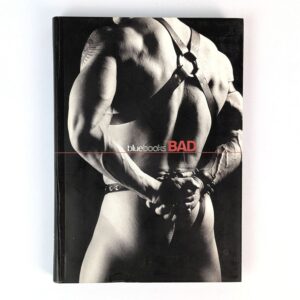
Bad
AU$80 Read MoreAdd to cartBen Robertson
Sydney: Blue Books / Studio Magazines, 2004.A special issue of Blue focussing on leather and SM. (not only) Blue was a glossy coffee table art magazine produced between 1995 and 2007 by Studio Magazines in Sydney, who also published the successful photography magazine, Black+White. “Blue’s agenda is to showcase artists whose work is an authentic representation of gay relationships, gay lifestyles and gay issues” (Blue’s editorial statement) and it did so in a large format filled with nude and semi nude art photography. The premiere issue featured William Yang, Tom Bianchi, Pierre et Gilles, Edmund White, Fiona McGregor, and Ian Roberts, and over its 12 year history featured work from top photographers and features on artists and celebrities including Robert Mapplethorpe, Leigh Bowery, Boy George, Erwin Olaf, k.d. lang, Bruce of LA, Dennis Rodman, Elton John, John Waters, Karl Lagerfield, Jeffrey Smart, Yukio Mishima, Paul Cadmas, William S. Burroughs, George Platt Lynes, Gilbert and George, Rupert Everett, Uma Thurman, Wilhelm von Gloeden and countless others.
-
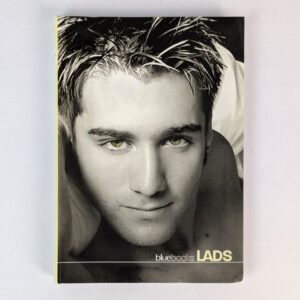
Lads
AU$50 Read MoreAdd to cartBen Robertson
Sydney: Blue Books, 2004. -

BelAmi’s Secret Eye
AU$150 Read MoreAdd to cartRobo Melo
Berlin: Bruno Gmunder, 2013.BelAmi is a gay pornographic film studio founded in 1993 by the Slovak filmmaker George Duroy, whose pseudonym was taken from the protagonist of Guy de Maupassant’s novel Bel-Ami. Established in the years following the collapse of the Eastern Bloc, the studio became closely associated with performers from Central and Eastern Europe, particularly the Czech Republic, Slovakia, and Hungary, presenting an idealised image of youthful masculine beauty and helping to define the archetype of the Euro-twink in contemporary gay erotica. BelAmi distinguished itself through a polished and often narrative-driven style of filmmaking. Rather than relying solely on a succession of scenes, many productions incorporated simple storylines, characterisation, and location shooting in rural, coastal, and historic European settings, lending the films a degree of atmosphere unusual within the genre at the time. The same aesthetic informed the studio’s extensive publishing programme, including calendars and photobooks produced with Bruno Gmunder Verlag. These publications, combining portraiture, travel imagery, and erotic photography, are striking examples of late twentieth- and early twenty-first-century gay visual culture.
-

Dreamboys 4: A Special Issue of Blue
AU$100 Read MoreAdd to cartMarcello Grand
Sydney: Studio Magazines, 2003.The fourth instalment of the Blue magazine special issues focusing on masculine beauty through the lenses of 50 photographers who are interpreting the theme of athletic prowess and bodily strength. (not only) Blue was a glossy coffee table art magazine produced between 1995 and 2007 by Studio Magazines in Sydney, who also published the successful photography magazine, Black+White. “Blue’s agenda is to showcase artists whose work is an authentic representation of gay relationships, gay lifestyles and gay issues” (Blue’s editorial statement) and it did so in a large format filled with nude and semi nude art photography. The premiere issue featured William Yang, Tom Bianchi, Pierre et Gilles, Edmund White, Fiona McGregor, and Ian Roberts, and over its 12 year history featured work from top photographers and features on artists and celebrities including Robert Mapplethorpe, Leigh Bowery, Boy George, Erwin Olaf, k.d. lang, Bruce of LA, Dennis Rodman, Elton John, John Waters, Karl Lagerfield, Jeffrey Smart, Yukio Mishima, Paul Cadmas, William S. Burroughs, George Platt Lynes, Gilbert and George, Rupert Everett, Uma Thurman, Wilhelm von Gloeden and countless others.
-
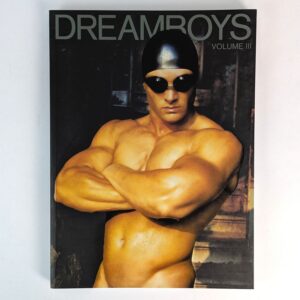
Dreamboys Volume III: A Special Issue of Blue
AU$100 Read MoreAdd to cartMarcello Grand
Sydney: Studio Magazines, [2002].The third instalment of the Blue magazine special issues focusing on masculine beauty through the lenses of 46 photographers who are interpreting the theme of athletic prowess and bodily strength. (not only) Blue was a glossy coffee table art magazine produced between 1995 and 2007 by Studio Magazines in Sydney, who also published the successful photography magazine, Black+White. “Blue’s agenda is to showcase artists whose work is an authentic representation of gay relationships, gay lifestyles and gay issues” (Blue’s editorial statement) and it did so in a large format filled with nude and semi nude art photography. The premiere issue featured William Yang, Tom Bianchi, Pierre et Gilles, Edmund White, Fiona McGregor, and Ian Roberts, and over its 12 year history featured work from top photographers and features on artists and celebrities including Robert Mapplethorpe, Leigh Bowery, Boy George, Erwin Olaf, k.d. lang, Bruce of LA, Dennis Rodman, Elton John, John Waters, Karl Lagerfield, Jeffrey Smart, Yukio Mishima, Paul Cadmas, William S. Burroughs, George Platt Lynes, Gilbert and George, Rupert Everett, Uma Thurman, Wilhelm von Gloeden and countless others.
-
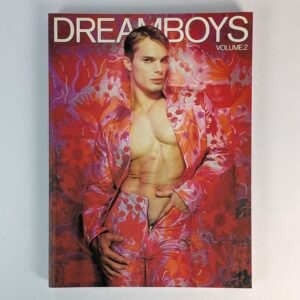
Dreamboys Volume 2: A Special Issue of Blue
AU$100 Read MoreAdd to cartMarcello Grand
Sydney: Studio Magazines, [2001].The second instalment of the Blue magazine special issues focusing on masculine beauty through the lenses of 66 photographers who are interpreting the theme of athletic prowess and bodily strength. (not only) Blue was a glossy coffee table art magazine produced between 1995 and 2007 by Studio Magazines in Sydney, who also published the successful photography magazine, Black+White. “Blue’s agenda is to showcase artists whose work is an authentic representation of gay relationships, gay lifestyles and gay issues” (Blue’s editorial statement) and it did so in a large format filled with nude and semi nude art photography. The premiere issue featured William Yang, Tom Bianchi, Pierre et Gilles, Edmund White, Fiona McGregor, and Ian Roberts, and over its 12 year history featured work from top photographers and features on artists and celebrities including Robert Mapplethorpe, Leigh Bowery, Boy George, Erwin Olaf, k.d. lang, Bruce of LA, Dennis Rodman, Elton John, John Waters, Karl Lagerfield, Jeffrey Smart, Yukio Mishima, Paul Cadmas, William S. Burroughs, George Platt Lynes, Gilbert and George, Rupert Everett, Uma Thurman, Wilhelm von Gloeden and countless others.
-

Dreamboys: A Special Issue of Blue
AU$60 Read MoreAdd to cartMarcello Grand
Sydney: Studio Magazines, 2000.The first instalment of the Blue magazine special issues focusing on masculine beauty through the lenses of photographers who are interpreting the theme of athletic prowess and bodily strength. (not only) Blue was a glossy coffee table art magazine produced between 1995 and 2007 by Studio Magazines in Sydney, who also published the successful photography magazine, Black+White. “Blue’s agenda is to showcase artists whose work is an authentic representation of gay relationships, gay lifestyles and gay issues” (Blue’s editorial statement) and it did so in a large format filled with nude and semi nude art photography. The premiere issue featured William Yang, Tom Bianchi, Pierre et Gilles, Edmund White, Fiona McGregor, and Ian Roberts, and over its 12 year history featured work from top photographers and features on artists and celebrities including Robert Mapplethorpe, Leigh Bowery, Boy George, Erwin Olaf, k.d. lang, Bruce of LA, Dennis Rodman, Elton John, John Waters, Karl Lagerfield, Jeffrey Smart, Yukio Mishima, Paul Cadmas, William S. Burroughs, George Platt Lynes, Gilbert and George, Rupert Everett, Uma Thurman, Wilhelm von Gloeden and countless others.
-

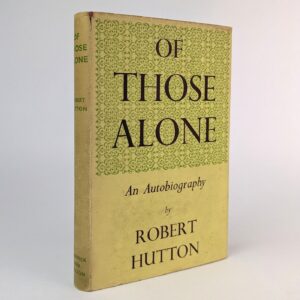
Of Those Alone
AU$1,000 Read MoreAdd to cartRobert Hutton
London: Sidgwick and Jackson, 1958.The pseudonymous autobiography of Horace Charles Forbes Cheston, published under the name Robert Hutton shortly after the release of the Wolfenden Report. Written at a time when homosexuality was still criminalised and taboo, Of Those Alone offers an unusually candid account of Cheston’s sexual and emotional life. Moving between Paris, California, New York, and the South of France before returning to England, he recounts his affairs, his ill-fated marriage to an American woman, and his descent into alcoholism, concluding with redemption through Alcoholics Anonymous, an organisation he later helped to establish in Britain. One of the earliest openly homosexual autobiographies of the postwar period, it precedes the more widely known works of the 1960s gay liberation era and is quite likely the first memoir of a gay alcoholic writer.
-
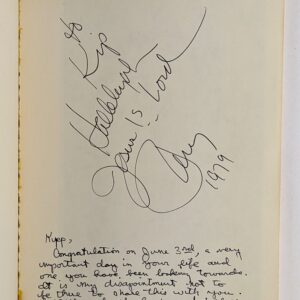

Perry: A Transformed Transexual
AU$200 Read MoreAdd to cartPerry Desmond; R. L. Hymers
Ironton: Metamorphis Books, 1978.First edition, first printing, of the self-told story of Perry Desmond (1936-1984), who worked as a male prostitute before opening an occult shop, transitioning, finding God, and detransitioning. This copy inscribed by Perry to the front flyleaf with another religious gift inscription to the same owner below.
-
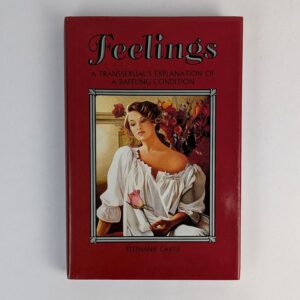
Feelings: A Transsexual’s Explanation of a Baffling Condition
AU$150 Read MoreAdd to cartStephanie Castle
Vancouver: Perceptions Press, 1992.A personal introduction to the subject by Canadian trans activist and founder of the Zenith Foundation Stephanie Castle (1925-2017).
-

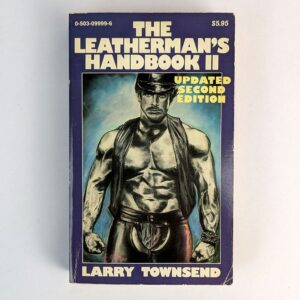
The Leatherman’s Handbook II: Updated Second Edition
AU$200 Read MoreAdd to cartLarry Townsend
New York: Carlyle Communications, 1989.A completely new sequel to the definitive exploration of the gay S&M leather scene.
-
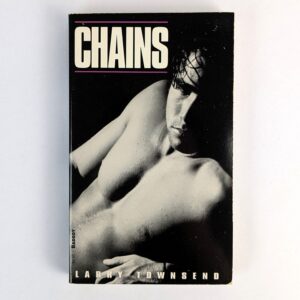
Chains
AU$40 Read MoreAdd to cartLarry Townsend
New York: Badboy, 1994.One of the many gay erotic pulp novels produced in the mid to late 20th century. These short sexually explicit stories, many of which were formulaic and published in easily recognisable series with graphically illustrated covers and titillating titles each targeting a specific sexual niche, demonstrate the breadth of sexual fantasy, occupation, desire, and deviance of the emerging homosexual culture.
-
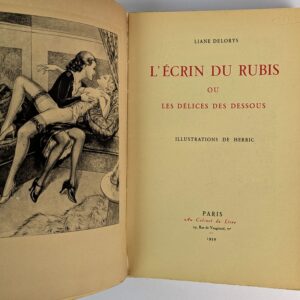
L’Ecrin du Rubis ou Les Delices des Dessous
AU$500 Read MoreAdd to cartLiane Delorys [Liane de Lauris]; Herric [Cheri Herouard]
Paris: Au Cabinet du Livre, 1939.Rare French lesbian erotica. The second edition, illustrated by Cheri Herourard. First published in 1932 in a very limited edition illustrated by P. Silex.
-

Whose Homosexuality? Which Authority? Homosexual Practice, Marriage Ordination and the Church
AU$50 Read MoreAdd to cartBrian Edgar; Gordon Preece
Adelaide: ATF Press, 2006.Interface: A Forum for Theology in the World Vol. 9 Nos 1 & 2. A special double issue of this Australian theology journal focusing on homosexuality with contributions by Bryden Black, David Clarke, Denise Cooper-Clarke, Graham Cole, Keith Dyer, Brian Edgar, Debra Hirsch, Muriel Porter, Gordon Preece, Peter Sherlock, and Mark Thiessen Nation.
-
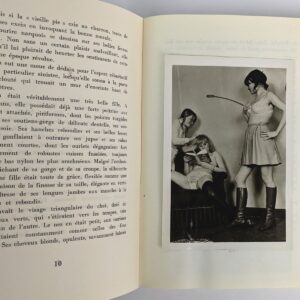
La Perverse Dominatrice
AU$850 Read MoreAdd to cartGreta Knout [Pierre Goetz]
: [Pierre Delalu], No date.The Perverse Dominatrix. 1960s clandestine novel by Pierre Goetz illustrated with 30 mounted photographs depicting a lesbian threesome with light and playful BDSM. DUTEL 2171 (noting only 28 photographs). Unrecorded in OCLC.
-
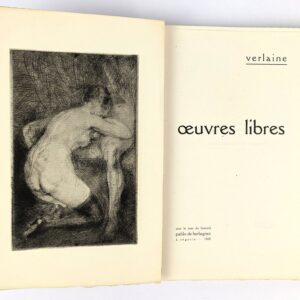
Oeuvres Libres
AU$650 Read MoreAdd to cartPaul Verlaine
Segovie: Pablo de Herlagnez, 1868 [c. 1930].Clandestine 20th century anthology of Verlaine’s Amies, Femmes, Hombres (except the last 4 quatrains of Balanide I), and Sonnet du trou du cul [Sonnet to an Asshole] by Verlaine and Arthur Rimbaud. With erotic chapter initials and accompanied by 6 erotic etchings by an anonymous artist. Edition of 400 copies, though often found without the suite of plates, here the plates are on thick Holland laid paper and not vellum as described in PIA 1440, DUTEL 2092.
-
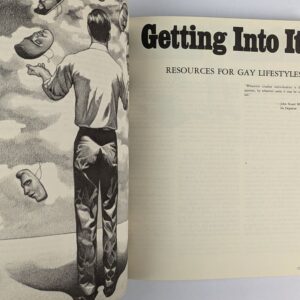
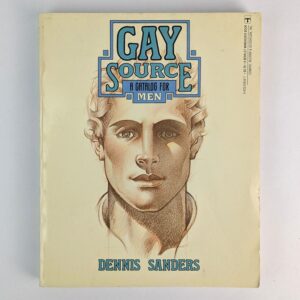
Gay Source: A Catalog for Men
AU$300 Read MoreAdd to cartDennis Sanders
New York: Coward, McCann & Geohegan, 1977.The Whole Earth Catalog of gay America; from help lines to holiday destinations. Compiled, written, and edited by Dennis Sanders with the assistance of Michael Emory. Illustrations by George Stavrinos. Feature articles by Felicine Picano, Ian Young, and many others.
-
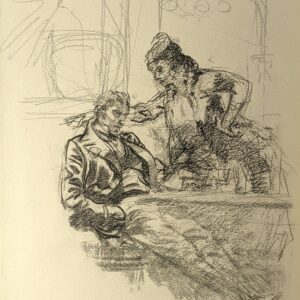

La Fille aux Yeux d’Or
AU$2,000 Read MoreAdd to cartHonore de Balzac; Almery Lobel-Riche
Paris: Le Livre du Bibliophile, G. & R. Briffaut, 1923.The Girl with the Golden Eyes. An aristocratic libertine becomes obsessed with a beautiful woman and sets about seducing her. Alas, his conquest uncovers a hidden lesbian relationship and he finds himself entangled in a web of erotic obsession and fatal jealousy. First published in 1835, this is the first edition with illustrations by Almery Lobel-Riche. One of 40 numbered copies on Japanese paper with the etchings in 3 states and an original drawing by Lobel-Riche (from a total edition of 500). This copy in a fine signed binding by H. Jacquet.
-


Morocco
AU$30 Read MoreAdd to cartAnnabelle Barker
New York: Rosebud, 1997. -
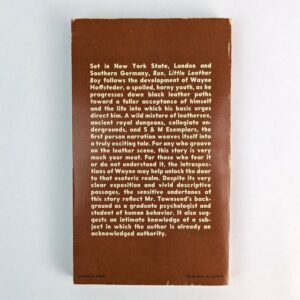
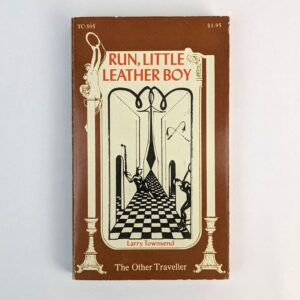
Run, Little Leather Boy
AU$120 Read MoreAdd to cartLarry Townsend
New York: The Olympia Press, 1971.SM leather gay pulp. The Other Traveller, the gay imprint of Olympia’s The Traveller’s Companion. TC-505.
-
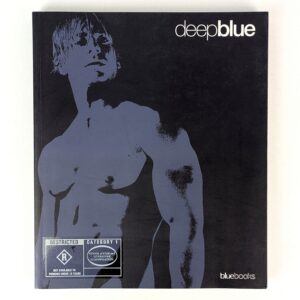
Deep Blue
AU$200 Read MoreAdd to cartBrad Johnston
Sydney: Studio Magazines, 2004.A special issue of Not Only Blue celebrating masculine sexuality featuring photography too explicit for the magazine. (not only) Blue was a glossy coffee table art magazine produced between 1995 and 2007 by Studio Magazines in Sydney, who also published the successful photography magazine, Black+White. “Blue’s agenda is to showcase artists whose work is an authentic representation of gay relationships, gay lifestyles and gay issues” (Blue’s editorial statement) and it did so in a large format filled with nude and semi nude art photography. The premiere issue featured William Yang, Tom Bianchi, Pierre et Gilles, Edmund White, Fiona McGregor, and Ian Roberts, and over its 12 year history featured work from top photographers and features on artists and celebrities including Robert Mapplethorpe, Leigh Bowery, Boy George, Erwin Olaf, k.d. lang, Bruce of LA, Dennis Rodman, Elton John, John Waters, Karl Lagerfield, Jeffrey Smart, Yukio Mishima, Paul Cadmas, William S. Burroughs, George Platt Lynes, Gilbert and George, Rupert Everett, Uma Thurman, Wilhelm von Gloeden and countless others.
-
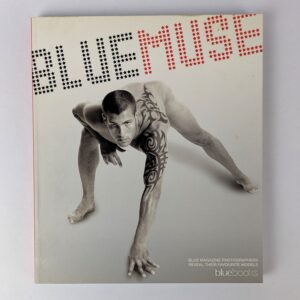
Blue Muse: Blue Magazine Photographers Reveal Their Favourite Models
AU$100 Read MoreAdd to cartMarcello Grand
Sydney: Studio Magazines, 2006.(not only) Blue was a glossy coffee table art magazine produced between 1995 and 2007 by Studio Magazines in Sydney, who also published the successful photography magazine, Black+White. “Blue’s agenda is to showcase artists whose work is an authentic representation of gay relationships, gay lifestyles and gay issues” (Blue’s editorial statement) and it did so in a large format filled with nude and semi nude art photography. The premiere issue featured William Yang, Tom Bianchi, Pierre et Gilles, Edmund White, Fiona McGregor, and Ian Roberts, and over its 12 year history featured work from top photographers and features on artists and celebrities including Robert Mapplethorpe, Leigh Bowery, Boy George, Erwin Olaf, k.d. lang, Bruce of LA, Dennis Rodman, Elton John, John Waters, Karl Lagerfield, Jeffrey Smart, Yukio Mishima, Paul Cadmas, William S. Burroughs, George Platt Lynes, Gilbert and George, Rupert Everett, Uma Thurman, Wilhelm von Gloeden and countless others. This special issue features short descriptions of some of Blue photographers favourite models, of course accompanied by numerous images.
-
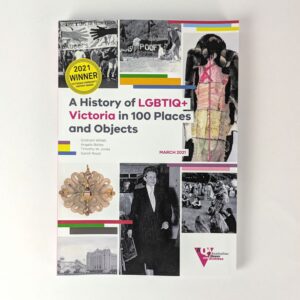
A History of LGBTIQ+ Victoria in 100 Places and Objects
AU$50 Read MoreAdd to cartGraham Willett; Angela Bailey; Timothy W. Jones; Sarah Rood
Melbourne: Australian Queer Archives and Heritage Victoria, 2021.“A History of LGBTIQ+ Victoria in 100 Places and Objects was commissioned by Heritage Victoria to highlight the rich, diverse and unique history of queer communities in Victoria and to demonstrate how these communities are reflected in the places, objects and landscapes that surround us. Lesbian, gay, bisexual, transgender, intersex, queer, asexual, sistergirl and brotherboy (LGBTIQ+) people are, and always have been, an integral part of Victorian social, political and cultural life. However, the experiences and voices of queer communities have not commonly been included in the historical record and, consequently, queer heritage has remained largely invisible. This report identifies 100 places, objects and collections that have specific and unique meaning to Victorias contemporary queer communities. Identifying and exploring the meaning of these places, objects and collections to members of the LGBTIQ+ communities who have suggested them adds depth and richness to Victorias history and heritage. It also makes visible the stories and experiences of communities that have, until recently, been ignored and at times actively persecuted.” (publisher’s blurb)
-

Queer Writing: Homoeroticism in Jean Genet’s Fiction
AU$50 Read MoreAdd to cartElizabeth Stephens
Basingstoke and New York: Palgrave Macmillan, 2009. -
Gay Heart Throbs (3 Issues, Complete)
AU$300 Read MoreAdd to cartLarry Fuller; Mike Kuchar
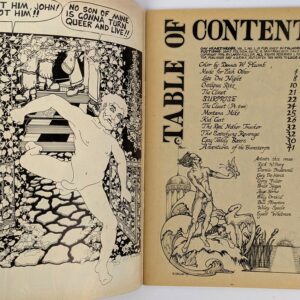
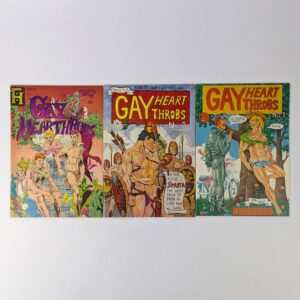
San Francisco: Fulhorne Productions, Larry Fuller Presents, and Inkwell, Inc., 1976-1981.A complete run of the intermittent and short-lived underground gay erotic comix anthology, the three issues published in 1976, 1979, and 1981. The title is thought to be a reference to the romance comic Heart Throbs. The stories are campy and pornographic. Featuring the work of Larry Fuller, Ray Horne, Mike Kuchar, and many others.
-
Lay ’em Straight
AU$30 Read MoreAdd to cartStuart Rowen
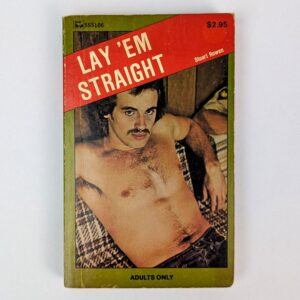
New York: Surree, 1981.Surree Stud Series gay pulp. SSS106. One of the many gay erotic pulp novels produced in the mid to late 20th century. These short sexually explicit stories, many of which were formulaic and published in easily recognisable series with graphically illustrated covers and titillating titles each targeting a specific sexual niche, demonstrate the breadth of sexual fantasy, occupation, desire, and deviance of the emerging homosexual culture.
-
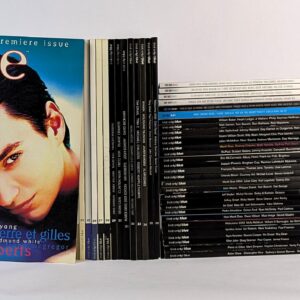
(not only) Blue (Complete Set, 67 Volumes)
AU$3,000 Read MoreAdd to cartMarcello Grand
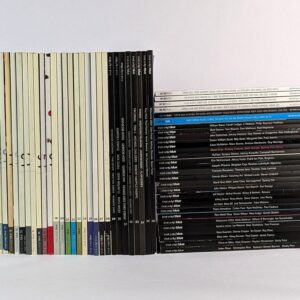
Sydney: Studio Magazines, 1995-2007.A complete set of Australian gay men’s magazine, (not only) Blue, from issue 00 to 66 (67 total). Blue was a glossy coffee table art magazine produced between 1995 and 2007 by Studio Magazines in Sydney, publishers of the successful photography magazine, Black+White. “Blue’s agenda is to showcase artists whose work is an authentic representation of gay relationships, gay lifestyles and gay issues” (Blue’s editorial statement) and it did so in a large format filled with nude and semi nude art photography. The premiere issue featured William Yang, Tom Bianchi, Pierre et Gilles, Edmund White, Fiona McGregor, and Ian Roberts, and over its 12 year history featured work from top photographers and features on artists and celebrities including Robert Mapplethorpe, Leigh Bowery, Boy George, Erwin Olaf, k.d. lang, Bruce of LA, Dennis Rodman, Elton John, John Waters, Karl Lagerfield, Jeffrey Smart, Yukio Mishima, Paul Cadmas, William S. Burroughs, George Platt Lynes, Gilbert and George, Rupert Everett, Uma Thurman, Wilhelm von Gloeden, and countless others.
-
Seeing & Being Seen
AU$600 Read MoreAdd to cartWilliam Yang
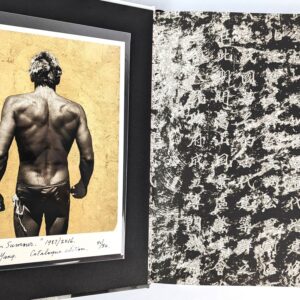
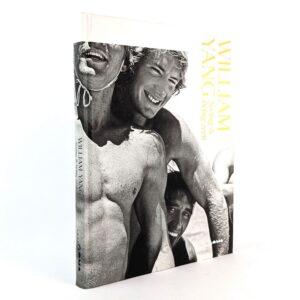
Brisbane: Queensland Art Gallery / Gallery of Modern Art, 2021.The deluxe edition, limited to only 50 copies signed by the artist with a limited edition archival inkjet print Golden Summer 1987 / 2016 by William Yang, printed on Hahnemuhle Smooth Cotton Rag paper. The print is signed, titled, dated and editioned by the artist in ink, and mounted inside the upper board in a mylar sleeve housing. “William Yang: Seeing and Being Seen explores photographer and performer William Yang’s five decades of prolific art practice. This is the first major survey exhibition and publication on the artist by a state gallery. Featuring reproductions of over 200 photographs, it traces Yang’s career from his heady early days as a social photographer in the 1970s documenting Sydney’s queer scene through to some of his well-known series addressing family ties, sexual and cultural identity, and the Australian landscape. Developed in collaboration with the artist, the publication also examines the artist’s deep connections to Queensland, including his mid-career explorations of growing up in the far north of the state.” (publisher’s blurb)
-

Animal Handlers
AU$40 Read MoreAdd to cartJay Shaffer
New York: Badboy, 1994.Gay pulp short story collection.