
Prices in AUD. Free Australian delivery for orders over $400. Free international delivery for orders over $800. Read full terms.
Showing all 48 resultsSorted by latest
-
Dance (11)
-
Film, Radio & Television (12)
-
Music (14)
-
Stage Magic & Mentalism (4)
-
Theatre & Plays (9)
-
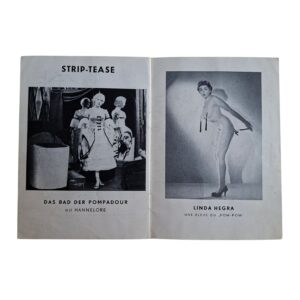
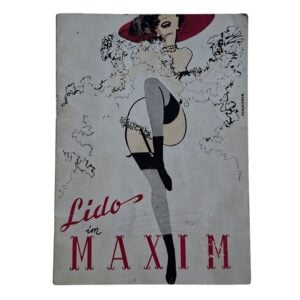
Lido im Maxim: La Maison du Strip-Tease
AU$200 Read MoreAdd to cartMaxim
Vienna: Maxim, 1958.Programme for a strip/cabaret variety show at the Vienna club Maxim, located at Wien 1, Rauhensteingasse 8, on the site of the house where Mozart died. Includes many portraits of international performers. Unrecorded in OCLC.
-
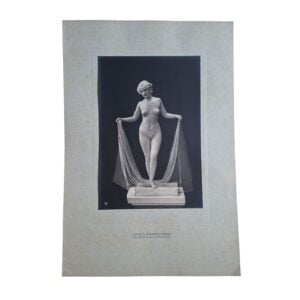
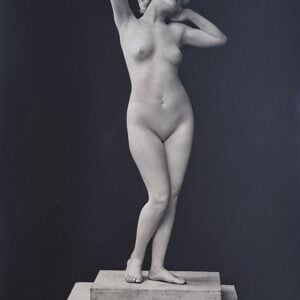
Modern Art and Nature
AU$3,500 Read MoreAdd to cartOlga Desmond; Adolf Salge; Otto Skowraneck
[Berlin]: Neue Photographische Gesellschaft, [1908].English issue of 8 plates of Olga Desmond and Adolf Salge from the 1908 series by German photographer Otto Skowraneck printed from the negatives of the Neue Photographische Gesellschaft m.b.H. (NPG). Includes Venus Anadyomene, Veil-Dance, A Question after R. Boeltzig, Prayer, Park-Nymph, Awakening, Adoration after Stephen Sinding, and Love Play. Desmond was a Berlin performer and dancer who co-founded “Evenings of Beauty”, staging nude and body-painted living statues. The performances were controversial though she always defended her performances as high art.
-
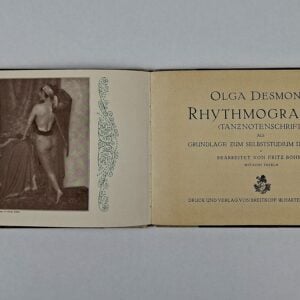
Rhythmographik (Tanznotenschrift) als Grundlage zum Selbststudium des Tanzes
AU$2,000 Read MoreAdd to cartOlga Desmond; Fritz Bohme
Leipzig: Breitkopf & Hartel, 1919.Desmond’s method of choreographic transcription intended as a basis for the self-study of dance, edited by Fritz Bohme. Desmond began performing as a living statue in 1906 and went on to broadly promote performing nude on stage, progressing from posed representations of classical figures to dance. Her early career attracted considerable controversy and debate, though she always defended her performances as high art. This dedication to the form remained evident throughout her later career as a dance teacher in Berlin, and the present work is an early example of her methods. One of 150 numbered copies, signed by Desmond at the end of the preface, with nude photographic portrait frontispiece, and 8 plates of dance notation in a rear pocket.
-

Das Musikalische System der Griechen in Seiner Urgestalt.
AU$200 Read MoreAdd to cartC. Fortlage
Leipzig: Breitkopf und Hartel, 1847.Aus den Tonleitern des Alypius zum ersten male entwickelt von Dr. C. Fortlage, Ausserordentlichem Professor der Philosophie in Jena. Mit II Tabellen. [The Musical System of the Greeks in its Original Form. Developed for the first time from the scales of Alypius]. This copy with the stamp of musician Immanuel Gotthold Reimann (1859-1932), founder of the Adelaide College of Music.
-
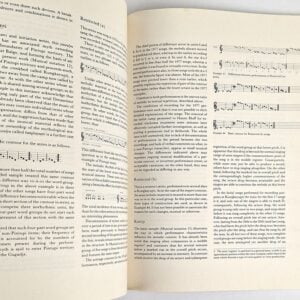
Songs of the Pintupi: Musical Life in a Central Australian Society
AU$100 Read MoreAdd to cartRichard M. Moyle
Canberra: Australian Institute of Aboriginal Studies, 1979.Musical score throughout.
-
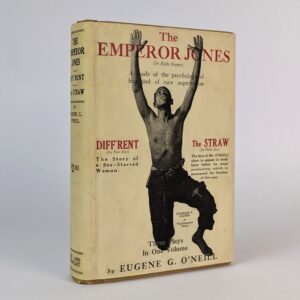
The Emperor Jones; Diff’rent; The Straw
AU$1,500 Read MoreAdd to cartEugene G. O’Neill
New York: Boni and Liveright, 1921.First edition, first state binding, in the original pictorial jacket. The Emperor Jones was a watershed in American theatre, one of the first major Broadway productions to feature a Black actor in a leading dramatic role of such prominence, originally performed by Charles S. Gilpin and later by Paul Robeson in a role that helped establish his international stage reputation. A bold expressionist exploration of fear, power, and racial consciousness, the play remains a landmark text in both African-American theatrical history and the development of modern American drama. ATKINSON A 15-I-i.a. Also includes Diff’rent, a two-act study of sexual repression in a New England fishing village, and The Straw, a naturalistic drama drawn from O’Neill’s own experience in a tuberculosis sanatorium.
-
Fantastic Worlds: North Africa’s Magazine of Cinema Fantasy and the Unknown
AU$400 Read MoreAdd to cartDavid Soren
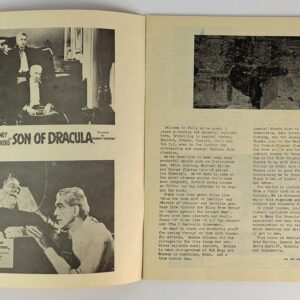
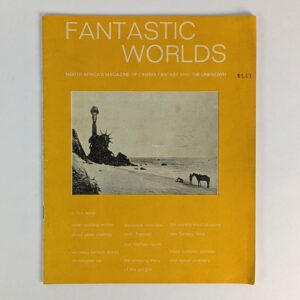
Cambridge, Mass.: Fantastic Worlds Magazine, [1972].Issue one of the horror and Hammer Films fanzine published by American archaeologist David Soren (1946-). “So one day we went to Hammer – we just walked right in a announced that we were publishers of a fanzine (fan magazine) about horror films in the U.S. and we asked for the addresses and phones numbers of David’s favorite Hammer stars so we could interview them – and we got them!! So for the next couple of years, whenever we were in London, we sought out and interviewed stars… To keep us honest, David had to actually produce the fanzine where these interviews were published, and so he wrote and distributed Fantastic Worlds Magazine, Issues 1 and 2, a real collector’s item today!” (Noelle Soren) Indeed rare, with only 1 holding recorded in OCLC, at the University of Georgia.
-
Girl Show: Into the Canvas World of Bump and Grind
AU$40 Read MoreAdd to cartA. W. Stencell
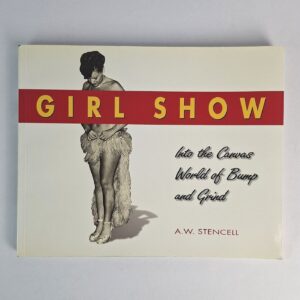
Sydney: Pluto Press, 1999. -
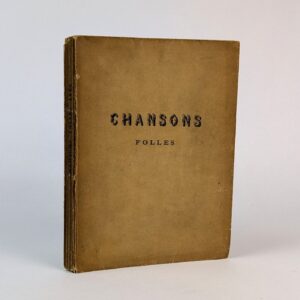
Chansons Folles
AU$500 Read MoreAdd to cart[Gustave Nadaud]
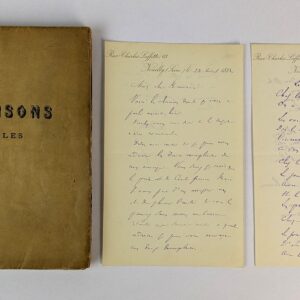
Evreux: Charles Herissey, 1887.Collection of 41 erotic songs with musical score by Gustave Nadaud and published anonymously with a fine frontispiece engraving by Henry Somm. One of 75 numbered copies on Japon (of a total edition of 300). This copy with a two-page signed letter by the author in purple ink dated 29 Avril 1882, written on nice stationery that features the letterhead Rue Charles Laffitte, 63, Neuilly, (Seine); and a two-page song composed on the same stationery in the same purple ink.
-
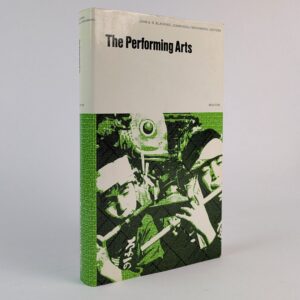
The Performing Arts: Music and Dance
AU$80 Read MoreAdd to cartJohn A. R. Blacking; Joann Keali’inohomoku
The Hague: Mouton Publishers, 1979. -
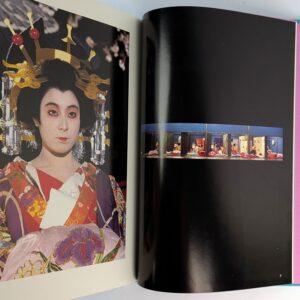
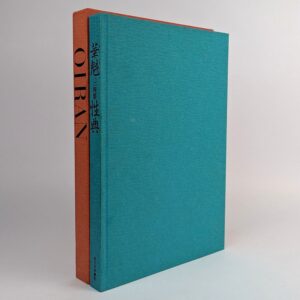
Oiran
AU$400 Read MoreAdd to cartTetsuji Takechi
Tokyo: Tokyo Academy of Arts, 1983.First edition photobook issued to accompany Takechi Tetsuji’s controversial late-career film Oiran, “A mixture of romance and sex combined with surrealistic horror elements.” The story is loosely based on the work of Jun’ichiro Tanizaki in which a 19th century Japanese prostitute moves to America and her dead lover manifests as a mole on her leg. Takechi was a prominent critic and kabuki director before moving into directing films in the 1960s. His 1964 feature Hakujitsumu is regarded as the first big budget pink film (Japanese movies with nudity or sexual content), and also the first Japanese production subjected to systematic fogging censorship. The following year, Black Snow (1965), led to his arrest on indecency charges, a landmark case he ultimately won, significantly reshaping Japanese film censorship and opening the way for the flourishing of the pink eiga genre through the late 1960s and 1970s. After a decade-long hiatus from cinema, Takechi returned with a more explicit remake of Hakujitsumu before directing Oiran in 1983. The film again brought him into conflict with the censors whom “edited and fogged in 98 different places, altering the film from a near-hardcore opus to a very soft costume drama.” Takechi promoted the film by proclaiming it featured “the first multicoloured penis in Japanese cinema.” The present photobook, issued uncensored, retains many of the film’s erotic stills and remains an important visual record of Takechi’s work. As usual for the period, explicit male nudity is absent. References: WEISSER: The Sex Films: Japanese Cinema Encyclopedia.
-
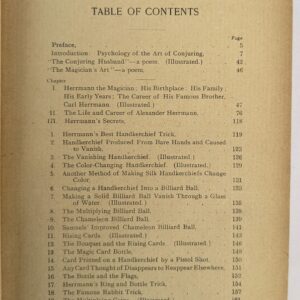
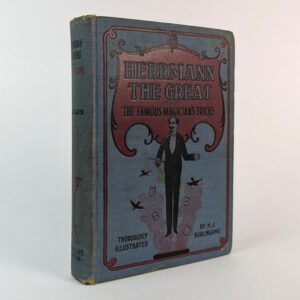
Herrmann the Great: The Famous Magician’s Wonderful Tricks
AU$200 Read MoreAdd to cartH. J. Burlingame
Chicago: Laird & Lee, 1897.The tricks of the 19th century French magician brothers Alexander and Carl Herrmann.
-
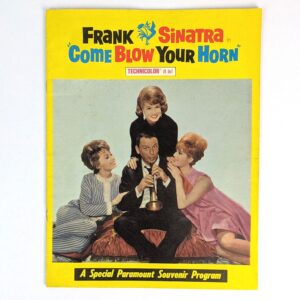
Frank Sinatra in Come Blow Your Horn: A Special Paramount Souvenir Program
AU$40 Read MoreAdd to cartFrank Sinatra
: Paramount Pictures, [1963].Souvenir book for the 1963 film starring Frank Sinatra.
-
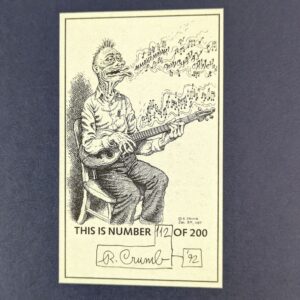
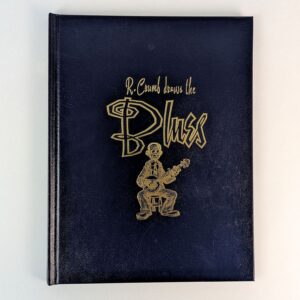
R. Crumb Draws the Blues
AU$1,000 Read MoreAdd to cartRobert Crumb
London: Knockabout Comics, 1992.Collection of music comics by underground comix legend Robert Crumb from Zap, Weirdo, et al. One of the limited hardcover edition of 200 signed and numbered copies.
-
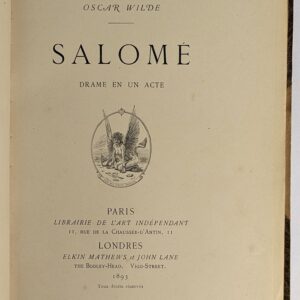
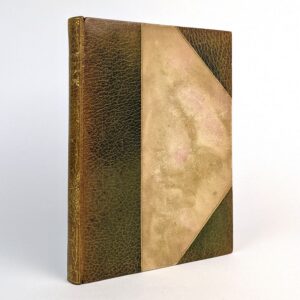
Salome. Drame en un acte.
AU$4,000 Read MoreAdd to cartOscar Wilde
Paris et Londres: Librairie de L’Art Independant and Elkin Mathews et John Lane, 1893.First edition, one of 600 copies, the title page device by Felicien Rops. MASON 348. This copy rebound in a fine signed art nouveau binding by Hatchards, Piccadilly, without the wrappers, with a plentiful quantity of blank leaves at the rear to allow for the binding design.
-
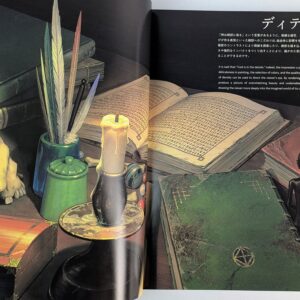
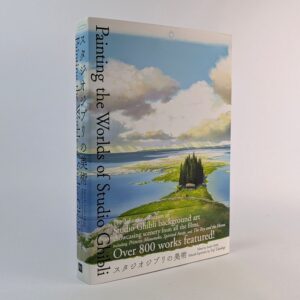
Painting the Worlds of Studio Ghibli
AU$215 Read MoreAdd to cartStudio Ghibli; Yoji Takeshige
Tokyo: Pie International, 2025.“Featuring more than 800 pieces of background art, this beautiful hardcover is a complete and enduring publication allowing readers to thoroughly enjoy backgrounds from each and every scene of the Ghibli masterpieces. Including art from each of Studio Ghibli’s twenty-seven films, these pages offer a glimpse into techniques that bring depth and life to these cherished cinematic worlds, revealing a mastery of brushwork, colour and perspective. Editorial supervision by Yoji Takeshige. This is a must-have book for fans of Ghibli films and creators involved in the animation industry. Editorial Supervisor: Yoji Takeshige, background artist and art director for many Ghibli films.” (publisher’s blurb)
-
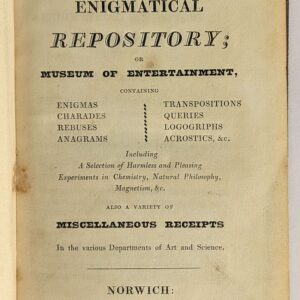
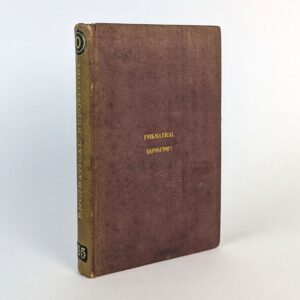
The Enigmatical Repository; or Museum of Entertainment,
AU$300 Read MoreAdd to cartJ. Dawson
Norwich: J. Dawson, No date.Containing Enigmas, Charades, Rebuses, Anagrams, Transpositions, Queries, Logogriphs, Acrostics, &c. Including A Selection of Harmless and Pleasing Experiments in Chemistry, Natural Philosophy, Magnetism, &c. Also a variety of Miscellaneous Receipts In the various Departments of Art and Science. A collection of word puzzles and simple chemistry experiments designed for youth amusement. Not in Toole Stott. This copy inscribed by the publisher J. Dawson and from the collection of magician Ricky Jay.
-
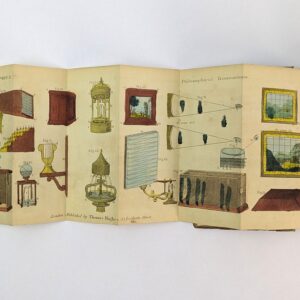
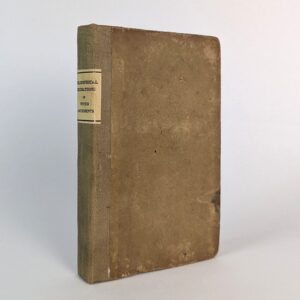
Philosophical Recreations, or Winter Amusements
AU$800 Read MoreAdd to cartJohn Badcock
London: T. Hughes, No date.A Collection of Entertaining & Surprising Experiments in Mechanics, Arithmetic, Optics, Hydrostatics, Hydraulics, Pneumatics, Electricity, Chemistry, Magnetisism, & Pyrotechny, Or Art of Making, Fire Works, together with the wonders of the Air Pump, Magic Lanthorn, Camera Obscura, &c. &c. &c. and a variety of Tricks with Cards. (circa 1828). TOOLE STOTT 77.
-
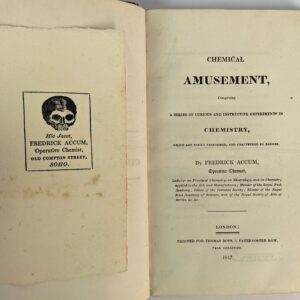
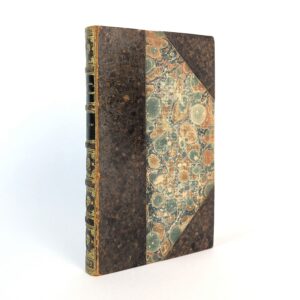
Chemical Amusement, Comprising a Series of Curious and Instructive Experiments in Chemistry,
AU$1,500 Read MoreAdd to cartFredrick Accum
London: Thomas Boys, 1817.Which are Easily Performed, and Unattended by Danger. 103 chemistry experiments with magical application for the conjuring chemist. The rare first edition with the 60 page, A Descriptive Catalogue of the Apparatus & Instruments Employed in Experimental and Operative Chemistry, in Analytical Mineralogy, and in the Pursuits of the Recent Discoveries of Voltaic Electricity, Manufactured and Sold by the author, at the rear, the separate title on the verso of pp. 191. Friedrich Accum (1769-1838) was a German chemist who lived in London from 1793 to 1821. He played a key role in the establishment of gas lighting in London and wrote a number of popular chemistry works, most notably campaigning against the unscrupulous use of chemical additives in food in his 1820 A Treatise on Adulterations of Food and Culinary Poisons. HALL 1, TOOLE STOTT 1. This copy in a Zaehnsdorf half leather binding with the author’s calling card laid in and the bookplates of magicians Roland Winder and Ricky Jay.
-
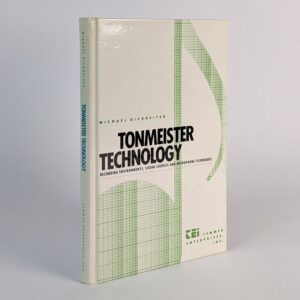
Tonmeister Technology: Recording Environments, Sound Sources, Microphone Techniques
AU$100 Read MoreAdd to cartMichael Dickreiter
New York: Temmer Enterprises, 1989.With 157 tables and illustrations. Translated from the German by Stephen F. Temmer.
-
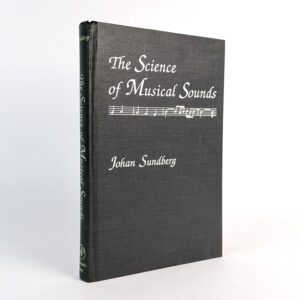
The Science of Musical Sounds
AU$50 Read MoreAdd to cartJohan Sundberg
San Diego: Academic Press, 1991.Part of the Academic Press Series: Cognition and Perception.
-
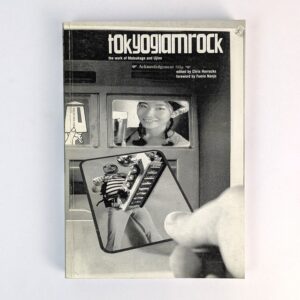
Tokyo GlamRock: The Work of Matsukage and Ujino
AU$40 Read MoreAdd to cartChris Horrocks
: iMMprint, 2002.The art, music and design of the Japanese duo Matsukage and Muneteru Ujino.
-
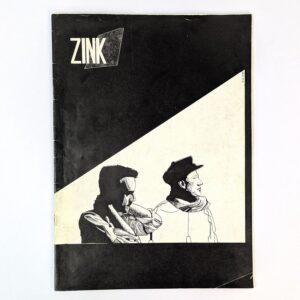
Zinkzong Musikmagasin Nr. 4
AU$30 Read MoreAdd to cartArild Polden
Ski: Zinkzong Musikmagasin, 1981.Single issue of Norwegian music zine Zink.
-
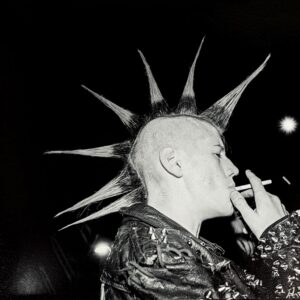
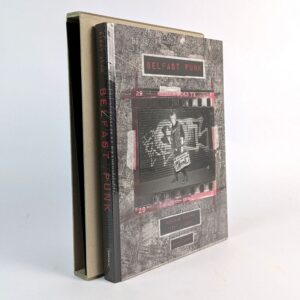
Belfast Punk: Warzone Centre, 1997 – 2003 (Deluxe Edition)
AU$650 Read MoreAdd to cartRicky Adam
Bologna: Damiani Editore, 2017.The deluxe edition, limited to 15 copies, with an original signed and numbered photograph by Ricky Adam. “The Warzone Collective began in 1984 in Belfast, Northern Ireland, when a few local punks decided to consolidate their efforts and find their own venue, practice, and social space. In 1986, the Collective opened Giros, its first premises in Belfast, which contained a vegetarian cafe, practice space, and screen printing facilities. It soon became a focal point for anarchists and punks. In 1991 the Collective moved Giros to a larger and more ambitious venue, the spot where all of the photographs in this book were taken. Over the years, thousands of people passed through Giros’ doors. A strong D.I.Y. ethic defined the way gigs and events were organized. It didn’t have an alcohol license, and it was an all ages venue. The Warzone Centre, or The Centre as it was called by some, became the countercultural hub for the greater Belfast area and beyond. Bands from all over the world played there, and it was famous for being one of the best in Europe for D.I.Y. punk. The photographs in this book were taken between 1997 and 2003. Toward the end of 2003, the Centre closed, leaving a huge gap in radical Belfast culture. It reopened in 2011, in a different venue on the opposite side of town and is still going strong today.” (publisher’s blurb)
-

PUNK ROCKhampton: Central Queensland Indie Music History, 1979-1999
AU$40 Read MoreAdd to cartCameron Borg
Bendigo: Moonlight Publishing, 2000. -
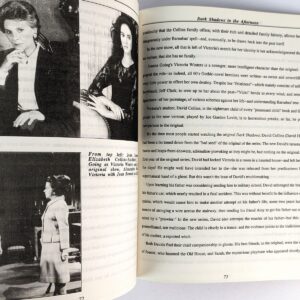
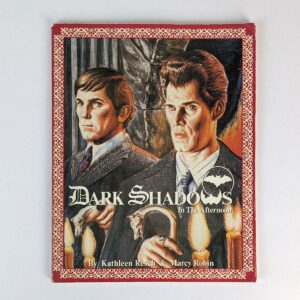
Dark Shadows in the Afternoon
AU$50 Read MoreAdd to cartKathleen Resch; Marcy Robin
New York: Image Publishing, 1991.A look at the American daytime TV horror soap opera, Dark Shadows. The original series ran for 1,225 episodes between 1966 and 1977.
-
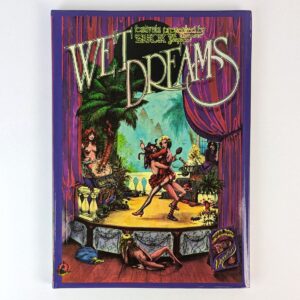
Wet Dreams: Films & Adventures
AU$300 Read MoreAdd to cartWilliam Levy; Willem de Ridder
Amsterdam: Joy Publications, 1973.The book of the Wet Dream Film Festivals presented by Suck, that European Sexpaper. Suck tasked themselves with creating “a new pornography which would demystify male and female bodies”. Heathcote Williams in his Suck manifesto declares “SUCK is Group Sex, Police Sex, Animal Sex, Teeny Sex, One Armed Bandit Sex, Geriatric Sex and Cosmic Sex”. Wet Dreams the book documents the film festivals organised by Suck and held in Amsterdam in 1970 and 1971 showing films for the sexual avant-garde exploring the boundaries between art and pornography. The book, illustrated throughout in the Suck style and with articles by Brion Gysin, Al Goldstein, Betty Dodson, Jim Haynes, Germaine Greer, Heathcote Williams, and many others, together with details of the films shown and the festival judges deliberations.
-
![The Dansant at the Cafe Royal, London, 1971 [Programme]](https://www.thebookmerchantjenkins.com/wp-content/uploads/0033419-300x300.jpg)
The Dansant at the Cafe Royal, London, 1971 [Programme]
AU$100 Read MoreAdd to cartDerek Roe; Margot Macrae; Cecil Beaton; Hettie Jacques
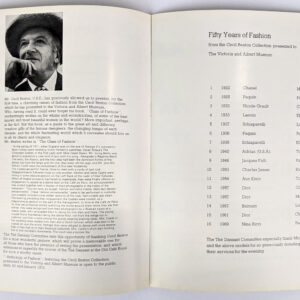
Paris and London: Nina Ricci, 1971.Programme for The Dansant ’71 insired by L’Air du Temps by Nina Ricci, created by Derek Roe. Texts by Margot Macrae and Cecil Beaton. The occasion presented fifty years of fashion from the Cecil Beaton Collection. The programme consists primarily of British advertisements, highlights include an advert for Valium Roche. This copy signed by English actress Hettie Jacques (1922-1980) to the front cover. Unrecorded in OCLC.
-
Bruce Lee & JKD Magazine No. 7
AU$80 Read MoreAdd to cartBruce Lee
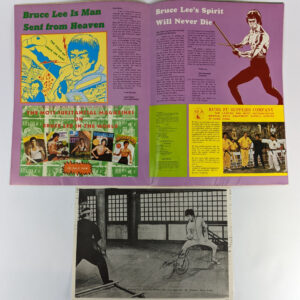
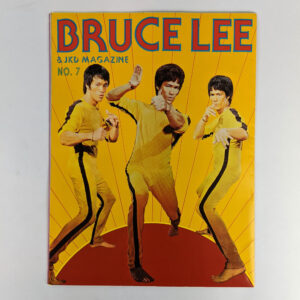
Hong Kong: Bruce Lee Jeet-kune-do Club, [1977].A large colour poster with interviews, articles, and photographs on the films and martial arts of Bruce Lee to verso. Includes essay by Chih Yao-chang, assistant director of The Way of the Dragon and The Game of Death. A facsimile signed photograph print laid in
-
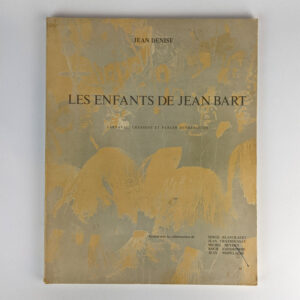
Les Enfants De Jean Bart: Carnaval, Chansons et Parler Dunkerquois
AU$80 Read MoreAdd to cartJean Denise
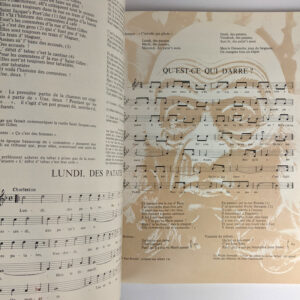
Dunkirk: Westhoeck-Editions, 1978.Musical score by composer Jean Denise. Includes introduction by Christian Bommel and contributions by Serge Blanckaert, Jean Chatroussat, Michal Heyden, Roch Vandromme, Jean Wispelaere, and David Riefenstahl.
-
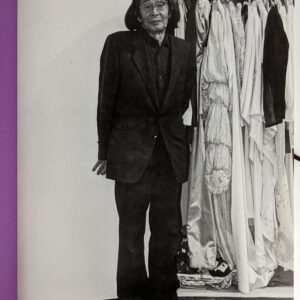
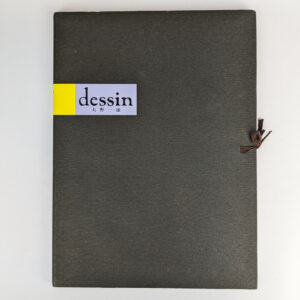
Dessin
AU$100 Read MoreAdd to cartKazuo Ohno
Kushiro: [Ryokugeisha], 1992.Facsmile of writings and drawings from the notebooks of Japanese dancer Kazuo Ohno (1906-2010), one of the founders of Butoh. A 1992 performance poster laid in
-
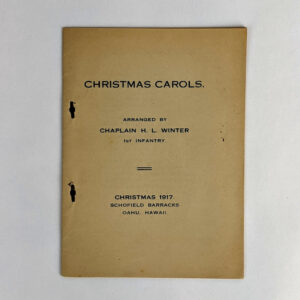
Christmas Carols
AU$60 Read MoreAdd to cartChaplain H. L. Winter
Oahu: Schofield Barracks, 1917.Christmas Carols arranged by Chaplain H. L. Winter, 1st Infantry: Christmas 1917, Schofield Barracks, Oahu, Hawaii. Unrecorded in OCLC.
-
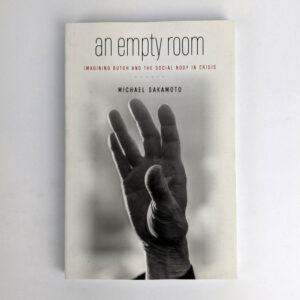
An Empty Room: Imagining Butoh and the Social Body in Crisis
AU$40 Read MoreAdd to cartMichael Sakamoto
Middletown: Wesleyan University Press, 2022. -
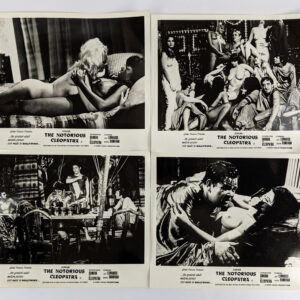
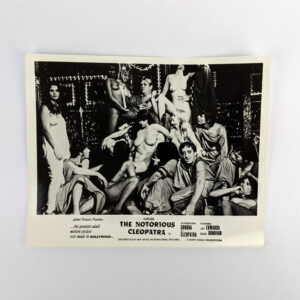
The Notorious Cleopatra (16 Original Photographs)
AU$350 Read MoreAdd to cartHarry Novak
[United States]: Global Pictures, 1970.16 publicity photographs for the 1970 sexploitation film, The Notorious Cleopatra, produced by Harry Novak, directed by Peter Perry Jr. and starring Loray White, Jay Edwards, and Dixie Donovan.
-
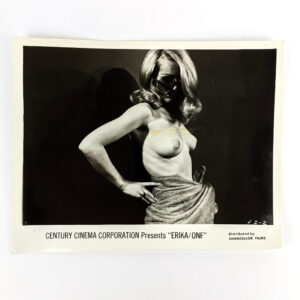
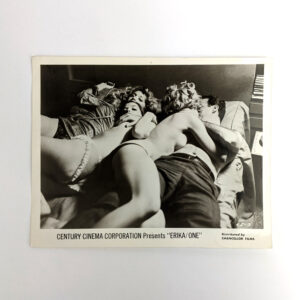
Erika/One (10 Original Photographs)
AU$150 Read MoreAdd to cartJerry Denby; Inga Larsen
[United States]: Century Cinema, 1969.10 publicity photographs for the 1969 sexploitation film, Erika/One, directed by Jerry Denby and staring Inga Larsen as a woman in torment.
-
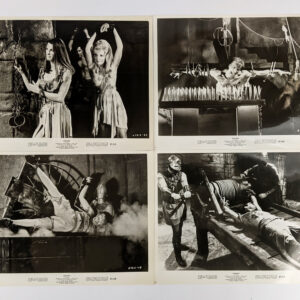
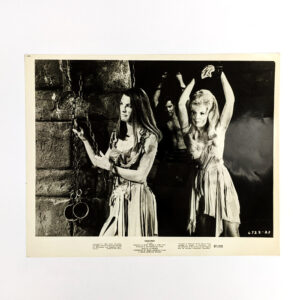
Sadismo (8 Original Photographs)
AU$200 Read MoreAdd to cartSalvatore Billitteri
[United States]: Trans American Films, 1967.8 publicity photographs for the 1967 Mondo documentary on torture, Sadismo. Narrated by Burt Topper and Terry Telli. Produced by Salvatore Billitteri. Music by Les Baxter. The original version of the film was withdrawn and and edited version reissued later the same year.
-
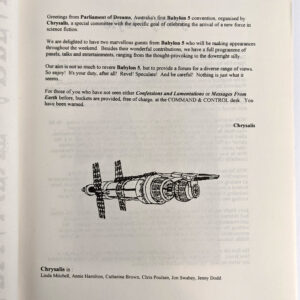
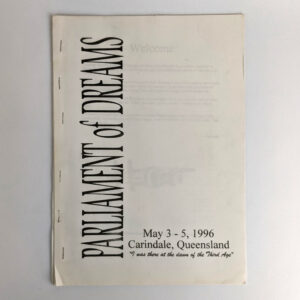
Parliament of Dreams
AU$50 Read MoreAdd to cartChrysalis
Brisbane: Chrysalis, 1996.Programme for Australia’s first Babylon 5 convention, Brisbane May 3-5, 1996. Unrecorded in OCLC.
-
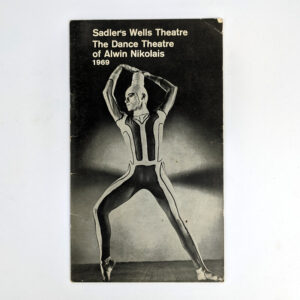
The Dance Theatre of Alwin Nikolais
AU$10 Read MoreAdd to cartAlwin Nikolais
London: Kelly & Kelly, 1969.Program for a performance at Sadler’s Wells Theatre, London
-
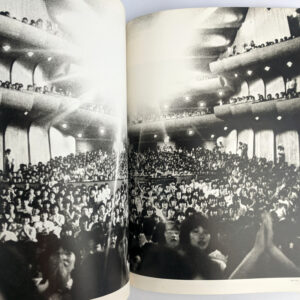
The Rock Photography
AU$165 Read MoreAdd to cartRex R. Kubota; Erica Nakada
Tokyo: Sunday-sha, 1979.Photography of 1970s Japanese rock bands on and off stage. Photographs by Masakazu Sakomizu, George Ide, Takumi Uchida, Kenji Suzuki, and Nobuhiro Sakagami. Rare, unrecorded in OCLC at January 2022.
-
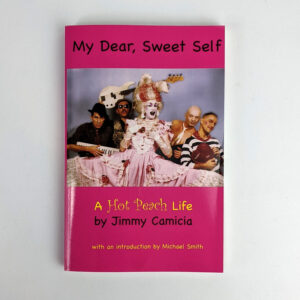
My Dear, Sweet Self: A Hot Peach Life
AU$30 Read MoreAdd to cartJimmy Camicia
Silverton: Fast Books, 2013.Biography of Jimmy Camicia, founder of New York drag performance group, Hot Peaches.
-
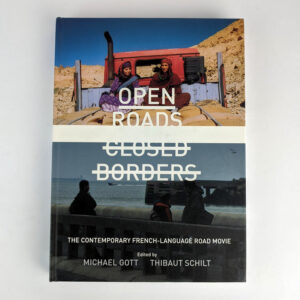
Open Roads, Closed Borders: the Contemporary French-Language Road Movie
AU$40 Read MoreAdd to cartMichael Gott; Thibaut Schilt
Bristol: Intellect, 2013. -
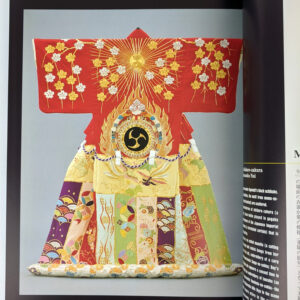
An Exhibition of Kabuki Stage Costumes
AU$50 Read MoreAdd to cartShochiku; Tetsuya Okazaki
Tokyo: Shochiku, 1998. -
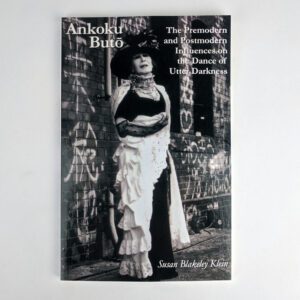
Ankoku Buto: The Premodern and Postmodern Influence on the Dance of Utter Darkness
AU$25 Read MoreAdd to cartSusan Blakeley Klein
Ithaca: East Asia Program, Cornell University, 1988.“A brief introduction to the history, philosophy, and techniques of the Japanese avant-garde dance movement, Ankoku Buto. Evoking images of grotesque beauty, revelling in the seamy underside of human behavior, Buto dance groups such as Sankai Juku and Dai Rakuda-kan have performed to wide critical and popular acclaim, making Buto one of the most influential new forces in the dance world today. The monograph traces the development of Buto from its birth in the bleak post-war landscape of 1950s Japan, and then addresses the question of Buto as a post-modern phenomenon, before going on to examine the influence of traditional Japanese performance on Buto techniques. The last chapter analyzes a specific dance (Niwa – The Garden) by Muteki-sha, to show how these techniques are used concretely. Includes translations of four essays on Buto by contemporary Japanese dance critics.” (publisher’s blurb)
-
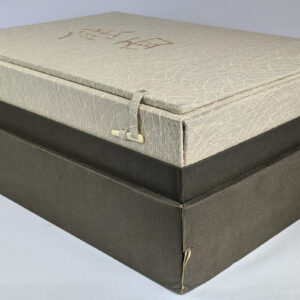
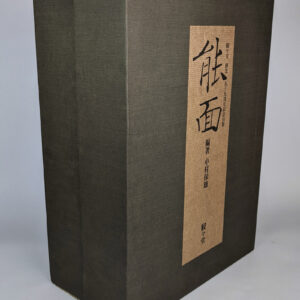
Nomen / Noh Masks
AU$2,000 Read MoreAdd to cartYasuo Nakamura; Naomi Maki
Kyoto: Shinshindo, 1979.A beautifully presented collection of masks used in the classical Japanese dance-drama Noh. Each plate, photographed by Naomi Maki, is mounted in an individual folder with tissue guard, housed in a portfolio case, and includes an index sheet. An accompanying explanatory volume written by Yasuo Nakamura goes into detail on the subject, as well as containing black and white photographs of the reverse sides of the masks. The portfolio and accompanying volume are housed inside of another cloth clamshell with two bone clasps, which in turn is housed in another box. Yasuo Nakamura (1919-1996) was a Japanese high school teacher, junior college professor, and Noh scholar, producing numerous works on the subject from the 1960s until his death. His scholarship on this collection of masks earned him the Geijutsu Sensho Prize from The Agency for Cultural Affairs.
-
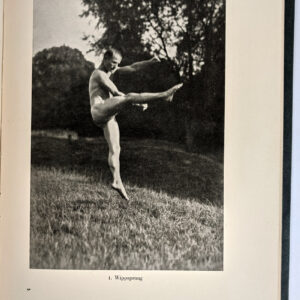
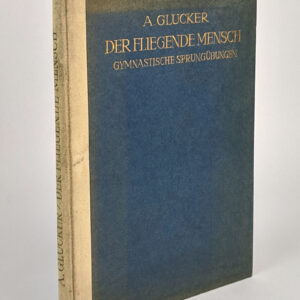
Der Fliegende Mensch: Gymnastische Sprungubungen
AU$55 Read MoreAdd to cartA. Glucker
Oldenburg: Gerhard Stalling, 1926.Authored by German gymnastics teacher August Glucker (1895-1975) the text provides instruction to reach new heights in frolicking. 26 beautiful examples of fine jumping and exquisite aerial repose are contained at the rear. A brilliant example of athleticism for the gymnast, dancer, or anyone interested in the human form.
-
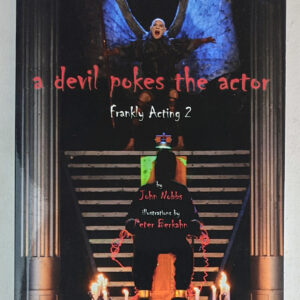
A Devil Pokes The Actor: Frankly Acting 2
AU$30 Read MoreAdd to cartJohn Nobbs; Peter Berkahn
Brisbane: Frank Theatre Press, 2010.“This is the second book about actor training by John Nobbs. The first, Frankly Acting, outlined the early development of the Frank Suzuki Performance Aesthetics (FSPA), as a western variant and translation of the classic Suzuki Actor Training Method (SATM). This devil’s logbook is a series of 25 provocations that poke further and deeper into the alchemical triggers and mechanisms that inform the one true actor training system originally devised by Tadashi Suzuki. Interspersed throughout the 25 provocations are revelations by some of the many actors that have used the FSPA to develop their acting spirit. Tadashi Suzuki, the inventor of the SATM, has stated that he believes that the training is not just for the actor’s craft, but that it should be a creative tool for making theatre performances . The FSPA follows on the traces of that purpose, and this book outlines its importance as the creative onestop shop of Ozfrank Theatre Matrix. It includes examples, with colour photographs, that illustrate how Ozfrank director Jacqui Carroll uses the FSPA to impel her productions.” (publisher’s blurb)
-
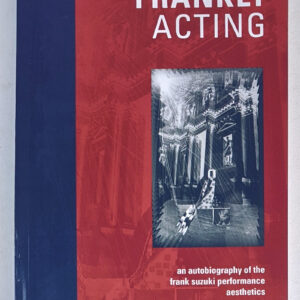
Frankly Acting: An Autobiography of the Frank Suzuki Performance Aesthetics
AU$20 Read MoreAdd to cartJohn Nobbs
Brisbane: Frank Theatre Press, 2006.“John Nobbs’ Frankly Acting is the first Australian book espousing a uniquely homegrown theatrical performance theory. As Grotowski did in Poland and Artaud in France, Nobbs has articulated an Australian performance aesthetic which revivifies in a contemporary context the theatrical traditions of its geographic region. With illuminating references to popular culture, his Suzuki-inspired method is based on rigorous theatrical discipline, but with an ever-present and distinctively Australian sense of humour. Frankly Acting grounds its theory in the artistic heritage of the Asia-Pacific, with a theatrical resonance which is universal.” (Martin Buzacott)
-
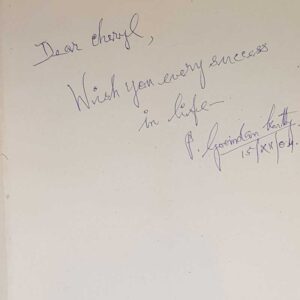
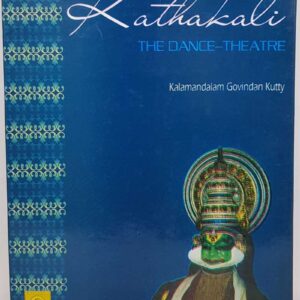
Kathakali: The Dance-Theatre
AU$40 Read MoreAdd to cartKalamandalam Govindam Kutty
Calcutta: The Asiatic Society, 1999.Foreword by Anil Kumar Sarkar.