
Prices in AUD. Shipping worldwide. Flat rate $8 postage per order within Australia. International by weight calculated at checkout. Read full terms.
-
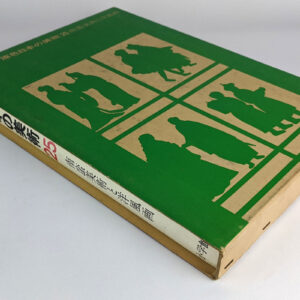
![Genshoku Nihon no Bijutsu 25 [Primary Colours of Japanese Art 25: Nanban Art and Western-style Painting]](https://www.thebookmerchantjenkins.com/wp-content/uploads/0019523-300x300.jpg)
Genshoku Nihon no Bijutsu 25 [Primary Colours of Japanese Art 25: Nanban Art and Western-style Painting]
AU$85.00 Read MoreAdd to cartTerukazu Akiyama
Tokyo: Shogakkan, 1970. -
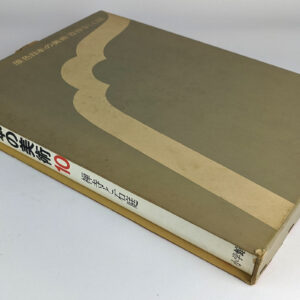
![Genshoku Nihon no Bijutsu 10 [Primary Colours of Japanese Art 10: Zen Temple and Stone Garden]](https://www.thebookmerchantjenkins.com/wp-content/uploads/0019521-300x300.jpg)
Genshoku Nihon no Bijutsu 10 [Primary Colours of Japanese Art 10: Zen Temple and Stone Garden]
AU$85.00 Read MoreAdd to cartTerukazu Akiyama
Tokyo: Shogakkan, 1967. -
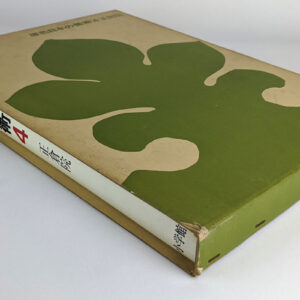
![Genshoku Nihon no Bijutsu 4 [Primary Colours of Japanese Art 4: Shosoin]](https://www.thebookmerchantjenkins.com/wp-content/uploads/0019519-300x300.jpg)
Genshoku Nihon no Bijutsu 4 [Primary Colours of Japanese Art 4: Shosoin]
AU$85.00 Read MoreAdd to cartTerukazu Akiyama
Tokyo: Shogakkan, 1968. -
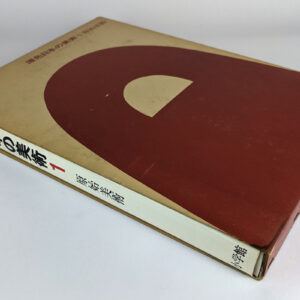
![Genshoku Nihon no Bijutsu 1 [Primary Colours of Japanese Art 1: Ancient Japanese Art]](https://www.thebookmerchantjenkins.com/wp-content/uploads/0019517-300x300.jpg)
Genshoku Nihon no Bijutsu 1 [Primary Colours of Japanese Art 1: Ancient Japanese Art]
AU$85.00 Read MoreAdd to cartTerukazu Akiyama
Tokyo: Shogakkan, 1970. -
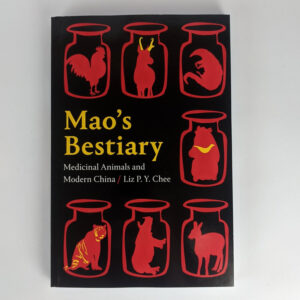
Mao’s Bestiary: Medicinal Animals and Modern China
AU$40.00 Read MoreAdd to cartLiz P. Y. Chee
Durham and London: Duke University Press, 2021.“A history of the rising use of “medicinal animals” in modern China. While animal parts and tissue had been present in Chinese medicine from an early date, the book argues that their role in the Chinese pharmacopiea greatly expanded and became systematized in the changed political and economic circumstances of the early Communist period. Mao’s Bestiary is the first book to place medicinal animals squarely within the historiography of Chinese medicine. In an age of controversy over the ethics and efficacy of faunal medicalization, its perpensity to foster zoonotic diseases and its devastating effect on wildlife conservation in China and worldwide, the book contributes a much-needed historical perspective, explaining the modern origins of what is too casually taken to be traditional practice” (publisher’s blurb)
-
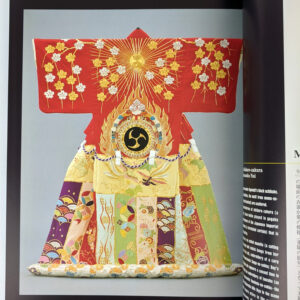
An Exhibition of Kabuki Stage Costumes
AU$50.00 Read MoreAdd to cartShochiku; Tetsuya Okazaki
Tokyo: Shochiku, 1998. -
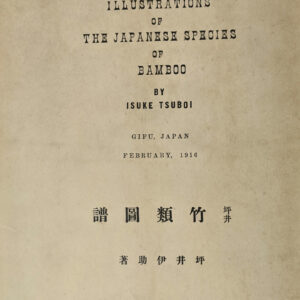
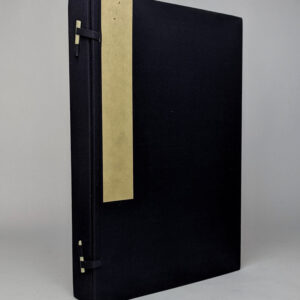
Illustrations of the Japanese Species of Bamboo
AU$1,850.00 Read MoreAdd to cartIsuke Tsuboi
Gifu and Tokyo: Kawada Teijiro and Hatsubaijo Maruzen Kabushiki Kaisha, 1916.The Tsuboi Bamboo Atlas comprises 109 loose colour lithographs of Japanese bamboo varieties with an English title page and index together with an 80 page book in Japanese. Presents examples of root systems, stems, with and without flowers and leaves, cross-sections, abnormalities, and fungus, at various scales, with Japanese and Latin titles, and English captions.
-
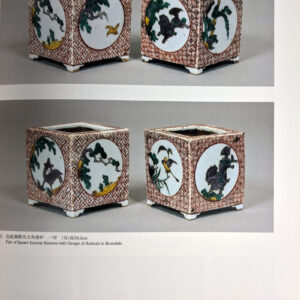
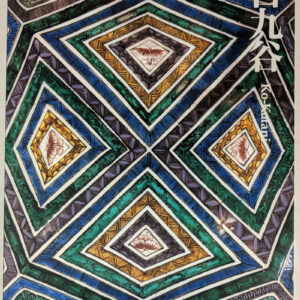
Ko-Kutani
AU$150.00 Read MoreAdd to cartIdemitsu Museum of Arts
Tokyo: Idemitsu Museum of Arts, 2004.A detailed catalogue of Ko-Kutani Japanese porcelain from the Idemitsu Museum of Arts collection. Primarily photographs, most of the text is in Japanese with some captions bearing English translation and an essay in English at the rear.
-
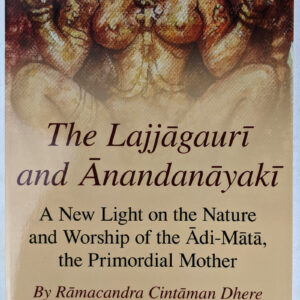
The Lajjagauri and Anandanayaki: A New Light on the Nature and Worship of the Adi-Mata, the Primordial Mother
AU$40.00 Read MoreAdd to cartRamacandra Cintaman Dhere
Melbourne: Monash University Publishing, 2020.Translated from Marathi and with an introductory chapter and annotation by Jayan Bhalcandra Bapat. “Lajjagauri is perhaps one of India’s oldest goddesses with images of her in South Asia dating back to the Indus Civilisation c. 3,000 to 1,500 BC. Her devotees can be traced back even earlier to the Ukraine c. 10,000 BCE. In India, new finds continue to expand the geographical spread of Lajjagauri’s devotees, most recently to Odisa. Dhere’s work on Lajjagauri is based on tireless pursuits of her image throughout western India. In contrast to the other thousands of Indian goddesses whose images are super abundant, Lajjagauri has become more reclusive as other deities have risen.” (publisher’s blurb)
-

The Other North
AU$30.00 Read MoreAdd to cartJesse Jones
Berlin: Sternberg Press, 2017. -
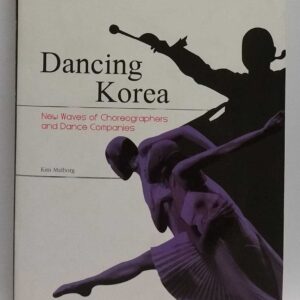
Dancing Korea: New Waves of Choreographers and Dance Companies
AU$20.00 Read MoreAdd to cartKim Malborg
Seoul: Hollym, 2012.