
Prices in AUD. Free Australian delivery for orders over $400. Free international delivery for orders over $800. Read full terms.
Showing all 82 resultsSorted by latest
-
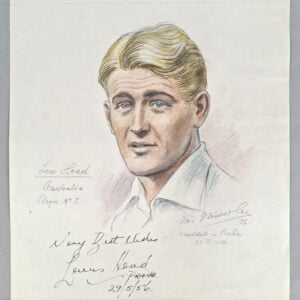
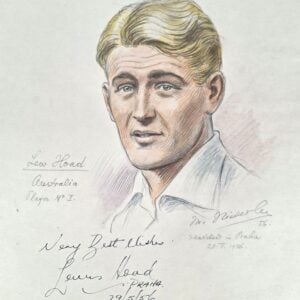
Lew Hoad Australia Player No 1. in Prague, 1956
AU$2,000 Read MoreAdd to cartMarcel Niederle
Prague: Marcel Niederle, 1956.Original portrait of Lew Hoad by the Czech artist and caricaturist Marcel Niederle (1898-1990), drawn in Prague two days after Hoad’s victory at the French Championships, and signed by Hoad the following day. Hoad appeared on the Prague courts on 28 and 29 May at the invitation of the Czechoslovak tennis authorities, then flew to Barcelona for the Trofeo Conde de Godo, and went on to win Wimbledon, the third of his three major singles titles that year. Signed by Niederle and captioned “Lew Hoad. Australia Player No 1. Sketched in Praha 28 V 1956”, and inscribed by Hoad “Very Best Wishes Lewis Hoad Praha 29/5/56”. Prepared for a cover of the Czech sports magazine ‘Stadion’ that was never published, and mounted on a large sheet of paper with the magazine’s worksheet tipped to the mount, clear of the drawing. Niederle specialised in sporting subjects, particularly tennis and ice hockey. After working in New York as an illustrator for Sports Illustrated he returned to Czechoslovakia, where he drew the leading tennis players of the 1950s to the 1970s, a period dominated by Australian champions. No holdings of Niederle’s work can be traced in any Australian public collection.
-
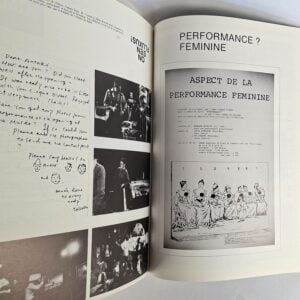
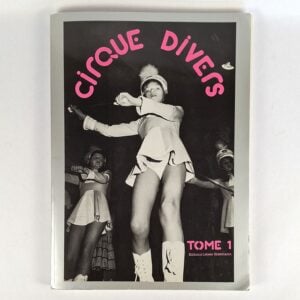
Cirque Divers
AU$500 Read MoreAdd to cartMichel Antaki
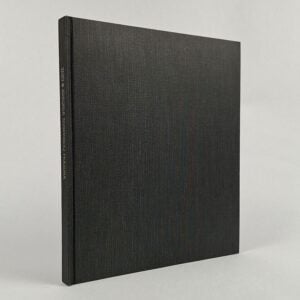
Bruxelles: Editions Lebeer Hossmann, 1986.Oversize self-documentation of the pataphysical cabaret and performance group / artist space in Liege, Belgium. Founded in 1977 by Michel Antaki, Jacques Jaminon, Brigitte Kaquet, Jacques Lizene, and Jean-Marie Lemaire, and operating until 1999. Though the cover states Tome 1, no further volumes were produced. This is the trade issue in wrappers; a deluxe issue of 15 artist copies was also issued. This copy with a trifolded two-sided A3 prospectus for the book, detailing the deluxe issue, a sponsorship card, and a 40 page booklet produced by the group likely in early 1987, largely reproducing mail art, including a contribution sent from Sydney.
-
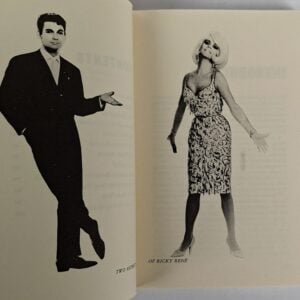
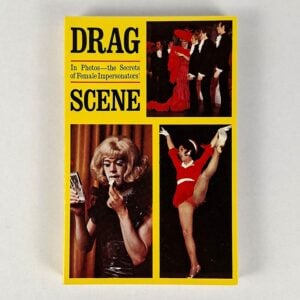
The Drag Scene: The Secrets of Female Impersonators
AU$200 Read MoreAdd to cartDesmond Montmorency
London: Luxor Press, 1970.A pictorial guide to drag performance and performers, ranging from a brief history of transvestism and a short guide to transformation, to where to see drag performance in London. More than half the book is given over to pictorial profiles of drag performers, including the Sydney duo Bruce Carter and Ken Keenan as Kate and Kathy Keenan.
-
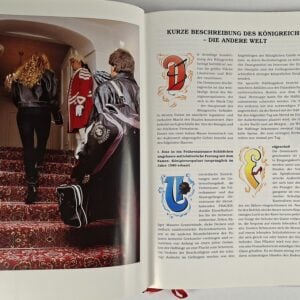
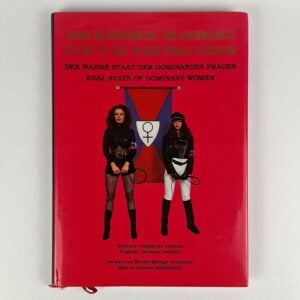
Leben im Konigreich – Die Andere Welt / Living in the Other World Kingdom: Real State of Dominant Women
AU$2,500 Read MoreAdd to cartPatricia de Gifford
Vizovice: The Other World Kingdom, 1996.The founding charter of The Other World Kingdom (OWK), a BDSM and femdom resort and micronation in Czechia. OWK was founded in 1996 and opened to visitors in 1997 on the grounds of a 16th-century chateau and claimed its own currency, passports, police force, courts, state flag, and state hymn, though it was not recognised by any other country. Patricia de Gifford ruled as Queen Patricia I, and citizenship for women required reaching the age of consent and ownership of at least one male slave; men who wished to become citizens were required to obey the Queen and pay taxes. The resort operated commercially as a large-scale femdom facility for a bit over a decade. The majority of the text is the founding charter, together with a brief overview, an introduction to the social classes, and the education programs on offer. Photographic illustrations throughout. Unrecorded in OCLC.
-
Abeceda Dusevniho Prazdna
AU$1,500 Read MoreAdd to cartZdenka Tmeje [Zdenek Tmej]; Alexandra Urbanova
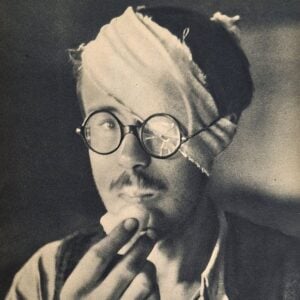
Praha [Prague]: Nakladatelstvi Zadruha, 1946.The most comprehensive, artistic, insider photographic documentation of Nazi forced labour, capturing the camp and surrounds at Breslau from Tmej’s capture in September 1942 through to 1944. With text by Alexandra Urbanova.
-
Lido im Maxim: La Maison du Strip-Tease
AU$200 Read MoreAdd to cartMaxim
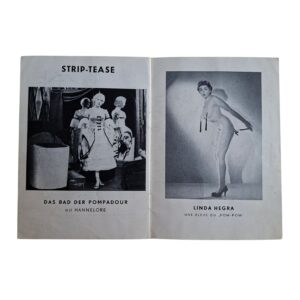
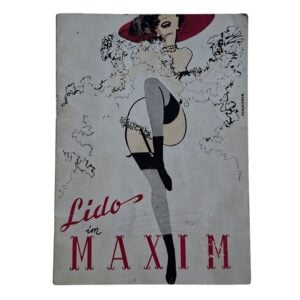
Vienna: Maxim, 1958.Programme for a strip/cabaret variety show at the Vienna club Maxim, located at Wien 1, Rauhensteingasse 8, on the site of the house where Mozart died. Includes many portraits of international performers. Unrecorded in OCLC.
-
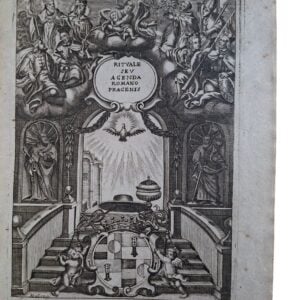
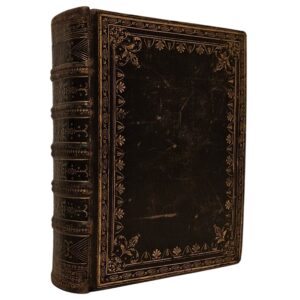
Rituale Romano-Pragense. Jussu & Authoritate Reverendissimi ac Celsissimi Principis, Domini, Domini Ferdonandi, e Comitibus de Khunburg
AU$500 Read MoreAdd to cart[Catholic Church, Archdiocese of Prague]
Vetero-Pragae [Prague]: Matthiam Hoger, 1731.The diocesan ritual of the Archdiocese of Prague, issued in the final year of the archiepiscopate of Ferdinand [Franz Ferdinand], Count von Khunburg (Archbishop of Prague, 1713-1731), and printed by Matthias Hoger in his capacity as archiepiscopal printer. Covering all of the rituals of the Catholic Church in Prague: baptism, confirmation, penance, matrimony, extreme unction, burial, exorcism, and blessings of houses, bells, and crops, together with the Prague ceremonial and processional calendar, and musical notation for the chanted rites. This copy bound without pp. 89-134 of the final parts of De Sacramento Poenitentiae, comprising the Bulla Coenae Domini and the related appendices on absolution. The absence of the Bulla is consistent across all recorded copies of the edition, however the appearance of the appendices varies, and one plate is normally found facing p. 135. The Bulla’s absence is best explained by the requirement across Catholic Europe that a papal bull needed civil sanction before it carried legal force and the Bulla Coenae Domini was among the most persistently withheld. This copy with a leather presentation plate to the front board, dated 1829, dedicating the volume “to the Reverend parish priest Carl Sternad, in remembrance, from Joseph Suchanek.”
-
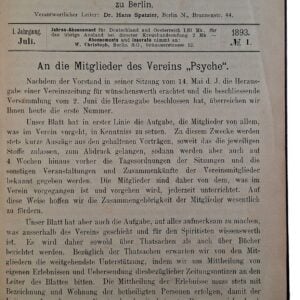
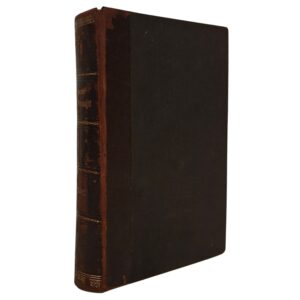
Psyche. Spiritistische Monatsschrift. Organ der spiritistische Loge “Psyche zur Wahrheit” zu Berlin. (1893-1898)
AU$1,600 Read MoreAdd to cartHans Spatzier; Friedrich Ernst; Carl Wald; Alfred Lindemann; Alfred Thienemann
Berlin: F. Schlosser, 1893-1898.Complete run of the first five years of Psyche, the monthly journal of a Berlin spiritist association that renamed and rebranded itself over this period as the leading German Spiritist association, closing out its run as the Loge ‘Psyche zur Wahrheit’. Numerous reports on seances and hauntings, arguments over fraudulent versus genuine mediums, spirit photography, telepathy, and more of interest to spiritists, alongside announcements for club lectures and informal gatherings. Contributions include the mesmerist and occult writer Willy Reichel, an ongoing study of the Renaissance magus Heinrich Cornelius Agrippa von Nettesheim, a rebuttal of the philosopher Georg von Gizycki’s public attack on spiritism, coverage of the Victorien Sardou play ‘Spiritisme’ on the Berlin stage, an obituary of the medium Valeska Topfer, and much more.
-
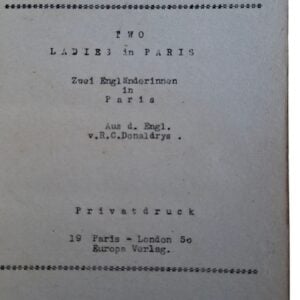
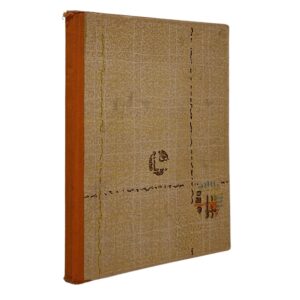
Two Ladies in Paris / Zwei Englanderinnen in Paris
AU$250 Read MoreAdd to cartR. C. Donaldrys
Paris and London: Privatdruck, Europa Verlag, 1950.Clandestine German erotic tale produced as a mimeographed typescript in a stated edition of 50 copies. The title page credits the work as being translated from the English by R. C. Donaldrys, though neither the translator nor English-language original has been traced. The production method is somewhat reminiscent of the Soho Typescripts, clandestinely produced pornographic fiction associated with London’s Soho book trade in the 1950s and 60s, but any direct link remains speculative. Unrecorded in OCLC.
-
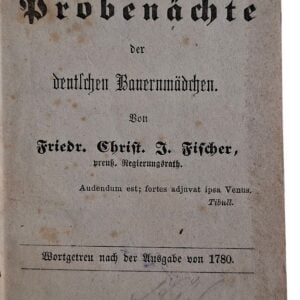
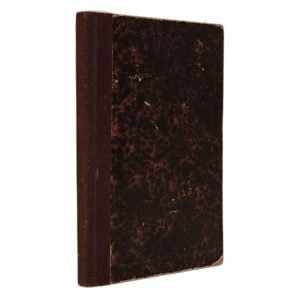
Ueber die Probenachte der teutschen Bauernmadchen
AU$300 Read MoreAdd to cartFriedr. Christ. J. Fischer
Stuttgart: Antiquariat von J. Scheible, 1853.[On the Trial Nights of German Peasant Girls], a study of the premarital courtship custom of a young man climbing through the window of a young peasant woman’s bedroom at night, by eighteenth-century German jurist and cultural historian Friedrich Christoph Jonathan Fischer (1750-1797). First published in 1780 and here reprinted by Stuttgart curiosa and folklore bookseller/publisher J. Scheible together with 13 pages of advertisements for other titles by the firm.
-
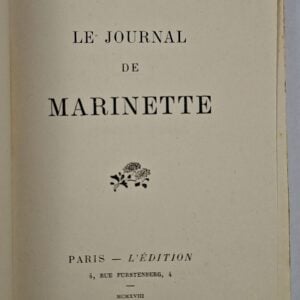
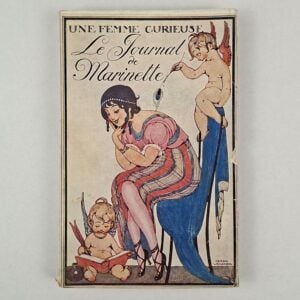
Le Journal de Marinette
AU$400 Read MoreAdd to cartUne Femme Curieuse; Gerda Wegener
Paris: L’Edition, 1918.Anonymous novel of a young lady’s adventures in Paris attributed to the same pseudonymous author as ‘L’Art de Seduire les Hommes suivi de l’Amour et les Poisons’, and published by the same curiosa imprint of Robert and Georges Briffaut. Whether Une Femme Curieuse here is Maurice Magre as suggested for ‘L’Art de Seduire’ is unknown. This new edition, reset with a denser line count, bringing the work from 308 pages to 242. Cover illustration by Danish illustrator Gerda Wegener, known for her distinctive lesbian erotica works. Her husband was one of the first people to undergo sex reassignment surgery in 1930. In the 1910s, her husband was regularly crossdressing and was Gerda’s primary model.
-
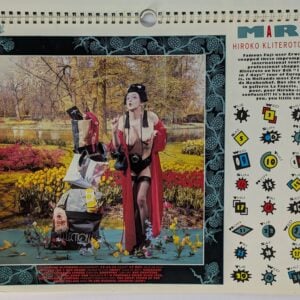
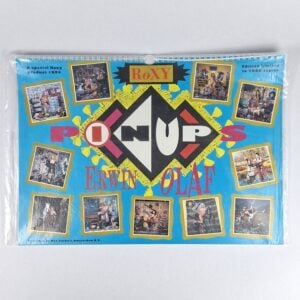
RoXY Pinups
AU$500 Read MoreAdd to cartErwin Olaf
Amsterdam: Max Studio’s, 1994.1994 calendar for the Amsterdam club RoXY. Operating from 1987-1999, RoXY (Radical outlet for the Xenomaniac in You) was a Dutch rave club emerging at the beginnings of rave culture. Known for its theatrical and glamorous atmosphere, which is on show here with 13 elaborately staged portraits by Dutch photographer Erwin Olaf.
-
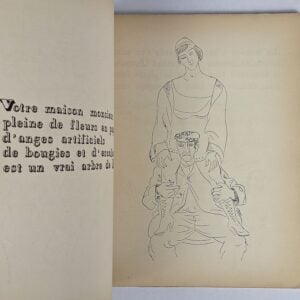
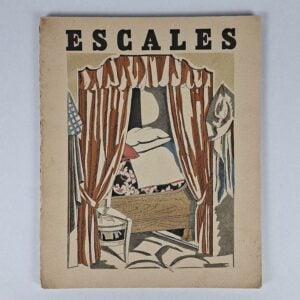
Escales
AU$1,000 Read MoreAdd to cartAndre Lhote; Jean Cocteau
Paris: Editions de La Sirene, 1920.Homage to the brothels of Marseille’s Vieux Port district. One of 400 numbered copies on Lafuma (from a total edition of 440). PIA 417.
-
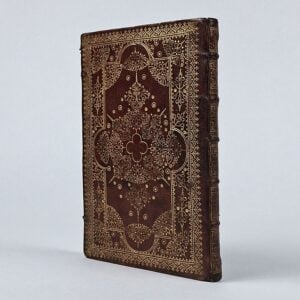
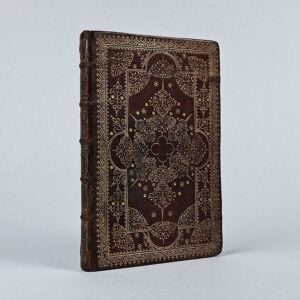
Le Tableau de la Croix Represente dans les ceremonies de la Sainte messe ensemble le tresor de la devotion aux soufrancesde N.re I. C. le tout enrichi de belles figures
AU$4,500 Read MoreAdd to cartJean Collin; Francoise Mazot
Paris: Chez F. Mazot, 1651-52.First issue of this wholly engraved devotional work, with both text and illustrations engraved on copper rather than set in type. The engraved title, depicting Christ in the Garden of Olives, is signed by Jean Collin (1623-1701), the Reims engraver. 35 illustrated openings follow, each pairing a stage of the Mass with a corresponding episode from the Passion of Christ, the Mass scenes possibly deriving from earlier Continental devotional models while the ornamental borders are Collin’s own work, followed by four further single-page plates numbered 36 to 39. The volume continues with litanies, including engraved busts of Jesus Admirabilis and Mater Amabilis, the Litaniae de nomine Iesu signed by the engraver I. Durant, followed by the seven Penitential Psalms in historiated borders, additional prayers, and the engraved privilege dated 9 June 1651 and the imprint dated 20 September 1652. This collation identifies the book as the first issue of the first edition, preceding the later impressions bearing a 1653 privilege and the revised 1653 edition. Jeanne Duportal identified the work as one of three publications whose engravings best exemplify the character of French religious illustration in the mid-seventeenth century. The contemporary pointille gilt binding, decorated with fine dotted and curved tools and retaining its metal clasps, is entirely characteristic of luxury Parisian devotional bindings of the period.
-
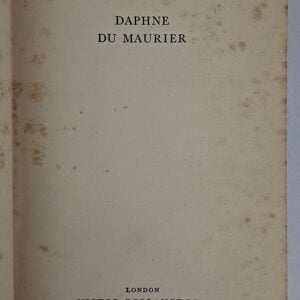
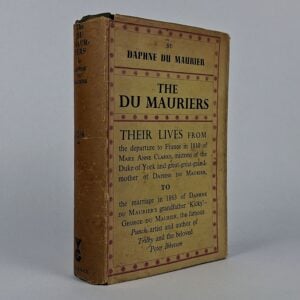
The du Mauriers
AU$100 Read MoreAdd to cartDaphne du Maurier
London: Victor Gollancz, 1937.First edition in the original jacket.
-
Bazaar Nr. 1 & Nr. 2
AU$500 Read MoreAdd to cartBo Karlsson
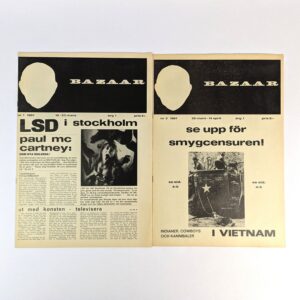
Stockholm: Bazaar, 1967.Complete run of the short-lived Swedish counterculture magazine, inspired by Oz, The Village Voice, and similar publications. Contents include an essay on LSD in Stockholm, coverage of the Swedish contemporary art scene, an interview with Paul McCartney, free jazz, and more.
-
The Constitution of the Czechoslovak Republic
AU$300 Read MoreAdd to cartKiri Hoetzl; V. Joachim
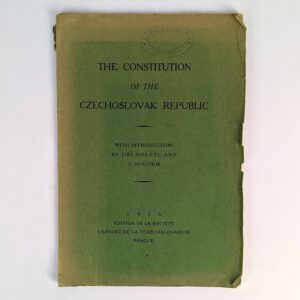
Prague: Edition de la Societe l’Effort de la Tchecoslovaquie, 1920.First edition of the Czechoslovak Constitution of 1920 with introductions by Jiri Hoetzl and V. Joachim. The 1920 constitution was the second constitution of Czechoslovakia ratified after WWI establishing it as a democratic republic, remaining in place until it was replaced in 1948 by the Ninth-of-May Constitution following the 1948 Czechoslovak coup d’etat by the Communist Party of Czechoslovakia.
-
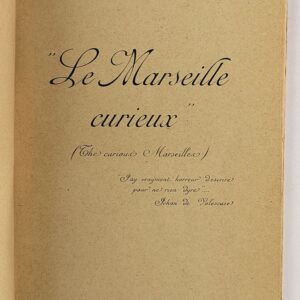
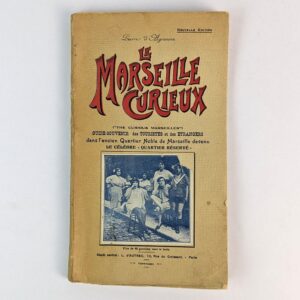
Le Marseille Curieux
AU$500 Read MoreAdd to cartPierre d’Agranon
Paris: L. d’Autrec, No date.The Curious Marseilles. Guide-Souvenir des Touristes et des Etrangers dans l’ancien Quartier Noble de Marseille Devenu Le Celebre Quartier Reserve. 1922 illustrated guide for sex tourists to the brothels of Marseille in the south of France. Copious illustrated with photographs of working women, a folding map of the area, and numerous advertisements.
-
The Second Continuation of the Old French Perceval: A Critical and Lexicographical Study
AU$100 Read MoreAdd to cartCorin F. V. Corley
London: The Modern Humanities Research Association, 1987. -


Portrait of a Revolution
AU$100 Read MoreAdd to cartBohdan Warchomij
: backpackbook, 2006.Photobook of the 2004 political protests in Ukraine. With an introduction by Australian photojournalist, David Dare Parker. This copy inscribed by the photographer.
-
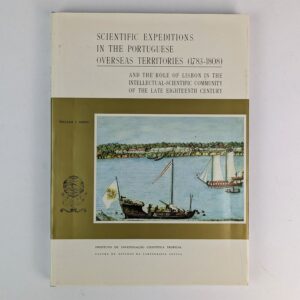
Scientific Expeditions in the Portuguese Overseas Territories (1783-1808)
AU$150 Read MoreAdd to cartWilliam Joel Simon
Lisboa: Instituto de Investigacao Cientifica Tropical, 1983.and the Role of Lisbon in the Intellectual-Scientific Community of the late Eighteenth Century.
-
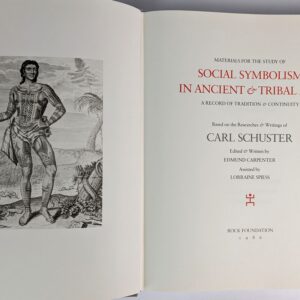
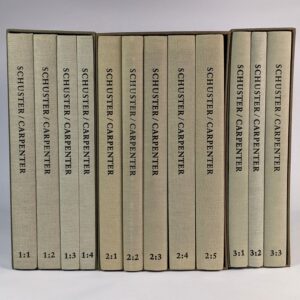
Materials for the Study of Social Symbolism in Ancient & Tribal Art: A Record of Tradition & Continuity
AU$10,000 Read MoreAdd to cartCarl Schuster; Edmund Carpenter; Lorraine Spiess.
New York: Rock Foundation, 1986-88.Based on the Researches & Writings of Carl Schuster. Edited & Written by Edmund Carpenter. Assisted by Lorraine Spiess. A cornerstone of comparative anthropology, mythology, and art history. This monumental work draws on the vast ethnographic record assembled by American art historian Carl Schuster (1904-1969). Schuster died suddenly of cancer, leaving the material unpublished. Carpenter spent nearly two decades editing Schuster’s archive into this twelve-volume synthesis. The result is an epic survey of visual and mythic patterns: from Paleolithic Europe to the tribal societies of Oceania, the Americas, and Africa. Issued privately in a very small edition distributed directly to museums and researchers Materials for the Study of Social Symbolism is likely the most comprehensive documentation and analysis of traditional symbolism ever published.
-
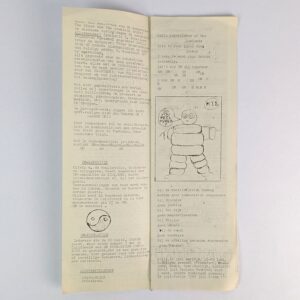
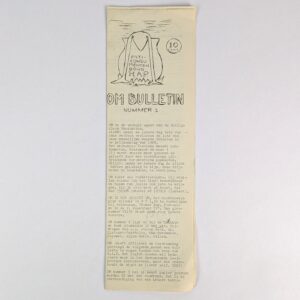
Om Bulletin Nummer 1
AU$100 Read MoreAdd to cartHeilige Alarm Pers
[Amsterdam]: Heilige Alarm Pers, 1968.First issue of the Dutch anti-consumerism countercultural bulletin by the Holy Alarm Press.
-
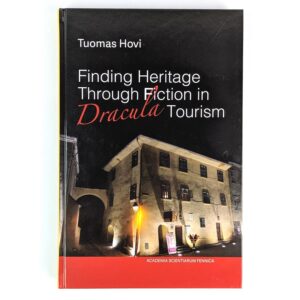
Finding Heritage Through Fiction in Dracula Tourism
AU$65 Read MoreAdd to cartToumas Hovi
Helskinki: Suomalainen Tiedeakatemia, 2016.Heritage and tourism have become inextricably linked. Depending on the view point, the effect of this link can be seen either negative or positive. Does tourism produce inauthentic and falsified tradition, threatening cultural heritage? Or does it, in fact, help to preserve heritage, culture and folklore in a changing and globalizing world? Tuomas Hovi investigates heritage in the context of Dracula tourism in Romania: tourists visiting places connected with either the fictional vampire Dracula or the historical Dracula, Vlad the Impaler, a 15th century Romanian ruler. How is Romanian heritage and culture presented and promoted through a seemingly superficial Dracula tourism based on Western popular fiction in Dracula tourism? Finding Heritage Through Fiction in Dracula Tourism offers new perspectives on the research literate concerning tourism and heritage, and a folkloristic view of tourism research. FF Communications No. 311 published by the Finnish Academy of Science and Letters.
-
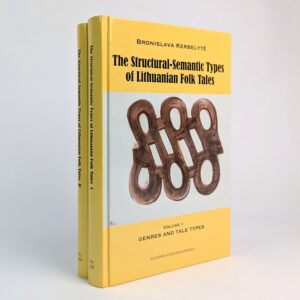
The Structural-Semantic Types of Lithuanian Folk Tales (2 Volumes)
AU$150 Read MoreAdd to cartBronislava Kerbelyte
Helskinki: Suomalainen Tiedeakatemia, 2015.I: Genres and Tale Types. II: The Classification and Index of Elementary Plots and Their Types. The classification system of the types of folk tales published by Antti Aarne in 1910 was a much needed and courageous project. Bronislava Kerbelyte has classified more than 40,000 variants of Lithuanian folk tales according to the international catalogue by Antti Aarne and Stith Thompson (AT). She has concluded that it is necessary to improve the classification system. Kerbelyte has determined elementary plots (EP) as structural elements for narratives and created the structural-semantic method for analysis and description of texts on several levels. The classification of elementary plots and their types contains much information about folk tales and about people. FF Communications No. 308 & 309 published by the Finnish Academy of Science and Letters.
-
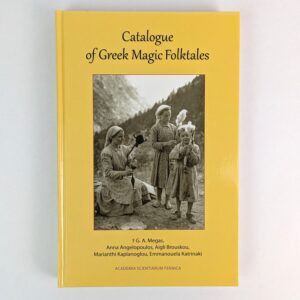
Catalogue of Greek Magic Folktales
AU$80 Read MoreAdd to cartG. A. Megas; Anna Angelopoulos; Aigli Brouskou; Marianthi Kaplanoglou; Emmanouela Katrinaki
Helskinki: Suomalainen Tiedeakatemia, 2012.The collected texts cover a period of more than a century of recordings (from the second half of the nineteenth century up to the mid-1970s) and geographically cover not only the entire Greek territory and Cyprus but also other areas where Greek populations live(d) and Greek cultures thrive(d) (Asia Minor, Pontus, Cappadocia, Southern Italy). Georgios A. Megas drafted the first catalogue, gathering and indexing all published and unpublished Greek folktale versions, so that the number of texts finally exceeded 23 000. A group of specialists continued for nearly 30 years carrying this project, consulting, classifying, and commenting G. Megas’ handwritten card indexes, and finally editing this rich material, scattered in public and private archives. FF Communications No. 303 published by the Finnish Academy of Science and Letters.
-
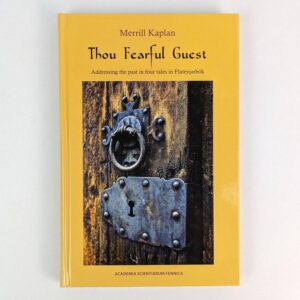
Thou Fearful Guest: Addressing the Past in Four Tales in Flateyjarbok
AU$70 Read MoreAdd to cartMerrill Kaplan
Helskinki: Suomalainen Tiedeakatemia, 2011.A stranger appears at the court of a Norwegian king known best for bringing Christianity to the North. Variations of this scene appear four times in the fourteenth-century manuscript Flateyjarbok. Thou Fearful Guest analyzes how these episodes create meaning by their connections to custom, law, myth, discourses of historical and spiritual truth, typological understandings of time, and the historical context of the manuscript in which they appear. Thou Fearful Guest explores how and to what end medieval Icelanders thought about tales of heathen gods and heroes. FF Communications No. 301 published by the Finnish Academy of Science and Letters.
-

Carl Wilhelm von Sydow: A Swedish Pioneer in Folklore
AU$60 Read MoreAdd to cartNils-Arvid Bringeus
Helskinki: Suomalainen Tiedeakatemia, 2009.Nils-Arvid Bringeus provides a detailed analysis of the founder of folklore research in Sweden, Professor Carl Wilhelm von Sydow (1878-1952). We are introduced to a fascinating personality and able to follow his persevering struggle to gain acceptance for a new academic discipline. Von Sydow took a highly active interest in international cooperation, not least within the field of folktale research. He taught at both Lund and Uppsala universities, establishing a taxonomy within the study of folklore that has been of great importance. FF Communications No. 298 published by the Finnish Academy of Science and Letters.
-
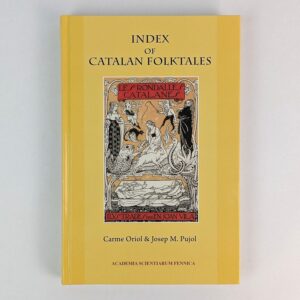
Index of Catalan Folktales
AU$70 Read MoreAdd to cartCarme Oriol; Josep M. Pujol
Helskinki: Suomalainen Tiedeakatemia, 2008.The Catalan language is spoken over a large area divided among four states (Andorra, Spain, France and Italy), with a total population of 13.5 million inhabitants. Catalan culture has a large body of literature as well as a rich and extensive tradition of folklore studies. Catalan folktales were ignored by the Types of the Folktale until the second edition (1961), which included only references to the collection published by Joan Amades (1950). The present Index of Catalan Folktales brings together the work of some seventy collectors working along 150 years and for the first time gives a faithful and complete image of the Catalan contribution to the world´s folklore heritage. FF Communications No. 294 published by the Finnish Academy of Science and Letters.
-
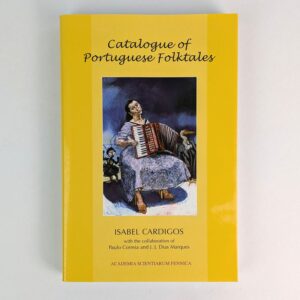
Catalogue of Portuguese Folktales
AU$60 Read MoreAdd to cartIsabel Cardigos; Paul Correia; J. J. Dias Marques
Helskinki: Suomalainen Tiedeakatemia, 2006.In the old Aarne / Thompson, Portugal was virtually non-existent, appearing in the bibliography of just three folktales. In 2003, the author of The Types of International Folktales stretched his hand to the first manuscript of the Catalogue of Portuguese Folktales and included them in 700 types of his own manuscript. The Catalogue of Portuguese Folktales is now the first regional index that takes into account the classifications of the new ‘ATU’. But it displays its difference by electing its own affinities with old ‘AT’ numbers, with regional catalogues, or even by offering new numbers. We can see a new face of the European folktale emerging, with a strong Mediterranean flavour. FF Communications No. 291 published by the Finnish Academy of Science and Letters.
-
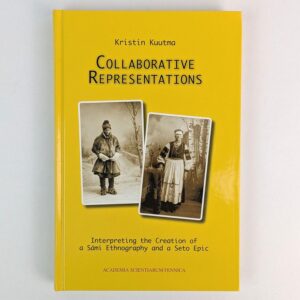
Collaborative Representations: Interpreting the Creation of a Sami Ethnography and a Seto Epic
AU$60 Read MoreAdd to cartKristin Kuutama
Helskinki: Suomalainen Tiedeakatemia, 2006.The focus of this book revolves around two manifestly representative texts from the early twentieth century: Johan Turi’s story of Sami experience Muitalus samiid birra and the Seto epic Peko performed by Anne Vabarna. The current analysis of the complex performative interaction between the culture bearer, his or her repertoire, and the culture researcher benefits from an interdisciplinary anthropological and folkloristic approach, informed by hybridity and the blurring of disciplinary boundaries in historicizing inquiries into cultural documentation and textual practices. FF Communications No. 289 published by the Finnish Academy of Science and Letters.
-

The Maiden’s Death Song & The Great Wedding: Anne Vabarna’s Oral Twin Epic written down by A. O. Vaisanen
AU$80 Read MoreAdd to cartLauri Honko; Anneli Honko; Paul Hagu
Helskinki: Suomalainen Tiedeakatemia, 2003.For centuries, the eastern shores of the Baltic Sea have nourished poetic cultures developing oral epic traditions that mostly survived in lays of a few hundred lines but that eventually gave rise to much longer traditional epics. The Maiden’s Death Song & The Great Wedding is a manifestation of a long epic format rare in Baltic-Finnish folk poetry and of two alternative storylines. It is also a masterpiece that serves as a reminder of the poetry of a gifted minority culture that tends to be forgotten. FF Communications No. 281 published by the Finnish Academy of Science and Letters.
-
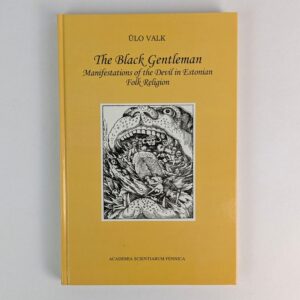
The Black Gentleman: Manifestations of the Devil in Estonian Folk Religion
AU$50 Read MoreAdd to cartUlo Valk
Helskinki: Suomalainen Tiedeakatemia, 2000.This empirical study of the Devil in the collections of the Estonian Folklore Archives, reflecting the world of belief inhabited by the Estonians in the 19th and 20th centuries, is also a book about suspicion and fear in everyday life. It describes how religious folklore has drawn borders between the human and the non-human, how it has modelled the Other, the supernatural and social evil. As a study of folk narrative, and legends in particular, it mainly discusses variation at the level of motif with special reference to the visual guises of the Devil. FF Communications No. 276 published by the Finnish Academy of Science and Letters.
-
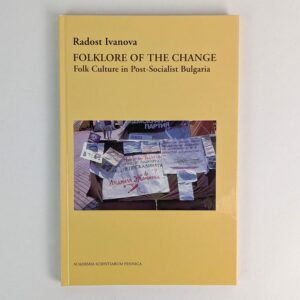
Folklore of the Change: Folk Culture in Post-Socialist Bulgaria
AU$40 Read MoreAdd to cartRadost Ivanova
Helskinki: Suomalainen Tiedeakatemia, 1999.The book analyses the developments taking place in Bulgaria in the years following November 10, 1989. The dynamics of the political and socio-economic changes in that period are comparable only to the most extreme periods of Bulgaria’s history. This study is not a political analysis. It is an attempt to follow the changes in people’s mentality. This book documents the enthusiasm of the negation of a chimera lasting half a century and the euphoria of the search for new roads. The volume consists of eight studies, seven of which deal with the democratic processes and developments in Sofia. FF Communications No. 270 published by the Finnish Academy of Science and Letters.
-
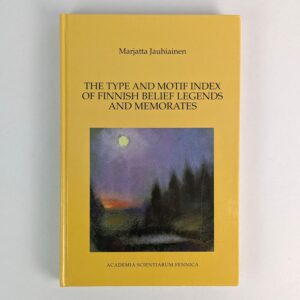
The Type and Motif Index of Finnish Belief Legends and Memorates
AU$65 Read MoreAdd to cartMarjatta Jauhiainen
Helskinki: Suomalainen Tiedeakatemia, 1998.Lauri Simonsuuri’s Typen- und Motivverzeichnis der finnischen mythischen Sagen (FFC 182), published in 1961 and reprinted in 1987, became a classic among the national legend catalogues. Marjatta Jauhiainen’s work not only updates and brings into English the catalogue, it is a thorough revision and enlargement of the classification system itself. In the introduction she surveys the history of collecting and the progress of belief-legend cataloguing on the international scene providing a concordance with Reidar Th. Christiansen’s The Migratory Legends (FFC 175, 1958/1992). A clarification of key terms, a subject directory and a map displaying tradition areas in Finland help the reader to orientate in the exceptionally rich store of belief legends and memorates. FF Communications No. 267 published by the Finnish Academy of Science and Letters.
-
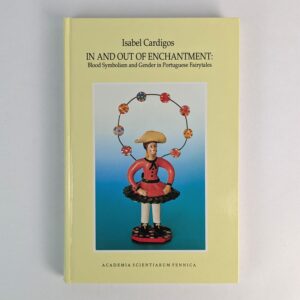
In and Out of Enchantment: Blood Symbolism and Gender in Portuguese Fairytales
AU$60 Read MoreAdd to cartIsabel Cardigos
Helskinki: Suomalainen Tiedeakatemia, 1996.The core of fairytales is the realm of enchantment. This study argues that the bloodshed associated with menstruation, defloration and childbirth–natural episodes in the lifecycle of women–is central to a syntax of enchantment and disenchantment that is common to all fairytales. It is a reflection on the gendered voices that have generated and contributed to the structure and symbolism of fairytales; and it takes shape along with the discussion of Portuguese versions of wide-spread tale types like AT303 (The Two Brothers), AT313 (The Girl as Helper in the Hero’s Flight and AT516 (Faithful John), as well as through an intriguing ecotype of Snake Helper tales (AT533*), ‘The Little Snake’. FF Communications No. 260 published by the Finnish Academy of Science and Letters.
-
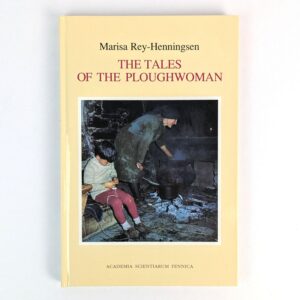
The Tales of the Ploughwoman
AU$40 Read MoreAdd to cartMarisa Rey-Henningsen
Helskinki: Suomalainen Tiedeakatemia, 1996.Appendix to FFC 254. FF Communications No. 259 published by the Finnish Academy of Science and Letters.
-
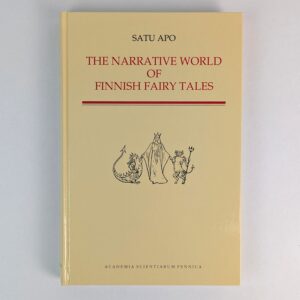
The Narrative World of Finnish Fairy Tales
AU$60 Read MoreAdd to cartSatu Apo
Helskinki: Suomalainen Tiedeakatemia, 1995.Finnish fairy tales represent the northern branch of the Western European fairy-tale tradition. Although Finnish epic folklore and mythology have been objects of great research interest, Finnish fairy tales have been studied surprisingly little. This study answers not only methodological but also the most important empirical questions, such as: what are the themes, plots and characters which have been able to entertain both fairy-tale tellers and their listeners from one generation to the next? How can these contentual elements be understood and interpreted within the framework of traditional Finnish folk culture? /// The methodological issues dealt with here include the question of how to approach traditional folklore material recorded in the 1800s, of which there is an enormous amount but very little accompanying contextual information. In order to analyse the contents of the tales, this study suggests the use of several semantic levels of abstraction as well as the systematic analysis of variation; only then is it feasible to present macrocontextual, interpretive hypotheses in which narrative and cultural structures are examined side by side. FF Communications No. 256 published by the Finnish Academy of Science and Letters.
-

The World of the Ploughwoman: Folklore and Reality in Matriarchal Northwest Spain
AU$60 Read MoreAdd to cartMarisa Rey-Henningsen
Helskinki: Suomalainen Tiedeakatemia, 1993.This study is a contribution to the discussion of folklore as a mirror of society. Spanish Galicia offers a special opportunity for examining wellknown folktales in a different context because of the cultural and economic dominance of women and the matriarchal life style which characterized the region until recently. That matriarchy was deeprooted in Galicia and did not result from male migration in modern times, is demonstrated in the historical chapters of the book, while the anthropological chapters (on family systems, work patterns, matriarchal ideology, sexual behaviour, religion and magic) tend to show that all aspects of Galician culture have been “canonized” in folklore; folklore therefore must have gone through radical changes in order to conform with the local ideology. While the women in Galician folktales almost always appear in active and aggressive hero roles, this has nothing to do with “wishful thinking” or “poetic fiction”, for according to the matriarchal concept it is just the natural order of things. Surely the correlation demonstrated here between the social structure, gender roles, and ideology may also be observed in male-dominated societies, once we learn to disengage from the patriarchal concept of the “natural order of things”. FF Communications No. 254 published by the Finnish Academy of Science and Letters.
-
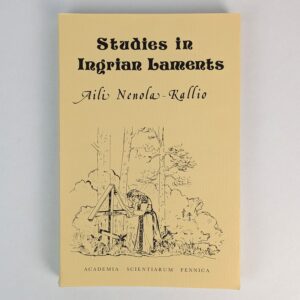
Studies in Ingrian Laments
AU$40 Read MoreAdd to cartAili Nenola-Kallio
Helsinki: Suomalainen Tiedeakatemia, 1982.Collection and analysis of Ingrian lament traditions, exploring ritual expression, grief, and regional folk poetics. FF Communications No. 234 published by the Finnish Academy of Science and Letters.
-
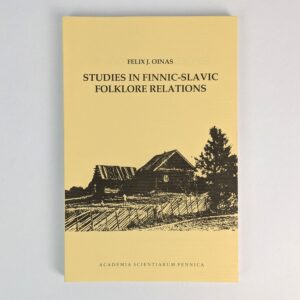
Studies in Finnic-Slavic Folklore Relations
AU$30 Read MoreAdd to cartFelix J. Oinas
Helsinki: Suomalainen Tiedeakatemia, 1991.Comparative study of Finnic and Slavic folklore, examining shared motifs, narrative structures, and cultural exchanges. FF Communications No. 205 published by the Finnish Academy of Science and Letters.
-
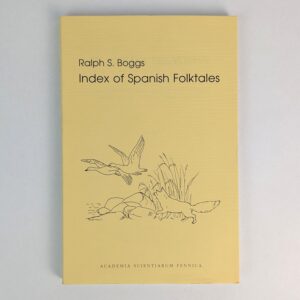
Index of Spanish Folktales
AU$30 Read MoreAdd to cartRalph S. Boggs
Helsinki: Suomalainen Tiedeakatemia, 1993.Classified according to Antti Aarne’s types of the folktale, translated and enlarged by Stith Thompson, in FF Communicatoins No. 74. FF Communications No. 90 published by the Finnish Academy of Science and Letters.
-
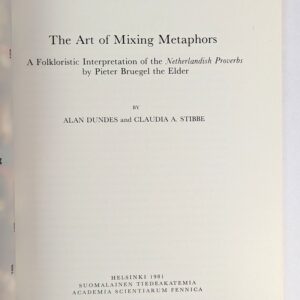
The Art of Mixing Metaphors: A Folkloristic Interpretation of the Netherlandish Proverbs by Pieter Bruegel the Elder
AU$30 Read MoreAdd to cartAlan Dundes; Claudia A. Stibbe
Helsinki: Suomalainen Tiedeakatemia, 1981.FF Communications No. 230 published by the Finnish Academy of Science and Letters.
-
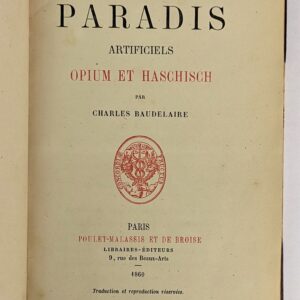
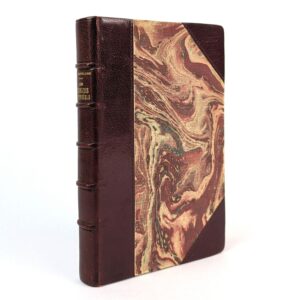
Les Paradis Artificiels: Opium et Haschisch
AU$4,000 Read MoreAdd to cartCharles Baudelaire
Paris: Poulet-Malassis et de Broise, 1860.First edition of Baudelaire’s Artificial Paradises, on the drug experiences of hashish and opium and their relationship with creative expression, being accounts from within the walls of Le Club des Haschischins and a translation and adaptation of Thomas De Quincey’s Confessions of an English Opium-Eater. CARTERET I:126. This copy rebound in a fine half leather binding without the wrappers.
-
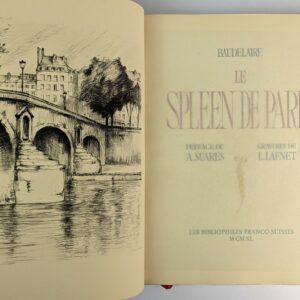
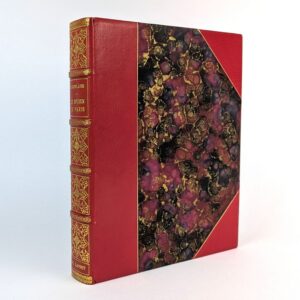
Le Spleen de Paris
AU$1,400 Read MoreAdd to cartCharles Baudelaire; L. Lafnet
: Les Bibliophiles Franco-Suisses, 1940 [1941].One of 106 numbered copies reserved for members of the final illustrated book by Luc Lafnet, with 90 etchings each with tissue guard.
-
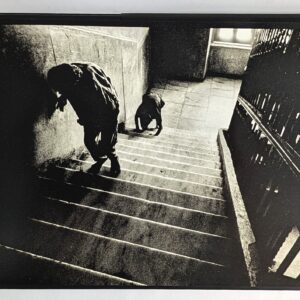
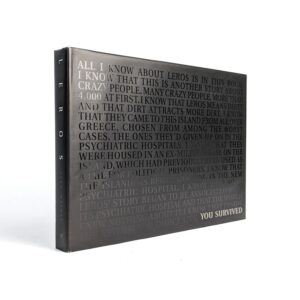
Leros
AU$300 Read MoreAdd to cartAlex Majoli
London: Trolley, 2002.Debut photo book by Magnum photographer Alex Majoli documenting the psychiatric hospital on the Greek island of Leros.
-
Monte Cassino (Con Amore) w/ Print
AU$40 Read MoreAdd to cartSteven Nestor
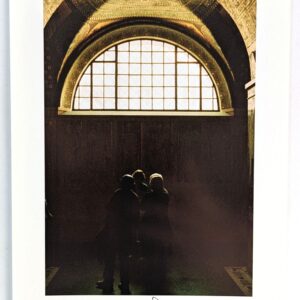
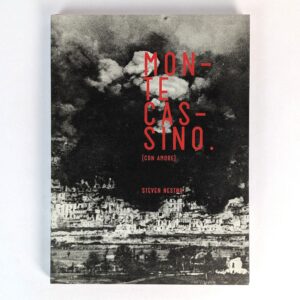
Sydney: T&G Publishing, 2019.“Monte Cassino: Con Amore is an exploration by Steven Nestor of the destruction of a small Italian town Monte Cassino and its monastery in the Second World War. Surviving copies of The Illustrated London News from 1944 lead Nestor on a journey to discover and record the last remaining traces of the devastation of the town and the Benedictine monastery built on the site of the original Abbey chosen and founded by St Benedict in the 6th century. Blending original material from his research archive alongside his own images, Nestor encourages the viewer to cross into an elusive but violent past. The photographic windows throughout this book look out onto a buried past that continues to inform and shape our present through the fragments that have survived destruction, the passage of time and a human quest to overcome disaster. This is a journey across unremarkable contemporary places and into their dark history: forlorn graffiti semaphores in a space once littered with casualties of battle, a collapsed street sign lies unnoticed on the edge of town and autumns mulch burns on the road that snakes its way up to the summit of worship and war.” (publisher’s blurb) This copy signed by Nestor on the title page and with a signed photographic print in a paper folder laid in.
-
Le Pornographe, ou Idees d’un Honnete-Homme sur, un Projet de Reglement pour les Prostitutes,
AU$1,000 Read MoreAdd to cart[Nicolas Restif de La Bretonne]
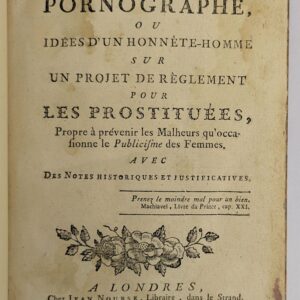
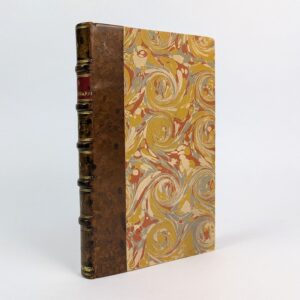
Londres and La Haie: Jean Nourse and Gosse Junior, 1770.Propre a prevenir les Malheurs qu’occafionne le Publicisme des Femmes. Avec Des Notes Historiques et Justificatives. [The Pornographer, or Ideas of an Honest Man on a Draft Regulation for Prostitutes, Proper to Prevent the Misfortunes Occurring from the Publicity of Women. With Historical and Justificatory Notes]. Second Edition of the classic 18th century utopian text on sex work in which Bretonne envisions prostitution as a public institution with numerous social and medical benefits. This copy in a 20th century rebind in quarter leather with new endpapers, and extra-illustrated with one erotic illustration bound in at page 16.
-
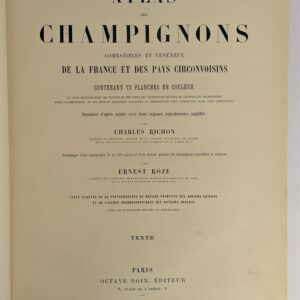
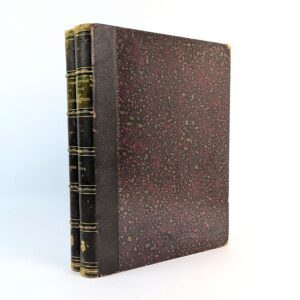
Atlas des Champignons Comestibles et Veneneux de la France et des pays Circonvoisins
AU$2,500 Read MoreAdd to cartCharles Richon; Ernest Roze
Paris: Octave Doin, 1888.Atlas of edible and poisonous mushrooms of France and surrounding countries containing 72 color plates or figures of 229 types of the main species of mushrooms sought for food, and similar suspect or dangerous species with which they are confused drawn from nature with their reproductive organs amplified by Charles Richon… Accompanied by a monograph of these 229 species and a general history of edible and poisonous mushrooms by Ernest Roze… Text illustrated with 62 photoengravings of primitive drawings by old authors and organographic figures by recent authors after reproductions made by Charles Rolet. Key late 19th century work of French mycology. VOLBRACHT 1753. BITTING pg. 398. This copy with the bookplate of French mycologist Raymond Bertault.
-
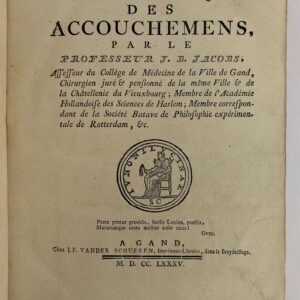
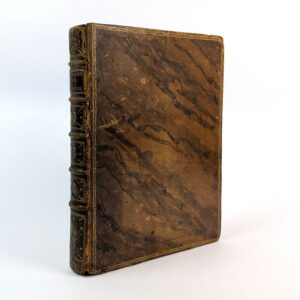
Ecole Pratique des Accouchemens.
AU$1,000 Read MoreAdd to cartJ. B. Jacobs
A Gand: Chez J. F. Vander Scheuren, 1785.First French translation of the important Dutch obstetrics manual by Jan Bernard Jacobs (1734-1790). At the time of its appearance, it was one of the most complete treatises on the art of childbirth and remained a standard work into the middle of the nineteenth century being described as a pearl of scientific production from the last years before the French Revolution.
-
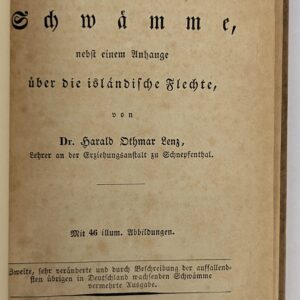
Die Nutzlichen und Schadlichen Schwamme, nebst einem Anhange uber die islandische Flechte
AU$800 Read MoreAdd to cartHarald Othmar Lenz
Gotha: Beckersche Buchhandlung, 1840.The useful and harmful mushrooms, with an appendix on the Icelandic lichen. The second edition enlarged with descriptions of German fungi. The elegantly coloured plates showing a total of 46 illustrations drawn by J. C. Ausfeld. VOLBRACHT 1165.2.
-
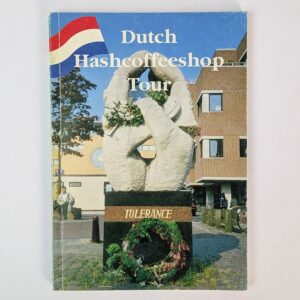
Dutch Hashcoffeeshop Tour
AU$40 Read MoreAdd to cartAnonymous
Breda: Ja Ja Exports, 1995.1990s guide to the coffee shops (marijuana cafes) of Amsterdam (and other Netherlands cities). Very detailed including the author’s review of each shop, as well as information about other cannabis culture. Also touches on the sex culture of the city.
-
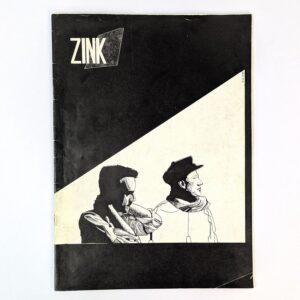
Zinkzong Musikmagasin Nr. 4
AU$30 Read MoreAdd to cartArild Polden
Ski: Zinkzong Musikmagasin, 1981.Single issue of Norwegian music zine Zink.
-
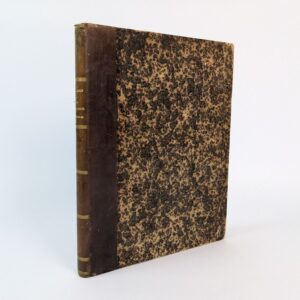
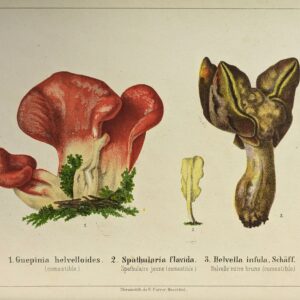
Les Champignons Comestibles et les especes veneneuses avec lesquelles ils pourraient etre confundus
AU$1,200 Read MoreAdd to cartLouis Favre-Guillarmod
Paris: Librairie Agricole, [1869].Edible and poisonous mushrooms in the Canton of Neuchatel, Switzerland. The first complete edition with the 2 parts in 1 volume. The first part being a reprint of the 1861 edition, Les champignons comestibles du canton de Neuchatel, the second with a new introduction and further invaluable information on the edibility of mushrooms VOLBRACHT 586. This copy with the mycological bookplate of Jacques and Helene Bon.
-
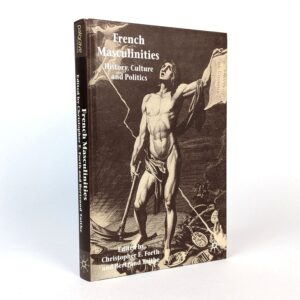
French Masculinities: History, Culture and Politics
AU$100 Read MoreAdd to cartChristopher E. Forth; Bertrand Taithe
Basingstoke and New York: Palgrave Macmillan, 2007.This copy inscribed by Christopher Forth
-
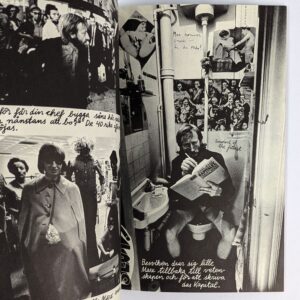

Pengar eller Livet
AU$150 Read MoreAdd to cartCarl Johan De Geer; Jan Hannertz
Stockholm: Albert Bonniers Forlag, 1970.[Money or Life]. Photobook novella with captions in Swedish of De Geer and friends of the Swedish underground on an artistic and erotic romp about town
-
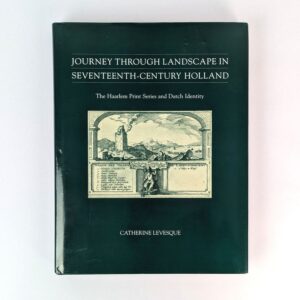
Journey Through Landscape in Seventeenth-Century Holland: The Haarlem Print Series and Dutch Identity
AU$80 Read MoreAdd to cartCatherine Levesque
University Park: The Pennsylvania State University Press, 1994. -
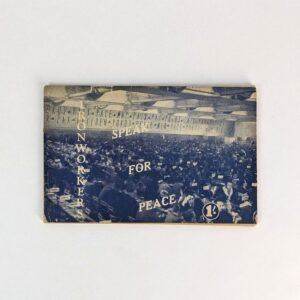
Ironworkers Speak for Peace
AU$40 Read MoreAdd to cartNational Council of the Federated Ironworkers’ Association of Australia
Sydney: National Council of the Federated Ironworkers’ Association of Australia, No date.Report of the rank and file members of the Ironworker’s Union that attended the 2nd World Peace Congress in Warsaw, Poland, November, 1950.
-
On Overcoming the Personality Cult and Its Consequences: Decision of the Central Committee, C.P.S.U
AU$200 Read MoreAdd to cartCentral Committee, Communist Party of the Soviet Union
Union of Soviet Socialist Republics: Central Committee, Communist Party of the Soviet Union, 1956.The resolution of the Central Committee published in the wake of the anti-Stalin Secret Speech by Soviet leader Nikita Khrushchev at the 20th Congress of the Communist Party of the Soviet Union, 25 February, 1956.
-
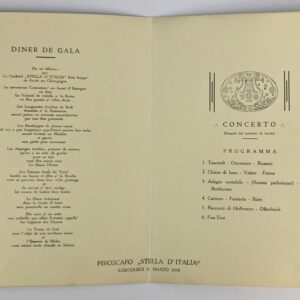
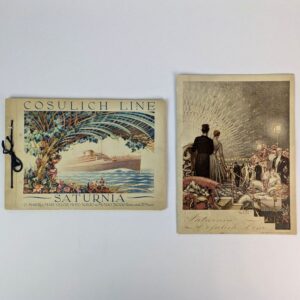
Cosulich Line Saturnia (Souvenir and Menu)
AU$100 Read MoreAdd to cartArgio Orell
Trieste: D. Modiano, 1927-1928.Portuguese edition of the pre-maiden voyage introductory souvenir book for the Italian ocean liner MS Saturnia WITH a menu and program in French for the night’s dinner and entertainment for 21st of March, 1928. Both with cover illustrations by Argio Orell.
-
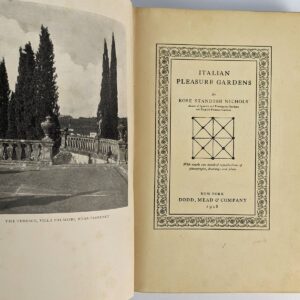
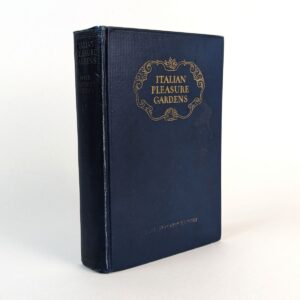
Italian Pleasure Gardens
AU$200 Read MoreAdd to cartRose Standish Nichols
New York: Dodd, Mead & Company, 1928.First printing of the third and final in American landscape architect Rose Standish Nichols’ (1872-1960) studies on the gardens of Europe, preceded by English Pleasure Gardens (1902) and Spanish and Portuguese Gardens (1924). Italian Pleasure Gardens was the first to be illustrated with photographs taken by Nichols on her travels, there being near 200 illustrations throughout.
-

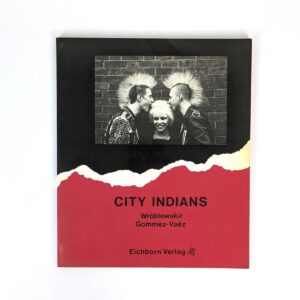
City Indians: Photographs of Western Tribal Fashion
AU$300 Read MoreAdd to cartChris Wroblewski; Nelly Gomez-Vaez
Frankfurt am Main: Eichborn Verlag, 1983.Photographic study of youth subculture in the United Kingdom and Europe in the late 1970s/early 1980s. Divided into sections: Mohicans, Piercing, Skinheads, Rock and Roll, Sons of Hell, Leather, Sic Boys, Dress, Tattoo, Hare Krishna, and Rasta. This copy inscribed by Wroblewski on the title page and with an inscribed laid in postcard of his photograph of one of the tattooed subjects featured in the book.
-
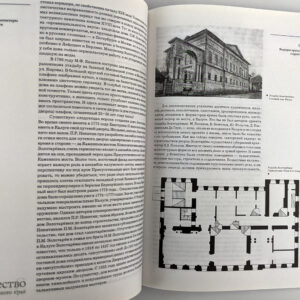
![[Architecture of the Kaluga Region: From Antiquity to the Present Day]](https://www.thebookmerchantjenkins.com/wp-content/uploads/0033374-300x300.jpg)
[Architecture of the Kaluga Region: From Antiquity to the Present Day]
AU$100 Read MoreAdd to cartA. C. Dneprovskiy-Orbeliani
Kaluga: N. F. Bochkareva, 2006. -
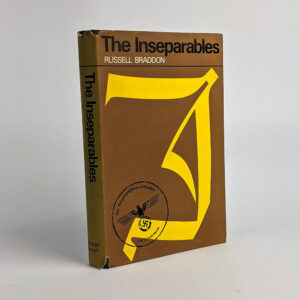
The Inseparables
AU$40 Read MoreAdd to cartRussell Braddon
London: Michael Joseph, 1968.A German medical student’s Christmas day pilgrimage to Dachau on LSD.
-
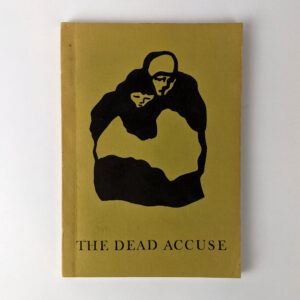
The Dead Accuse: Collection of Letters from Behind the Iron Curtain
AU$40 Read MoreAdd to cartArturs Plaudis
Melbourne: JAJM Fund, 1984.Collection of letters telling of life in Latvia from 1944 to 1980.
-
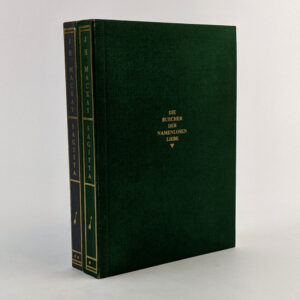
Die Buecher Der Namenlosen Liebe (2 Volumes)
AU$100 Read MoreAdd to cartJohn Henry Mackay [Sagitta]
Berlin: Verlag Rosa Winkel, 1979.The Books of Nameless Love. Seven volumes were originally published between 1906-1926 under the pseudonym Sagitta. Writer, anarchist, and advocate Mackay traces early developments of the homosexual emancipation movement in Germany.
-
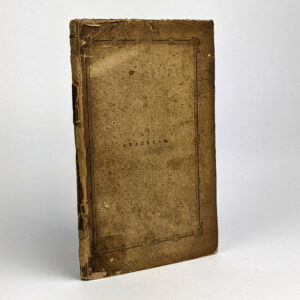
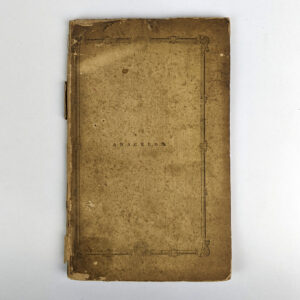
Anacreonti Quae Tribuuntur Carminum Paraphrasis Elegiaca
AU$150 Read MoreAdd to cartJ. H. Hoeufft
Dordraci: Peter van Braam, 1795.Poems by Anaccreon (ca. 575-495 BC), a Greek lyric poet who wrote in the Ionic dialect here translated into Latin by J.H. Hoeufft. His works were meant to be sung or recited to lyre music, and included hymns as well as less virtuous drinking and love songs.
-
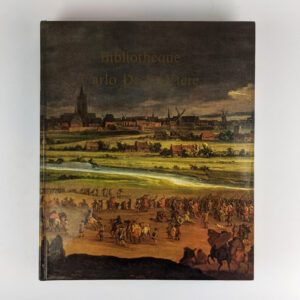
Bibliotheque Carlo de Poortere: Verhaeren, Maeterlinck, Rodenbach
AU$150 Read MoreAdd to cartCarlo de Poortere
Liege: Vaillant – Carmanne, 1985.Carlo de Poortere (1917 – 2002), son of Belgian carpet manufacturer Louis de Poortere and later co-manager of the family business, was a bibliophile and collector. His library included fine 17th and 18th century bindings, and other works from the sixteenth to the twentieth centuries. He also collected manuscripts and memorabilia, and it is those that this book documents, by Emile Verhaeren (Belgian Symbolist author, 1855 – 1916, Maurice Maeterlinck (Belgian poet and playwright, 1862 – 1949), and Georges Rodenbach (Belgian Symbolist writer and poet, 1855 – 1898). Produced in a limited edition of 350 copies, numbers 1 – 50 printed on Deluxe watermarked Ingres Van Gelder paper; this being one of the deluxe edition, being number 36.
-
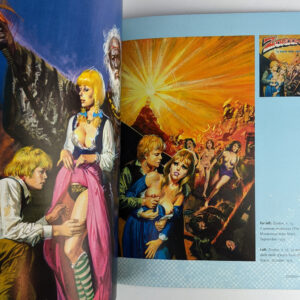
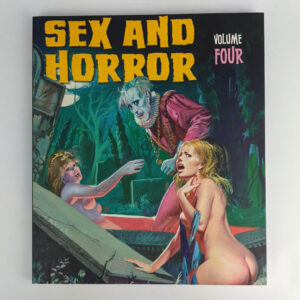
Sex and Horror Volume 4
AU$55 Read MoreAdd to cartNicola D’Agostino; Y. El-Droubie
London: Korero Press, 2016.“This is the fourth title in our bestselling Sex and Horror series, which celebrates the 1960s and 1970s publishing phenomenon known as fumetti sexy–Italian adult comics with a unique take on such genres as horror, crime, fantasy, history and fairy tales. The comics were hugely successful, due in part to their uninhibited mix of twisted humour, gory violence, and up-front eroticism; however, what makes them so sought-after today is their technicolour cover illustrations, rendered by classically trained painters. Here is a further collection of those superb covers–a visual feast of outrageous pulp art.” (publisher’s blurb)
-
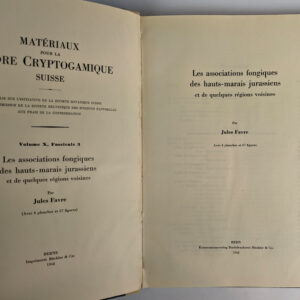
Les Associations Fongiques des Hauts-Marais Jurassiens et de Quelques Regions Voisines
AU$40 Read MoreAdd to cartJules Favre
Liestal: Druck Ludin, 1960.The Fungal Associations of the Hauts-Marais Jurassiens and some neighboring regions. Volume X, Fasciule 3 of Materiaux pour la Flore Cryptogamique Suisse.
-
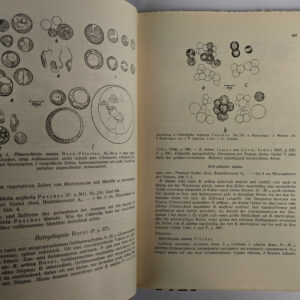
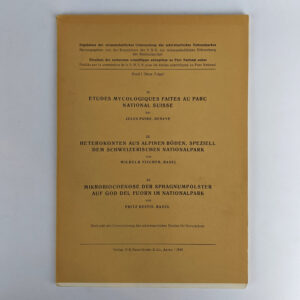
Etudes Mycologiques Faites au Parc National Suisse; Heterokonten aus Alpinen Boden, Speziell dem Schweizerischen Nationalpark; Mikrobiocoenose der Sphagnumpolster auf God del Fuorn im Nationalpark
AU$80 Read MoreAdd to cartJules Favre; Wilhelm Vischer; Fritz Heinis
Aarau: H. R. Sauerlander 7 Co., 1945.3 papers from the Results of the Scientific Investigation of the Swiss National Park: 11. Mycological Studies Made in the Swiss National Park by Jules Favre, with 2 colour plates; 12. Heterokonten from Alpine soil, specifically the Swiss National Park by Wilhelm Vischer; 13. Microbiocoenosis of the sphagnum pads on God del Fuorn in the National Park by Fritz Heinis. Printed with the support of the Swiss Federation for Nature Conservation.
-
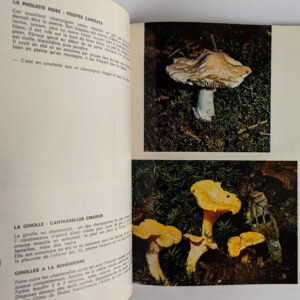
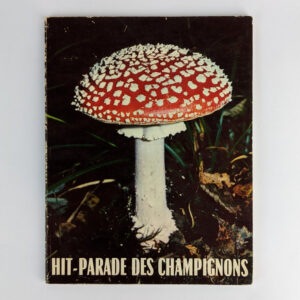
Hit-Parade des Champignons: Champignons Sauvages, Champignons & Nature
AU$55 Read MoreAdd to cartSerge Hureaux
Paris: Iris, 1974.French guide to wild mushrooms.
-
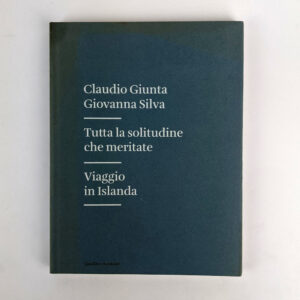
Tutta la Solitudine che Meritate. Viaggio in Islanda
AU$80 Read MoreAdd to cartClaudio Giunta; Giovanna Silva
Macerata and Milan: Quodlibet Humboldt, 2013.All the Solitude you Deserve. Trip to Iceland. With text by Claudio Giunta and photographs by Giovanna Silva. This is the story of a trip through Iceland detailing the history, culture, music, and books, illustrated with images of the magnificent landscape.
-
Pre-WWI German Real Photo Postcard
AU$50 Read MoreAdd to cart[Military Theatre]
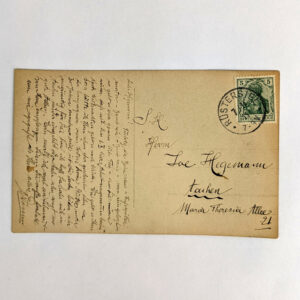
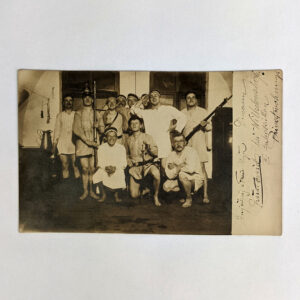
[Germany]: No publisher, 1911.Depicting a group of young soldiers posing in a private apartment as though for a theatrical play. They wear long shirts but no trousers, a few carry weapons – rifles and a sword – and most have a hat. One wears a spiked helmet, another what looks like a tin helmet. Posted in Rustersiel to Herr Hegemann in Aachen and postmarked 1911, it identifies them as members of the third sea battalion. The letter is mostly everyday notes, references going to China after Christmas.
-
Hints on Service in France: Containing Lists of What to Take and How to Take it with Other Valuable Information for Officers and Men
AU$80 Read MoreAdd to cartRobert Davis
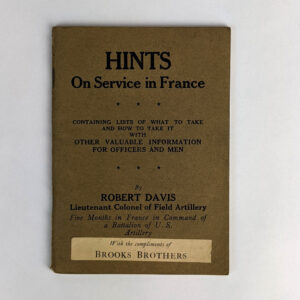
Kansas City: Union Bank Note Co., 1918.Tips for an officer. Label on the wrappers: With the compliments of Brooks Brothers; with a 14 page fold out catalogue for Brooks Brothers Clothing pasted in the back. ” This list includes a representative selection of merchandise in our stock for the outfitting of Officers in the various branches of the Army and Navy” (from page 1 of the catalogue.)
-
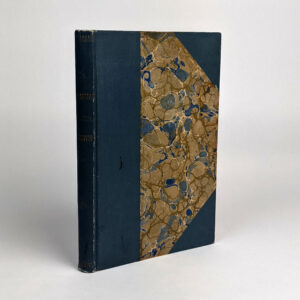
Dikter
AU$80 Read MoreAdd to cartJohan Bergman
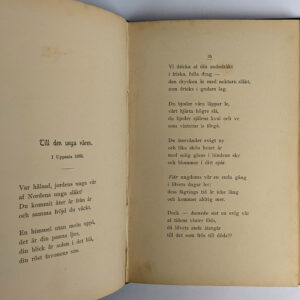
Goteborg: Wettergren & Kerber, 1894.Poetry by Swedish archeologist and parliamentarian Johan Bergman (1864-1951).
-
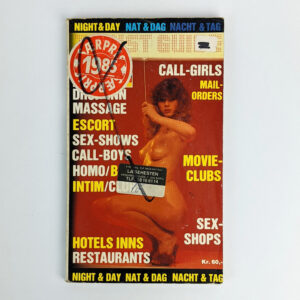
Tourist Guide 83: Denmark Night and Day
AU$300 Read MoreAdd to cartBureau des Affaires Commerciales, Zurich
Vedbaek: Libido-press, 1983.1980s guide for the sex tourist in Denmark. A directory of sex work services, massage parlours, hotels, clubs, and more, graphically illustrated throughout. A detailed record of the Danish sex industry in the early 1980s. Rare, Unrecorded in OCLC.
-
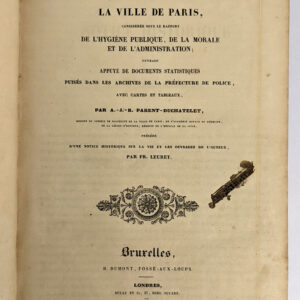
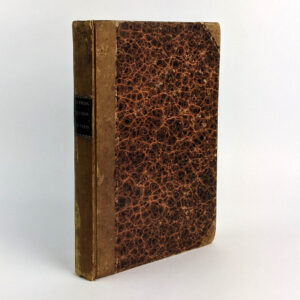
De la Prostitution dans la Ville de Paris
AU$300 Read MoreAdd to cartA. J. B. Parent-Duchatelet
Bruxelles: H. Dumont, 1837.Consideree sous le rapport de l’hygiene publique, de la morale et de l’administration. ‘Of Prostitution in the City of Paris’, “considered from the point of view of public hygiene, morals, and administration; supported by statistical documents drawn from the archives of the police, with maps and tables.” Authored by French physician Alexandre Parent-Duchatelet (1790-1836), an eminent hygienist who wrote numerous works on public health. This text, published post-humously, became his most famous and is regarded as a medical classic; a major work on the history of prostitution and one of the first empirical sociological surveys based upon nearly 8 eight years of research digging through police archives and conducting field interviews and surveys. The first edition published in 2 volumes in 1836 is considered one of the first work’s of modern sex research. This is the Second Edition to which is added an essay on his life and work by Fr. Leuret.
-
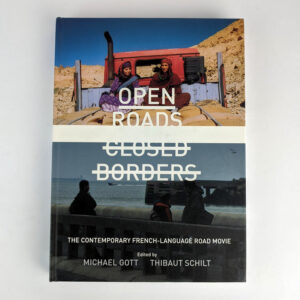
Open Roads, Closed Borders: the Contemporary French-Language Road Movie
AU$40 Read MoreAdd to cartMichael Gott; Thibaut Schilt
Bristol: Intellect, 2013. -
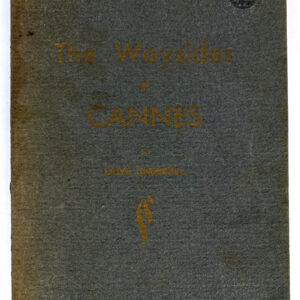
The Waysides of Cannes
AU$100 Read MoreAdd to cartOlive Underhill
Cannes: The Lounge Library, No date.Early 20th century travel guide to Cannes on the French Riviera. Provides short historical overview of Rivierian and Cannes history, the villas of Cannes, modern Cannes: its entertainment’s, sights, sports, and various excursions: Mont-Chevalier, Saint-Cassian, La Corniche d’Or, The Esterels, La Napoule, Theoule, La Croix-des-Gardes, Auribeau, The Tanneron, Notre-Dame de Peygros, Saint-Cassien-du_bois, Saint-Barthelemy, Ranguin, La Roquette, Le Cannet, Mougin, Notre-Dam-de-Vie, Castelaras, Grasse, Valley of the Loup, Gourdon, Super-Cannes, Vallauris, Biot, Villeneuve-Loubet, Saint-Paul-du-Var, CAgnes, Antibes, Les Iles de Lerins, and more. 3 double page maps. Scarce, one copy recorded in OCLC, at Cornell.
-

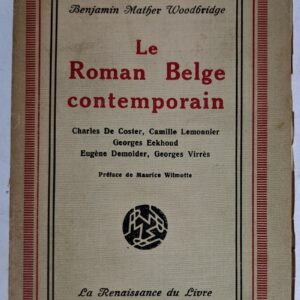
Le Roman Belge Contemporain
AU$80 Read MoreAdd to cartBenjamin Mather Woodbridge
Bruxelles: La Renaissance du Livre, 1930.Writing on the Belgian novels of Charles De Goster, Camille Lemonnier, George Eekhoud, Eugen Demolder, and George Virres. Preface by Maurice Wilmotte. This copy inscribed by Woodbridge to A. Poli.
-
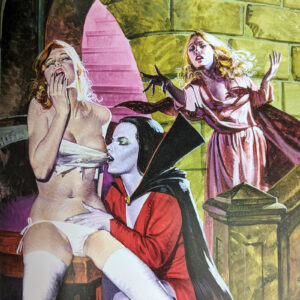
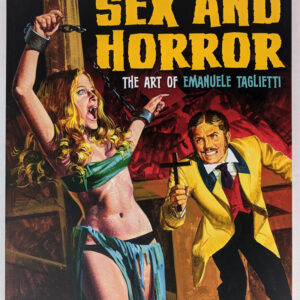
Sex and Horror: The Art of Emanuele Taglietti
AU$40 Read MoreAdd to cartEmanuele Taglietti
London: Korero Press, 2015.The first book in the Sex and Horror series. “A long overdue look at the famed fumetti work of Emanuele Taglietti: a legendary comic book cover artist known for his outrageous style. In the course of his career in the 1970s and ’80s, he painted more than 500 covers for adult comic books such as Zora la Vampira, Sukia, Mafia, and 44 Magnum, and became one of the most outstanding artists of the golden age of Italian comics. His iconic work, overflowing with violence and eroticism, is unforgettable. A must-have for comic book fans, artists and popular culture aficionados alike.” (publisher’s blurb)