
Prices in AUD. Free Australian delivery for orders over $400. Free international delivery for orders over $800. Read full terms.
Showing 1–100 of 1096 resultsSorted by latest
-
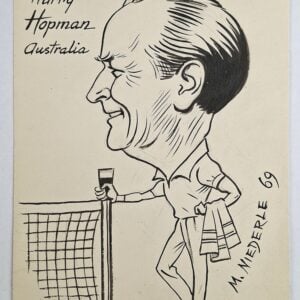
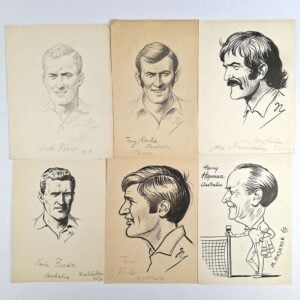
Davis Cup Champions: Harry Hopman, Neale Fraser, Tony Roche, and John Newcombe
AU$750 Read MoreAdd to cartMarcel Niederle
Prague: Marcel Niederle, 1957-1969.Six original caricatures by the Czech artist and caricaturist Marcel Niederle (1898-1990) of Harry Hopman and three of the players who won the Davis Cup under his captaincy. Hopman, in ink, dated 1969, the year he moved to the United States, had captained Australia to 16 Davis Cup wins between 1939 and 1967. Neale Fraser, Wimbledon champion in 1960, in two drawings: one in ink, captioned “Wimbledon 1957”, the other in pencil, undated and captioned “No. 1”, probably from 1959 or 1960, when he was ranked the world’s leading amateur. Tony Roche, French champion in 1966, in two undated drawings, one in pencil, the other in ink with ink wash and pencil. John Newcombe, seven-time major singles champion and Roche’s partner in 12 major doubles titles, in ink, undated. Niederle specialised in sporting subjects, particularly tennis and ice hockey. After working in New York as an illustrator for Sports Illustrated he returned to Czechoslovakia, where he drew the leading tennis players of the 1950s to the 1970s, a period dominated by Australian champions. No holdings of Niederle’s work can be traced in any Australian public collection.
-
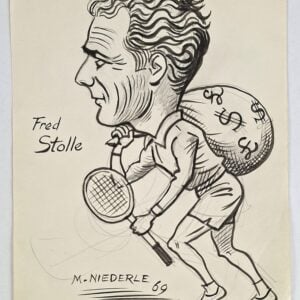
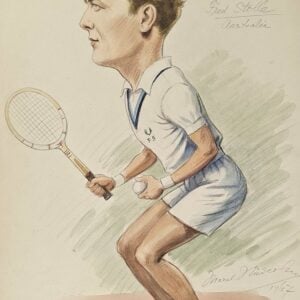
Fred Stolle
AU$650 Read MoreAdd to cartMarcel Niederle
Prague: Marcel Niederle, 1967-1969.Original portrait of Fred Stolle in pencil and watercolour by the Czech artist and caricaturist Marcel Niederle (1898-1990), made in 1967, Stolle’s first year as a professional after winning the French Championships in 1965 and the US Championships in 1966. Offered with a smaller caricature of Stolle by Niederle in ink and pencil, dated 1969, depicting Stolle with a racket in one hand and a large sack of money over his shoulder, likely a comment on the advent of the Open Era. Niederle specialised in sporting subjects, particularly tennis and ice hockey. After working in New York as an illustrator for Sports Illustrated he returned to Czechoslovakia, where he drew the leading tennis players of the 1950s to the 1970s, a period dominated by Australian champions. No holdings of Niederle’s work can be traced in any Australian public collection.
-
Rod Laver
AU$1,200 Read MoreAdd to cartMarcel Niederle
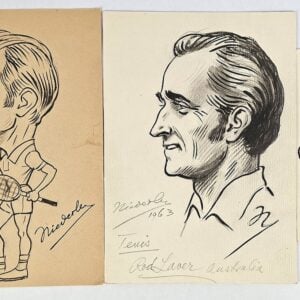
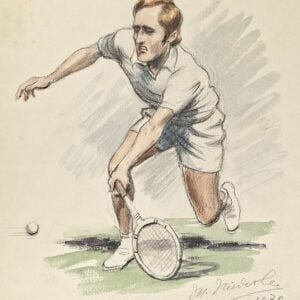
Prague: Marcel Niederle, 1963-1970.Original portrait of Rod Laver in pencil, charcoal and watercolour, signed, by the Czech artist and caricaturist Marcel Niederle (1898-1990), made in 1970, the year after Laver’s second Grand Slam. Offered with three smaller caricatures of Laver by Niederle in ink and pencil, all signed, one showing Laver holding a trophy, and one with ink wash, dated 1963, Laver’s first year as a professional after his first Grand Slam. Niederle specialised in sporting subjects, particularly tennis and ice hockey. After working in New York as an illustrator for Sports Illustrated he returned to Czechoslovakia, where he drew the leading tennis players of the 1950s to the 1970s, a period dominated by Australian champions. No holdings of Niederle’s work can be traced in any Australian public collection.
-
Lew Hoad Australia Player No 1. in Prague, 1956
AU$2,000 Read MoreAdd to cartMarcel Niederle
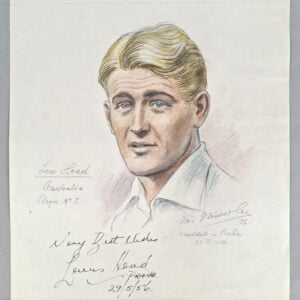
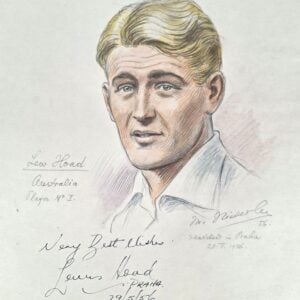
Prague: Marcel Niederle, 1956.Original portrait of Lew Hoad by the Czech artist and caricaturist Marcel Niederle (1898-1990), drawn in Prague two days after Hoad’s victory at the French Championships, and signed by Hoad the following day. Hoad appeared on the Prague courts on 28 and 29 May at the invitation of the Czechoslovak tennis authorities, then flew to Barcelona for the Trofeo Conde de Godo, and went on to win Wimbledon, the third of his three major singles titles that year. Signed by Niederle and captioned “Lew Hoad. Australia Player No 1. Sketched in Praha 28 V 1956”, and inscribed by Hoad “Very Best Wishes Lewis Hoad Praha 29/5/56”. Prepared for a cover of the Czech sports magazine ‘Stadion’ that was never published, and mounted on a large sheet of paper with the magazine’s worksheet tipped to the mount, clear of the drawing. Niederle specialised in sporting subjects, particularly tennis and ice hockey. After working in New York as an illustrator for Sports Illustrated he returned to Czechoslovakia, where he drew the leading tennis players of the 1950s to the 1970s, a period dominated by Australian champions. No holdings of Niederle’s work can be traced in any Australian public collection.
-
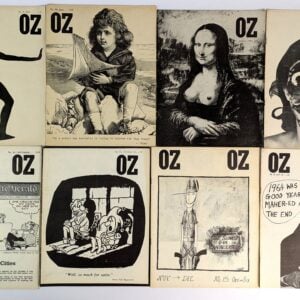
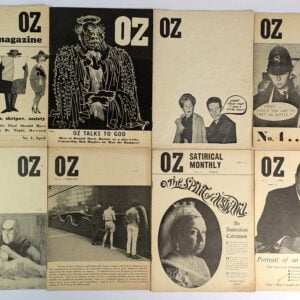
Oz Magazine (Australia) Complete Set with Newsletters
AU$15,000 Read MoreAdd to cartRichard Neville; Richard Walsh; Martin Sharp
Sydney: Oz Publications Ink, 1963-1970.The foundational Australian edition of Oz, edited by Richard Neville, Richard Walsh, and Martin Sharp and published in Sydney between 1963 and 1969, with the reduced-format fortnightly newsletters continuing into 1970 under Walsh and Dean Letcher. Preceding and inspiring the better-known London Oz (1967-1973), the Australian edition tackled censorship, homosexuality, police corruption, the White Australia policy, and the Vietnam War, provoking a series of obscenity prosecutions, culminating in a 1964 conviction that was later overturned on appeal. Sharp’s covers and illustrations, ranging from early satirical cartooning to full psychedelic intensity, chart his emergence as one of Australia’s most significant pop artists. Complete in 41 issues of the magazine proper, together with a complete set of the rarely seen newsletters (Nos. 42-82) including the election special (No. 56). A high point of Australian underground publishing.
-
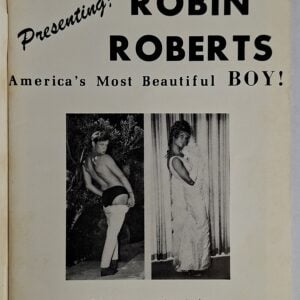
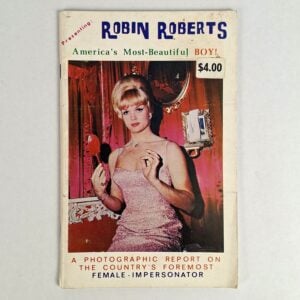
Presenting: Robin Roberts. America’s Most Beautiful Boy
AU$250 Read MoreAdd to cartEdgar Byrnes
New York: Marquis Publishers, [c. 1960].Digest photobook of Florida drag performer Robin Roberts, “The Miami Peach”, with two photo-sequences tracing a performative transition from boy to queen. Little is known of Roberts beyond these shoots, but the photographs were reprinted numerous times in the drag magazine ‘Female Mimics’, on one occasion under the name Windy Starr. Bob Davis, founder and director of the Louise Lawrence Transgender Archive, notes that Lee Brewster (owner of Lee’s Mardi Gras Boutique in New York) described the Marquis digest as one of his best all-time sellers, and that “except for these photos, which appear to have all been shot in one session, virtually nothing is known about Robin Roberts” (‘Female Mimics Part 3: Pudgy’s Challenge’, TGForum). A single copy of this edition recorded in OCLC at Yale, with two further copies traced of the 34 page edition, which was published without an imprint and contains only the first sequence.
-
The Clyster: For the Connoisseur of Enema Delights (July 1989)
AU$300 Read MoreAdd to cartTrish Turner Labs
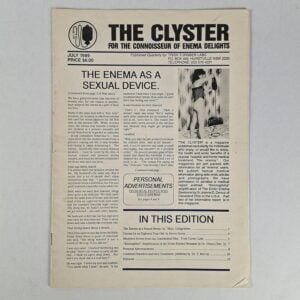
Sydney: Trish Turner Labs, 1989.Single issue of The Enema Fanciers Society quarterly newsletter, a Sydney klismaphile club run by Trish Turner Labs from a PO Box at Hurstville. The issue contains two pages of personals, two pages of letters, two further articles, and a one-page second instalment of a serialisation, stated to be by permission, of ‘Klismaphilia: Amplification of the Erotic Enema Deviance’ by Dr Joanne D. Denko (printed as Denco). Denko, a psychiatrist, coined the term klismaphilia in 1973, and this paper first appeared in the ‘American Journal of Psychotherapy’ in 1976. The back page states that the society was launched with a newspaper advertisement about eight months earlier, boasts that their file now includes 5000 names and addresses of interested persons, and announces the next issue for October 1989. The cover story continues from a May issue, so presumably at least one earlier number of the newsletter was published. Despite these markers, no other issues of the newsletter, or any record of the society or of Trish Turner have been traced by this cataloguer, the only record that can be traced is that of their registered company name being dissolved in a 1995 Government Gazette notice. Offered together with the newsletter is a membership application form. Membership offered the newsletter every three months, a three litre enema set, a half-hour VHS ‘Introduction to the Enema’, a 64 page book ‘The Enema a Teaching Manual’, and an outcall enema service for members when in Sydney.
-
Sydney Playguy Vol. 2 No. 13
AU$250 Read MoreAdd to cartRobert Lionel Jackson; Rick Peterson; Sean Williams; Malcolm Rainier
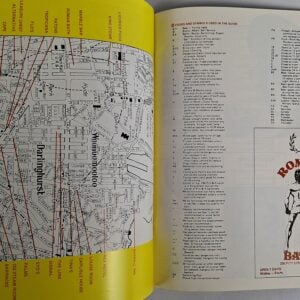
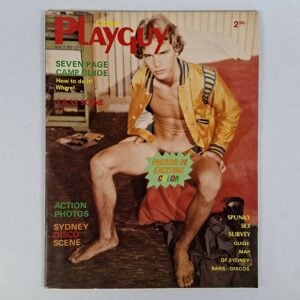
Sydney: Trademark Social Club, 1979.With a map and guide of Sydney’s gay scene and a detailed sex survey for men. Australian erotica, no holdings of any issue of the magazine recorded in Trove or OCLC.
-
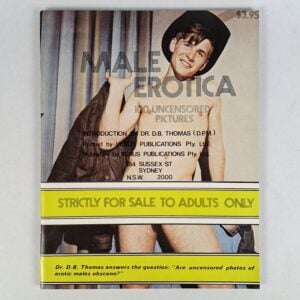
Male Erotica: 100 Uncensored Pictures
AU$150 Read MoreAdd to cartVenus Publications
Sydney: Venus Publications, No date.With a short introduction credited to Dr. D. B. Thomas explaining that the work is attempting to show the male body in various forms, that male beauty is not limited to the ancient ideal of Adonis. Australian erotica, unrecorded in Trove or OCLC.
-
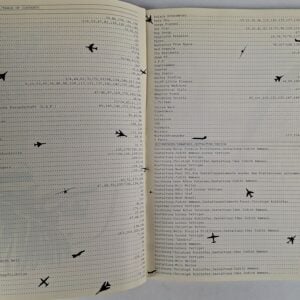
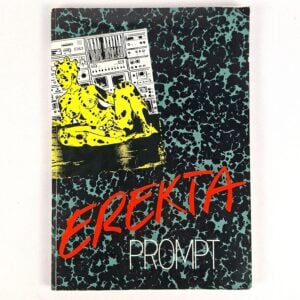
Erekta Prompt
AU$250 Read MoreAdd to cartJudith Ammann
Basel: Judith Ammann, 1981.Anthology of punk, post-punk and new wave lyrics, combined with illustrations by a small group of artists: Judith Ammann, Helgi Thorgils Fridjonsson, Lorenz Vettiger, Christoph Kohlhofer, Beat Muggli, Paul Ott, Lene Adler Petersen, Milo Heller, Rato Graf, Christian Bitenc, Rofa Muller, Felix Fischer, and Abwarts. Conceived, edited, and published by the Swiss artist Judith Ammann. In her introduction she describes the lyrics as personal documents by young, often very young, writers, inseparable from the music, and the drawings and layout as a way to evoke some of its essence rather than replace it. Text is primarily in English, but lyrics also appear in their original language. Lyrics from nearly 100 bands and artists including Joy Division, Dead Kennedys, Crass, Throbbing Gristle, Cabaret Voltaire, Bauhaus, The Residents, Tuxedomoon, Pere Ubu, Stiff Little Fingers, Sham 69, The Pop Group, Fad Gadget, The Normal, Red Crayola, Glenn Branca, Theoretical Girls, Monte Cazazza, Deutsch Amerikanische Freundschaft, Der Plan, Palais Schaumburg, Hans-a-plast, Abwarts, Hermann’s Orgie, Grauzone, Lilliput, Tara Cross, Charlotte Pressler, Lynne Tillman, Barbara Ess, Wharton Tiers, Walter Steding, Chrome, Half Japanese, Pylon, Au Pairs, Flesh Eaters, Weirdos, Negative Trend, Units, Geile Tiere, and Radiators From Space. Australia is represented by Sydney industrial group SPK.
-
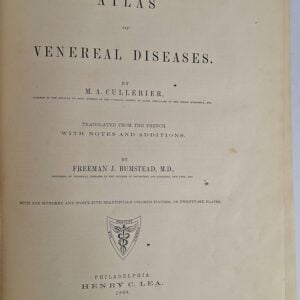
Atlas of Venereal Diseases
AU$550 Read MoreAdd to cartM. A. Cullerier; Freeman J. Bumstead
Philadelphia: Henry C. Lea, 1868.First edition in English of Michel-Auguste Cullerier’s ‘Precis iconographique des maladies veneriennes’, translated with notes and additions by Freeman J. Bumstead, and illustrated with 145 figures on 26 colour lithographic plates by Thomas Sinclair. Cullerier was chief surgeon at the Hopital du Midi, the Paris hospital for venereal disease.
-
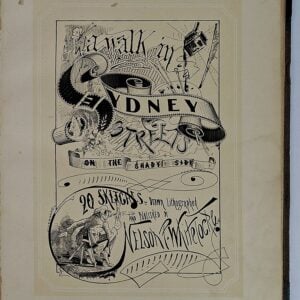
A Walk in Sydney Streets on the Shady Side
AU$2,500 Read MoreAdd to cartNelson P. Whitelocke
Sydney: Nelson P. Whitelocke, 1885.20 Sketches. Drawn, Lithographed and Published by Nelson P. Whitelocke. A series of lithographed studies of Sydney street life in the 1880s focusing on the working and marginal figures of the city, including sex workers, the drunk, the infirm, street performers, a Chinese vegetable seller, and others. Comprising 20 lithographed plates with cream backgrounds, each accompanied by a page of descriptive text on the facing leaf, together with 2 preliminary lithographed plates (dedication and title), a Finis plate, and 2 leaves of text (advertisement and list of plates). FERGUSON 18490.
-
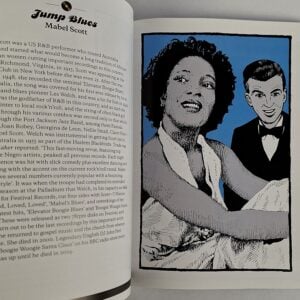
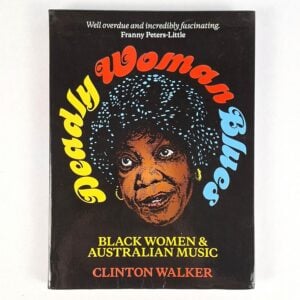
Deadly Woman Blues: Black Women & Australian Music
AU$400 Read MoreAdd to cartClinton Walker
Sydney: NewSouth, 2018.Illustrated survey of Black women in Australian music, the first such book of its kind, containing micro-biographies of over 100 artists each accompanied by an original artwork produced by Walker in a style reminiscent of R. Crumb’s ‘Heroes of Blues, Jazz & Country’. Withdrawn shortly after publication following backlash from several of the women featured over biographical errors. Most copies were pulped, with only a small number sold before withdrawal. One of the most recent cases of Australian literature suppression. CAINS 171.
-
The Hashish Cookbook
AU$60 Read MoreAdd to cartPanama Rose
San Francisco: Level Press, 1974.The 1970s Level Press reprint of the 1966 Gnaoua Press recipe book.
-
A Citizen’s Guide to Marihuana in Australia
AU$40 Read MoreAdd to cartFrank Crowley; Lorna Cartwright
Sydney: Angus & Robertson, 1978.A balanced look at marijuana in the midst of the prohibition years in Australia. Also discusses broader drug use in Australia in the 1970s. This copy with a laid in clipped feature from ‘The Age’, 7 July 1989, arguing that prosecuting people for using marijuana is archaic, costly and pointless.
-
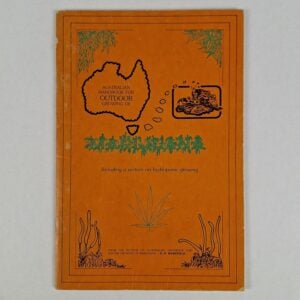
Australian Handbook for Outdoor Growing of Marijuana
AU$50 Read MoreAdd to cartD. R. Wakefield
Sydney: Doug Wakefield, No date.Scarce example of Australian growing literature, following on from Wakefield’s previous pamphlet on indoor growing. A revised edition followed in 1986.
-
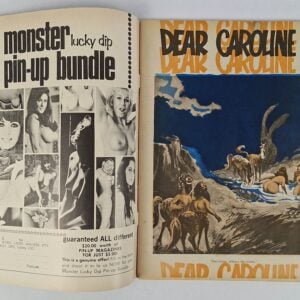
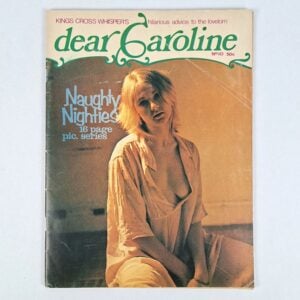
Kings Cross Whisper’s Dear Caroline No. 10
AU$100 Read MoreAdd to cartKings Cross Whisper
Sydney: Group Publications, [1969].Single issue of the Dear Caroline spinoff of the Australian sexpaper Kings Cross Whisper. First published in Kings Cross, Sydney in 1964, the Whisper was a joke newspaper filled with light stories, gag features, dirty jokes, and nude women. The Dear Caroline feature was the agony aunt advice column, here given more pages amongst the pinups and cartoons.
-
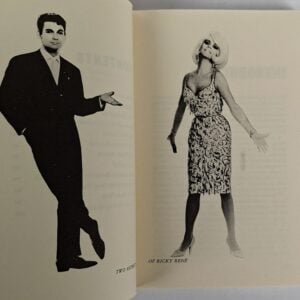
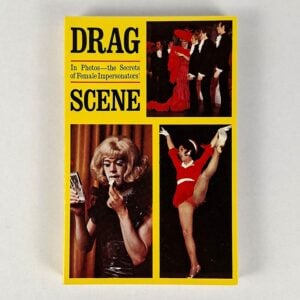
The Drag Scene: The Secrets of Female Impersonators
AU$200 Read MoreAdd to cartDesmond Montmorency
London: Luxor Press, 1970.A pictorial guide to drag performance and performers, ranging from a brief history of transvestism and a short guide to transformation, to where to see drag performance in London. More than half the book is given over to pictorial profiles of drag performers, including the Sydney duo Bruce Carter and Ken Keenan as Kate and Kathy Keenan.
-
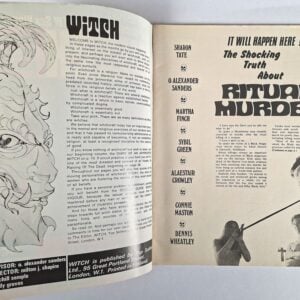
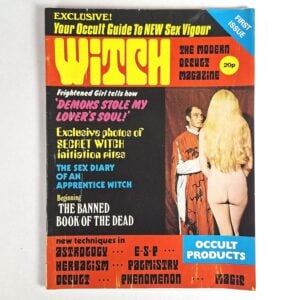
Witch: The Modern Occult Magazine
AU$400 Read MoreAdd to cartO. Alexander Sanders; Milton J. Shapiro; H. Churchill Semple; Judy Groves
London: Top Sellers Ltd., No date.1970s English occult magazine fronted by Alex Sanders, the self-styled King of the Witches and founder of Alexandrian Wicca. Seemingly a one-shot with no further issues traced despite the rear cover hinting at topics in the next issue. Includes articles on ritual murder, Louise Huebner, tarot, sex magic, occult jewellery, and more. Unrecorded in OCLC.
-
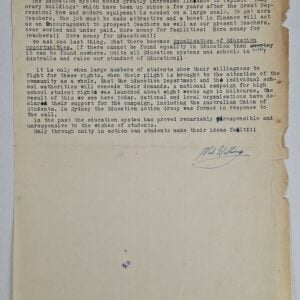
![Public Address given by Neil Williams, [Randwick Boy's High Inter-state] Students strike Wednesday Sept 20. [1972]](https://www.thebookmerchantjenkins.com/wp-content/uploads/0037647-300x300.jpg)
Public Address given by Neil Williams, [Randwick Boy’s High Inter-state] Students strike Wednesday Sept 20. [1972]
AU$200 Read MoreAdd to cartNeil Williams
Sydney: Neil Williams, 1972.Typescript address given by Neil Williams of Randwick Boys High School on 20 September 1972, the day of Australia’s first national secondary student strike, in which an estimated 80,000 students took part. Two pages with minor autograph amendments, signed by Williams at the end, together with an earlier draft leaf heavily revised in red ink, built around two passages cut from a printed strike leaflet and pasted in. From the archive of Perry Clugston, editor of the 1970 Randwick Boys High underground paper ‘The Voice of Young Australia’.
-
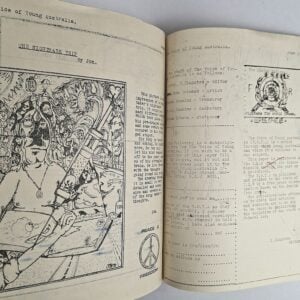
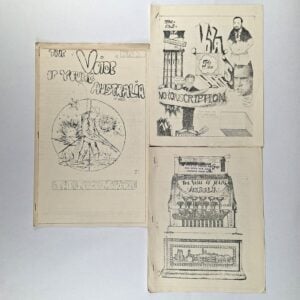
The Voice of Young Australia Nos. 2, 4, 5
AU$500 Read MoreAdd to cartPerry Clugston; Jonathon Coleman [Jonathan ‘Jono’ Coleman]
Sydney: The Voice of Young Australia, 1970.Three issues of a 1970 underground paper produced by students at Randwick Boys High School in Sydney, edited by Perry Clugston with illustrations by Jonathon Coleman, later the radio and television presenter Jonathan ‘Jono’ Coleman. Anti-war and openly critical of school administration. Offered together with two loose sheets being drafts of the editorial in No. 5 regarding the unelected Junior Students’ Council at RBHS, and two pinned sheets of comments by seven teachers on the “personality and general attitudes” of Clugston. Unrecorded in Trove.
-
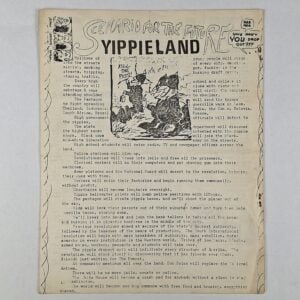
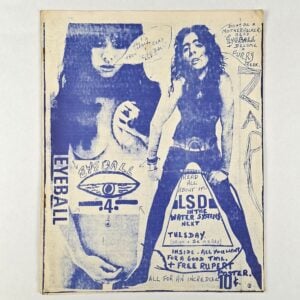
Eyeball #4
AU$150 Read MoreAdd to cartAnonymous
[Sydney]: No publisher, No date.Early 1970s Sydney zine of Yippie politics, together with much talk on drugs and reproductions of Robert Crumb comix. The cover featuring a collage of Kishin Shinoyama’s 1969 photograph of Carmen Maki and Alice Cooper from his ‘Love It to Death’ promo with extra cartoon captioning including furthering the unfeasible narrative of putting LSD in the water supply.
-
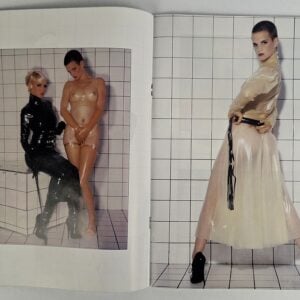
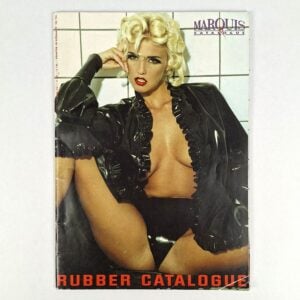
Rubber Catalogue
AU$100 Read MoreAdd to cartPeter W. Czernich
Shepton Mallet: The Fetish Factory / Marquis Catalogue, 1994.Rubber and fetishwear collection by publisher of the German-based fetish magazine Marquis, Peter W. Czernich.
-
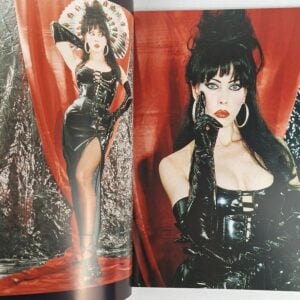
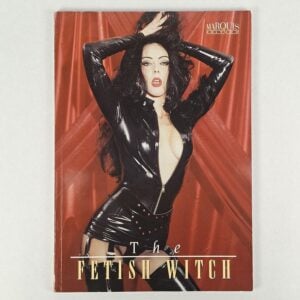
The Fetish Witch
AU$100 Read MoreAdd to cartAndreas Dietze
Shepton Mallet: The Fetish Factory / Marquis Edition, 1996.Collection of photography by Andreas Dietze of fetish model Simone, styled as “The Witch”. Issued as a Marquis Edition, the book imprint of the German fetish magazine ‘Marquis’, founded by Peter W. Czernich in 1994.
-
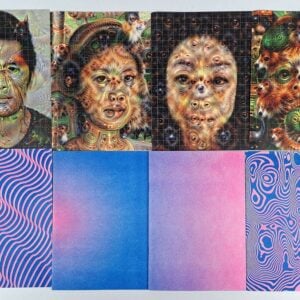
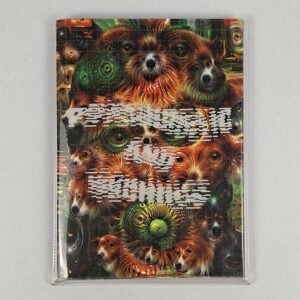
Psychedelics and Technics
AU$250 Read MoreAdd to cartZheng Mahler
Hong Kong: Small Tune Press, 2019.Excerpts from reading groups consisting of artists, students, scholars, musicians, bankers, and asylum seekers in Hong Kong from April to May 2018 exploring the discussion of psychedelic consciousness, artificial intelligence, and the interconnection of death. 4 booklets printed in risograph together with 4 sheets of blotter. One of 300 numbered copies.
-
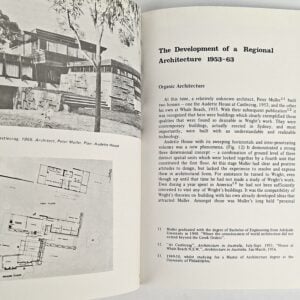
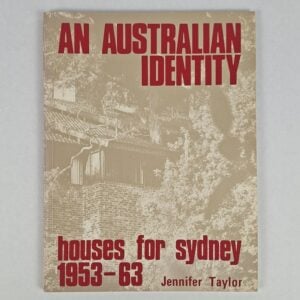
An Australian Identity: Houses for Sydney, 1953-63
AU$150 Read MoreAdd to cartJennifer Taylor
Sydney: University of Sydney, 1984.Jennifer Taylor (1935-2015) was Associate Professor of Architecture at the University of Sydney at the time of publishing. Through this account of postwar architecture, she contends that the houses featured are culturally distinctive, and that they could play a crucial role in addressing Sydney’s housing needs. Includes “The Sydney School”, Neo-Brutalism, Organic Architecture, and “The Natural House”.
-
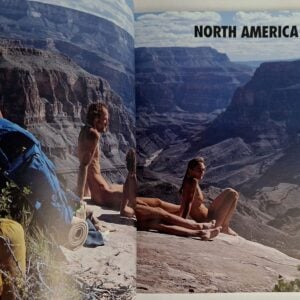
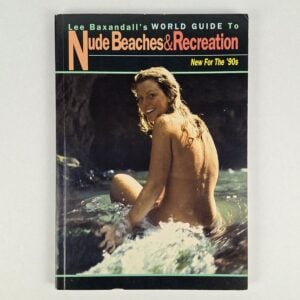
Lee Baxandall’s World Guide to Nude Beaches & Recreation: New For The ’90s
AU$65 Read MoreAdd to cartLee Baxandall
Oshkosh: N Editions, 1991.Travel guide for the nudist movement by the founder of The Naturist Society. First published in 1980 and with editions in 1981, 1983, 1986, 1991, 1995, 1997, 1998, and 2000. This 1991 edition includes detailed sections on Australia and the Pacific, as well as Antarctica.
-
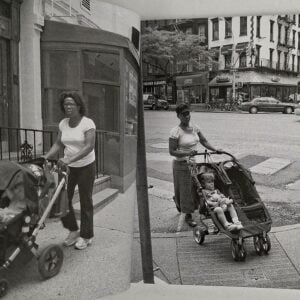
Street Strollers of New York
AU$150 Read MoreAdd to cartCatherine Bell
Melbourne: Monash Gallery of Art, 2014.“Street strollers of New York is a sequence of photographs that document African-American nannies shuttling white children through the affluent mid-town streets of Manhattan. Catherine Bell’s interest in this subject grew out of her own experience working as a nanny in London; she embarked on this project with the notion to pay tribute to an under-acknowledged workforce. While there is a significant tradition in documentary photography of images of heroic workers, Bell’s images of African-American nannies belong to another tradition altogether – that of the clandestine street photograph. In these pictures, taken with a hidden camera and for the most part without the subject’s knowledge, Bell has cast each nanny in the role of a fugitive.” (exhibition statement, Sutton Gallery)
-
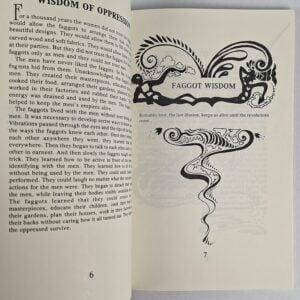
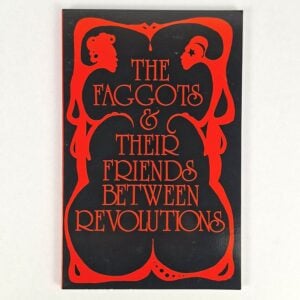
The Faggots & Their Friends Between Revolutions
AU$200 Read MoreAdd to cartLarry Mitchell
New York: Calamus Books, 1988.1970s queer communal living fantasy classic. “The queens luxuriate in variety. They often make fun of the men’s fashions. The queens display infinite weirdnesses to the world. For them, style is the path into the unique self and so to transcendence. They long for everyone to reveal themselves wherever they are.” (page 63). Illustrations by Ned Asta. YOUNG 2736*.
-
![Raging Womyn in Reply to Breaching the Peace [TOGETHER WITH] Wymn's Land](https://www.thebookmerchantjenkins.com/wp-content/uploads/0037636-300x300.jpg)
Raging Womyn in Reply to Breaching the Peace [TOGETHER WITH] Wymn’s Land
AU$200 Read MoreAdd to cartJean Freer
London: The Wymn’s Land Fund, No date.A comment on the women’s liberation movement and the Common Womyn’s Peace Camp at Greenham. Illustrations by Cathy Giles. With a handbill ‘Wymn’s Land’ laid in: “A land base for womyn? Is this what Greenham Common is becoming? Will the Americans and the MoD leave, giving us full access to the 850 acres of land, enough to create an open [women’s] community committed to womon-loving anarchy and nonviolence?”
-
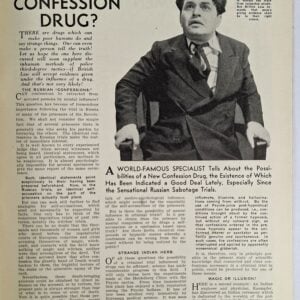
![Health and Physical Culture, July 1st, 1937 (Vol. 9, No. 7) [New Drug to Force Confessions]](https://www.thebookmerchantjenkins.com/wp-content/uploads/0037635-300x300.jpg)
Health and Physical Culture, July 1st, 1937 (Vol. 9, No. 7) [New Drug to Force Confessions]
AU$100 Read MoreAdd to cartAlfred J. Briton
Sydney: Health and Physical Culture, 1937.Single issue of the Australian physique journal, combining physical culture with recurring nudist and naturist themes and undercurrents of eugenics. Founded by gym owner Alfred J. Briton, ‘Health and Physical Culture’ was issued monthly from May 1929 to January 1943. This issue with the cover story ‘New Drug to Force Confessions’, on truth serums used to extract confessions from prisoners. Also articles on diabetes and vegetarianism, and a racist feature, ‘Would You Welcome Marriage with a Half-Caste?’, which argues that Australia faces a “rapidly growing half-caste problem” on top of its “colour problem”.
-
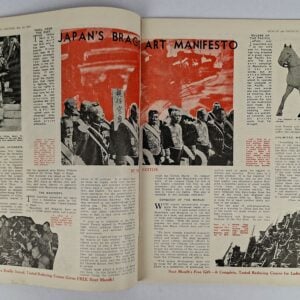
![Health and Physical Culture, May 1st, 1933 (Vol. 5, No. 5) [A Week End With The Near Nudes]](https://www.thebookmerchantjenkins.com/wp-content/uploads/0037634-300x300.jpg)
Health and Physical Culture, May 1st, 1933 (Vol. 5, No. 5) [A Week End With The Near Nudes]
AU$100 Read MoreAdd to cartAlfred J. Briton
Sydney: Health and Physical Culture, 1933.Single issue of the Australian physique journal, combining physical culture with recurring nudist and naturist themes and undercurrents of eugenics. Founded by gym owner Alfred J. Briton, ‘Health and Physical Culture’ was issued monthly from May 1929 to January 1943. This issue with the cover story ‘A Week End With The Near Nudes’, W. F. Glover’s account of the Sun Bake Cult near Sydney. Also an article, ‘The Yellow Peril’, on Japan in Manchuria.
-
![Health and Physical Culture, November 1st, 1931 (Vol. 3, No. 11) [The Inside Story of Sydney's Nude Cult]](https://www.thebookmerchantjenkins.com/wp-content/uploads/0037633-300x300.jpg)
Health and Physical Culture, November 1st, 1931 (Vol. 3, No. 11) [The Inside Story of Sydney’s Nude Cult]
AU$100 Read MoreAdd to cartAlfred J. Briton
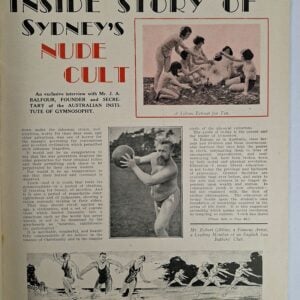
Sydney: Health and Physical Culture, 1931.Single issue of the Australian physique journal, combining physical culture with recurring nudist and naturist themes and undercurrents of eugenics. Founded by gym owner Alfred J. Briton, ‘Health and Physical Culture’ was issued monthly from May 1929 to January 1943. This issue with the cover story ‘The Inside Story of Sydney’s Nude Cult’, an interview with J. A. Balfour, founder of the Australian Institute of Gymnosophy. Also articles on opium and sexual freedom.
-
Lee Marrs’ Pre-Teen Dirty-Gene Kung-Fu Kangaroos Nos. 1-3 (Complete Set)
AU$100 Read MoreAdd to cartLee Marrs
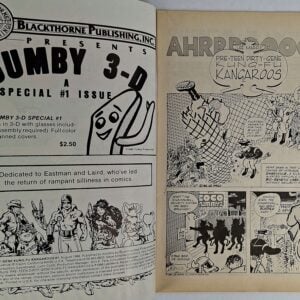
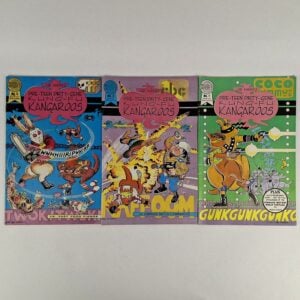
El Cajon: Blackthorne Publishing, 1986-1987.A group of Australian exchange students to the United States are transformed into kung fu kangaroos after an explosion at a biogenetics lab, a spoof of the Teenage Mutant Ninja Turtles (the first issue features a contribution from TMNT co-creator Peter Laird). Lee Marrs (1945-) was one of the first women working in underground comix and a founding member of the Wimmen’s Comix collective. Unrecorded in Australian institutions, 7 holdings in OCLC, all in the US, only 2 of those being complete sets.
-
John Krugge: The Autobiography of an Old Man in Search of an Orgasm
AU$600 Read MoreAdd to cartJohn Krugge; Cyril Saxon
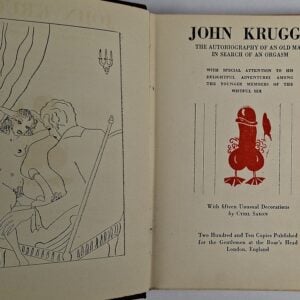
London: Boar’s Head, No date.An erotic novel in the form of an autobiography, here in what appears to be the first edition and the source text for the later reprints. One of 210 unnumbered copies printed for the Gentlemen at the Boar’s Head. Printed on laid paper with full margins, with 7 plates and illustrations in the text. The text was reprinted by Collectors Publications in 1969 (171 pages), which reproduces this title page and imprint, and later in the Venus Library series (V-1005, 127 pages), both in smaller formats and with different illustrations. Here Cyril Saxon’s illustrations include lesbian and horse-themed erotica. Unrecorded in OCLC.
-
The Northern Tribes of Central Australia (Walter Roth’s Copy)
AU$2,500 Read MoreAdd to cartBaldwin Spencer; F. J. Gillen
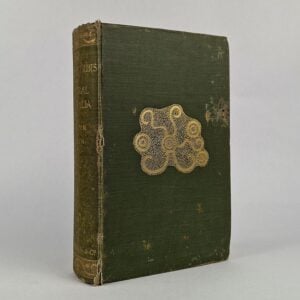
London: Macmillan and Co., 1904.Spencer and Gillen’s expeditions in the late 19th and early 20th centuries marked the beginning of modern anthropological fieldwork in Australia. They amassed an enormous collection of notebooks, films, audio recordings, illustrations, and photographs, which are well represented throughout. An important association copy, inscribed on the front free endpaper by Spencer on behalf of both authors to Walter Edmund Roth (1861-1933). The year of publication was the year Roth became Queensland’s Chief Protector of Aboriginals, and the same year his Western Australian royal commission report documented abuses of Aboriginal people in the North-West. As an administrator Roth worked tirelessly for the betterment of Aboriginal rights against colonial and political forces, though controversy, including “payment” to take photographs of sexual positions for anthropological reasons, hounded him to resignation.
-
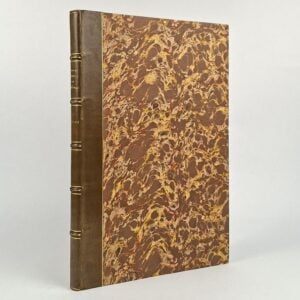
Annual Report of the Northern Protector / Chief Protector of Aboriginals, 1903-1909
AU$2,500 Read MoreAdd to cartWalter E. Roth; Richard B. Howard
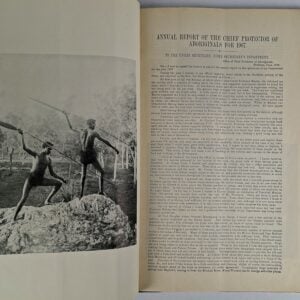
Brisbane: George Arthur Vaughan and Anthony James Cumming, Government Printers, 1904-1910.Seven consecutive annual reports of the Queensland Protector of Aborigines, running from Walter Roth’s last year as Northern Protector of Aboriginals through his term as Chief Protector and into the first years of his successor, Richard Baron Howard. The 1903 report is the last of the divided system, under which Roth administered the north and Archibald Meston the south; the protectorate of Queensland was reorganised under a single Chief Protector in 1904, with Roth appointed. Walter Edmund Roth (1861-1933) was a physician, anthropologist, and the first Northern Protector of Aboriginals. As an administrator Roth worked tirelessly for the betterment of Aboriginal rights against colonial and political forces, though controversy, including “payment” to take photographs of sexual positions for anthropological reasons, hounded him to resignation.
-
![[Coloured Labour, 1861-1906]](https://www.thebookmerchantjenkins.com/wp-content/uploads/0037628-300x300.jpg)
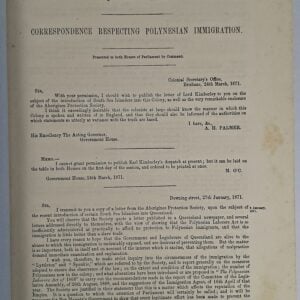
[Coloured Labour, 1861-1906]
AU$4,500 Read MoreAdd to cartQueensland Government [BLACKBIRDING]
Brisbane: Government Printer, 1861-1906.A substantial collection of Queensland government papers bound together in one volume concerning blackbirding, indentured labour, and migrant Pacific and Asian workers in Queensland. Fifty distinct papers, two present in duplicate, making fifty-two papers in all. Full list of papers: 1. 1861 Asiatic Labor; 2. 1868-9 Polynesian Laborers Act (Petition); 3. 1871 Correspondence Respecting Polynesian Immigration; 4. 1873 Inquiry Into The “Jason” Case (Further Paper and Correspondence Relating to); 5. 1875 Immigration of Chinese and Indian Coolies; 6. 1874 Sugar Manufacture-Claim of John Buhot (Petition); 7. 1874 Coolie Immigration (Petition); 8. 1876 The Case of Mr. Joseph Francis Kelsey. Report from The Select Committee Appointed to Inquire into the Matters in Dispute Between the Public Works Office and Mr. Joseph Francis Kelsey; together with Proceedings of the Committee and Minutes of Evidence; 9. 1876 Polynesian Laborers Bill (Petition from Maryborough); 10. 1876 Alleged Abuses Connected with Polynesian Labor (2 copies); 11. 1876 Polynesian Laborers Not Receiving Their Wages from Mortgagees in Possession; 12. 1876 The Proceedings in the South Seas by W. H. Hayes, a United States Subject (Further Despatch Respecting); 13. 1876 Pacific Islanders’ Protection Act (Despatch Respecting); 14. 1877 Report of Select Committee of 1876 on the Polynesian Labour Question (Despatch); 15. 1877 Mr. Mackay’s Report Upon Sugar Factories, Etc.; 16. 1877 Inquiry into Certain Alleged Illicit Distillation at the Dabilban Distillery, Logan River (Report of Board); 17. 1877 Chinese Immigration; 18. 1877 Resignation by Mr. Sheridan of the Office of Inspector of Polynesians; 19. 1877 Immigration Agent and Polynesian Inspector at Maryborough; 20. 1878 Recruiting Agents and Introduction of Polynesians (2 copies); 21. 1881 Colonial Sugar Refining Company’s Bill. Report from the Select Committee of the Colonial Sugar Refining Company’s Bill; together with the Minutes of Evidence and Appendix; 22. 1882 Coolies from British-India (Correspondence Respecting the Proposed Introduction of); 23. 1882 Proposed Extension of Facilities for Employment of Polynesian Labour (Petition); 24. 1883 Labour Vessel “Heron”; 25. 1883 Labourers from British India (Further Correspondence Respecting the Proposed Introduction of); 26. 1884 The Temporary Closure of the Hospital for Pacific Islanders at Mackay (Correspondence Respecting); 27. 1884 Selection on or Near the Delta of the Burdekin River; 28. 1884 Correspondence Respecting Proposed Introduction of Laborers from British India; 29. 1885 Pacific Islanders Fund (Revenue and Expenditure of the); 30. 1885 Report with Minutes of Evidence taken before The Royal Commission Appointed to Inquire into the Circumstances Under Which Labourers Have Been Introduced into Queensland from New Guinea and Other Islands, etc., together with Proceedings of the Commission, etc.; 31. 1891 Indented Labourers from Germany and Italy (Correspondence Relating to the Emigration of); 32. 1891 Pacific Island Immigration (Annual Report of Department of); 33. 1897 Pacific Island Immigration (Immigration Agent’s Annual Report Upon); 34. 1899 Admission of Japanese into Queensland; 35. 1897 Coloured Population of Queensland; 36. 1899 Departure of Japanese from Queensland. Return Showing the Number of Japanese who have Departed from Queensland Since the Initiation of the Passport System; 37. 1899 Pacific Islanders’ Fund (Report on, for the Year Ended 30th June, 1899); 38. 1901 Death Rate of Polynesians at Fairymead and Bingera Plantations; 39. 1901 Fines Inflicted on Polynesian Islanders in the Cairns District; 40. 1901 Pacific Islands Labourers Bill in the Federal Parliament (Letter, Dated 15th November, 1901, from Premier of Queensland to President and Members of the Senate of the Commonwealth of Australia); 41. 1901 Admission of Japanese into Queensland (Further Correspondence Relating to); 42. 1901 Pacific Island Immigration (Immigration Agent’s Annual Report Upon); 43. 1901 Pacific Islanders’ Fund (Annual Statement of Account); 44. 1903 Pacific Island Immigration (Immigration Agent’s Annual Report Upon); 45. 1904 Pacific Island Immigration (Immigration Agent’s Annual Report Upon); 46. 1905 Pacific Island Immigration (Immigration Agent’s Annual Report Upon); 47. 1905 Bonus for Sugar-cane Cultivated and Harvested by White Labour; 48. 1906 Deportation of Kanakas (Correspondence between the Premier of Queensland and the Prime Minister of the Commonwealth Respecting); 49. 1906 Regulations under “The Pacific Island Labourers Acts, 1880-1892”; 50. 1906 Report of the Royal Commission Appointed to Inquire into and Report regarding the Number of Pacific Islanders to be Deported from Queensland at the end of the Current Year, the most efficient manner of Repatriating them, with the probable Cost thereof; whether there are in Queensland any Pacific Islanders whose Compulsory Deportation would be inconsistent with humanity or with good faith; and whether Sufficient Labour for carrying on the Queensland Sugar Industry is likely to be available when Pacific Islanders can no longer be lawfully employed, and, if sufficient labour for such purpose is not likely to be locally obtainable, the best means of supplying the deficiency; together with Minutes of Proceedings, Minutes of Evidence taken before the Commission, and Appendices.
-
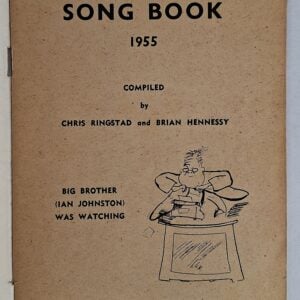
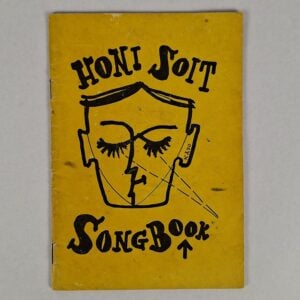
Qui Mal Y Pense Song Book 1955
AU$65 Read MoreAdd to cartChris Ringstad; Brian Hennessy
Sydney: Publicity Press for the Students’ Representative Council, University of Sydney, 1955.Collection of poetry and humorous illustration published on the occasion of the University of Sydney Commemoration Day, 10th May 1955.
-
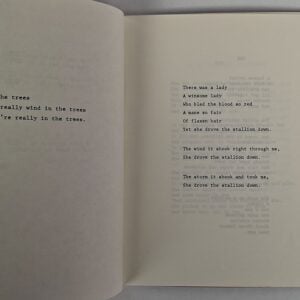
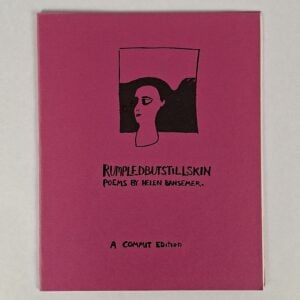
Rumpledbutstillskin: Poems by Helen Bansemer
AU$65 Read MoreAdd to cartHelen Bansemer
Adelaide: Chaotic Press, [1974].The poet’s second collection, from the early years of the 1970s rise in Australian women’s poetry.
-


DeMask Mistress Collection
AU$300 Read MoreAdd to cartSteve English; Trevor Watson
Amsterdam: DeMask Distribution, 2003.Deluxe trade catalogue of femdom fetishwear of Dutch latex and leather store DeMask, photographed by Trevor Watson. Opened in 1990 by Steve English in the Red Light District of Amsterdam (with Xaviera Hollander attending the launch) the store still operates today. Throughout the 1990s DeMask helped shape the international fetish scene hosting events (Europerve, Rubber Ball et al.) in collaboration with Skin Two magazine.
-
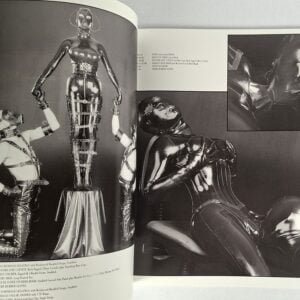

DeMask Bizarre Rubber Collection
AU$300 Read MoreAdd to cartSteve English; Housk Randall
Amsterdam: DeMask Distribution, 1997.The third printed catalogue of Dutch latex and leather store DeMask. Opened in 1990 by Steve English in the Red Light District of Amsterdam (with Xaviera Hollander attending the launch) the store still operates today. Throughout the 1990s DeMask helped shape the international fetish scene hosting events (Europerve, Rubber Ball et al.) in collaboration with Skin Two magazine. Photography by Housk Randall.
-
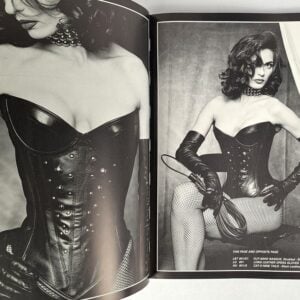
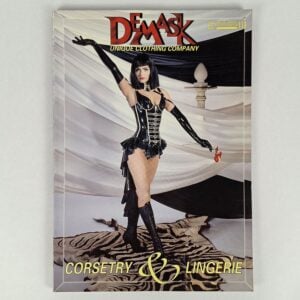
DeMask Unique Clothing Company: Corsetry & Lingerie
AU$200 Read MoreAdd to cartSteve English
Amsterdam: DeMask Distribution, 1995.The second printed catalogue of Dutch latex and leather store DeMask. Opened in 1990 by Steve English in the Red Light District of Amsterdam (with Xaviera Hollander attending the launch) the store still operates today. Throughout the 1990s DeMask helped shape the international fetish scene hosting events (Europerve, Rubber Ball et al.) in collaboration with Skin Two magazine. Three printings of this catalogue were issued in quick succession, this third printing identified by Edition III on the front cover.
-
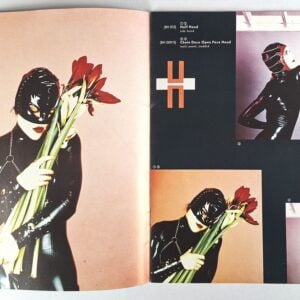
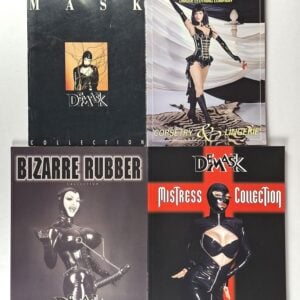
Complete DeMask Catalogue Collection (4 Volumes)
AU$1,000 Read MoreAdd to cartSteve English; Housk Randall; Trevor Watson
Amsterdam: DeMask Unique Clothing Gallery, 1991-2003.A complete set of the four printed catalogues of Dutch latex and leather store DeMask. Opened in 1990 by Steve English in the Red Light District of Amsterdam (with Xaviera Hollander attending the launch) the store still operates today. Throughout the 1990s DeMask helped shape the international fetish scene hosting events (Europerve, Rubber Ball et al.) in collaboration with Skin Two magazine. The set includes: DeMask Mask Collection (1991), DeMask Unique Clothing Company: Corsetry & Lingerie (1995), DeMask Bizarre Rubber Collection (1997), and DeMask Mistress Collection (2003). The latter two volumes with photography by Housk Randall and Trevor Watson.
-
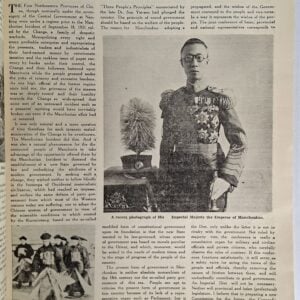
![Manchuria: Fortnightly Publication of The Manchuria Daily News [Vol. 1, No. 1] (July 1, 1936)](https://www.thebookmerchantjenkins.com/wp-content/uploads/0037618-300x300.jpg)
Manchuria: Fortnightly Publication of The Manchuria Daily News [Vol. 1, No. 1] (July 1, 1936)
AU$400 Read MoreAdd to cartT. Furujo
Dairen [Dalian]: The Manchuria Daily News, 1936.First issue, the Special Far East Number, of ‘Manchuria’, the fortnightly magazine of The Manchuria Daily News, the English-language newspaper published at Dairen from 1908 to 1940 under the South Manchuria Railway Company to present Japan’s case in Manchuria to foreign readers. The magazine ran until about 1940. Includes an article by General Seishiro Itagaki on the foundations of Manchoukuo, as well as articles on the Barga nomads, bandit activity in Manchuria, Manchoukuo philately, salt production, smuggling, ports, railways, defence, and more.
-
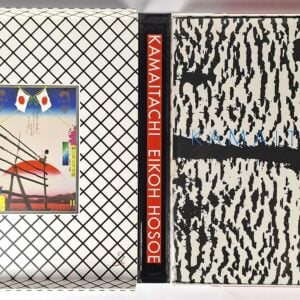
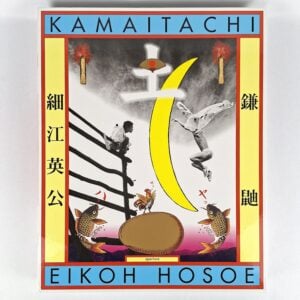
Kamaitachi
AU$800 Read MoreAdd to cartEikoh Hosoe
Tokyo: Aperture, 2005.Hosoe’s photobook of butoh dancer Tatsumi Hijikata in the small farming village of Tashiro, the hometown of Hijikata’s father. “Kamaitachi has two meanings. On the one hand, it is unmistakably a documentary of butoh dancer Tatsumi Hijikata. On the other it is a “record” of my own “memories”, both nostalgic and sad, of having been evacuated as a schoolchild during WWII.” (the artist) The Second Edition, with text in English and a clamshell designed by Tadanori Yokoo, following the Japanese edition of 1969. One of 500 numbered copies signed by the photographer on a mounted plate.
-
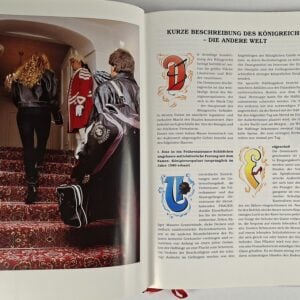

Leben im Konigreich – Die Andere Welt / Living in the Other World Kingdom: Real State of Dominant Women
AU$2,500 Read MoreAdd to cartPatricia de Gifford
Vizovice: The Other World Kingdom, 1996.The founding charter of The Other World Kingdom (OWK), a BDSM and femdom resort and micronation in Czechia. OWK was founded in 1996 and opened to visitors in 1997 on the grounds of a 16th-century chateau and claimed its own currency, passports, police force, courts, state flag, and state hymn, though it was not recognised by any other country. Patricia de Gifford ruled as Queen Patricia I, and citizenship for women required reaching the age of consent and ownership of at least one male slave; men who wished to become citizens were required to obey the Queen and pay taxes. The resort operated commercially as a large-scale femdom facility for a bit over a decade. The majority of the text is the founding charter, together with a brief overview, an introduction to the social classes, and the education programs on offer. Photographic illustrations throughout. Unrecorded in OCLC.
-
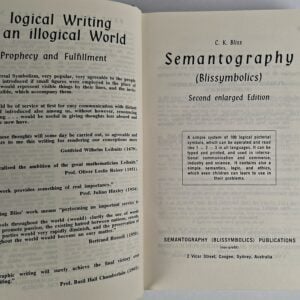
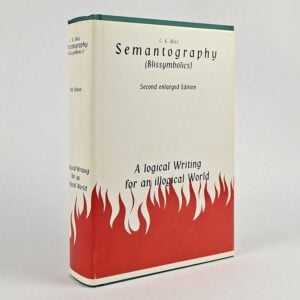
Semantography (Blissymbolics): A Logical Writing for an Illogical World
AU$1,200 Read MoreAdd to cartC. K. Bliss
Sydney: Semantography (Blissymbolics) Publications, 1966.The ideographic writing system of Austro-Hungarian (present-day Ukraine) Charles K. Bliss (1897-1985). Jewish, Bliss conceived his Blissymbols while a refugee in Shanghai and Sydney with the goal of creating an easy-to-learn international auxiliary language, he hoped with this book to mark a new era in human communication and cooperation. He migrated with his wife to Australia in 1946. This copy with the original cardboard carton and bookmark.
-
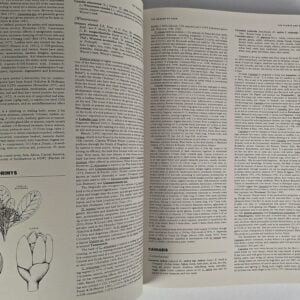
Garden of Eden: The Shamanic Use of Psychoactive Flora and Fauna, and the Study of Consciousness
AU$4,500 Read MoreAdd to cartSnu Voogelbreinder
[Melbourne]: Snu Voogelbreinder, 2009.First and only printed edition of the encyclopaedic magnum opus of Australian ethnobotanist Snu Voogelbreinder in which is explored “the vast world of psychoactive plants, animals and other organisms, and their uses in shamanism, spiritual exploration and healing. Encompassing scientific research, personal experience, ancient knowledge and esoteric philosophies, a multidisciplinary approach is taken, giving a wide view of the effects of natural substances on the mind, with an emphasis towards beneficial outcomes. Preliminary information is given regarding neurochemistry, drug-free consciousness alteration, and methods of use, from cultivation or wild-sourcing through to harvesting, processing, consumption, and navigation of the effects. Thousands of species from over 1700 genera are discussed, with over 440 genera covered in greater detail, including botanical and zoological descriptions. Also included are a detailed index of natural chemicals of particular interest, and a huge bibliography containing thousands of reference entries.” (rear cover) Initially published in a limited run of 500 copies, fewer were distributed due to printing errors. Only 2 institutional copies traced: at Purdue University and the National Library of Australia.
-
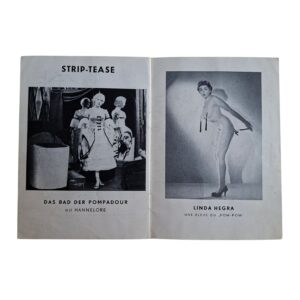
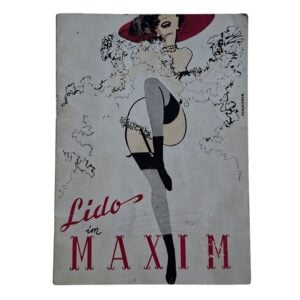
Lido im Maxim: La Maison du Strip-Tease
AU$200 Read MoreAdd to cartMaxim
Vienna: Maxim, 1958.Programme for a strip/cabaret variety show at the Vienna club Maxim, located at Wien 1, Rauhensteingasse 8, on the site of the house where Mozart died. Includes many portraits of international performers. Unrecorded in OCLC.
-
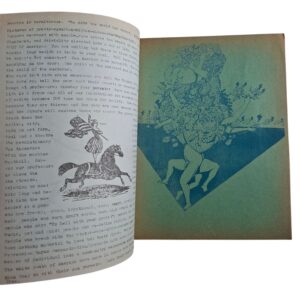
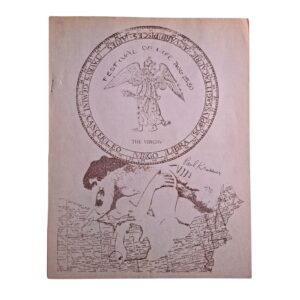
Festival of Life Aug 25-30
AU$2,000 Read MoreAdd to cartYippies (Youth International Party)
New York: YIP, 1968.Promotional hand-out distributed ahead of the planned Festival of Life, an event planned leading into the Democratic National Convention in Chicago in August of 1968. Contains 8 pages of text and illustrations on 5 coloured paper leaves comprising sexy and psychedelic illustrations, a manifesto-like text attributed to Jerry Rubin, and instructions on firebombs and DMT. This copy signed by writer and Yippie founding member Paul Krassner to the front cover.
-
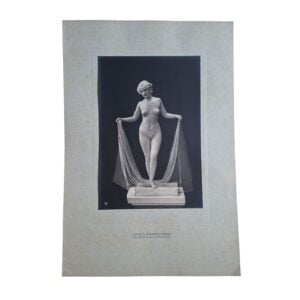
Modern Art and Nature
AU$3,500 Read MoreAdd to cartOlga Desmond; Adolf Salge; Otto Skowraneck
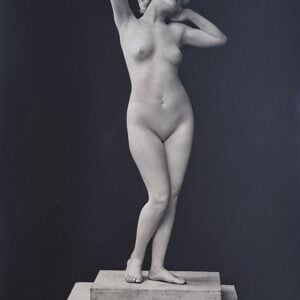
[Berlin]: Neue Photographische Gesellschaft, [1908].English issue of 8 plates of Olga Desmond and Adolf Salge from the 1908 series by German photographer Otto Skowraneck printed from the negatives of the Neue Photographische Gesellschaft m.b.H. (NPG). Includes Venus Anadyomene, Veil-Dance, A Question after R. Boeltzig, Prayer, Park-Nymph, Awakening, Adoration after Stephen Sinding, and Love Play. Desmond was a Berlin performer and dancer who co-founded “Evenings of Beauty”, staging nude and body-painted living statues. The performances were controversial though she always defended her performances as high art.
-

Butch: The Male Thing! Vol. 1, Nos. 2 & 3
AU$400 Read MoreAdd to cartBill Munro
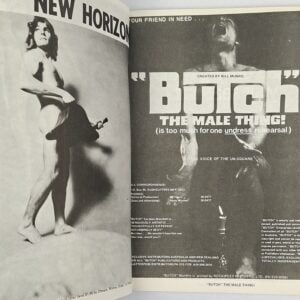
Sydney: Butch Enterprises, [1972].The second (of only two published) of one of Australia’s first gay porn magazines. It has been well documented that Munro’s publishing ventures were more for his own joy of sex than any great publishing profit aspirations, nonetheless, this final double-issue presents as a fine example of 1970s Australian erotica with its mix of male homoeroticism, cartoons, advertisements, and articles, as well as venue, book, and film reviews. Uncommon in the medium, Munro published his name prominently on the front cover, and the interior contains portraits of himself and staff, at a time when homosexuality was still criminalised throughout Australia. He later said he wanted Butch to have a “strong come out attitude [and show] that somebody wasn’t afraid to come out of the closet” (Munro: Let It All Hang Out, 2008). After Butch, Munro published a shortlived tabloid in 1973 titled Little Butch, before selling up to Bill Horne, heterosexual smut publisher of Ribald, who continued the publication as Gay. Printed by Sydney printers Rotaspeed Press, known for printing numerous Australian erotica works by Howard Products, Potz Press, and Lay Press, as well as student newspapers such as University of Queensland Union’s Semper Floreat.
-

Abrichtung und Bestrafung des Ehemanns / The Training and Education of a Husband (2 Volumes)
AU$800 Read MoreAdd to cartPatricia de Gifford
Vizovice: The Other World Kingdom, 1996.A marriage manual for dominant women, authored by the absolute monarch of The Other World Kingdom, a BDSM and femdom resort and micronation in Czechia. OWK was founded in 1996 and opened to visitors in 1997 on the grounds of a 16th-century chateau and claimed its own currency, passports, police force, courts, state flag, and state hymn, though it was not recognised by any other country. Patricia de Gifford ruled as Queen Patricia I, and citizenship for women required reaching the age of consent and ownership of at least one male slave; men who wished to become citizens were required to obey the Queen and pay taxes. The resort operated commercially as a large-scale femdom facility for a bit over a decade. Published in the year of the kingdom’s founding, this two volume devotes Volume I to the training and breaking-in of a husband, and Volume II to his punishment.
-
The French Way
AU$150 Read MoreAdd to cartMonique Monet
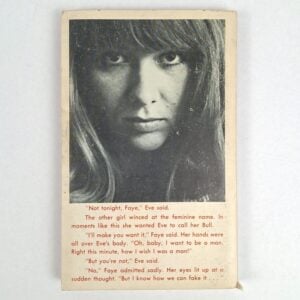
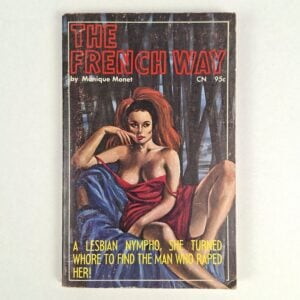
North Hollywood: All Star Books, 1965.Lesbian pulp AS 54. “A lesbian nympho, she turned whore to find the man who raped her!” One of the many lesbian pulp novels produced in the mid to late 20th century. Often formulaic and issued in easily recognisable series with suggestive covers and titillating titles, the genre was written largely by male authors under female pseudonyms for a male readership, though a smaller number of authors, some of them lesbian or bisexual women writing under similar pseudonyms, brought more narrative sincerity and psychological depth to the same commercial format. The genre as a whole ranges from outright formulaic titillation to more literary treatments of lesbian relationships within the constraints of the paperback original.
-

The Gas
AU$200 Read MoreAdd to cartCharles Platt
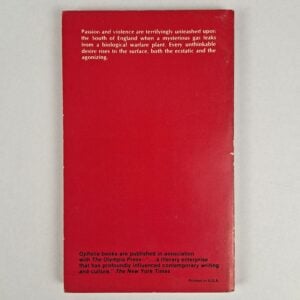
New York: Ophelia Press, 1970.Erotic science fiction pulp OPH-216. “Passion and violence are terrifyingly unleashed upon the South of England when a mysterious gas leaks from a biological warfare plant. Every unthinkable desire rises to the surface, both the ecstatic and the agonizing.” (from cover blurb)
-
The Boy Avengers
AU$200 Read MoreAdd to cartKarl Flinders
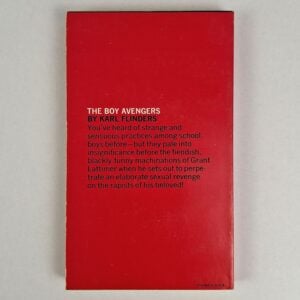
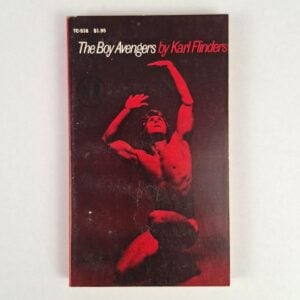
New York: The Traveller’s Companion, 1971.Gay pulp TC-516. One of the many gay erotic pulp novels produced in the mid to late 20th century. These short sexually explicit stories, many of which were formulaic and published in easily recognisable series with graphically illustrated covers and titillating titles each targeting a specific sexual niche, demonstrate the breadth of sexual fantasy, occupation, desire, and deviance of the emerging homosexual culture.
-
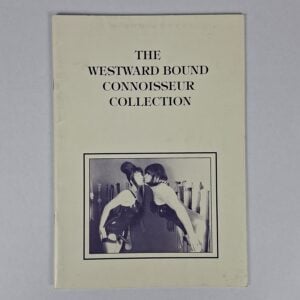
The Westward Bound Connoisseur Collection
AU$400 Read MoreAdd to cartWestward Bound
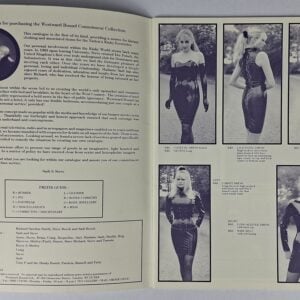
London: Westward Bound, 1992.First trade catalogue issued by the British fetishwear company Westward Bound. The business grew out of Der Putsch, the influential London fetish club founded in 1983, and the associated Westward Bound Bed, Breakfast & Dungeon in Cornwall, whose national television exposure helped establish the company’s profile. Issued as the firm expanded into mail-order retail in the early 1990s, the catalogue offers fetishwear in rubber, PVC, leather, footwear, corrective and disciplinary clothing, boned corsetry, jewellery, wigs, and related accessories. Westward Bound went on to become one of Britain’s best-known fetishwear brands and remains in business today. Sinead O’Connor wore a Westward Bound latex dress on the cover of her 2014 album, ‘I’m Not Bossy, I’m the Boss’. Unrecorded in OCLC.
-
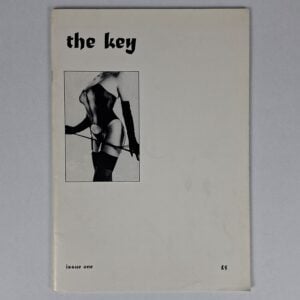
The Key (Issue One)
AU$200 Read MoreAdd to cartDavid
Haywards Heath: Sussex Mailbox, 1995.English fetish contact magazine, edited and published by a one-man operation “David” trading as Sussex Mailbox. Contains more than 200 detailed contact advertisements (the editor states his aim was to produce a higher-quality contact magazine than otherwise available in England at the time), interspersed with lengthy profiles of individual fetishists or their desires and minor fetish trade advertisements, a letters to the editor section, and a guide to advertising in a planned second issue. Laid in is a key to the codes used in the advertisements. The editorial reports that the publisher had been raided by police on 8 March [1995] in connection with the magazine. Several letters, dated April and May [1995], refer to the raid and offer sympathy. No second issue has been traced, and it is possible the police attention curtailed the title after a single number. Unrecorded in OCLC.
-
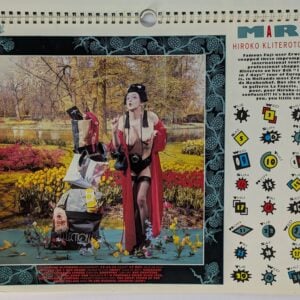
RoXY Pinups
AU$500 Read MoreAdd to cartErwin Olaf
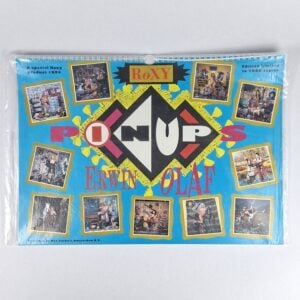
Amsterdam: Max Studio’s, 1994.1994 calendar for the Amsterdam club RoXY. Operating from 1987-1999, RoXY (Radical outlet for the Xenomaniac in You) was a Dutch rave club emerging at the beginnings of rave culture. Known for its theatrical and glamorous atmosphere, which is on show here with 13 elaborately staged portraits by Dutch photographer Erwin Olaf.
-
Archive of Homoerotic Prints with Catalogue and TLS
AU$2,000 Read MoreAdd to cartRudolf von Keller
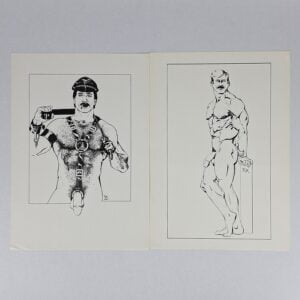
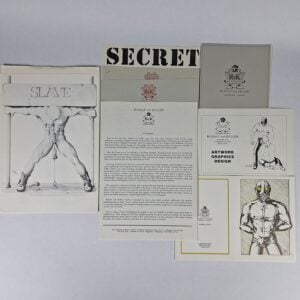
London: Rudolf von Keller, 1993.Archive of late 1980s / early 1990s homoerotic prints by Rudolf von Keller, sent to Jurgen Boedt, editor of the Belgian fetish magazine Secret, in the original postmarked envelope from London to Brussels. One of the two signed typed letters lists the contents of the packet as sent: the artist’s biography, advertising card, catalogue and price list, 8 sets of A4 posters (some in series of 3, others of 4), and 4 greeting cards. Of these, one three-poster series and one greeting card are absent from the surviving archive, while a second packet of A3 posters, also described in the letter, is no longer present. The artwork features hardcore homoerotic themes centred on leather, BDSM, and sadomasochism. Von Keller’s biographical note describes him as born in the late 1940s and educated in Germany, England and the Netherlands, before studying fine art at a college in the English Midlands. After working as a freelance designer while travelling Europe, he returned to the family jewellery business, but continued to produce fetish and BDSM drawings, watercolours, and paintings for a private circle. A series of exhibitions brought this work to a wider audience, leading to print reproduction and, in late 1990, his first ‘Artwork’ catalogue (included here), offering posters, cards, and limited edition prints. The operation was based in London, with a small studio later opened in Amsterdam for developing new work; the note describes him dividing his time between the two cities and a family home in the Rhineland.
-
Residu (Complete Set, 2 Volumes)
AU$400 Read MoreAdd to cartDaniel Richter
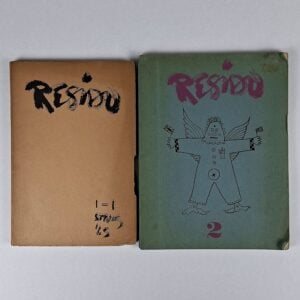
Athens, London, and Provincetown: Residu/ Richter, 1965-66.Complete set, in two issues only. Avant-garde literary journal featuring contribution by Allen Ginsberg, Harold Norse, Philip Lamantia, William Burroughs, Gerogry Corso, Simon Vinkenoog, Jack Nuttall, Alexander Trochi, and others. Includes several pieces on LSD, hash, and other psychedelics.
-
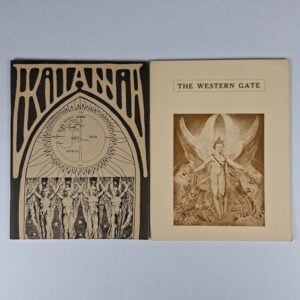
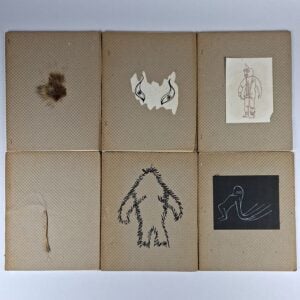
The Magazine of Further Studies (Complete Set) together with Britannia and The Western Gate
AU$650 Read MoreAdd to cartJohn Clarke; Albert Glover; George Butterick; Fred Wah; Daniel Zimmerman
Buffalo: Institute of Further Studies, 1965-1970.Poetry journal published at the University at Buffalo during the mid to late 1960s by a group of poets and scholars associated with Charles Olson and the literary community that developed after his arrival at SUNY Buffalo following the closure of Black Mountain College. Contributions from the editors alongside Olson, Robert Duncan, John Wieners, Ed Sanders, Duncan McNaughton, Ruth Fox, Stephen Rodefer, Harvey Brown, David Tirrell, and others. This complete set in 6 issues offered together with two further publications, Britannia and The Western Gate, both edited in Buffalo by Daniel Zimmerman in 1970, with continued output from many of the same contributors. No. 1 with a two leaf typescript, Up Rising, by Robert Duncan laid in.
-
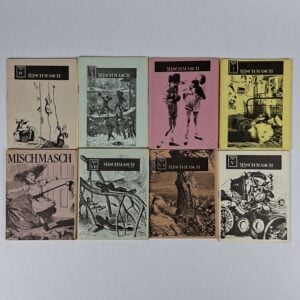
Mischmasch (Complete Set, 8 Volumes)
AU$200 Read MoreAdd to cartJay Mandeville
Kansas City: Mischmasch Antigraphics, 1977-88.Dada art-zine, complete in 8 issues, No. VII with the supplemental booklet ‘The Pleasure Car’ laid in. Unrecorded in OCLC.
-
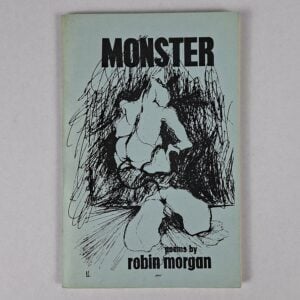
Monster
AU$150 Read MoreAdd to cartRobin Morgan
Melbourne: Melbourne Radical Feminists, No date.American radical feminist Robin Morgan’s first book of poems, originally published by Random House in 1972. The title poem, ‘Monster’, quickly became one of the best-known poems of the women’s liberation movement, with the collection selling thirty thousand copies in its first six months. Its most controversial poem, ‘Arraignment’, accused Ted Hughes of complicity in Sylvia Plath’s death through his infidelity and alleged violence. Although Morgan revised the poem before publication, Hughes threatened legal action. Without informing Morgan, Random House agreed to withdraw the book from Commonwealth markets in return for Hughes dropping the matter. Feminist presses across the Commonwealth responded with unauthorised ‘pirate’ editions, most produced with Morgan’s blessing. The first appeared in Canada and followed shortly after by editions in Australia and New Zealand. Each varied in content: some carried graphics by women artists, others photographs of Plath, others, as here, both versions of ‘Arraignment’. This Australian edition includes illustrations and a bibliographical preface by Melbourne Radical Feminists.
-
Advantage Receiver
AU$300 Read MoreAdd to cartShelton Lea
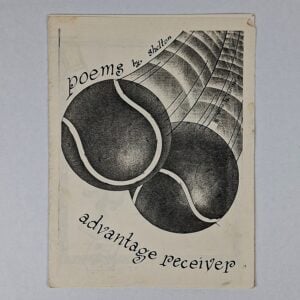
[Mountain View]: [Shelton Lea and Christine Webb], No date.Self-published collection of poems by Australian poet Shelton Lea with illustrations by Chrissy [Christine Webb] published during their prolific 1980s photocopy output from their cottage at Mountain View. Two copies recorded in Trove, at the State Library of Victoria and Monash, a further copy also located in the Papers of Shelton Lea at UNSW.
-
Brando Meets Kookaburra: Poems
AU$300 Read MoreAdd to cartShelton Lea; Karl Gallagher
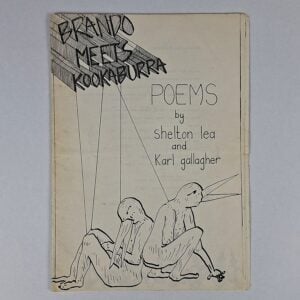
Mountain View: Podsucker Press, No date.Self-published collection of poems by Shelton Lea and Karl Gallagher under another Webb-Lea Mountain View imprint, Podsucker Press. Two copies recorded in Trove, at the National Library of Australia and the State Library of Victoria, a further copy also located in the Papers of Shelton Lea at UNSW.
-
Ballad of the Latrobe Valley-O
AU$300 Read MoreAdd to cartShelton Lea
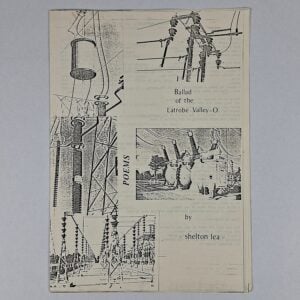
[Mountain View]: Clough Press, No date.Self-published collection of poems by Australian poet Shelton Lea with illustrations by Christine Webb under another Webb-Lea Mountain View imprint, Clough Press (the cottage they lived in also known as Clough Cottage). A single copy recorded in Trove, at the State Library of Victoria, a further copy also located in the Papers of Shelton Lea at UNSW. This copy matching the record at SLV with the additional loosely inserted single sheet with the untitled poem with the first line “i’m here today for a winge.”
-
The Maggie Poem
AU$300 Read MoreAdd to cartShelton Lea
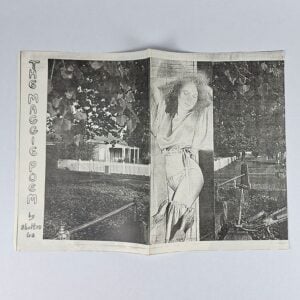
[Mountain View]: [Shelton Lea], No date.Poem printed in Lea’s usual 1980s photocopy Mountain View output, this piece about his relationship with the red-headed Irish prostitute Maggie, and her death by his side in a Melbourne park. Georgeff’s Delinquent Angel tells the story: “Shelton had, at various times, fallen into the arms of prostitutes. There was a history of unconditional mateship between Shelton and those girls, even from his early days in Kings Cross. They’d provided a safety net for him and he had reciprocated. Shelton believed in the notion of the good-hearted prostitute. ‘I’ve met a whole lot of them in my life and they’ve treated me kindly. They don’t treat themselves very kindly.’ Maggie was an Irish girl with mad flaming hair. She was a junkie. She was the girl Shelton had gone to after the break up with Barbara. Candle, her hoon (pimp) had her installed upstairs in a building in Fitzroy. ‘Any nap-jack could come and fuck her for ten bob, and Candle would take the money.’ She wanted to get away and Shelton had fought Candle to take her. They went to the seaside for a few days. When they came back, they took a flagon of port and went to the park, the dying ground, with the blackfellas and shared it with them. Shelton fell asleep in the sun on the grass, near the highrise flats. ‘Maggie slid around the corner for a dose of methadone. She came back and drank more port and when I woke up she was lying next to me dead.’ He wrote a poem for Maggie and said he thought it was grand and full of life. ‘That’s what it is to be a poet, to sing about life. There’s no time for bitterness, but I don’t walk through that park when I don’t think about Maggie …’ A single copy recorded in Trove, at the State Library of Victoria, a further copy also located in the Papers of Shelton Lea at UNSW.
-
The Love Poems
AU$400 Read MoreAdd to cartShelton Lea; Jenni Mitchell
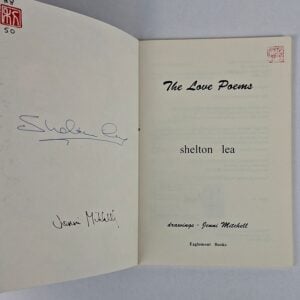
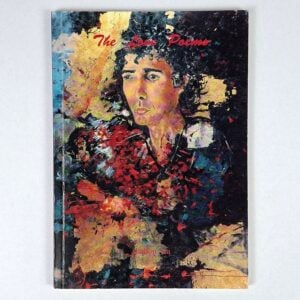
Melbourne: Eaglemont Books, 1993.Collection of Lea’s love poems, published by his own Eaglemont Press in June 1993, limited to 1000 unnumbered copies, with drawings throughout by Jenni Mitchell, whose portrait of Lea from her Australian poets’ portraits series appears on the cover. Poems selected by Patrick McCauley; some had previously appeared in Overland and in Lea’s earlier collection Poems From A Peach Melba Hat. This copy signed by both Lea and Mitchell, with a flyer for Lea’s Eaglemont Books, at 81 Silverdale Road, ‘Specialising in Australian poetry. Call Shelton’, laid in.
-
A Stillness Reserved Only For Stones
AU$200 Read MoreAdd to cartShelton Lea; Frank Kellaway
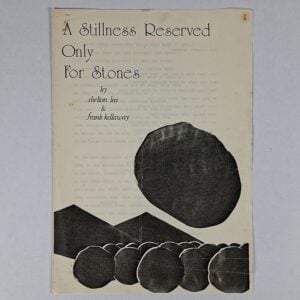
Mountain View: Clough Press, No date.Tribute pamphlet issued under another Webb-Lea Mountain View imprint, Clough Press (the cottage they lived in also known as Clough Cottage): two poems by Lea and one by Frank Kellaway in memory of John Reed, the Heide patron with which both Lea and his mentor Barrett Reid were closely associated. The rear cover carries an acknowledgement of the Ministry for the Arts grant that, per Georgeff, supported Lea’s prolific output during this period. A single copy recorded in Trove, at the State Library of Victoria.
-
Dressing My Girl in a Tu-Tu
AU$400 Read MoreAdd to cartShelton Lea
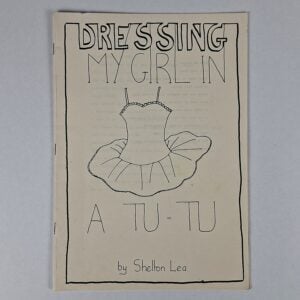
Mountain View: Podsucker Press, 1988.Self-published collection of Lea’s poetry, illustrated by Webb, produced at the couple’s Mountain View cottage under the Podsucker Press imprint, continuing the series begun with Split Lips and Spare Angels. A single copy recorded in Trove, at the State Library of Victoria, a further copy also located in the Papers of Shelton Lea at UNSW.
-
Split Lips
AU$200 Read MoreAdd to cartShelton Lea; Christine Webb
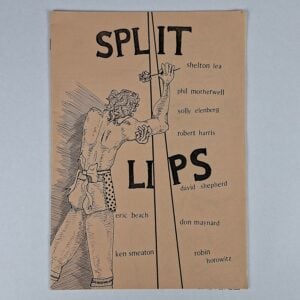
[Mountain View]: Podsucker Press, 1986.Australian poetry anthology self-published by Christine Webb and Shelton Lea from their cottage at Mountain View, Victoria, under the imprint Podsucker Press. Bringing together Lea and others from the Melbourne poetry scene: Phil Motherwell, Solly Elenberg, Robert Harris, David Shepherd, Eric Beach, Don Maynard, Ken Smeaton and Robin Horowitz, with illustrations throughout by Webb. The earliest of the couple’s home productions under this imprint.
-
Spit in the Ocean (Shirley Abicair’s Set w/ ephemera)
AU$1,000 Read MoreAdd to cartKen Kesey; Ken Babbs
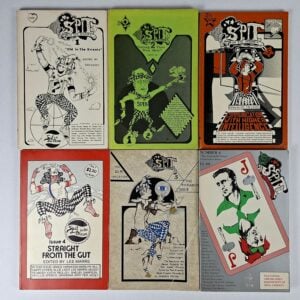
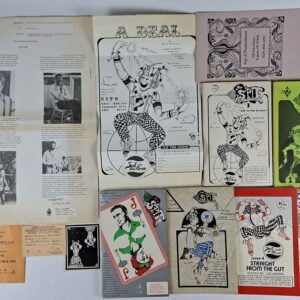
Pleasant Hill: Intrepid Trips Information Service, 1976-1981.Issues 1-6 of the Merry Pranksters literary journal (a 7th and final number not included here was published in 2003) from the collection of Australian zither player Shirley Abicair (1928-2025), with guest editors inlcuding Timothy Leary, Lee Marrs and Richar and Elaine Loren. The set is offered together with seven pieces of related ephemera: promotional poster (35cm x 21.5cm) advertising the series with a coupon for either $1 for the first tissue or $5 for the first seven and on the verso a prose piece ‘Food Stamp Raga’ by Corn Twang (Babbs); Key-Z Productions (Zane and Stephanie Kesey) catalogue of books, videos, audio tapes, attire, and posters; two guest pass tickets to Grateful Dead and New Riders of the Purple Sage at the Lyceum; a guest pass to Grateful Dead at Wembley Stadium; a ticket to The Second Perennial Poetic Hoohaw May 7th 1977 Eugene Oregon; and a broadside promoting Ken Babbs speaking/performance tour for Spit In The Ocean No. 1.
-
Biba Fashion Catalogues Archive
AU$4,000 Read MoreAdd to cartBarbara Hulanicki; Stephen Fitz-Simon; John McConnell; Helmut Newton; Donald Silverstein; Hans Fuerer; Harri Peccinotti; Sarah Moon; Delisia Howard; Chris Price
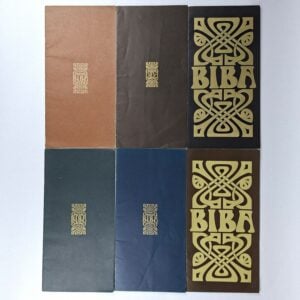
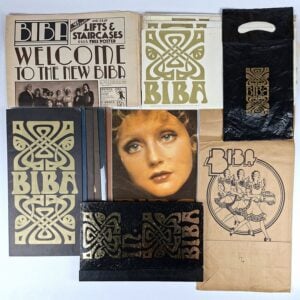
London: Biba, 1968-2004.A complete set of the six Biba mail order catalogues (35.5cm x 18cm), four retaining their original Biba logo envelopes. Each catalogue was designed by John McConnell. Offered here together with: the Biba company newspaper ‘Welcome to the New Biba’ [London, 1973], produced to mark the opening of the Big Biba department store in Kensington; a Biba Food Hall paper bag; a Biba plastic carry bag; the exhibition catalogue ‘Biba: The Label, The Lifestyle, The Look’ (Leicester Museum and Art Gallery, 1993); and ‘In Biba: A Graphic Romance’ by Delisia Howard, illustrated by Chris Price, with foreword and additional illustrations by Barbara Hulanicki (London: Hazard Books, 2004). Biba was founded by Barbara Hulanicki and Stephen Fitz-Simon in 1964 as a mail-order fashion label, becoming one of the defining names of London’s Swinging Sixties and early 1970s style. Rejecting conventional catalogue photography, the mail-order catalogues were conceived as fashion editorials, featuring original work by Donald Silverstein, Hans Feurer, Helmut Newton, Sarah Moon, and Harri Peccinotti. Combining innovative graphic design with editorial fashion photography, they rank among the landmarks of late-1960s British fashion publishing.
-
![[Sex Slave]](https://www.thebookmerchantjenkins.com/wp-content/uploads/0037519-300x300.jpg)
[Sex Slave]
AU$5,000 Read MoreAdd to cartSuzan Pitt
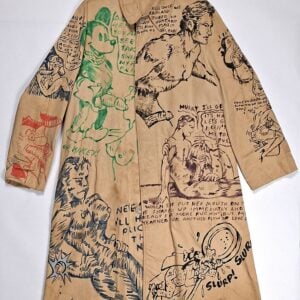
New York: Suzan Pitt, 1984.Beginning in 1984, Suzan Pitt (1943-2019) painted a series of one-of-a-kind wearable artworks for The A. More Store, a project of the New York artists’ collective COLAB. Later that year they were sold through Patricia Field’s East 8th Street boutique alongside works by Keith Haring and Stephen Sprouse. Pitt described the coats as unique artworks that could be either worn or hung on the wall, combining imagery drawn from popular culture, her animated films, and her watercolours into layered visual narratives of free association. Pitt is thought to have produced between fifty and one hundred painted coats during the 1980s before concentrating on the production of her animated film Joy Street. She returned to the format in 2016 in collaboration with House of Byfield. Sexuality was a persistent subject in Pitt’s work well before the coats. Her early film Crocus (1971) established a recurring association in her animation between sexuality and vegetal and floral forms, carried further in Asparagus (1979), a film noted on release for its frank sexual imagery and remembered for its pairing with David Lynch’s Eraserhead on the midnight-movie circuit. The present coat, its title taken from the painted text across the upper back, extends this preoccupation into wearable form, setting sexually explicit illustrations and lettering against appropriated cartoon imagery of Mickey Mouse and Goofy. This example belongs to the original 1984 series and is signed and dated by the artist.
-
Dix Sujets aimables dans le gout antique
AU$2,500 Read MoreAdd to cartChevalier Remy [Andre Lambert]
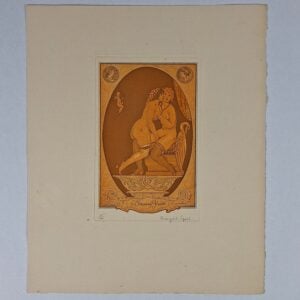
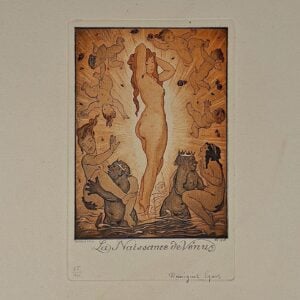
Se trouve a Cyhere: et ne se vend nulle part, 1917 [1920].A detailed collection of hand-coloured erotic plates with a pseudonymous preface by the artist under his Chevalier Remy moniker. The second edition published around 1920 by the artist with the plate L’Amour Astronome replaced by Hesitation aux Portes du Temple. One of 100 numbered copies (from a total edition of 110), the title, colophon, and illustrations each numbered and signed ‘Remigius Eques’. DUTEL 1411, PIA 349, PERCEAU 321.
-
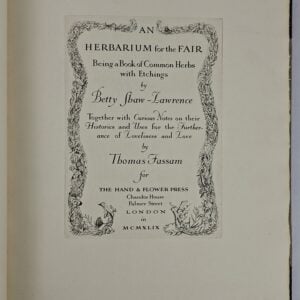
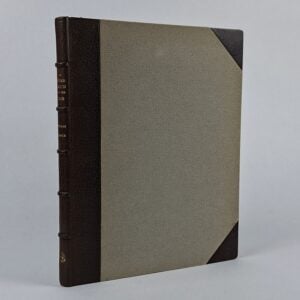
An Herbarium for the Fair: Being a Book of Common Herbs with Etchings
AU$500 Read MoreAdd to cartBetty Shaw-Lawrence; Thomas Fassam
London: The Hand & Flower Press, 1949.Together with Curious Notes on their Histories and Uses for the Furtherance of Loveliness and Love (such as for Taking Away Hair, Bettering the Breasts, the Ease of Sighings, Making a Person Chaste, Loth to Love, and Turning a Person’s Head). One of 250 numbered copies (from a total edition of 260), signed by Fassam, each of the 20 plates signed by the artist.
-
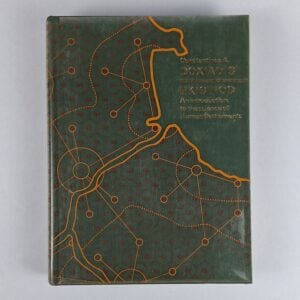
Ekistics: An Introduction to the Science of Human Settlements
AU$100 Read MoreAdd to cartConstantinos A. Doxiadis
London: Hutchinson, 1971.The Greek architect-planner’s magnum opus on his futurist conceptual framework for the maximal development of human settlements.
-
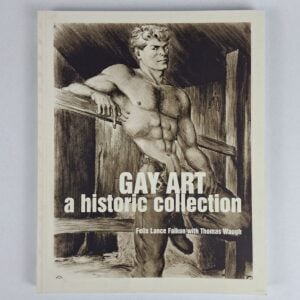
Gay Art: A Historic Collection
AU$150 Read MoreAdd to cartFelix Lance Falkon; Thomas Waugh
Vancouver: Arsenal Pulp Press, 2006.New edition of one of the first anthologies of gay art, A Historic Collection of Gay Art (Greenleaf Editions, 1972). Includes Tom of Finland, Graewolf, Blade, Harry Bush, and many others. Prefaces by Don Gilmore (1972) and Felix Lance Falkon (2006); Forewords by G. G. Stoctay (1972) and Earl Kemp (2006); and Introductions by Felix Lance Falkon (1972) and Thomas Waugh (2006). Published “in the hopes that their personal lives will become more sexually enlightened, enriched and educated, A historic collection of gay art is dedicated to those adults who desire sexually explicit material for their private use in the privacy of their own homes” (from the first edition preface)
-
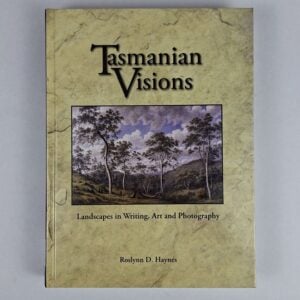
Tasmanian Visions: Landscapes in Writing, Art and Photography
AU$50 Read MoreAdd to cartRoslynn D. Haynes
Hobart: Polymath Press, 2006. -
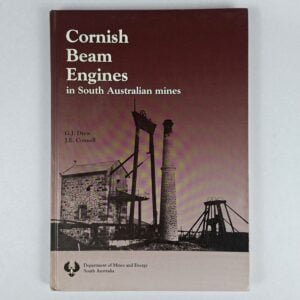
Cornish Beam Engines in South Australian Mines
AU$50 Read MoreAdd to cartG. J. Drew; J. E. Connell
Adelaide: Department of Mines and Energy, South Australia, 1993.History and development of steam powered mining in South Australia. This copy signed by both authors.
-
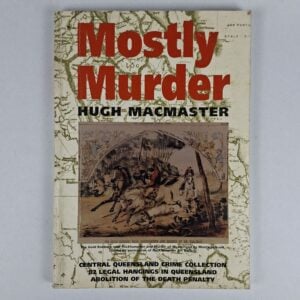
Mostly Murder
AU$50 Read MoreAdd to cartHugh Mac Master
Rockhampton: Hugh Mac Master, 1999.Central Queensland crime collection. 82 legal hangings in Queensland. Abolition of the death penalty.
-
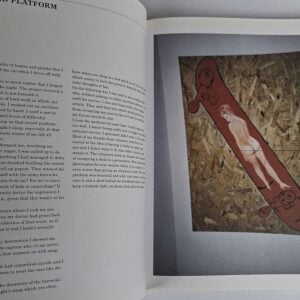

People Think I’m Cool: The Life and Art of Pane
AU$100 Read MoreAdd to cartStefano Pane Monfeli
Bologna: Damiani, 2011.Autobiographical art monograph by the Italian street artist.
-
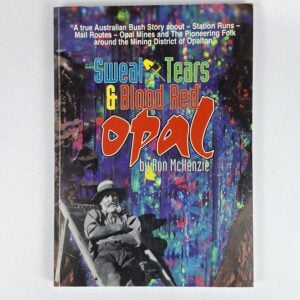
Sweat, Tears & Blood Red Opal
AU$80 Read MoreAdd to cartRon McKenzie
Winton: Ron McKenzie, 2000.“A true Australian Bush Story about – Station Runs – Mail Routes – Opal Mines and The Pioneering Folk around the Mining District of Opalton.” This copy signed by McKenzie and with the inkstamp of the local distributor in Winton, Searle’s.
-
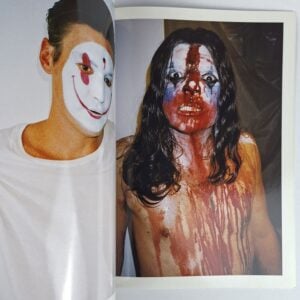
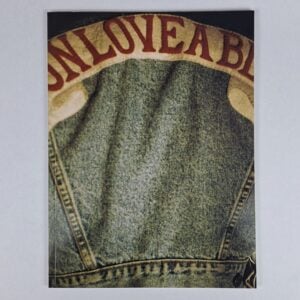
Unloveable
AU$100 Read MoreAdd to cartKai Regan
New York: O. H. W. O. W., 2008.Photobook by American photographer Kai Regan of early 2000s NYC art scene.
-
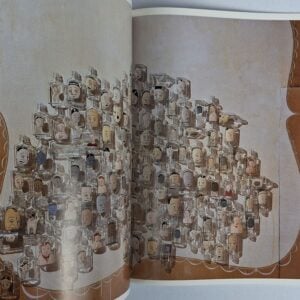
The Buddy System
AU$100 Read MoreAdd to cartBarry McGee
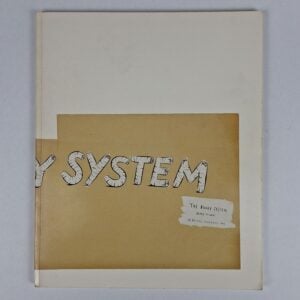
New York: Deitch Projects, 1999.Catalogue for a gallery exhibition for street artist Barry McGee AKA Twist. Includes numerous blank pages for hand-embellishment.
-
A Field Companion to Australian Fungi
AU$30 Read MoreAdd to cartBruce Fuhrer
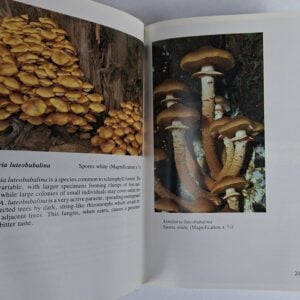
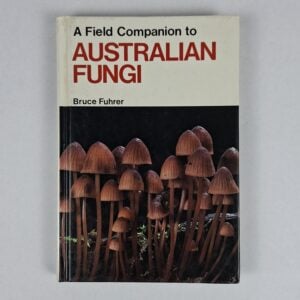
Melbourne: The Five Mile Press, 1985. -
Bobby Fischer Teaches Chess
AU$60 Read MoreAdd to cartBobby Fischer
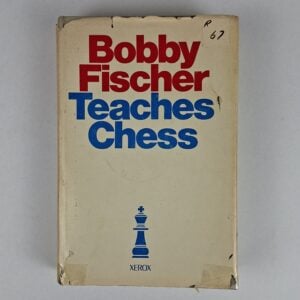
Stamford: Xerox, 1966. -
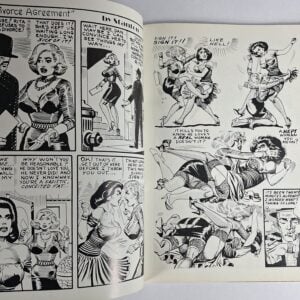
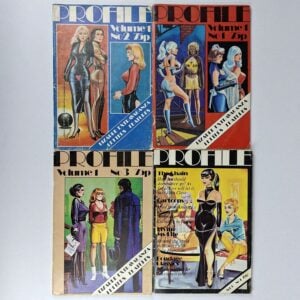
Profile (Volume 1 No 1, 2, 3, 4)
AU$500 Read MoreAdd to cartCarl Handen
London: European Publications, 1973.British “bizarre” periodical, edited by Carl Handen with art direction by Hans Deiter. Each cover is illustrated by the American artist Eric Stanton, whose bondage and fetish comics also run throughout all four issues; the cover of number four is billed as “More from America’s leading bizarre illustrator – Stanton. Exclusive to Profile.” The same issue announces that Profile has “obtained the exclusive rights to the creative and erotic writing of John Cleve,” the principal pseudonym of the American writer Andrew J. Offutt, extensively used for erotic fiction between 1969 and the mid 1980s; the story “The Chain,” appearing in this number. Also included is a feature on the pseudonymous French novelist Alan Mac Clyde and the illustrator Carlo, both associated with the interwar French sadomasochistic novel genre. Further contributors across the four numbers include Audrey Kendell, Iago, Maud Cameron, Bernard Valonnes, Gee Kay, Earle Dexter, Mark Ralphs, Victor Rhodes, Julie Hamilton, and Sally Fleming. Number four states that a fifth issue was planned; it is not known whether publication continued. Unrecorded in OCLC, and not mentioned in Richar Perez Seves: Eric Stanton & the History of the Bizarre Underground. A complete run (Nos. 1-4) is held by the Bishopsgate Institute’s UK Fetish Archive, London.
-
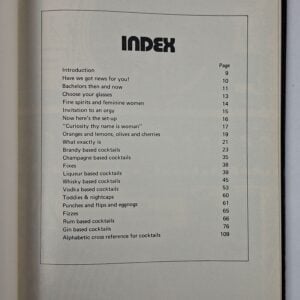
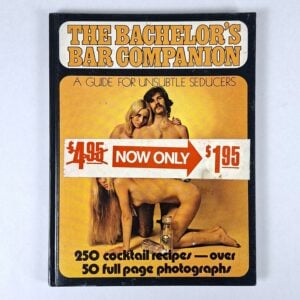
The Bachelor’s Bar Companion: A Guide for Unsubtle Seducers
AU$100 Read MoreAdd to cartNigel Shaw
Sydney: Leon Publishing Company, 1972.Part of Sydney publisher Leon’s Bachelor’s series of guides for the unmarried man. Illustrated throughout with professional models, some of the photographs by Douglas Thompson. If you can look past them, the volume also contains 250 cocktail recipes and tips for winning a lady’s favours.
-
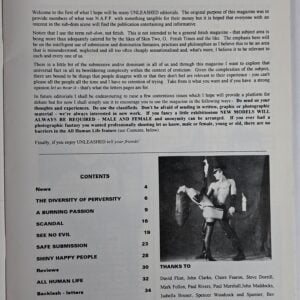
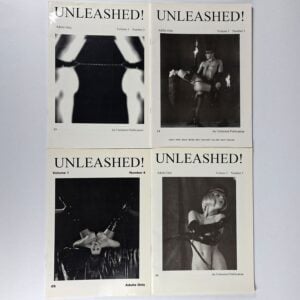
Unleashed! (Volume 1, Number 1, 2, 3, 4)
AU$500 Read MoreAdd to cartJohn Garner
Leeds: Unlimited, 1994-1995.First four issues of the English BDSM magazine Unleashed!, comprising articles, SM sex guides, erotic photography and art, community news and events, letters and classifieds, with frequent reports on the launch and closure of fetish events, businesses, and other publications. Photography largely by John Garner, with contributions from David Flint among others. Issue four trails a fifth issue; whether this appeared is not known. Unrecorded in OCLC; a single issue (no. 1) is held by the Bishopsgate Institute UK Fetish Archive, London.
-
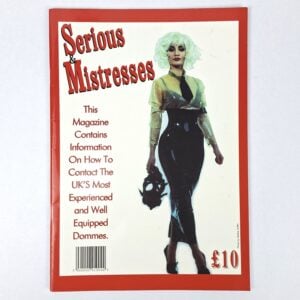
Serious & Mistresses
AU$60 Read MoreAdd to cartDOM Promotions
Blackwood: DOM Promotions, No date.English catalogue of dominatrixes and mistresses, mostly full page adverts devoted to each. Unrecorded in OCLC.
-
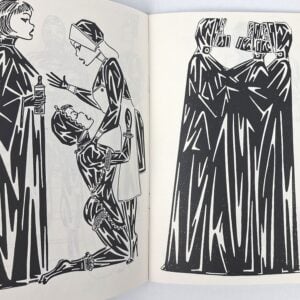
Bewitching Bitches
AU$400 Read MoreAdd to cartPeter X
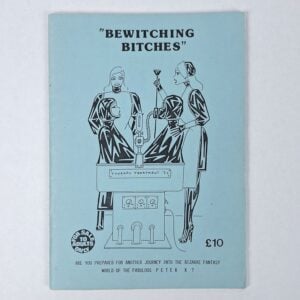
London: [Swish Publications], No date.“Are you prepared for another journey into the bizarre fantasy world of the fabulous Peter X?” The second of two collections of fetish drawings by the fantasist of dominant women and lady rubberists published by the English femdom magazine Madame. Circa 1986-87. Both of Peter X’s works unrecorded in OCLC.
-

The BMW 02 Series: The Cult Car (BMW Profiles 3)
AU$200 Read MoreAdd to cartWalter Zeichner
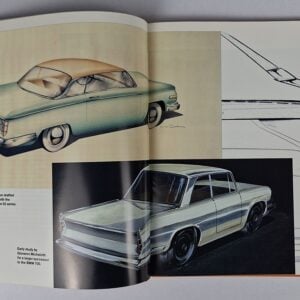
: BMW, 1998.The third in a series of historical profile books produced by the auto manufacture. With the 2002 Turbo quadfold brochure in rear pocket.
-
Whichaway? Photographs from Kiwirrjura, 1974-1996
AU$60 Read MoreAdd to cartJon Rhodes
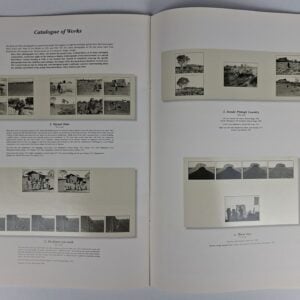
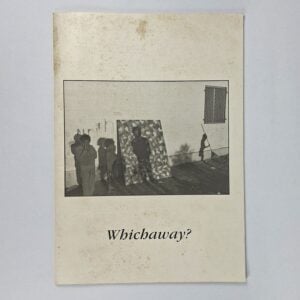
Thora: Jon Rhodes, 1998. -

Utopia: The Genius of Emily Kame Kngwarreye
AU$100 Read MoreAdd to cartMargo Neale; Emily Kngwarreye
Tokyo: The Yomiuri Shimbun, 2008.The bilingual Japanese edition published to accompany the retrospective exhibition shown in Osaka and Tokyo.
-
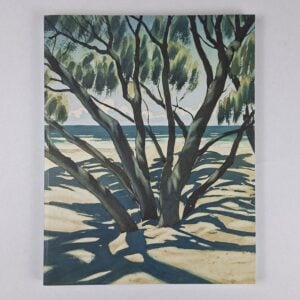
Making It Modern: The Watercolours of Kenneth Macqueen
AU$150 Read MoreAdd to cartSamantha Littley; Kenneth Macqueen
Brisbane: Queensland Art Gallery, 2007. -
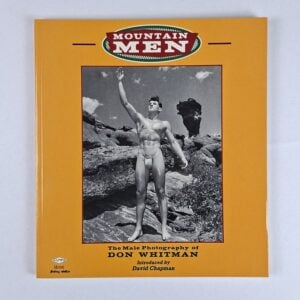
Mountain Men: The Male Photography of Don Whitman
AU$100 Read MoreAdd to cartDon Whitman
London: Editions Aubrey Walter, 1991.The physique photography of Don Whitman’s Western Photography Guild, operating out of Denver Colorado, capturing the perfectly sculpted men of the American West in the Rocky Mountains.
-
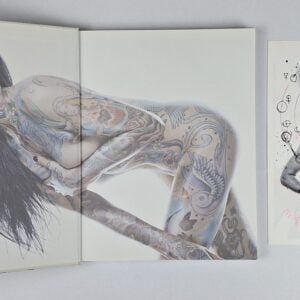
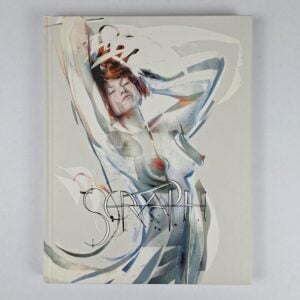
Seraph
AU$150 Read MoreAdd to cartAllan Amato
Los Angeles: Baby Tattoo Books, 2017.Collection of female nude photography exploring nakedness and sexuality. Introduction by Erika Moen. Essays by Liz Lee Stoya. 3 limited edition designs and a trade edition were released. This is the limited edition design featuring Amanda Palmer by Bill Seinkiewicz on the cover, one of 200 numbered copies signed by Amato and Seinkiewicz, also with a signed hand-embellished print by Seinkiewicz laid in.